
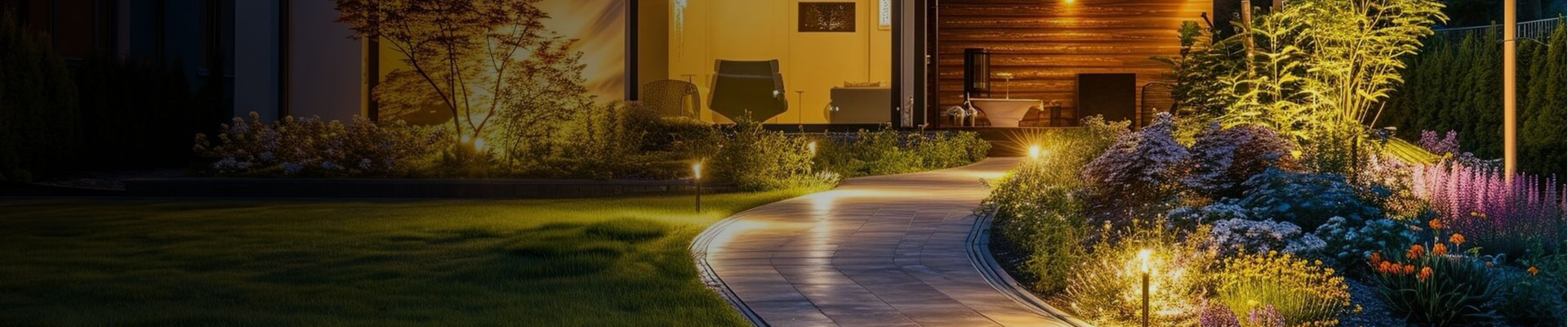
1. Start with the Purpose of the Tree Lighting
2. Match the Light Type to the Tree
3. Consider the Tree’s Size and Shape
4. Choose the Right Brightness
5. Select the Right Color Temperature
6. Pay Attention to Beam Angle
7. Decide Between Uplighting, Downlighting, and Wrapping
8. Choose Outdoor-Rated Fixtures
9. Use LED Lights for Efficiency and Longevity
10. Choose the Right Power Source
11. Plan the Fixture Placement Carefully
12. Avoid Overlighting the Tree
13. Think About Tree Growth and Maintenance
14. Choose a Style That Matches the Landscape
15. Use Timers, Dimmers, and Smart Controls
16. Safety Matters
17. Best Lighting Choices by Tree Type
FAQs
Outdoor tree lighting can transform a garden, yard, driveway, patio, or commercial landscape after dark. The right lights can highlight the natural shape of a tree, improve nighttime visibility, create a welcoming atmosphere, and make an outdoor space feel more finished. However, choosing tree lights is not only about picking the brightest fixture or the most decorative style. The best choice depends on the tree’s size, shape, location, purpose, power source, weather exposure, and the lighting effect you want to create.
This guide explains how to choose the right lights for lighting an outdoor tree in a practical, focused way.
1. Start with the Purpose of the Tree Lighting
Before choosing fixtures, decide why you want to light the tree. Different goals require different lighting styles.
For example, if your goal is to create a dramatic focal point, uplighting from the base of the tree may be the best option. If you want a warm, festive look, string lights wrapped around branches or the trunk may work better. If the tree is near a walkway or driveway, the lighting should also improve visibility and safety.
Common purposes include:
- Highlighting a beautiful tree as a landscape feature
- Creating a cozy outdoor atmosphere
- Improving safety around paths, steps, and seating areas
- Adding decorative lighting for holidays or events
- Increasing curb appeal at night
- Making a patio, garden, or backyard feel more inviting
Once the purpose is clear, it becomes much easier to choose the correct type, brightness, beam angle, and placement.
2. Match the Light Type to the Tree
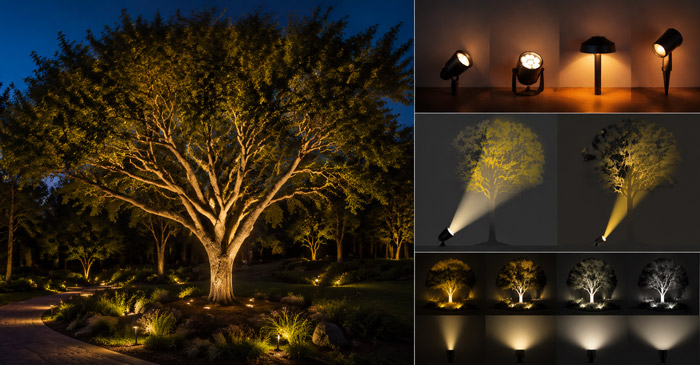
Not all outdoor tree lights are the same. Some are designed to shine upward, some are meant to hang from branches, and others are used to wrap around trunks or create soft ambient light.
Best Outdoor Tree Light Types by Use
|
Light Type |
Best For |
Lighting Effect |
Notes |
|---|---|---|---|
|
Uplights / Spotlights |
Large trees, ornamental trees, front yards |
Dramatic upward illumination |
Great for highlighting trunk, canopy, and structure |
|
Floodlights |
Very large trees or wide canopies |
Broad, strong light coverage |
Use carefully to avoid glare |
|
String Lights |
Small to medium trees, patios, events |
Warm, decorative, festive glow |
Best for ambiance rather than strong illumination |
|
Fairy Lights |
Delicate branches, small trees, garden accents |
Soft, magical sparkle |
Works well for decorative detail |
|
Well Lights |
Mature trees, lawns, formal landscapes |
Hidden uplighting from ground level |
Clean appearance, low visual clutter |
|
Trees above seating areas or paths |
Natural moonlight effect |
Fixtures are mounted in the tree and aimed downward |
|
|
Solar Tree Lights |
Areas without wiring access |
Low-maintenance accent lighting |
Best where sunlight exposure is strong |
|
Low-Voltage Landscape Lights |
Long-term outdoor installations |
Reliable, controlled illumination |
Requires transformer and wiring |
For permanent landscape lighting, low-voltage LED uplights, spotlights, and well lights are usually the most reliable options. For decorative or seasonal lighting, string lights and fairy lights are often easier and more flexible.
3. Consider the Tree’s Size and Shape
The size and structure of the tree strongly influence the lighting choice.
A small ornamental tree does not need the same light output as a tall oak, palm, maple, or pine. Using lights that are too bright on a small tree can make it look harsh and unnatural. Using lights that are too weak on a large tree may make the lighting appear flat or barely visible.
Small Trees
Small trees usually look best with soft, controlled lighting. A single low-wattage uplight or a few strands of warm string lights may be enough. Avoid extremely bright floodlights because they can overpower the tree and create glare.
Medium Trees
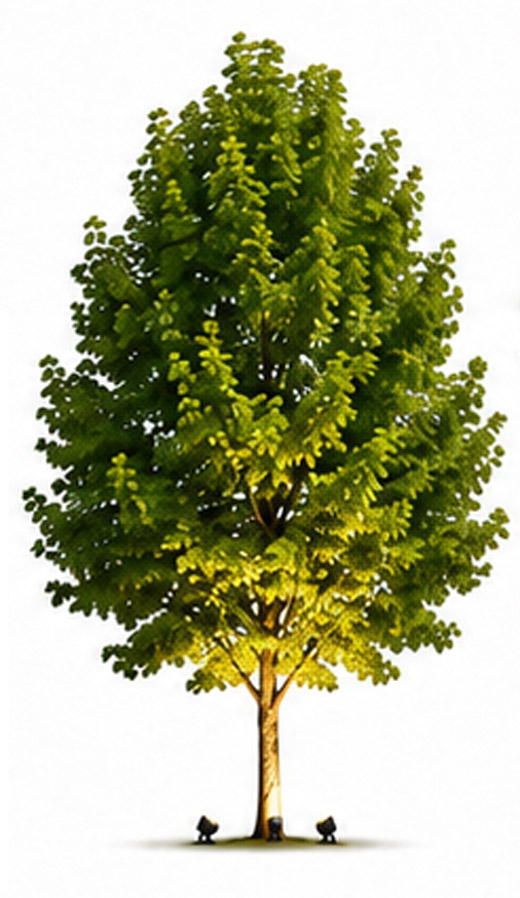
Medium trees often benefit from two or three fixtures placed at different angles. This helps reveal the trunk, branches, and canopy without creating heavy shadows on one side.
Large Trees
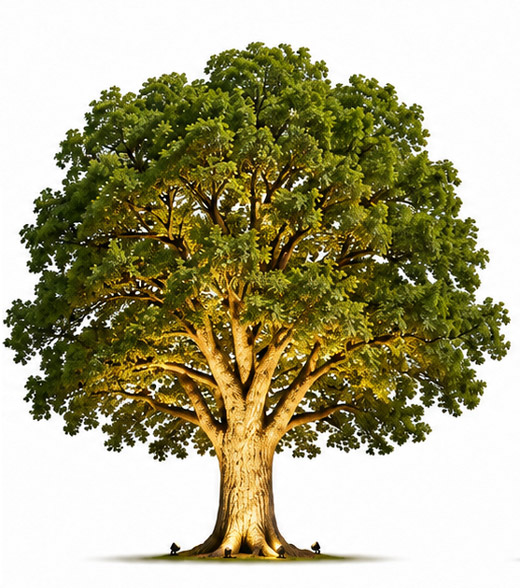
Large trees need stronger lights, wider beam angles, or multiple fixtures. For mature trees with broad canopies, a combination of uplighting and cross-lighting may be necessary. One light at the base may only illuminate part of the trunk, leaving the upper canopy dark.
Narrow or Columnar Trees
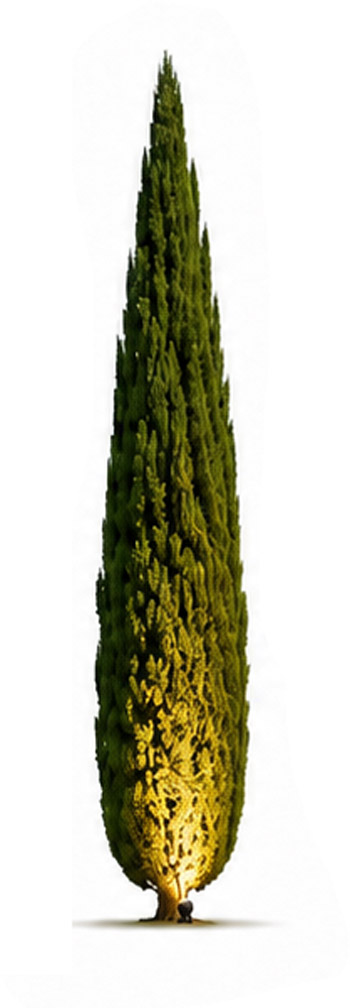
Tall, narrow trees such as Italian cypress, arborvitae, or certain palms usually work well with narrow beam spotlights. The beam should follow the vertical shape of the tree.
Wide Canopy Trees
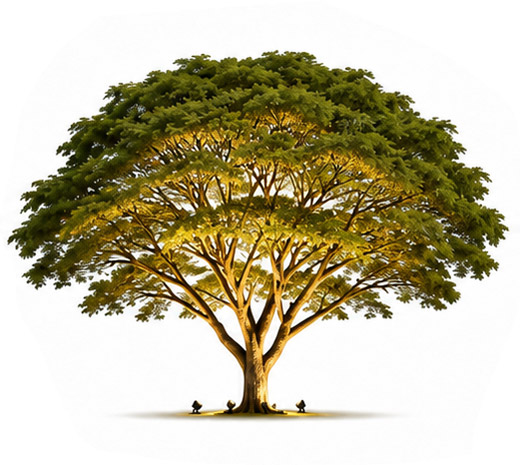
Trees with spreading branches need wider beam angles or multiple fixtures. A single narrow spotlight may create a bright stripe instead of evenly lighting the canopy.
See also: Hui, X., & Wong, A. (2018). Design guidelines for landscape lighting: Effects of tree size and structure on lighting performance. Lighting Research & Technology, 50(6), 871–885.
4. Choose the Right Brightness
Brightness is one of the most important factors in outdoor tree lighting. Too little light may not show the tree properly. Too much light can create glare, disturb neighbors, waste energy, and make the landscape look harsh.
For outdoor tree lighting, brightness is usually measured in lumens. The right lumen range depends on tree size and the desired effect.
Recommended Brightness for Outdoor Tree Lighting
|
Tree Size / Lighting Goal |
Suggested Lumens per Fixture |
Best Fixture Type |
Recommended Effect |
|---|---|---|---|
|
Small ornamental tree |
100–300 lumens |
Small spotlight or uplight |
Soft accent lighting |
|
Medium tree |
300–700 lumens |
Uplight or spotlight |
Clear trunk and canopy detail |
|
Large mature tree |
700–1,500+ lumens |
Multiple spotlights or floodlights |
Strong landscape feature |
|
Decorative string lighting |
50–200 lumens per strand area |
String lights or fairy lights |
Warm ambient glow |
|
Path-adjacent tree |
100–500 lumens |
Downlight or low-voltage fixture |
Safety plus subtle accent |
|
Dramatic focal-point tree |
700–2,000+ lumens total |
Multiple uplights |
Bold architectural effect |
Brightness should be adjusted based on the surrounding environment. A tree in a very dark backyard may need less light than a tree near a brightly lit street, driveway, or commercial building.
5. Select the Right Color Temperature
Color temperature affects the mood of the tree lighting. It is measured in Kelvin, usually shown as “K” on the product label.
For most outdoor tree lighting, warm white is the safest and most attractive choice.
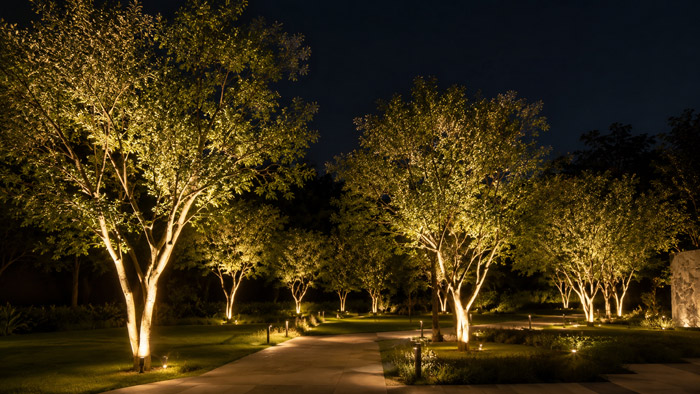
Warm White
2700K–3000K
Warm white light creates a soft, welcoming glow. It works well for homes, patios, gardens, and traditional landscapes. It also brings out the natural warmth of bark, wood, stone, and greenery.
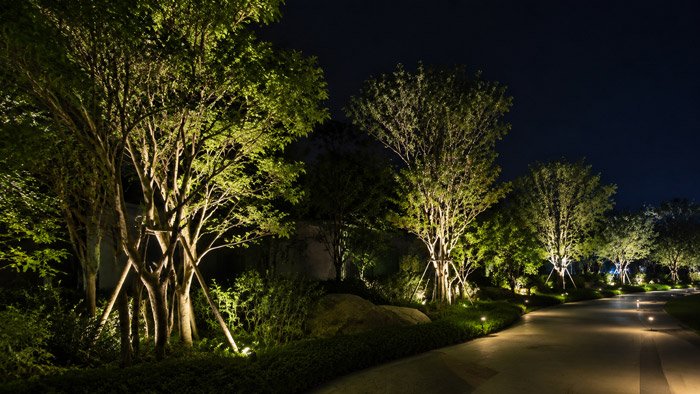
Neutral White
3500K–4000K
Neutral white gives a cleaner and slightly brighter appearance. It may work well for modern homes, commercial landscapes, or areas where visibility is more important than coziness.
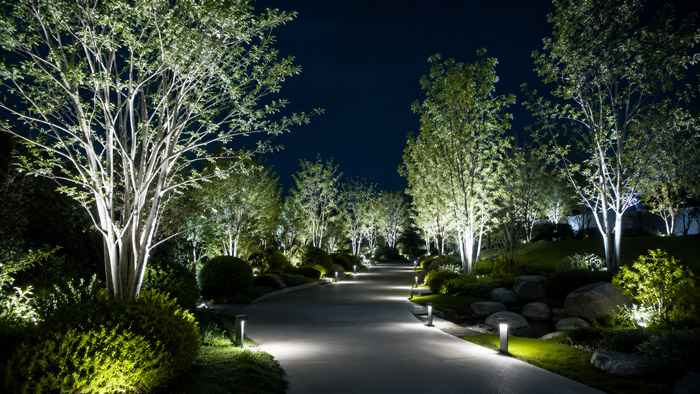
Cool White
5000K and Above
Cool white can look sharp and bright, but it may feel harsh in residential landscapes. It can also make trees look less natural. Use it only when a crisp, modern effect is specifically desired.
For most outdoor trees, 2700K or 3000K LED lights are recommended.
6. Pay Attention to Beam Angle
Beam angle determines how wide or narrow the light spreads.
A narrow beam creates a focused, dramatic effect. A wide beam covers more of the tree and produces softer illumination.
For tall, narrow trees, choose a narrow beam angle, usually around 15 to 30 degrees. For broad canopies, choose a wider beam, usually around 40 to 60 degrees or more.
If you are lighting a large tree, using several medium-beam lights from different positions often looks better than one very strong floodlight. Multiple fixtures create depth and reduce harsh shadows.
See also: Van Kemenade, J., & Reker, J. (1988). Beam characteristics for accent lighting. Journal of the Illuminating Engineering Society, 17(2), 118–130.
7. Decide Between Uplighting, Downlighting, and Wrapping
The placement of the lights changes the entire look of the tree.
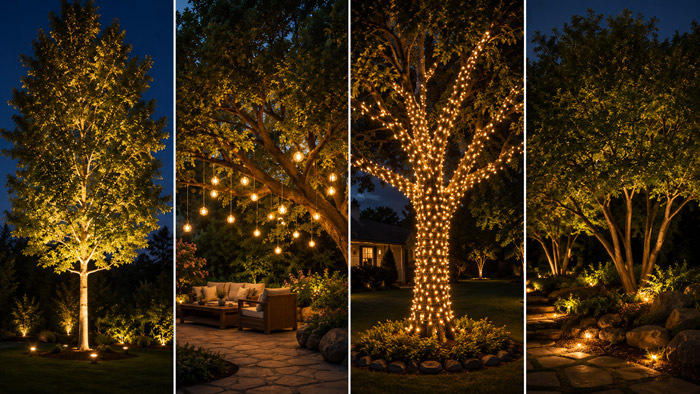
Uplighting
Uplighting is one of the most popular methods for outdoor tree lighting. Fixtures are placed at ground level and aimed upward toward the trunk and canopy. This technique works especially well for trees with interesting bark, strong branch structure, or large canopies.
Uplighting creates drama and makes the tree stand out as a nighttime focal point.
Downlighting
Downlighting places fixtures higher in the tree and aims the light downward. This can create a natural “moonlight” effect, especially when the light passes through branches and leaves. It is useful over patios, garden paths, and seating areas.
Downlighting is more difficult to install than uplighting because fixtures must be mounted in the tree safely.
Wrapping
Wrapping uses string lights around the trunk or branches. This creates a decorative, festive effect. It is common for patios, restaurants, events, and holiday displays.
Wrapping works best when the lights are evenly spaced and not pulled too tightly around growing branches.
8. Choose Outdoor-Rated Fixtures
Outdoor tree lights must be designed for exterior use. Indoor lights should not be used outside because they may not handle rain, moisture, temperature changes, dirt, or UV exposure.
Look for fixtures labeled as weather-resistant or waterproof. Pay attention to the IP rating.
An IP65 rating is usually suitable for outdoor landscape fixtures exposed to rain. IP67 or IP68 may be better for very wet areas, ground-level installations, or locations where water can collect.
The fixture material also matters. Aluminum, brass, copper, and stainless steel are common choices for durable outdoor lights. Plastic fixtures are often cheaper but may become brittle or faded over time.
9. Use LED Lights for Efficiency and Longevity
LED lights are usually the best choice for outdoor tree lighting. They use less energy, last longer, produce less heat, and are available in many brightness levels and color temperatures.
Compared with older halogen lights, LED fixtures are more efficient and easier to maintain. This is especially important for trees that are lit every night.
When choosing LED lights, check:
- Lumens, not just watts
- Color temperature
- Beam angle
- Outdoor rating
- Fixture material
- Warranty
- Compatibility with transformers or dimmers
For permanent installations, high-quality LED landscape lights are worth the investment.
10. Choose the Right Power Source
Outdoor tree lights usually use one of three power options: low-voltage wired power, solar power, or plug-in line voltage.
Low-Voltage Lighting
Low-voltage lighting is commonly used for professional landscape lighting. It usually runs on 12 volts and requires a transformer. It is safer and more energy-efficient than standard line-voltage outdoor lighting.
See also: Low Voltage Pathway Lights vs. High Voltage Lighting: Which Is Better for Outdoor Use?
This is a strong choice for permanent tree lighting.
Solar Lighting
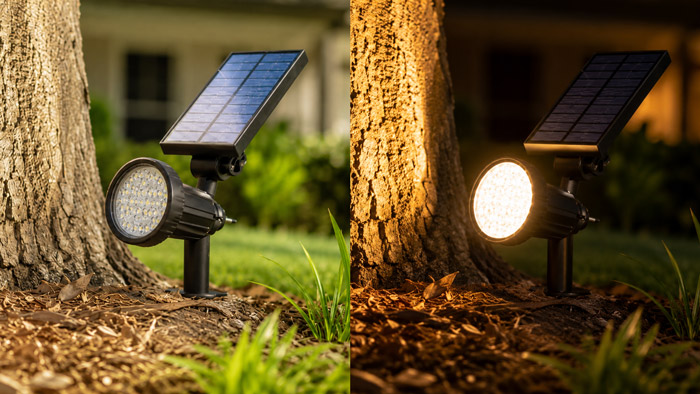
Solar lights are easy to install because they do not require wiring. However, they depend on direct sunlight. They may not perform well in shaded areas, during cloudy weather, or in winter.
Solar lights are best for simple accent lighting, not powerful tree illumination.
Plug-In Lights
Plug-in outdoor lights are common for string lights and seasonal displays. They are convenient but require access to a weather-protected outdoor outlet. Extension cords must be rated for outdoor use.
See also: Mains-Powered vs Solar-Powered Garden Lights: Which Is the Better Choice?
11. Plan the Fixture Placement Carefully
Placement is just as important as the light itself. A well-chosen fixture can still look bad if it is placed incorrectly.
For uplighting, place the fixture far enough from the trunk to allow the light to spread naturally. If the light is too close, it may create a narrow, harsh beam. If it is too far away, the light may miss the canopy or spill into unwanted areas.
For large trees, place lights at two or three angles rather than directly in front only. This creates a more natural three-dimensional look.
Avoid aiming lights directly toward windows, roads, neighboring properties, or seating areas. Glare can make even expensive lighting feel uncomfortable.
12. Avoid Overlighting the Tree
One of the most common mistakes is using too much light. Outdoor tree lighting should enhance the tree, not make it look like a stage set unless that is the intended effect.
Good lighting leaves some shadows. Shadows help reveal texture, depth, and shape. A completely flooded tree can look flat and unnatural.
If you are unsure, start with fewer lights and lower brightness. You can always add more fixtures later.
13. Think About Tree Growth and Maintenance
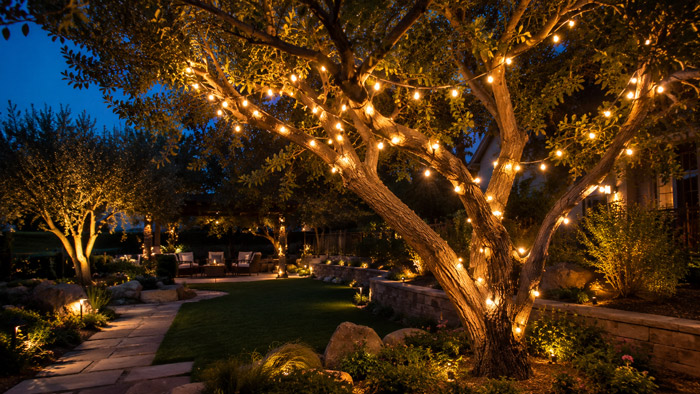
Trees grow, branches move, and trunks expand. Lighting should not damage the tree or interfere with healthy growth.
For string lights, do not wrap wires too tightly around trunks or branches. Leave space for growth, and inspect the lights regularly.
For mounted fixtures, avoid damaging the bark unnecessarily. If downlights are installed in the tree, use tree-friendly mounting hardware and leave room for movement.
Also consider maintenance access. Fixtures may need cleaning, repositioning, or replacement over time. Do not place lights where they are impossible to reach safely.
14. Choose a Style That Matches the Landscape
The fixture should match the overall outdoor design. A modern home may look best with sleek black or bronze fixtures. A traditional garden may suit brass or copper lights. In natural landscapes, low-profile fixtures that disappear into the ground are often better.
For decorative lighting, the wire color matters. Green or brown wires blend better with trees, while black wires may suit modern outdoor spaces. White wires are usually more visible unless used on pale trunks or holiday displays.
15. Use Timers, Dimmers, and Smart Controls
Controls make outdoor tree lighting more convenient and efficient.
A timer can turn the lights on and off automatically. A photocell can switch lights on at dusk and off at dawn. A dimmer allows you to adjust brightness for different moods or seasons. Smart outdoor plugs and smart transformers can provide app control, schedules, and sometimes color adjustment.
For permanent outdoor tree lighting, a timer or smart transformer is highly recommended.
Outdoor electrical lighting must be installed safely. Use outdoor-rated cables, connectors, plugs, and fixtures. Keep wires away from lawn mower paths, sharp edges, standing water, and high-traffic areas.
For low-voltage systems, the risk is lower, but proper installation still matters. For line-voltage fixtures or complicated wiring, hiring a qualified electrician is the safest option.
Also avoid placing hot fixtures too close to dry leaves, mulch, or bark. LED lights are cooler than halogen lights, but heat and poor installation can still create problems.
17. Best Lighting Choices by Tree Type
Different trees look better with different lighting methods.
For palm trees, uplighting the trunk and crown usually works well. A narrow or medium beam can emphasize the height and texture.
For oak, maple, and other large canopy trees, use multiple uplights from different angles. This helps reveal the branch structure and wide canopy.
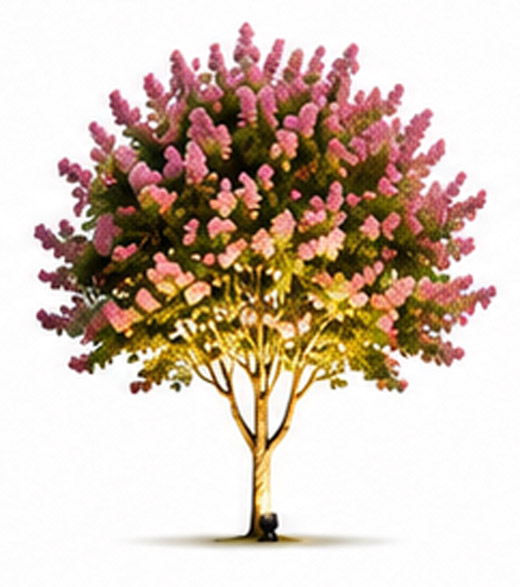
For flowering trees, softer warm lights are better. Harsh lighting can wash out the flowers and make the tree look artificial.
For evergreens, uplights or wide-beam spotlights can highlight the dense shape. String lights can also work well for decorative seasonal displays.
For small ornamental trees, avoid overpowering them. A low-lumen spotlight or delicate fairy lights are usually enough.
How far should outdoor tree lights be placed from the trunk?
For small trees, lights are usually placed 1–2 feet from the trunk. For medium or large trees, 3–8 feet often works better, depending on canopy width and beam angle.
The goal is to let the light spread naturally across the trunk and branches without creating a harsh bright spot.
Are low-voltage lights better than solar lights for outdoor trees?
Low-voltage lights are usually better for permanent outdoor tree lighting because they provide stronger, more reliable, and more consistent brightness.
Solar lights are easier to install, but they depend on sunlight exposure and are better for light decorative accents.
How many lights do you need for one outdoor tree?
A small tree may only need one fixture, while a medium tree often needs two or three. Large mature trees may require three to six lights or more to cover the trunk, canopy, and branch structure evenly.
The number depends on tree size, shape, and the lighting effect desired.
What is the best waterproof rating for outdoor tree lights?
For most outdoor tree lighting, IP65 is a good minimum because it protects against dust and rain.
In very wet areas, near sprinklers, or for fixtures installed close to the ground, IP67 or IP68 is a better choice.
Can outdoor tree lights damage trees?
Outdoor tree lights can damage trees if they are installed too tightly, screwed in carelessly, or left unchecked as the tree grows.
Use tree-friendly mounting methods, avoid wrapping wires tightly around branches, and inspect the lights regularly to prevent bark damage or wire restriction.
