
The Big Picture: Performance vs Convenience
Side-by-Side Comparison
Mains-Powered Garden Lights: Strengths and Limitations
Solar-Powered Garden Lights: Strengths and Limitations
Lighting Quality: The Part Most Buyers Underestimate
Cost: Upfront vs Total Cost of Ownership
Safety and Compliance: Don’t Skip This Part
Decision Guide: Which Should You Choose?
Installation and Design Tips (A Mix of Practical Bullets and Pro Advice)
FAQs
Garden lighting is one of the fastest ways to make an outdoor space feel intentional: pathways become safer, planting beds gain depth at night, and patios turn into usable “rooms” long after sunset. But before you pick fixtures or color temperature, you need to choose the power source—because it will shape everything from brightness and reliability to installation complexity and long-term running costs.
The two dominant options are mains-powered (wired) and solar-powered garden lights. Both can look excellent and both can be the “better” choice—depending on your site conditions, performance expectations, and how you plan to use the space. This guide compares them in a practical, professional way, and helps you decide with confidence.
What “Mains-Powered” and “Solar-Powered” Really Mean
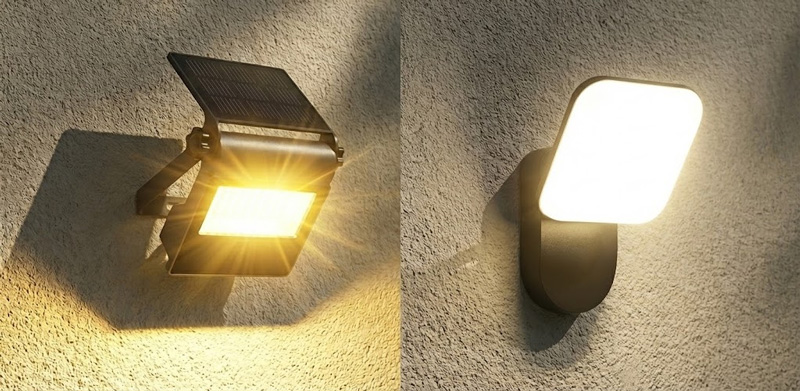
Mains-powered garden lighting draws electricity from your home’s electrical supply. In practice, this usually takes one of two forms:
- Low-voltage wired lighting (commonly 12V) powered via a transformer connected to mains. This is widely used for landscapes because it’s safer and flexible.
- Line-voltage (mains voltage) lighting where fixtures are directly wired into outdoor-rated circuits. This is more typical for architectural lighting and permanent installations, often requiring a licensed electrician.
Solar-powered garden lighting uses a photovoltaic (PV) panel to charge a battery during the day, then powers LEDs at night. Many products are “all-in-one” units with the panel, battery, LED, and control electronics integrated into a single fixture. Some higher-end systems have a remote panel for better sun capture.
This difference—grid power vs stored sunlight—drives the biggest trade-offs: consistent output vs self-contained convenience.
The Big Picture: Performance vs Convenience
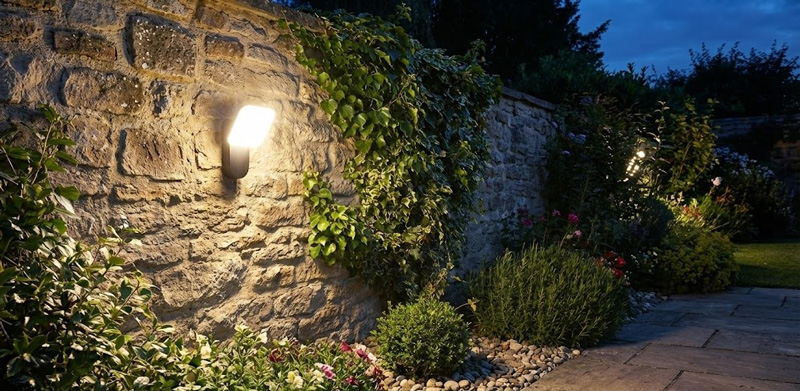
If your priority is reliable, high-quality illumination—the kind that can truly light a path, highlight trees, or support entertaining—mains-powered lighting tends to win. It provides predictable output night after night, unaffected by cloudy weather or winter daylight.
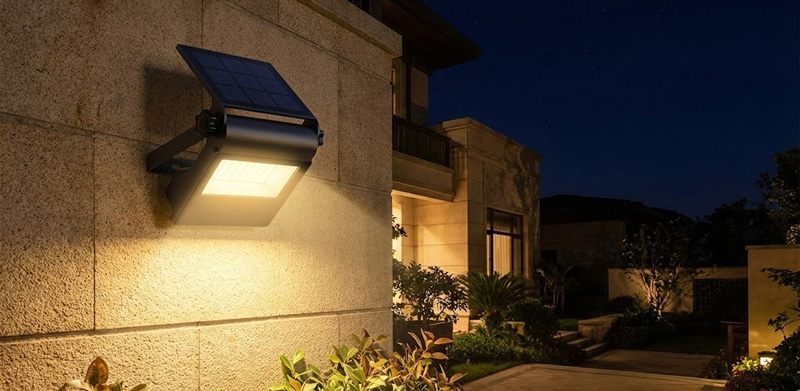
If your priority is ease, low disruption, and flexibility—especially for renters, small gardens, or areas far from the house—solar lighting is hard to beat. You can often install it in minutes with no trenching, and reposition it whenever your landscaping changes.
But the decision isn’t just about brightness. It’s also about control, safety, maintenance cycles, and total cost over the system’s life.
|
Category |
Mains-Powered (Wired) Garden Lights |
Best Fit |
|
|---|---|---|---|
|
Brightness & Beam Control |
Consistently high brightness; wide range of optics (spot, flood, wall wash). |
Generally lower brightness; optics improving but still limited at budget end. |
Mains for dramatic or functional lighting; solar for gentle accent. |
|
Reliability |
Very reliable; runs at full output regardless of weather. |
Output depends on sun exposure, season, battery health. |
Mains for critical areas (steps, driveways). |
|
Runtime |
Unlimited while scheduled; all-night lighting is easy. |
Runtime varies (often 4–10 hours); “all night” depends on battery and settings. |
Mains for long evenings; solar for shorter nightly ambiance. |
|
Control & Smart Features |
Strong support for timers, photocells, dimmers, zones, smart home integration. |
Some offer sensors/modes; fewer robust smart ecosystem options. |
Mains for advanced automation. |
|
Installation |
Requires cabling, routing, sometimes trenching; may need electrician for line voltage. |
Usually simple stake/mount; minimal tools; no wiring. |
Solar for quick DIY; mains for permanent upgrades. |
|
Upfront Cost |
Higher, especially with pro installation; fixtures often higher quality. |
Lower entry cost; premium solar systems cost more but still avoid wiring. |
Solar for budget start; mains for long-term value. |
|
Operating Cost |
Small but ongoing electricity cost. |
Essentially zero grid electricity cost. |
Solar for off-grid efficiency. |
|
Maintenance |
Occasional fixture cleaning; cable checks; transformer replacement over time. |
Battery replacements every few years; panel cleaning; winter performance management. |
Mains for low maintenance; solar if you accept battery cycles. |
|
Aesthetics & Build |
Broad design range; often heavier, more durable materials. |
Huge variety; quality varies widely; integrated designs can be sleek. |
Tie—depends on product tier. |
|
Shaded Gardens |
Works fine in shade. |
Struggles in shade unless panel can be placed in sun. |
Mains in shaded sites. |
|
Expandability |
Easy to add fixtures (especially low-voltage), but you must plan load capacity. |
Easy to add individually, but each is its own system; results can be inconsistent. |
Mains for cohesive “designed” lighting. |
Mains-Powered Garden Lights: Strengths and Limitations
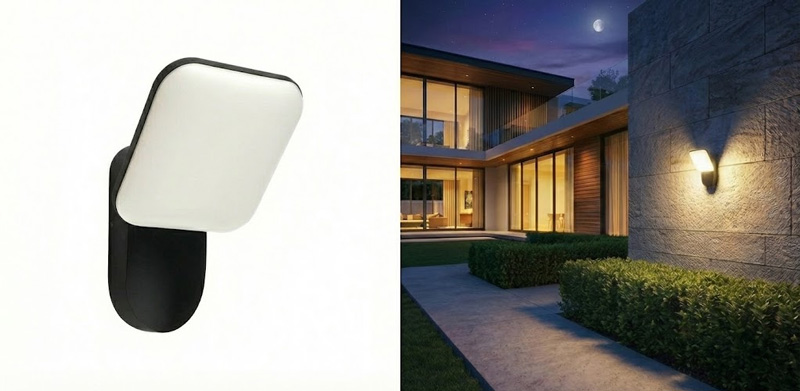
A professionally designed mains-powered system can transform a garden. It supports layered lighting—path illumination, uplighting on trees, grazing along walls, and subtle downlighting for seating areas—without constantly compromising on output or runtime.
Why mains-powered lighting often looks “more expensive”
It’s not only about brightness. Wired systems typically offer:
- Better optics: tighter spots for trees, wider floods for beds, controlled glare for paths.
- Stable color temperature: consistent warm-white tones instead of shifting color as a battery drains.
- Uniformity: multiple fixtures in a zone behave predictably (same timing, same output).
Because the power supply is steady, you can use lighting as a design material—not just as decoration.
Common advantages (quick scan)
- Consistent illumination regardless of season or weather.
- Supports true task lighting for steps, entrances, driveways, and outdoor kitchens.
- Centralized control via timers, photocells, dimming, zoning, and smart integration.
- Long-term durability (especially in higher-grade brass/aluminum/stainless fixtures).
- Better for complex layouts where many fixtures must coordinate.
Real drawbacks to consider
The downsides are mostly about setup:
- Installation complexity: routing cable, hiding runs, and sometimes trenching.
- Higher upfront cost: fixtures plus transformer plus wiring plus labor (if hired).
- Less flexible after installation: moving a fixture may require re-routing cable.
That said, low-voltage wired systems (with a transformer) are often a sweet spot: safer than line-voltage and still robust.
Solar-Powered Garden Lights: Strengths and Limitations
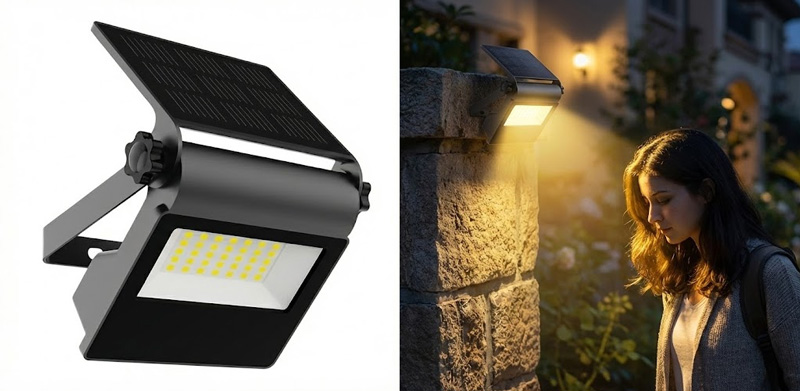
Solar lighting has improved dramatically. LEDs are more efficient, batteries are better than they used to be, and many fixtures include smart-ish modes that balance brightness and runtime. For certain goals—soft ambiance, marking borders, or lighting a distant corner without cables—solar can be the most sensible choice.
Where solar shines (literally and figuratively)
Solar lights are at their best when you want lighting that is:
- Quick to deploy
- Low commitment
- Placed far from power
- Modest in brightness
They also excel for seasonal needs—parties, holiday décor, temporary safety lighting during a renovation—because you can install and remove them without touching your home’s electrical system.
Key advantages
- No wiring: minimal disruption to paving, lawns, and planting beds.
- Easy DIY: often “stake and go.”
- Low operating cost: uses sunlight rather than grid electricity.
- Highly flexible: reposition as your landscape evolves.
- Great for remote spots: sheds, far beds, side yards.
The practical limitations professionals see most often
Solar lighting’s biggest challenges are predictable:
-
Sun exposure is non-negotiable.
Even a partial shade pattern (trees, fences, buildings) can reduce charging significantly. Winter sun angles and shorter days can make performance drop precisely when you want lighting most. -
Battery lifecycle is real.
Rechargeable batteries degrade over time. The fixture may still “work,” but runtime and brightness often decline after a couple of years depending on battery type, temperature swings, and charging conditions.
See also: Solar Powered Garden Lights Battery Life: How Long Does It Last?
-
Brightness and control vary wildly by product tier.
Budget solar lights can look uneven: different color tones, inconsistent activation times, and “dots of light” rather than shaped illumination.
None of these are deal-breakers; they just mean solar should be chosen intentionally, not as a default.
Lighting Quality: The Part Most Buyers Underestimate
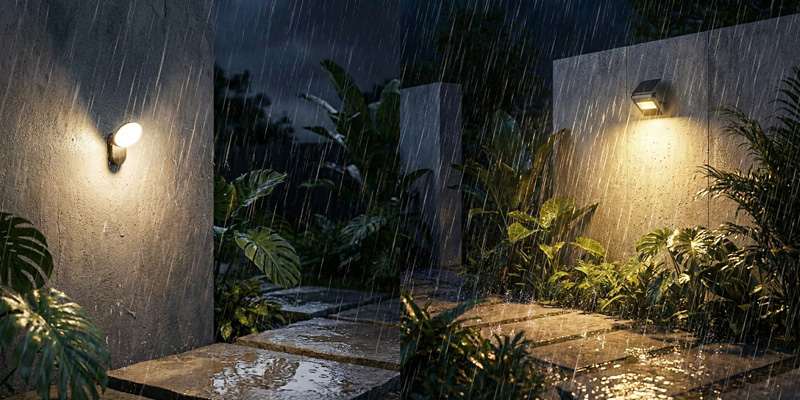
When people feel disappointed by outdoor lighting, it’s rarely because the fixture was “ugly.” It’s usually because the lighting effect wasn’t planned.
Mains-powered systems are more capable of producing “designed light”:
- Uplight a tree canopy without harsh glare
- Wash a textured wall for depth
- Create consistent path lighting with controlled spill
Solar systems often deliver “presence light”:
- A gentle glow that marks edges
- A decorative highlight
- A small pool of light near the fixture
Neither is inherently better—what matters is matching the effect to the purpose.
Cost: Upfront vs Total Cost of Ownership
A common misconception is that solar is always cheaper. It can be cheaper initially, but the long-term picture depends on quality and replacement cycles.
Mains-powered cost profile
- Higher upfront: transformer, cable, fixtures, installation
- Lower replacement frequency if you buy durable fixtures
- Small ongoing electricity cost
Solar-powered cost profile
- Low entry cost for basic sets
- Potential recurring costs: battery replacements, occasional fixture replacement when seals fail
- Near-zero electricity cost
If you expect to keep your garden design stable for years and want consistent performance, mains often delivers better long-term value. If you’re experimenting, renting, or only need subtle lighting, solar is usually the most cost-effective path.
Safety and Compliance: Don’t Skip This Part
For line-voltage outdoor wiring, regulations and safety standards matter. Water, soil, and outdoor exposure raise the stakes, and in many places a licensed electrician is required for certain work.
For low-voltage mains-powered systems, safety is generally better, but you still need:
- Outdoor-rated cable and connectors
- Proper transformer sizing and weatherproof placement
- Thoughtful routing to avoid garden tools and future digging
For solar, electrical hazards are minimal, but there are still concerns:
- Poor-quality fixtures can allow moisture intrusion, leading to corrosion and early failure
- Cheap plastic stakes can become brittle and snap, leaving sharp pieces in soil
- Glare can still be an issue if fixtures are placed at eye level near seating
Decision Guide: Which Should You Choose?
Here’s a professional, practical way to decide—based on use case, not ideology.
Choose mains-powered if you want:
- Strong, reliable illumination for paths, steps, entrances, driveways
- Consistent “designed” lighting for trees, walls, architectural features
- All-night runtime without brightness drop
- Centralized control (timers, dimming, zones, smart home)
- A permanent upgrade that increases perceived property quality
Choose solar-powered if you want:
- Quick installation with no trenching or wiring
- Lighting in areas far from the house
- Flexibility to move fixtures as planting plans change
- Low operating costs and minimal commitment
- Subtle accent lighting rather than task lighting
Often the best answer is: a hybrid
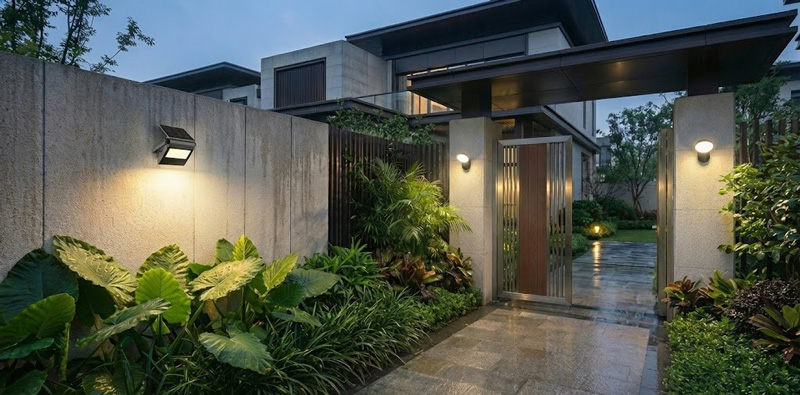
Many well-lit gardens use both:
- Mains-powered for the “spine” of the property: steps, paths, entrance, key trees.
- Solar for secondary accents: border markers, occasional highlights, remote corners.
This hybrid approach gives you reliability where it matters and convenience where it’s smartest.
Installation and Design Tips (A Mix of Practical Bullets and Pro Advice)
A few principles will improve results no matter what you choose:
- Prioritize glare control. More light is not always better. Poorly aimed fixtures ruin outdoor comfort.
- Use warm color temperatures (often in the warm-white range) for a natural, welcoming look—especially near plants and stone.
- Think in layers: path + feature + ambient. A single type of light everywhere looks flat.
- Plan maintenance access. Even solar panels need occasional cleaning; wired fixtures may need aiming adjustments after landscaping changes.
For solar specifically:
- Place solar panels where they get the most direct sun, not where the light needs to be.
- Consider fixtures with replaceable batteries, not sealed units—this extends usable life.
- In winter or shaded gardens, select modes that prioritize runtime over peak brightness.
For mains-powered specifically:
- Avoid “too few, too bright.” More fixtures at lower intensity usually looks more professional.
- Leave capacity in the transformer for future expansion.
- Use quality, weatherproof connectors—many outdoor issues come from poor connections, not the LEDs.
How can I tell whether a solar garden light is genuinely bright enough or mainly decorative?
Do not rely on marketing terms such as “super bright.” Focus on measurable specifications and how the light is delivered.
- Lumens (lm): Indicates total output but does not guarantee useful light on the ground.
- Beam angle and optics: Narrow beams suit accent lighting, while wider beams improve uniformity on paths.
- Lux data: Products that provide lux-at-distance or photometric curves are more trustworthy than lumen-only claims.
- Output regulation: Many solar lights start bright and step down later at night to preserve runtime.
For safety-critical areas such as steps or entrances, prioritize solutions with consistent output—often wired systems or premium solar units with verified photometrics.
Why do solar garden lights perform worse in winter or during long cloudy periods?
Solar lighting is governed by an energy budget: reduced sunlight means less stored energy, and cold temperatures can lower battery efficiency.
Practical improvements:
- Place panels for maximum sun exposure; consider remote or adjustable panels in shaded gardens.
- Choose adaptive brightness modes that reduce output to extend runtime.
- Select products with replaceable batteries and clear battery specifications.
If your site has persistent shade or limited winter sun, a wired low-voltage system is usually the more reliable option.
For wired systems, should I choose low-voltage or line-voltage outdoor lighting?
Most residential landscape lighting performs best with low-voltage systems using a transformer and low-voltage cabling.
- Low-voltage (commonly 12V): Safer, easier to expand, and well suited to paths, uplights, and layered designs.
- Line-voltage (mains): More permanent electrical work, often requiring professional installation and stricter compliance.
Low-voltage wired lighting is generally the best balance of safety, flexibility, and design control. Line-voltage is best reserved for specific architectural or code-driven applications.
Why do some garden lights look glaringly bright, yet the path is still poorly lit?
This is typically caused by glare combined with poor beam control. The eye sees a bright source, but little light reaches the walking surface.
How to fix it:
- Use glare-controlled fixtures with shields, louvers, or deep-set LEDs.
- Aim light at surfaces such as paths, walls, or foliage, not toward eye level.
- Use more fixtures at lower output rather than a few overpowering lights.
This principle applies to both solar and wired lighting, though wired systems typically offer better optical control.
How should I compare long-term costs fairly, not just purchase price?
Compare options using a total cost of ownership (TCO) approach over the expected service life.
Mains-powered lighting: Higher upfront cost, but longer-lasting components, stable output, and modest ongoing energy costs.
Solar-powered lighting: Lower entry cost, but account for battery replacements, weathering, and potential performance decline.
If you need consistent nightly lighting, wired systems often win on long-term value. For flexibility, quick installation, or hard-to-wire areas, high-quality solar systems can be the more economical choice.
