
How Solar Lights Actually Work (and What They Really Need)
Direct Sunlight vs. Indirect Light: What’s the Difference for Performance?
How Much Sun Do Solar Lights Need?
Why Some Solar Lights “Work in Shade” Better Than Others
Placement Matters More Than People Expect
A Professional Way to Evaluate Your Location: “Light Budgeting”
Bullet-Style: Practical Tips to Get Better Results Without Relocating Everything
When Direct Sunlight Really Is Necessary
Bullet-Style: Myths That Cause Confusion
Choosing the Right Solar Light for Your Sun Conditions
FAQs
Solar lights feel almost magical: you stake them into the ground or mount them to a wall, and night after night they glow without wiring or an electric bill. But that “magic” is really a straightforward energy system—one that depends on how much light the solar panel can capture during the day. So do solar lights have to have direct sunlight? The most accurate answer is: they don’t strictly require direct sunlight to work, but they perform best with it. In low-light conditions they may still charge, just not as fully, which usually means dimmer output, shorter runtime, or inconsistent performance.
To understand why, it helps to look at what’s inside a typical solar light and what “sunlight” really means in practical terms.
How Solar Lights Actually Work (and What They Really Need)
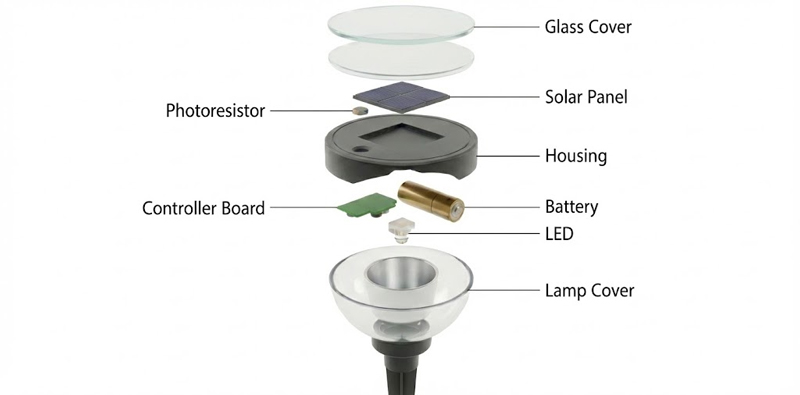
Most solar lights contain four core components:
- Solar panel (photovoltaic cells) that converts light into electricity
- Rechargeable battery that stores electricity for nighttime use
- Charge controller / circuitry that manages charging and prevents overcharge
- LED lamp + light sensor that turns the light on at dusk and off at dawn
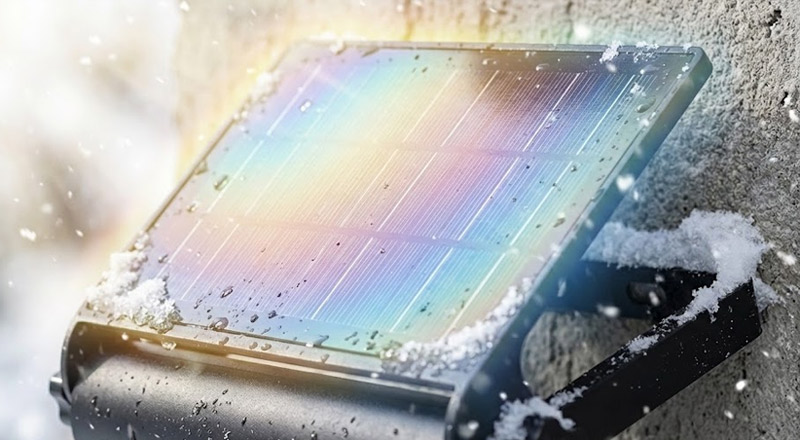
The solar panel does not “store sunlight.” It converts light—photons—into electrical current. That means solar lights can charge from any sufficiently bright light source, including sunlight filtered through clouds, reflected light, or even strong artificial lighting. The catch is that the amount of electricity generated depends heavily on light intensity and duration.
Direct sunlight is simply the most intense, most energy-dense light source most solar lights will ever see. If your panel receives several hours of unobstructed sun, it can typically recharge the battery to near full capacity. If the panel only gets weak or intermittent light, it may still charge—but the battery may never reach a full state of charge.
Think of it like filling a bucket with water. Direct sunlight is a wide-open faucet. Indirect light is a trickle. Both fill the bucket, but one is much faster, and the trickle may not keep up with what you’re trying to use at night.
Direct Sunlight vs. Indirect Light: What’s the Difference for Performance?
Model: Lumetro LM-SL-904
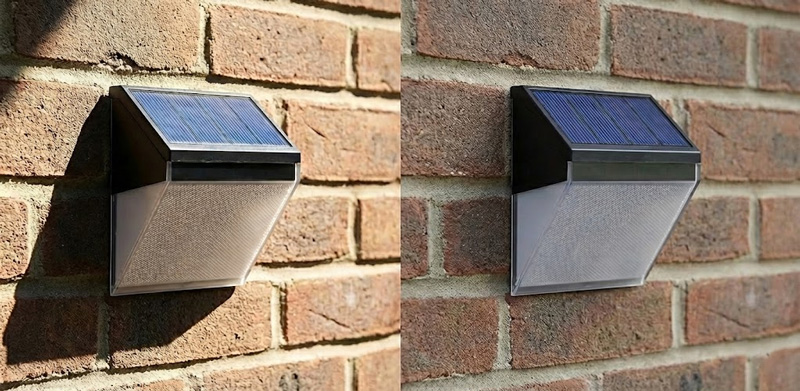
Direct sunlight means the sun’s rays hit the panel without obstruction—no shade from buildings, trees, fences, overhangs, or heavy cloud cover (light clouds still allow some direct radiation). This usually delivers the highest charging current.
Indirect sunlight (or diffuse light) happens when sunlight is scattered by clouds, haze, or reflected off surfaces before reaching your panel. The panel still receives light, just at a lower intensity. That typically translates to:
- Slower charging throughout the day
- Lower total energy stored in the battery
- Shorter operating time after dark
- Dimmer brightness or earlier “step-down” to low mode (on lights with brightness control)
Many modern solar lights are designed to be tolerant of imperfect light—because real yards, balconies, and pathways are rarely perfect solar labs. However, “tolerant” does not mean “immune.” If a solar light is consistently undercharged, it will behave like any underpowered device: it will either run briefly, run dimly, or not run reliably.
How Much Sun Do Solar Lights Need?
Manufacturers often advertise numbers like “8–10 hours of light on a full charge,” but those claims usually assume a certain amount of charging. In everyday conditions, what matters most is the concept of total daily light energy.
A useful way to think about it:
- If your solar panel gets several hours of strong sun (often 4–6 hours of good sun), you’ll usually get solid performance.
- If it gets only partial sun (for example, morning sun but shade in the afternoon), performance can be okay, especially in summer.
- If it gets mostly shade with only bright ambient light, it may still work but usually with reduced runtime and brightness.
- If it gets deep shade (like under dense tree cover or on a north-facing wall in winter), many lights will struggle.
Season and latitude matter too. In winter, the sun is lower in the sky, days are shorter, and panels can spend more time in shadow. That’s why a solar light that worked great in July might disappoint in December—even in the same location.
Why Some Solar Lights “Work in Shade” Better Than Others
Not all solar lights are built the same. Their ability to perform without direct sunlight depends on design choices:
- Solar panel size and efficiency: Larger panels capture more light, and higher-efficiency cells convert a bigger fraction into electricity.
- Battery capacity and chemistry: Higher capacity means more stored energy, but it also may require more sunlight to fully charge. Lithium-ion and LiFePO₄ batteries tend to handle cycling and partial charging better than older NiMH in many products (though implementation quality varies).
- LED efficiency and power draw: A light that consumes less power can run longer on the same stored energy.
- Power management: Better lights regulate brightness and can “step down” output to stretch runtime when charge is low.
- Panel orientation and mounting: A remote panel that can be aimed at the sun often outperforms a fixed, integrated panel trapped in shade.
So if one brand “works fine” in a semi-shaded spot while another doesn’t, it’s often not a mystery—it’s differences in panel area, battery capacity, and circuitry.
Placement Matters More Than People Expect
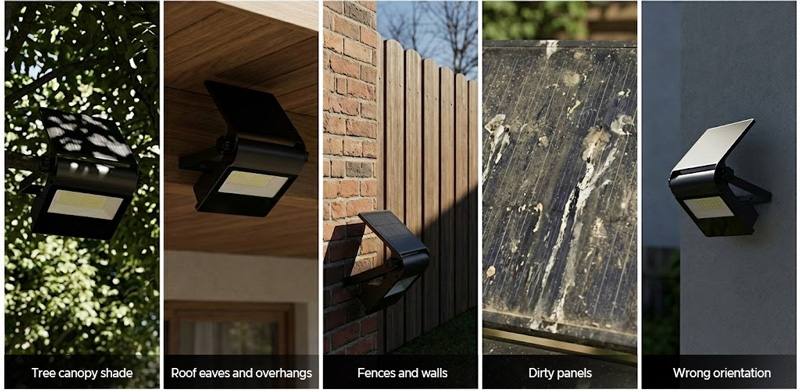
A solar light doesn’t just need sunshine—it needs sunshine on the panel, not on the lamp head. Many people focus on where they want light at night and forget that the panel needs daylight exposure. This is especially important for integrated units (where the panel sits on top of the fixture).
Here are some real-world placement factors that commonly reduce charging:
- Tree canopy shade: Leaves create moving shadows all day long; the panel may never get sustained high-intensity light.
- Roof eaves and overhangs: Even small overhangs can block midday sun when the sun is higher.
- Fences and walls: They cast long shadows, especially in winter.
- Dirty panels: Dust, pollen, bird droppings, and grime can reduce panel output more than you’d think.
- Wrong orientation: A panel facing away from the sun’s strongest path will underperform.
If you can optimize only one thing, optimize exposure. Even moving a light a few feet can change it from “always dim” to “works all night.”
A Professional Way to Evaluate Your Location: “Light Budgeting”
If you want a more technical perspective, treat your setup like an energy budget:
- Energy in = panel output × hours of useful light
- Energy stored = what the battery can accept (and how efficiently it charges)
- Energy out = LED power draw × hours of operation
When your panel sits in shade, “energy in” drops sharply. The LED load at night doesn’t care—it still draws what it draws. The result is shorter runtime. Better solar lights manage this by reducing LED power or using motion sensors so the light is dim most of the time and bright only when needed.
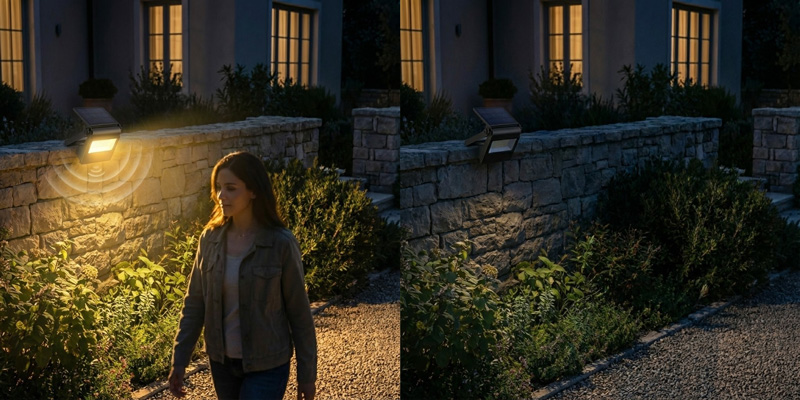
That’s why motion-sensor solar lights are often the best choice for marginal sunlight locations: they’re designed around a lower average energy demand.
Bullet-Style: Practical Tips to Get Better Results Without Relocating Everything
If your solar lights can’t get perfect sun, you can still improve outcomes:
- Clean the solar panel gently every few weeks (more often in dusty or pollen-heavy seasons).
See also: How to Clean Garden Lights?
- Trim back branches or reposition around predictable shadow lines.
- Avoid placing panels where they’ll be shaded during the strongest sun hours (often late morning to mid-afternoon).
- If your light has modes, use a lower brightness setting or “energy-saving” mode.
- Consider solar lights with separate/remote panels so the panel can be placed in sun while the lamp stays where you need it.
- Use motion-sensor models in shaded areas to reduce total nightly energy consumption.
- Replace the rechargeable battery if the unit is a year or two old and performance has declined (many use standard sizes, though quality varies).
See also: Solar Powered Garden Lights Battery Life: How Long Does It Last?
When Direct Sunlight Really Is Necessary
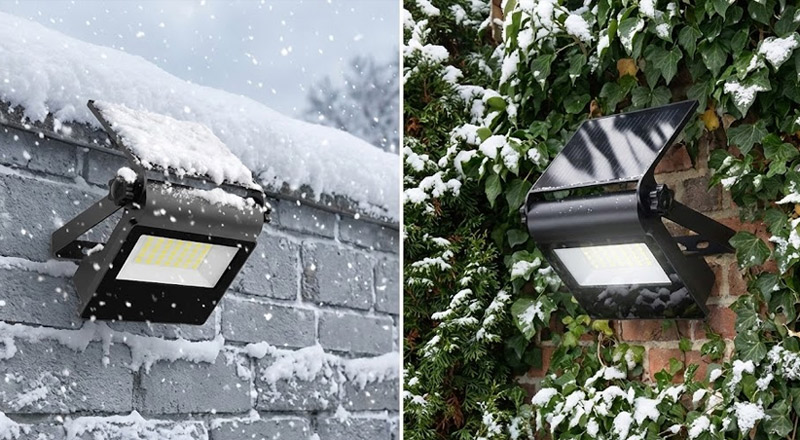
There are situations where indirect light simply won’t cut it:
- High-lumen solar floodlights meant to mimic wired security lights
- Decorative lights expected to run all night at consistent brightness
- Winter operation at higher latitudes, where daily sunlight energy is low and shadows are long
- Deep shade environments (north-facing walls, under dense evergreen trees, narrow alleys between buildings)
In these cases, you either need a much larger panel, a larger battery system, a hybrid solution (solar + plug-in), or a design with a remote panel.
Bullet-Style: Myths That Cause Confusion
- Myth: “If it’s daytime, it’s charging.”
Reality: The panel may be producing very little in shade or low sun angles.
- Myth: “A bigger battery always means better.”
Reality: A bigger battery helps only if you can charge it. Otherwise it may stay partially charged.
- Myth: “Solar lights don’t work in winter.”
Reality: They can work in winter, but charging is harder. Better placement, cleaner panels, and efficient designs make a big difference.
- Myth: “Any outdoor light will charge them.”
Reality: Artificial light can contribute a bit, but most setups won’t provide enough intensity for a full charge.
Choosing the Right Solar Light for Your Sun Conditions
Model: Lumetro LM-SL-904
If you get strong sun, most decent solar lights will perform well. If you have partial sun or mixed shade, prioritize designs that are forgiving:
- Larger or higher-quality panels
- Efficient LEDs with lower power draw
- Smart dimming or multi-mode control
- Motion sensor operation for security use
- Remote panel options for tricky placement
Also pay attention to realistic expectations. Many pathway lights are designed to provide ambiance, not stadium-level illumination. If you want true functional lighting (for safety, stairs, or security), look for solar fixtures explicitly rated for higher brightness and verify that your panel placement can support that demand.
FAQs
Do solar lights need direct sunlight?
No. Solar lights do not strictly require direct sunlight, but direct sun provides the most efficient charging.
Indirect daylight can still charge the battery, though performance and nighttime runtime will usually be reduced.
Will solar lights charge on cloudy days?
Yes. Solar panels continue to generate power under cloud cover.
However, reduced light intensity means charging is slower and the battery may not reach full capacity.
Will solar lights charge in the shade?
Sometimes. Bright or open shade can provide limited charging.
Deep or continuous shade usually results in poor charging and short nighttime runtime.
Will solar lights charge from outdoor artificial lighting?
Some solar lights may respond slightly to strong artificial light sources.
However, most consumer solar panels charge far less effectively under porch or street lighting than under natural sunlight.
Artificial light may provide minimal assistance, but it is rarely a meaningful substitute for solar exposure.
Why do my solar lights only run for 1–2 hours at night?
The most common causes include:
Insufficient daytime charging due to shade, winter sun angle, or a dirty panel.
An aging or degraded battery that no longer holds full capacity.
A high-brightness operating mode that drains stored energy quickly.