

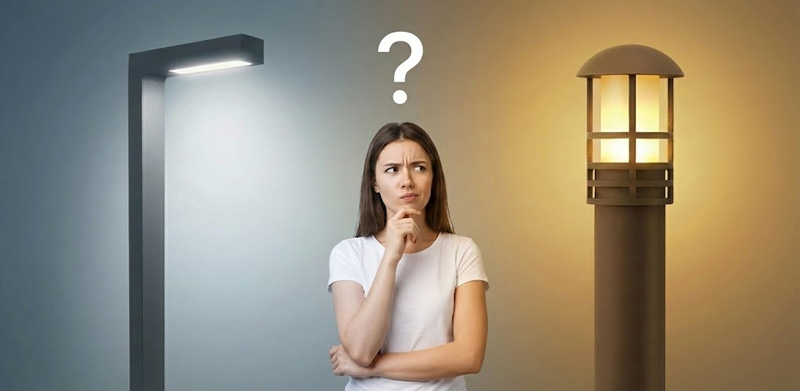
Understanding the Two Systems
Side-by-Side Comparison Table
Deep Dive: Key Decision Factors
Practical Guidance
A Simple Decision Framework
FAQs
Outdoor lighting looks simple—put lights along a path, plug them in, enjoy the glow. In reality, choosing between low voltage pathway lights (most commonly 12V) and high voltage lighting (typically 120V in North America, 230V in many other regions) shapes everything: safety, installation complexity, brightness options, long-term maintenance, expandability, and even how “premium” the final result feels at night.
Both systems can create beautiful outdoor environments. The “better” choice depends on what you’re lighting (a short garden path vs. a long driveway), how much DIY you want to do, local electrical codes, and your tolerance for troubleshooting later. This article breaks down both approaches in practical terms—what you gain, what you risk, and how to decide.
Understanding the Two Systems
What Low Voltage Pathway Lighting Really Is
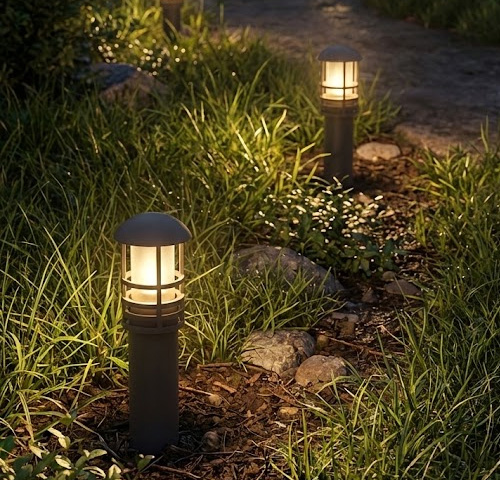
Low voltage pathway lights use a step-down transformer to convert household line voltage to a safer, lower voltage (usually 12V AC or DC). The fixtures connect via low voltage cable—often laid shallowly under mulch or soil. Because the voltage is low, the risk of dangerous shock is dramatically reduced, which is a major reason low voltage dominates landscape lighting for homes.
Low voltage systems are also modular. You can add fixtures later, move them, or redesign the layout without tearing open walls or running conduit in many cases. For many homeowners, that flexibility is the difference between “I’ll do it this weekend” and “I need an electrician and permits.”
That said, low voltage has one technical “gotcha” that shows up in real yards: voltage drop. Long cable runs or too many fixtures on one line can cause the lights near the end of the run to look dimmer. This doesn’t mean low voltage is inferior—only that layout and transformer sizing matter.
What High Voltage Outdoor Lighting Means
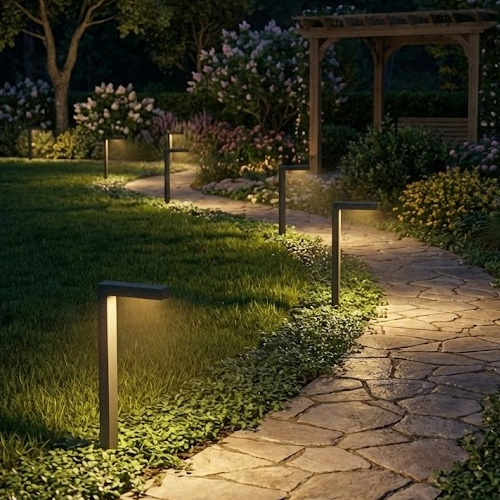
High voltage outdoor lighting connects directly to your home’s line voltage. That includes traditional wired landscape fixtures, many wall-mounted exterior lights, and some hardwired path or area lighting systems. Because high voltage carries more power, it can support long runs with less concern about voltage drop and may be appropriate for large properties, commercial spaces, or very bright area
lighting.
High voltage installations tend to require more formal electrical work: conduit, junction boxes, GFCI protection where required, and compliance with local electrical code. In many regions, this means hiring a licensed electrician. The benefit is a system that can be extremely robust, especially for permanent fixtures that won’t be moved.
However, “more robust” comes with trade-offs: higher shock hazard, more complicated repairs, and less flexibility if you change your landscaping later.
The Real-World Difference: It’s Not Just Voltage—It’s the Experience
Most people don’t pick lighting based on voltage—they pick based on outcomes:
- Do you want a soft, inviting path glow that highlights texture and planting?
- Do you need functional brightness for security and visibility?
- Do you want to install it yourself or keep it “set-and-forget” with professional work?
Low voltage pathway lights typically excel in aesthetic landscape lighting and DIY-friendly upgrades. High voltage often excels in permanent, high-output, long-run applications—but with more upfront complexity.
Side-by-Side Comparison Table
| Factor | Low Voltage Pathway Lights (Typically 12V) | High Voltage Outdoor Lighting (Typically 120V/230V) |
|---|---|---|
| Safety | Generally safer; lower shock risk | Higher shock risk; strict safety practices needed |
| Installation | Often DIY-friendly; shallow burial cable common | Usually requires electrician, conduit, junction boxes |
| Code/Permits | Often simpler (varies by region) | More likely to require permits/inspection |
| Flexibility | Easy to expand, reposition, or redesign | Less flexible once hardwired |
| Voltage Drop | Can dim on long runs unless designed well | Minimal voltage drop issues on long runs |
| Upfront Cost | Transformer cost + fixtures; labor often lower | Higher labor costs; materials (conduit/boxes) add up |
| Long-Term Reliability | Very good if designed well; transformer is a key component | Very robust; fewer “system” components like transformers |
| Maintenance | Easy fixture swaps; troubleshooting can involve transformer/wiring layout | Repairs can be more technical and safety-critical |
| Best For | Paths, gardens, patios, accent lighting, most homes | Large properties, commercial sites, bright permanent lighting |
| Brightness Options | Excellent with LEDs; usually “softer” landscape feel | Wide range including very bright area lighting |
| Energy Efficiency | Excellent with LED fixtures | Also excellent with LED fixtures (efficiency depends on fixture) |
| Lighting Control | Timers, photocells, smart transformers available | Smart switches, hardwired controls, advanced integration possible |
Deep Dive: Key Decision Factors
1) Safety and Peace of Mind
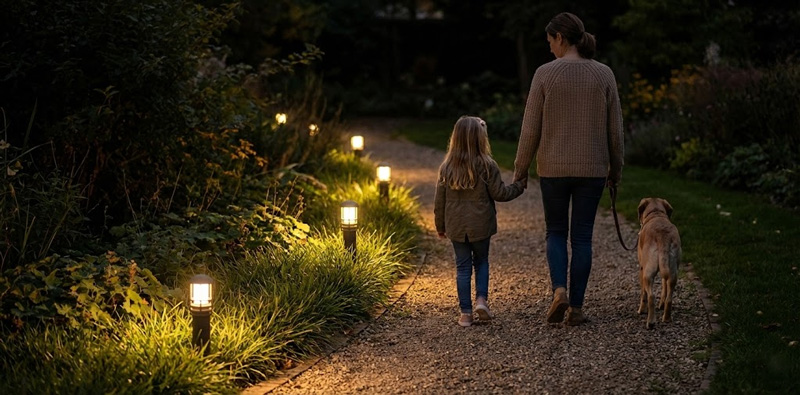
If you have kids, pets, frequent guests, or you simply want the lowest risk solution, low voltage is hard to beat. A severed low-voltage cable is still a problem, but it’s typically less dangerous than damaged line-voltage wiring. For homeowners who like to garden, dig, and change things, low voltage offers “forgiveness.”
High voltage can be perfectly safe when correctly installed—professionals do it every day. The issue is that the margin for error is smaller. Improper connections, water ingress, or damaged conduit can create serious hazards.
2) Installation Complexity and Who Should Do the Work
Low voltage pathway systems are commonly installed by homeowners because they often involve:
- Mounting a transformer near an outlet
- Running low-voltage cable
- Making waterproof connections
- Placing fixtures and testing at night
High voltage typically means a more formal electrical project. If you want wall-mounted lights, pole lights, or permanent fixtures tied into a circuit, high voltage may be the standard approach. But for simple pathway lighting, it can be overkill unless you have special requirements.
3) Brightness, Ambience, and Glare Control
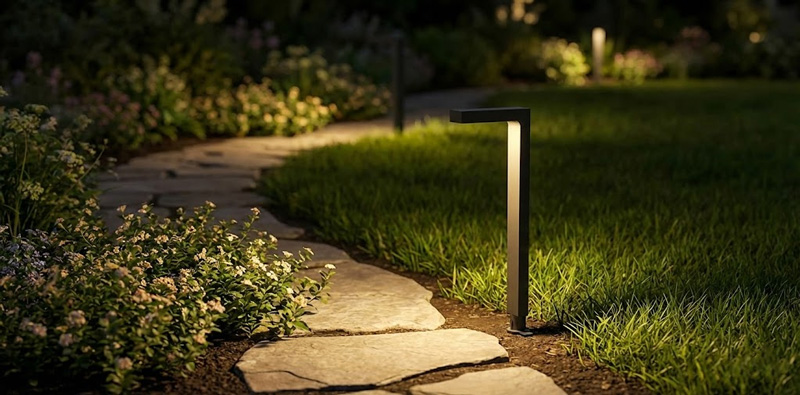
Pathway lighting isn’t supposed to behave like stadium lights. The best designs aim for visual guidance and warm ambience—enough to see the path edges without harsh glare.
Low voltage pathway fixtures are often designed specifically for this: shielded light, lower mounting heights, and softer distribution. High voltage fixtures can also be designed well, but many high-output options make it easier to accidentally create glare, harsh shadows, or “runway” lighting that looks commercial rather than residential.
4) System Design: The Transformer Question
Low voltage requires a transformer, and the transformer is both a feature and a dependency. A good transformer adds:
- Timer and photocell automation
- Zone control
- Dimming options
- Sometimes smart/app control
But it’s also one more component that can fail. Choosing a quality transformer and avoiding overload is crucial.
High voltage doesn’t need a transformer for the whole system, but LED fixtures may include drivers internally. Either way, electronics exist—just distributed differently.
5) Scaling Up and Adding More Lights Later
If you’re the type of person who will keep upgrading landscaping, low voltage wins on adaptability. Want to add three more fixtures next season? Typically you can extend a line or add a new run.
High voltage expansions often mean new conduit runs, more junction work, and possibly a new circuit depending on load and layout.
6) Performance on Long Runs and Large Properties
This is where high voltage can shine. For long driveway lighting, large estates, or commercial pathways, low voltage can still work—but it demands better planning: heavier gauge cable, multiple home runs, or multiple transformers/zones to avoid dim ends.
High voltage is naturally suited to long distances with fewer brightness consistency issues.
Practical Guidance
Choose Low Voltage Pathway Lights if you want:
- A DIY-friendly installation with minimal specialized tools
- Safer handling around gardens, pets, and frequent digging
- A soft, landscape-focused aesthetic (guidance lighting, not floodlighting)
- Easy expandability over time (add, move, redesign)
- Strong compatibility with timers, photocells, and smart transformers
- Lower labor cost (especially if you’re doing it yourself)
Common low-voltage mistakes to avoid:
- Overloading the transformer (no headroom for future expansion)
- Using thin cable for long runs → dim lights at the end
- Poor waterproof connections that corrode over time
- Installing lights too close together → “airport runway” look
- Aiming for brightness instead of visual comfort (glare ruins good design)
Choose High Voltage Outdoor Lighting if you need:
- Long-distance runs (large properties) with consistent output
- Permanent, hardwired fixtures intended to stay put for years
- Higher-output applications (some area lighting/security scenarios)
- A system designed and installed to meet strict code requirements
- Integration into existing exterior circuits and structured controls
Common high-voltage pitfalls to avoid:
- DIY wiring without code knowledge (this is where problems start)
- Inadequate waterproofing/gaskets and poor junction box practices
- Not using proper GFCI protection where required
- Underestimating how hard it is to move fixtures later
- Over-lighting: brighter isn’t always safer or more attractive
A Simple Decision Framework
If your goal is beautiful residential pathway lighting
- Default answer: Low voltage pathway lights
- Why: safer, easier, more flexible, and designed for the “landscape look”
If your goal is a long driveway or large property path
1. Consider:
- High voltage (professional installation) or
- Low voltage with heavier cable + multiple runs/transformers
2. Practical rule: if runs are long and you want consistent brightness with minimal planning, high voltage can be simpler—provided you’re comfortable with professional work.
If your goal is security lighting
1. You might use both:
- High voltage wall lights/floods for functional illumination
- Low voltage for path guidance and aesthetics
2. Security lighting is usually better as layered lighting rather than a single “super bright” approach.
If you want smart control
- Low voltage systems can be very smart via transformer-based control
- High voltage can be very smart via switches, relays, and home automation
- Decide based on what you already use: smart outdoor transformer vs. smart circuit control.
FAQs
Can low voltage and high voltage outdoor lighting be used together in the same project?
Yes. Hybrid lighting systems are common in well-designed outdoor projects.
High voltage lighting is often used for fixed architectural elements such as wall-mounted fixtures, garage lights, and tall poles.
Low voltage lighting is typically used for pathway guidance and landscape accents.
The key requirement is to keep the circuits completely separate and ensure each system meets its own safety and electrical code requirements.
How does climate affect the performance of low vs. high voltage outdoor lighting?
Climate has a major influence on long-term performance.
In areas with heavy rain, snow, or freeze–thaw cycles, low voltage systems often perform better because their wiring tolerates moisture and minor ground movement more easily.
High voltage systems rely on sealed conduit and junction boxes; when moisture enters, failures can be more severe and repairs more complex.
Overall reliability depends more on fixture quality and waterproofing than voltage alone.
Which system offers better long-term cost efficiency?
For most residential installations, low voltage systems tend to have lower lifetime costs.
While transformers may eventually need replacement, fixtures and layout changes are relatively inexpensive.
High voltage systems may be durable, but labor costs for repairs or modifications are significantly higher.
Over a 10–15 year period, flexibility often outweighs initial durability.
Does voltage choice affect light color consistency and quality?
Voltage alone does not determine color quality, but system stability does.
Poorly designed low voltage systems may experience brightness variation that subtly affects perceived color consistency.
High voltage systems generally deliver uniform power over long distances.
With modern LED drivers and proper low voltage design, excellent color consistency is achievable in both systems.
Are low voltage pathway lights suitable for professional or commercial landscapes?
Yes, when engineered correctly.
Many commercial environments such as hotels, resorts, campuses, and public walkways use low voltage systems with multiple transformers, zoning, and heavier-gauge cable.
The idea that low voltage lighting is only for residential use is outdated.
System design, load calculation, and fixture quality matter far more than voltage classification.