
What the First Digit “6” Means: Complete Dust Protection
What the Second Digit “5” Means: Water Jets, Not Submersion
Why IP65 Can Still Fail in Real Gardens
Comparing IP65 with Other Outdoor IP Ratings
Ideal Applications for IP65 Garden Lights
Situations Where IP65 Is Not Enough
Common Misconceptions About IP65
Installation Tips to Get the Best Performance from IP65
FAQs
When shopping for garden lights—such as pathway lights, bollards, spotlights, wall-mounted fixtures, or landscape accent lights—you will almost certainly encounter the term IP65 waterproof. It appears frequently in product descriptions and specifications, often presented as a guarantee of durability and outdoor reliability.
However, while “waterproof” is commonly used as a marketing term, IP65 is a technical classification, and misunderstanding it can lead to incorrect installation choices, water damage, or premature product failure. One of the most common mistakes is assuming that IP65-rated garden lights can be submerged in water. They cannot.
Understanding IP Ratings: Two Digits, Two Types of Protection
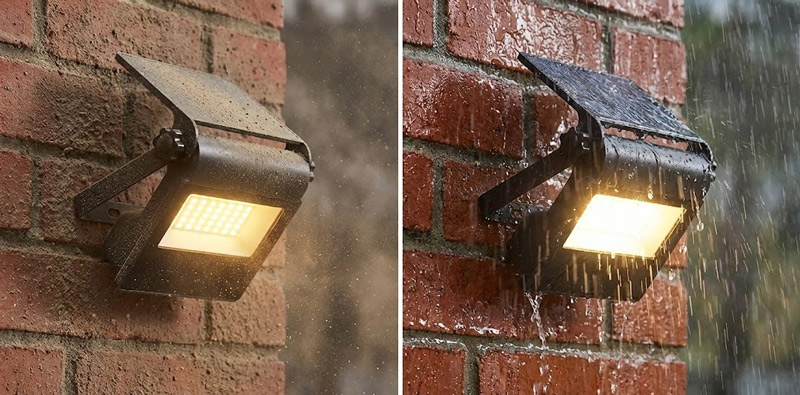
An example shown in the figure: Lumetro LM-SP04 Model.
IP stands for Ingress Protection, a standardized system used to describe how well an enclosure protects internal components from external elements. An IP rating always consists of two digits, and each digit has a distinct meaning.
- The first digit indicates protection against solid objects, such as dust, sand, and debris.
- The second digit indicates protection against water in various forms, such as rain, splashes, sprays, or immersion.
Because these two protections are tested separately, it is incorrect to think of IP65 as a single, general “waterproof score.”
What the First Digit “6” Means: Complete Dust Protection
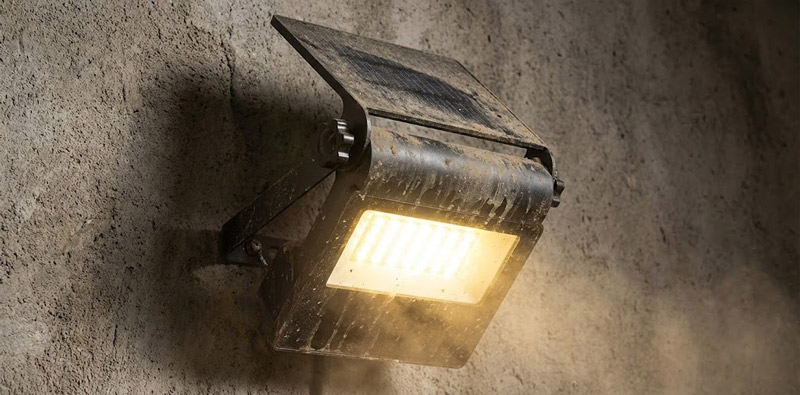
In an IP65 rating, the first digit is 6, which is the highest possible level of protection against solid particles.
This means the enclosure is considered dust-tight. Under test conditions, dust is prevented from entering the fixture in quantities that could interfere with normal operation.
For garden lights, this is especially important. Outdoor environments expose fixtures to soil, sand, pollen, leaves, insects, fertilizer residue, and airborne debris. Over time, dust ingress can degrade optical performance, trap moisture, and accelerate corrosion. A dust-tight enclosure significantly improves long-term reliability.
What the Second Digit “5” Means: Water Jets, Not Submersion
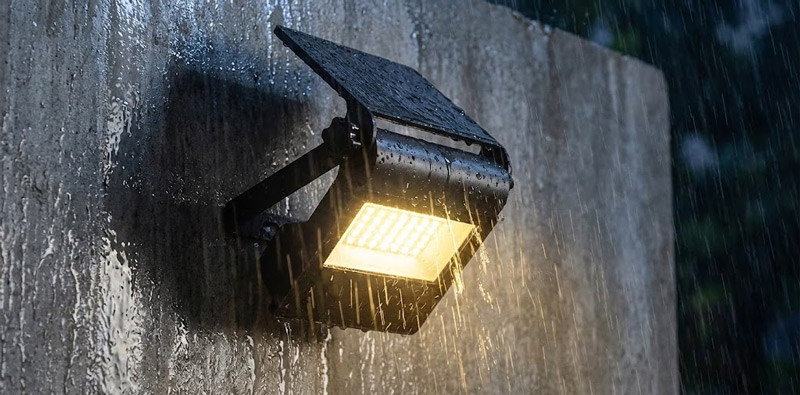
The second digit in IP65 is 5, and this is where most misunderstandings occur.
A water protection level of 5 means the product is resistant to water jets projected from any direction. In practical terms, this includes:
- Rainfall, including wind-driven rain
- Sprinkler systems
- Splashes from the ground or nearby surfaces
However, IP65 does not mean the product can be submerged in water. It is not designed to withstand continuous contact with water or the pressure created by immersion, even at shallow depths.
A helpful way to remember this distinction is:
- IP65 = suitable for rain and splashing
- IP67/IP68 = suitable for immersion
Rain and immersion are fundamentally different conditions, both in water pressure and in how moisture attempts to enter an enclosure.
Why IP65 Can Still Fail in Real Gardens
Even when a product meets IP65 requirements, water-related failures can still occur if the fixture is used outside its intended conditions.
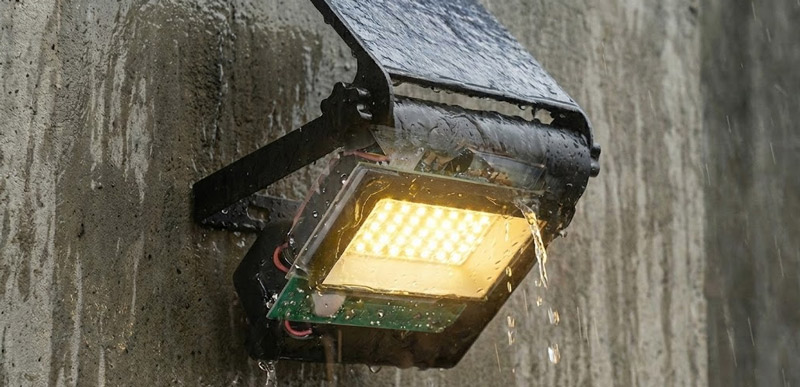
Real-world gardens introduce factors that standardized tests do not fully replicate:
- Standing water creates constant pressure against seals, which IP65 does not address
- Poor drainage can cause fixtures to sit in water after heavy rain
- Temperature changes can cause internal air expansion and contraction, stressing gaskets
- Aging seals may lose elasticity over time
- Improper installation can compromise cable glands or gasket alignment
When water enters an IP65-rated light under these conditions, it does not necessarily mean the product is defective. It often means the application exceeded what IP65 is designed to handle.
Comparing IP65 with Other Outdoor IP Ratings
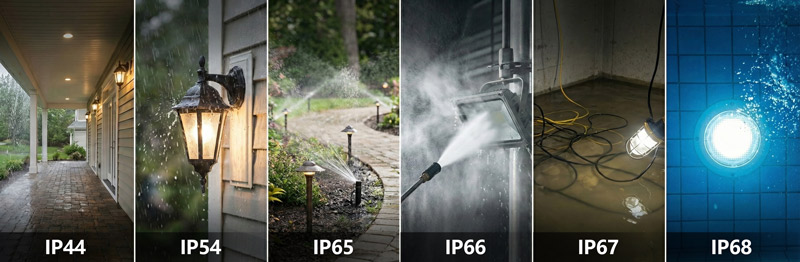
To choose the right protection level, it helps to see how IP65 compares with other commonly used ratings in outdoor lighting.
|
IP Rating |
Dust Protection |
Water Protection |
Typical Use Case |
|---|---|---|---|
|
IP44 |
Basic protection |
Splash resistant |
Covered outdoor areas |
|
IP54 |
Dust protected |
Splash resistant |
Light outdoor exposure |
|
IP65 |
Dust-tight |
Water jets |
Most garden lighting |
|
IP66 |
Dust-tight |
Strong water jets |
Heavy spray environments |
|
IP67 |
Dust-tight |
Temporary immersion |
In-ground or flood-prone areas |
|
IP68 |
Dust-tight |
Continuous immersion |
Underwater lighting |
For most above-ground garden lights, IP65 offers an excellent balance between protection, cost, and design flexibility.
Ideal Applications for IP65 Garden Lights
IP65 is widely used because it fits the needs of most landscape lighting installations. It performs reliably when fixtures are exposed to weather but not submerged.
Typical suitable applications include:
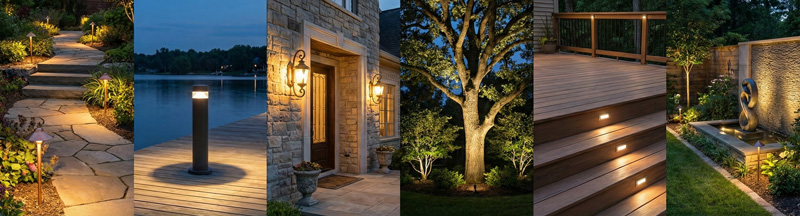
- Pathway and walkway lights
- Bollard lights
- Wall-mounted exterior lights
- Tree and shrub uplights
- Deck and step lighting above ground level
- General landscape accent lighting
When installed correctly and placed in well-drained locations, IP65-rated fixtures handle normal outdoor exposure very effectively.
Situations Where IP65 Is Not Enough
There are certain scenarios where IP65 should not be relied upon:
1. In-ground recessed fixtures without drainage
Lights installed flush with soil or pavement are at high risk of sitting in water.
2. Areas prone to flooding or puddling
Even short-term standing water can exceed IP65 limits.
3. Near ponds, fountains, or water features
Splash zones may turn into immersion zones over time.
4. Pressure-washer cleaning
High-pressure water can exceed the force assumed in IP65 testing.
In these cases, a higher rating such as IP67 or IP68 is more appropriate.
Common Misconceptions About IP65
Many installation failures trace back to simple misunderstandings:
- “IP65 means waterproof.”
IP65 means water-resistant to jets, not waterproof in all conditions.
- “If it survives rain, it can survive immersion.”
Rain and immersion apply very different stresses to seals.
- “Higher IP is always better.”
Higher IP ratings can increase cost, heat buildup, and design constraints. The best choice is the rating that matches the environment.
Installation Tips to Get the Best Performance from IP65
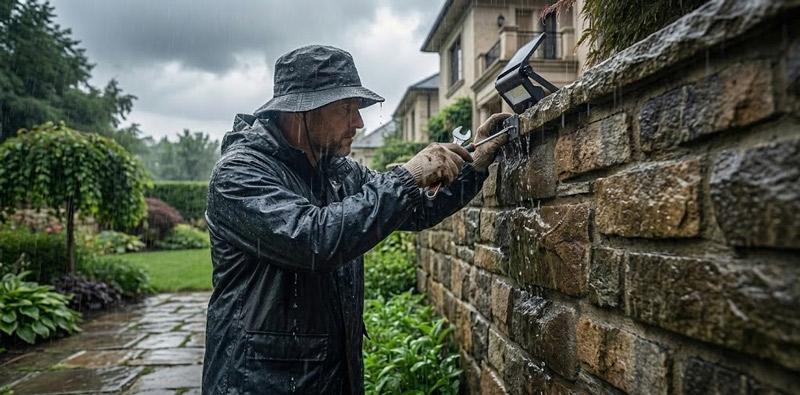
Even the best-rated product depends on correct installation. To maximize the lifespan of IP65 garden lights:
- Install fixtures above ground whenever possible
- Ensure proper drainage around the mounting area
- Tighten cable glands and seals according to instructions
- Avoid aiming sprinklers directly at fixtures
- Do not clean with pressure washers
- Periodically inspect gaskets and seals
Correct installation often matters just as much as the IP rating itself.
Does IP65 protection apply to the entire garden light or only specific components?
IP65 protection applies only to the parts of the fixture that are enclosed and sealed as part of the rated design.
In most garden lights, this includes the housing, lens, and internal electronics.
External connectors, power supplies, plugs, or extension cables may not share the same IP rating unless explicitly specified.
For long-term reliability, all exposed components in the installation should meet an appropriate outdoor protection level.
Can an IP65 garden light be installed horizontally or upside down?
Orientation matters. While IP65 testing involves water sprayed from multiple directions, real-world drainage depends on gravity.
Installing a fixture upside down or in a position where water can pool around seals or cable entries increases the risk of moisture ingress.
Always follow the manufacturer’s recommended mounting orientation to maintain the intended protection level.
Does IP65 protection change over time as the garden light ages?
Yes. IP ratings describe performance at the time of testing, not over the full lifespan of the product.
UV exposure, temperature cycling, mechanical stress, and environmental conditions can gradually degrade seals, gaskets, and cable glands.
Regular inspection and maintenance help ensure the fixture continues to perform close to its original IP65 protection level.
Is IP65 sufficient for coastal or high-humidity environments?
IP65 provides strong protection against dust and water spray, but it does not address corrosion caused by salt and humidity.
In coastal environments, long-term durability depends on material selection, surface treatments, and fastener quality.
For these locations, IP65 should be paired with corrosion-resistant housings, stainless steel hardware, and appropriate protective coatings.
Why do some IP65 garden lights still develop condensation inside the lens?
Condensation does not necessarily indicate water leakage.
Temperature changes between day and night can cause internal air to cool and release moisture, forming condensation on the inside of the lens.
This effect is common in sealed outdoor fixtures. Proper design, pressure equalization features, and correct installation help reduce it.
Occasional condensation during changing weather conditions does not automatically mean the IP65 rating has failed.
