
How solar powered lights actually work (and what must go right)
Types of outdoor solar lighting: what’s out there and which work best in winter
The winter energy problem: shorter days + weaker sun
Cold temperatures: good for panels, hard on batteries
Snow, ice, and dirt: the “panel covered = system off” reality
What “work” means in winter: setting realistic expectations
Winter performance factors and mitigations
Design choices that make winter solar lighting reliable
1. Bigger panel area beats almost everything
2. Battery chemistry and quality matter
3. Smart lighting modes: adaptive brightness wins
4. Optical efficiency: not all lumens are equal
Installation: winter success is mostly about location and angle
Professional rule of thumb: think in watt-hours
Practical guidance (bullet-point section)
If you already own solar lights and want them to work better this winter
If you’re buying new solar powered lights for winter performance
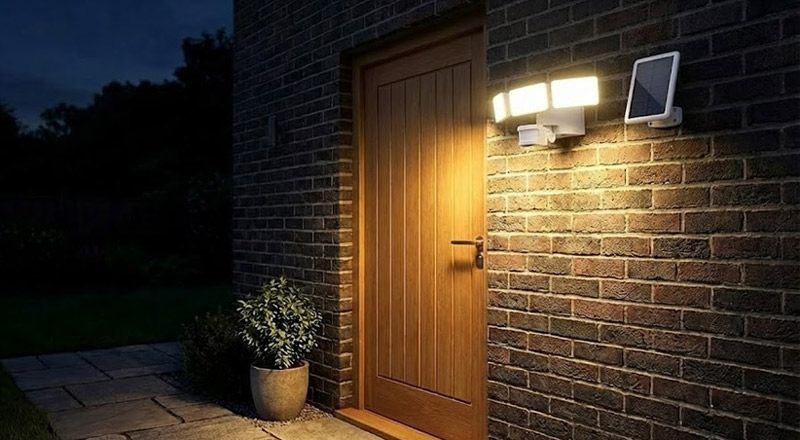
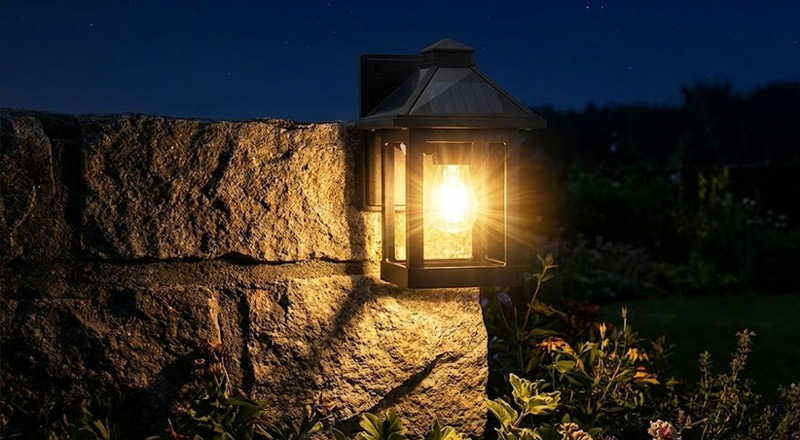
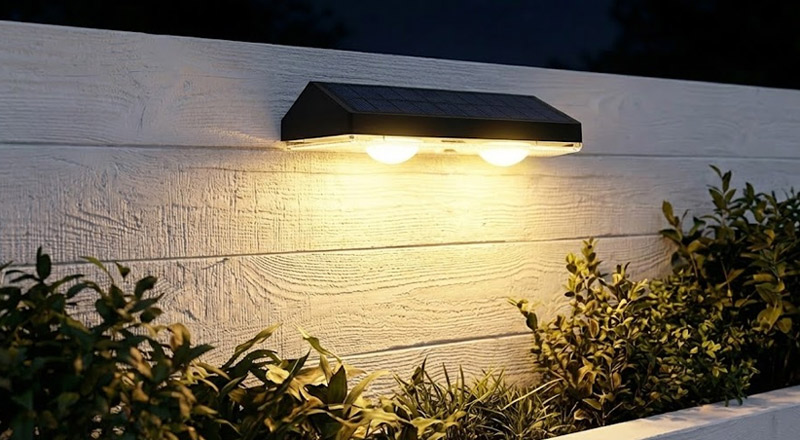
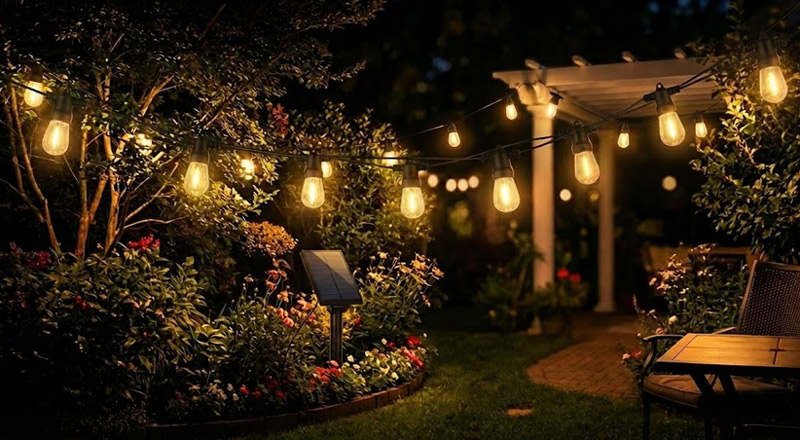
Best-selling brands and product highlights:
FAQs
Yes—solar powered lights can work in the winter, and in many regions they work surprisingly well. But winter is the season when their performance is most sensitive to design choices (panel size, battery type, control electronics), installation (tilt, shading, orientation), and maintenance (snow, dirt, ice). If you’ve ever seen solar lights dim early or fail altogether in December, it doesn’t necessarily mean “solar doesn’t work in winter.” It usually means the system is operating with less sunlight and higher losses than it was designed for.
This article explains the physics and engineering behind winter performance, what “working” realistically means during short days, how temperature affects batteries, and what practical steps—both for homeowners and professionals—can make solar lighting reliable through the cold season.
How solar powered lights actually work (and what must go right)
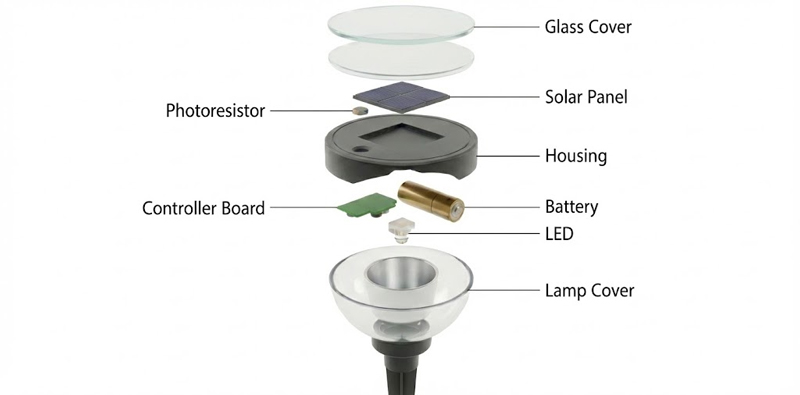
A typical solar light is a small off-grid system with four key parts:
-
Solar panel (PV module): Converts sunlight to electrical power (DC). The panel generates electricity from sunlight, allowing the lights to operate without traditional electrical wiring.
-
Charge controller / driver electronics: Regulates charging and prevents overcharge/over-discharge; often includes dusk-to-dawn sensing.
-
Battery: Stores energy harvested during daylight to power the light at night.
-
LED + optics: Uses stored energy efficiently; brightness depends on available battery energy and driver settings.
For optimal charging, it is important to place solar garden lights where they can receive direct sunlight for at least six to eight hours daily. Positioning the lights so they receive sunlight ensures the solar panels gather enough energy to power the lights through the night.
In summer, long days and higher sun angles often “mask” design compromises. In winter, the energy budget becomes tight. Solar lights fail in winter mostly for two reasons:
- Not enough energy collected during the day (low winter sun, clouds, shading, dirty panels, snow cover).
- Not enough usable energy stored and delivered at night (battery chemistry slows in cold, capacity decreases, voltage sags, and protection circuits shut down earlier).
Solar garden lights use the sun's energy to illuminate outdoor spaces, offering an eco-friendly lighting solution. By using renewable energy, they can significantly reduce electricity costs and help lower your carbon footprint by decreasing reliance on electrical power generation.
To understand winter performance, think like an engineer: daily energy in vs. nightly energy out.
Types of outdoor solar lighting: what’s out there and which work best in winter
Outdoor solar lighting comes in a wide range of styles, each designed to brighten your garden, yard, or pathway while adding a touch of style and functionality. Whether you’re looking to create a soft glow for evening ambience or need reliable illumination for safety and security, there’s a solar light to suit every outdoor space—even during the winter months.
Wall Mounted Lights
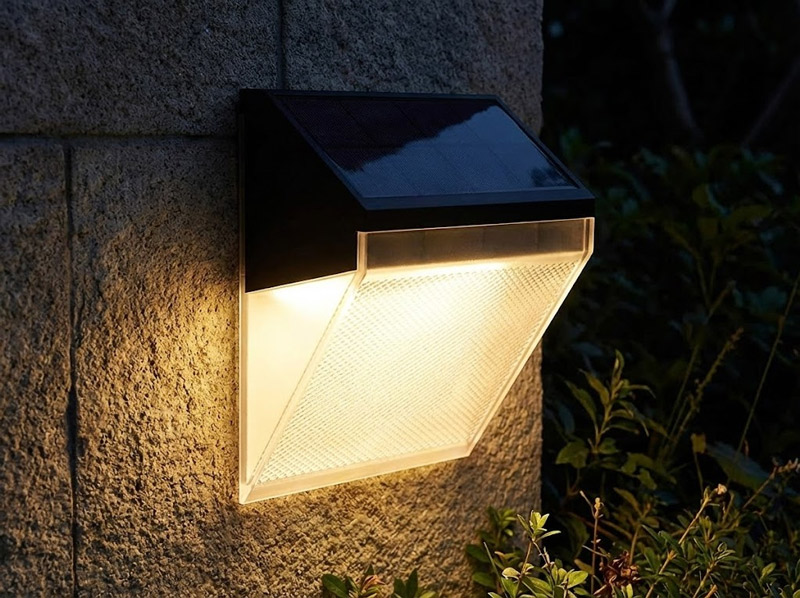
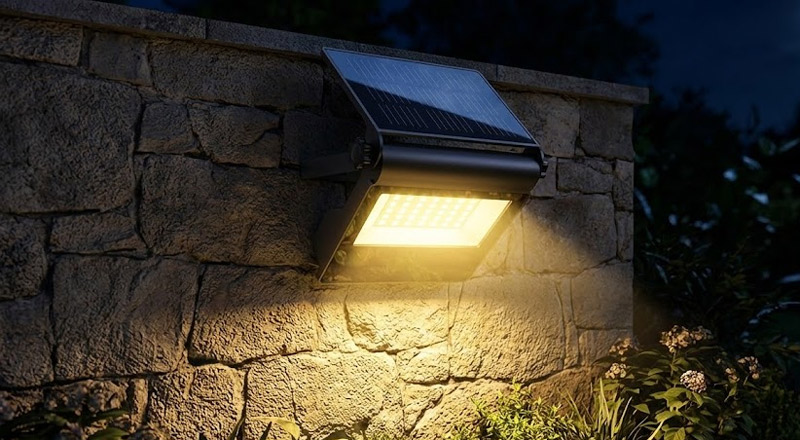
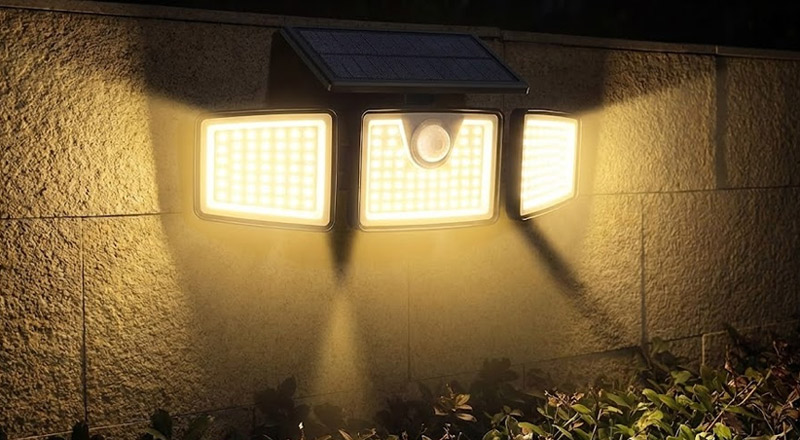
Wall mounted lights are a favorite for homeowners who want to illuminate entryways, fences, or the sides of a house. These lights are typically easy to install, often requiring just a few basic tools, and they offer the benefit of being out of the way while still providing ample brightness. Many wall mounted lights feature large solar panels to maximize energy collection, even on cloudy days, and are built with weather resistant materials to withstand winter’s rain, snow, and ice. Their durable, weatherproof construction means little maintenance is needed, making them a practical choice for year-round use.
Figure illustrates the Lumetro LM-SL-904 Model
String Lights
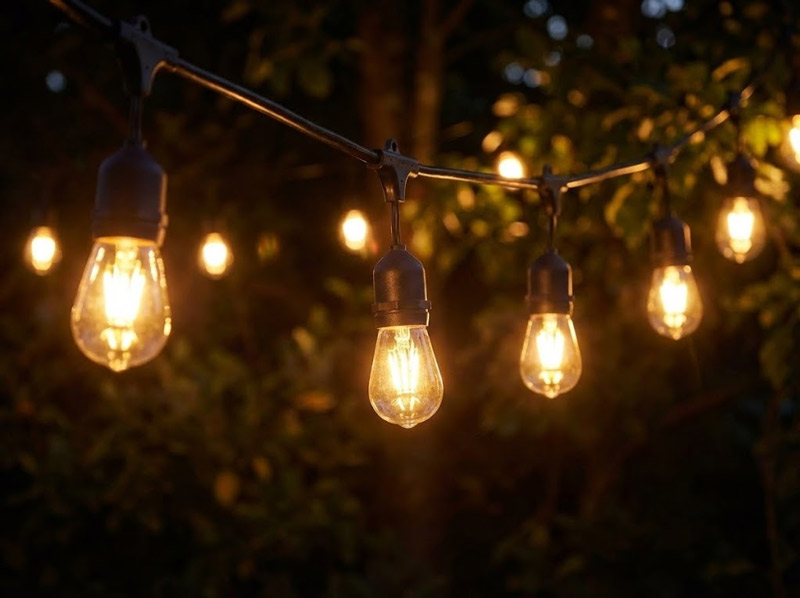
String lights are perfect for adding a decorative touch to your outdoor space. These versatile lights can be draped along fences, wrapped around trees, or hung above patios to create a welcoming atmosphere. String lights are not just for looks—they can also serve functional purposes, such as lighting up pathways or highlighting garden features. Look for string lights with robust, weatherproof designs and efficient solar panels to ensure they continue to shine through the winter, even when sunlight is limited.
Fairy Lights
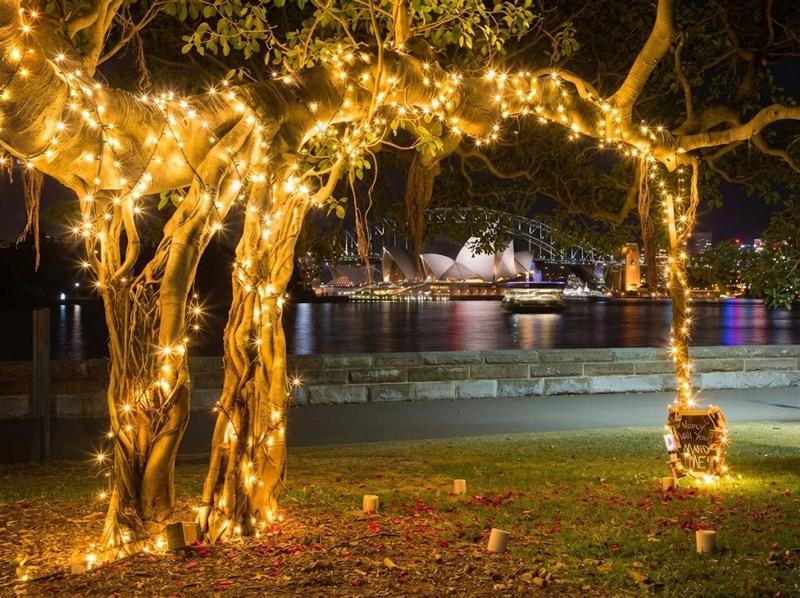
Fairy lights offer a whimsical, decorative option for those who want to add a magical sparkle to their garden or backyard. These tiny lights are often powered by compact solar panels and can be hung almost anywhere, from plants to pergolas. Thanks to their energy-efficient design, fairy lights can provide a soft glow for hours, even after a short winter day. Adjustable settings allow you to customize the brightness and lighting patterns, making them a stylish and flexible choice for any outdoor space.
Spotlights
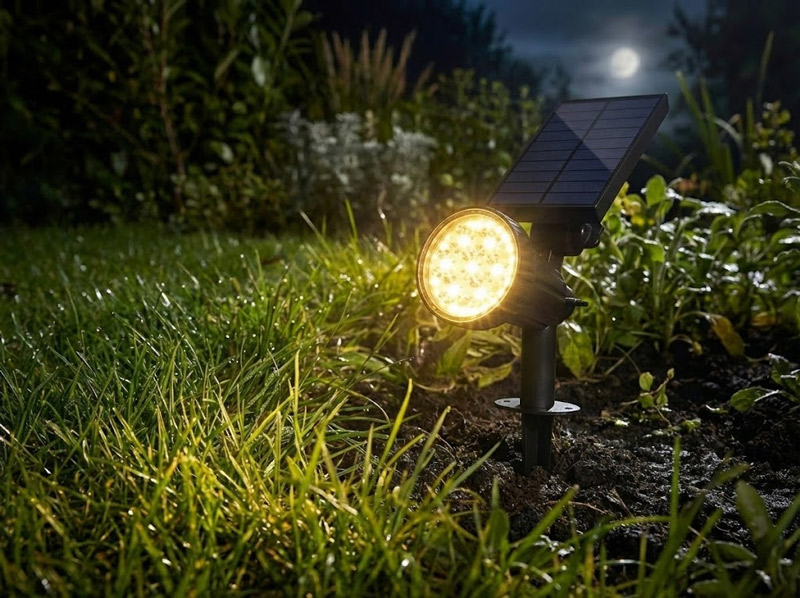
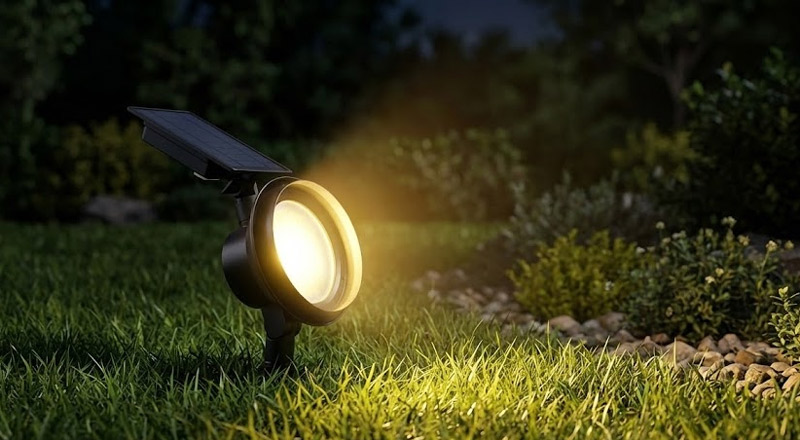
Spotlights are ideal for highlighting specific features in your yard, such as statues, address numbers, or prized plants. With focused beams and adjustable angles, spotlights can be positioned to illuminate dark corners or provide extra security around your house. Many spotlights are designed with larger panels and higher lumen outputs, ensuring they remain bright and functional even during the shorter, dimmer days of winter.
Figure illustrates the Lumetro LM-5081 Model
When selecting solar lights for winter, prioritize models with larger solar panels and high-capacity batteries to maximize the amount of sunlight they can capture and store. Weatherproof and durable materials are essential for withstanding harsh winter conditions, so look for lights with solid construction and a high waterproof rating. Brightness is also key—choose lights with higher lumen ratings to ensure your outdoor space stays well-lit from dusk to dawn.
Some of the best selling options for winter include wall mounted lights with oversized panels, string lights made from tough, weather resistant materials, fairy lights with customizable settings, and spotlights that offer both brightness and adjustability. These products are designed to perform reliably in all seasons, providing both decorative and functional benefits.
Installation is typically straightforward—most solar lights can be staked into the ground, hung from fences or trees, or attached to walls with minimal tools. Maintenance is minimal: just keep the solar panels clean and free from snow or debris to ensure optimal performance.
With so many stylish and durable options available, solar lights are a smart way to brighten your outdoor space, enhance your garden’s ambience, and enjoy the benefits of renewable energy all year round—even in the depths of winter.
The winter energy problem: shorter days + weaker sun
Winter reduces solar harvest in multiple ways:
- Shorter daylight hours: Fewer hours for charging, especially at higher latitudes.
- Lower sun angle: Sunlight hits panels more obliquely, reducing effective irradiance if panels are flat.
- More clouds and storms (in many climates): PV output drops significantly under overcast skies.
- More shading: Bare tree branches can still cast long shadows; buildings create longer winter shadows due to the low sun path.
A solar light that is perfectly adequate in July may be underpowered in January even if nothing “breaks.” This is why professional solar lighting designs use worst-month sizing (designing for the darkest month, not the average month).
Cold temperatures: good for panels, hard on batteries
Here’s a counterintuitive truth: solar panels themselves often perform better in cold weather. Photovoltaic cells generally become slightly more efficient at lower temperatures. So if the sun is bright (clear winter days), panels can produce excellent power.
The real winter bottleneck is usually the battery.
Why batteries struggle in cold
Most small solar lights use lithium-ion (often Li-ion or LiFePO₄) or nickel-metal hydride (NiMH). In low temperatures:
- Chemical reactions slow down.
- Internal resistance rises.
- Battery voltage drops more under load.
- The usable capacity decreases, sometimes sharply.
- Charging may be restricted by the battery management system (BMS) to avoid damage.
For lithium-ion batteries especially, charging below freezing can be harmful unless the pack is designed to handle it (via low-temp charge cutoffs, heating, or specific chemistries). Many quality solar lights include protection that simply won’t charge below a threshold temperature. That’s good for safety and longevity—but it can make winter performance seem “inconsistent.”
Snow, ice, and dirt: the “panel covered = system off” reality
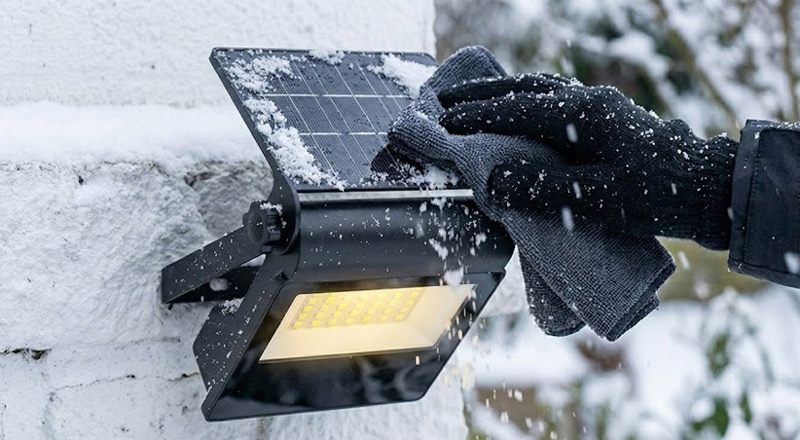
Snow is one of the simplest explanations for winter failure: a covered panel harvests nearly zero energy. Even a thin layer of snow or frost can block light enough that charging doesn’t recover.
Other winter issues include:
- Frost cycles: Morning frost can delay charging until late morning.
- Road salt and grime: In urban areas, panels get dirty faster in winter.
- Ice lenses and diffuser clouding: Can reduce light output even if the battery is full.
If you want winter reliability, plan for the fact that maintenance matters more.
What “work” means in winter: setting realistic expectations
Solar powered lights in winter often still work, but with changes in behavior:
- Shorter runtime (lights turn off earlier).
- Reduced brightness (many lights automatically switch to a dim light mode to conserve power and create ambiance, but this dim light may not be sufficient for safety or security needs).
- More variability day-to-day (cloudy stretches can drain the battery).
- Occasional missed nights if several low-sun days occur in a row without sufficient battery reserve.
Solar lights automatically illuminate at dusk when darkness reaches a certain level, using ambient light as a trigger. Different solar garden lights offer varying brightness levels, from dim light settings around 5 lumens for ambiance, up to over 350 lumens for strong spotlights and security.
Higher-quality systems are designed around a concept called autonomy—the number of nights the system can run without new solar input (e.g., 2–5 nights). Cheap garden lights often have minimal autonomy and assume near-daily full charging.
Winter performance factors and mitigations
|
Winter factor |
What happens technically |
Typical symptom |
Practical mitigation |
|---|---|---|---|
|
Short days |
Less charging time; lower daily Wh harvested |
Dim lights, early shutoff |
Use larger panel, higher-efficiency LEDs, lower power mode |
|
Low sun angle |
Flat panels get less effective irradiance |
Weak charging even on clear days |
Tilt panel steeper for winter (often near latitude + 10–15°) |
|
Cloud cover / storms |
PV output drops dramatically |
Several bad nights in a row |
Increase battery capacity (autonomy), reduce nightly power draw |
|
Snow cover |
Panel blocked = near-zero charging |
Light works 1–2 nights then dies |
Mount panel where snow sheds; brush off snow regularly |
|
Cold battery chemistry |
Capacity and voltage drop; BMS may limit charging |
Flicker, sudden shutdown, won’t charge |
Choose LiFePO₄ or cold-rated batteries; keep battery insulated or indoors (if possible) |
|
Shading from buildings/trees |
Low winter sun makes long shadows |
“Works in summer, not winter” |
Relocate or elevate panel; avoid north-facing and shaded sites |
|
Dirty panel (salt/grime) |
Light transmission decreases |
Gradual decline |
Clean panel periodically with water + soft cloth |
|
Poor-quality charge control |
Inefficient charging and early cutoff |
Inconsistent performance |
Upgrade to better fixtures with MPPT/robust controllers (when available) |
Design choices that make winter solar lighting reliable
1. Bigger panel area beats almost everything
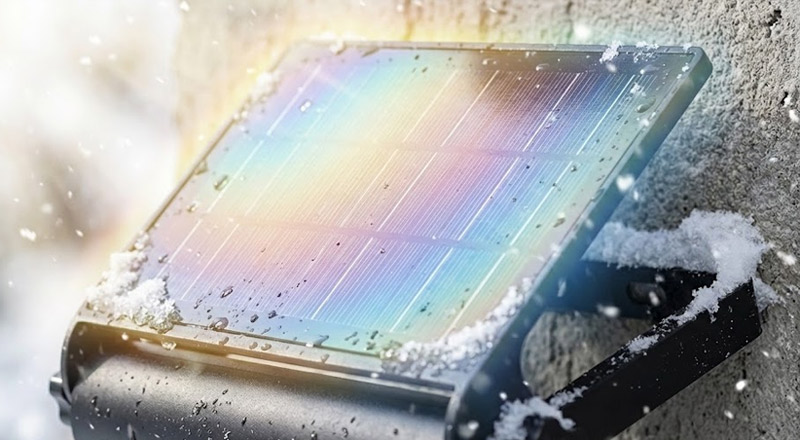
In winter, panel size is often the single most important factor. A larger panel increases daily energy harvest and makes the system less sensitive to clouds and short days. Many decorative path lights use very small panels that simply can’t collect enough winter energy.
If you’re specifying equipment professionally, favor products that publish:
- Panel wattage (not just “solar powered”)
- Battery capacity (Wh is best; mAh is okay if voltage is stated)
- Lumen output and runtime claims with test conditions
2. Battery chemistry and quality matter
- LiFePO₄ (lithium iron phosphate): Often more stable, long cycle life, and can be better behaved across temperature ranges than typical Li-ion, though charging below freezing still needs proper management.
- Li-ion (NMC/NCA variants): High energy density; may be more sensitive to cold charging limits depending on design.
- NiMH: Tolerant and robust in many consumer lights, though self-discharge and lower energy density can be drawbacks.
See also: Solar Powered Garden Lights Battery Life: How Long Does It Last?
Quality isn’t just chemistry—it’s the presence of a well-designed BMS and conservative operating limits.
3. Smart lighting modes: adaptive brightness wins
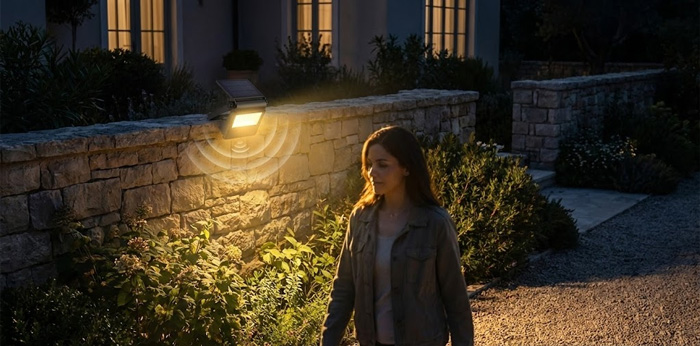
Better solar lights use strategies such as:
- Motion-boost (dim baseline, brighten on motion)
- Multi-step dimming through the night
- Energy budgeting based on battery state-of-charge
- Adjustable runtime profiles (e.g., “winter mode”)
Many models include a switch that allows users to select different lighting modes; it is important to confirm that the desired mode is active, especially when adjusting for safety or ambiance. Motion sensors are often used to detect movement and automatically adjust brightness, enhancing security and saving energy. Additionally, many 2025 solar garden light models now offer app and voice control for adjusting settings, providing added convenience.
These features let the light remain functional even when winter energy is tight.
4. Optical efficiency: not all lumens are equal
A well-designed optic (lens/reflector) can place light where it’s needed—walkways, driveways, signage—so you can use less electrical power for the same perceived usefulness. In winter design, efficiency is reliability.
Installation: winter success is mostly about location and angle
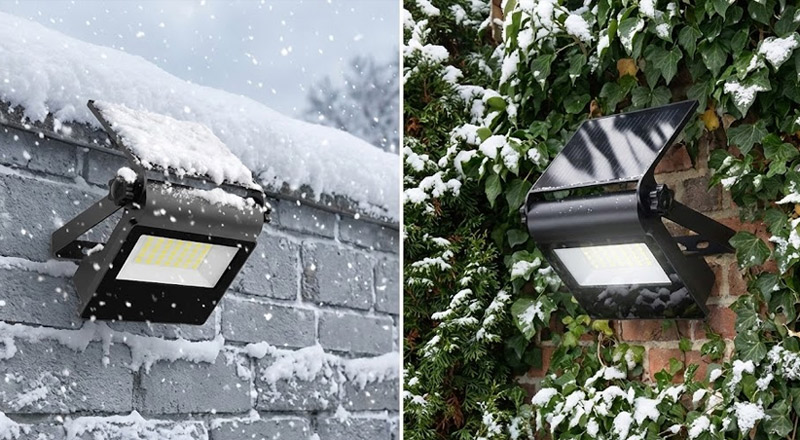
A solar light can be technically excellent and still fail if installed poorly. Winter is when installation mistakes show up.
- Avoid shade at all costs. In winter, a small shadow can wipe out charging because the sun is low and shadows stretch far. Place solar garden lights where they can receive sunlight throughout the day for optimal charging and performance.
- Aim for maximum midday sun. Morning and late-afternoon winter sun is weak; prioritize the 10 a.m.–2 p.m. window.
- Tilt panels for winter. Many consumer stake lights have panels flat or near-flat, which is suboptimal in winter. A steeper angle helps capture low-angle sunlight and sheds snow better.
- Keep panels accessible. If you can’t easily brush off snow, you’ll have extended downtime. Install lights where you can access them for maintenance, such as cleaning the panels.
Install solar lights along paths, driveways, and stairs to enhance safety and visibility when accessing these areas at night. For stake-mounted lights, ensure the ground is soft enough to push them in, or use a hammer if needed. Some solar lights can be easily stuck onto surfaces, like fences, for a quick setup, while others may require screws and plugs for wall mounting. Choose the installation method that best suits your location and ensure all lights are positioned for easy access and optimal sunlight exposure.
Professional rule of thumb: think in watt-hours
If you want predictable results, estimate energy:
- Nightly consumption (Wh) ≈ LED power (W) × hours on
- Daily harvest (Wh) ≈ panel power (W) × “effective sun hours” × system efficiency
In winter, “effective sun hours” can be low, and overall efficiency (charging + battery + driver) might be 60–80% depending on quality. This is why professional systems either oversize the panel/battery or reduce the load with dimming schedules.
Practical guidance (bullet-point section)
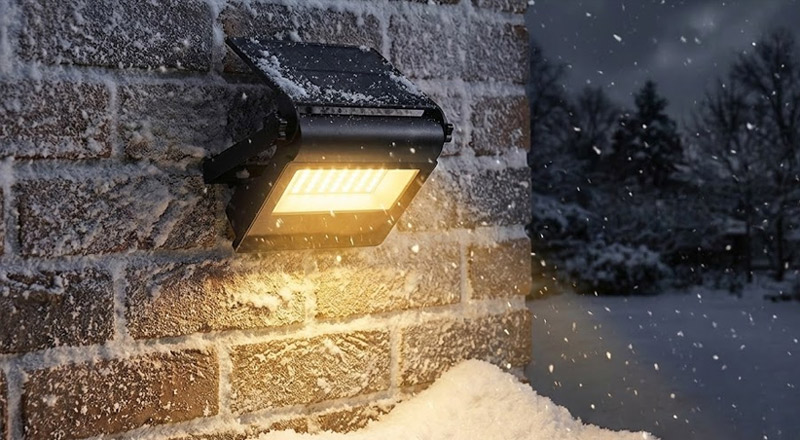
If you already own solar lights and want them to work better this winter
- Clean the panel (dust, film, salt residue). Even a light haze can matter in winter.
- Remove snow promptly after storms; don’t wait for it to melt.
- Relocate to a sunnier spot—winter sun angles can turn “fine in summer” locations into shaded zones.
- Angle the panel steeper if the design allows (or mount on a bracket).
- Check battery health: older batteries show winter weakness first. If the light used to last all night and now dies early, the battery may be aging.
- Use a “hybrid” approach: keep solar for accent/path lighting, and use wired lighting where safety-critical illumination is required (stairs, steep walkways).
If you’re buying new solar powered lights for winter performance
- Larger panel wattage and published specifications
- Battery capacity stated clearly (prefer Wh, or mAh with voltage)
- Cold-weather rating or at least a reputable manufacturer with clear operating ranges
- Adaptive brightness modes (motion boost, dimming profiles)
- Replaceable batteries (helps long-term maintenance)
- Separate panel options for shaded installation areas (panel in sun, light where you need it)
- IP65 or IP67 ratings for waterproof and dust-resistant performance, ensuring year-round outdoor use
See alsao: What Is IP65? The Waterproof Rating of Garden Lights
- Dual charging options such as USB-C ports for manual battery charging during low sunlight periods
- Manufactured quality—look for solar garden lights built with durable, high-quality components like lithium-ion batteries for long-lasting performance
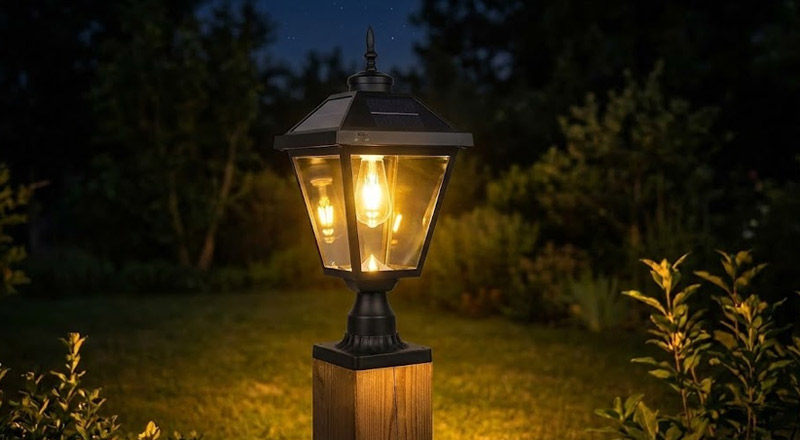
- Decorative design options—solar garden lights come in various styles, including string lights and lanterns; lanterns with Edison bulbs offer a vintage, stylish look that enhances outdoor decor and curb appeal
- Ease of installation—many lanterns and string lights are simple to hang on hooks, brackets, or fences for both decorative and functional purposes
- Solar energy collection—solar garden lights gather energy from the sun via a solar panel, storing it in a rechargeable lithium-ion battery for nighttime illumination
- Purchase considerations—while some solar lights may have a higher upfront cost, the purchase offers long-term savings and durability compared to conventional lighting options
Best-selling brands and product highlights:
Avoid:
- Very small, decorative stake lights if you expect full-night brightness in winter
- Unspecified “high lumen” claims with no runtime/testing details
- Fully sealed units with no battery replacement if you expect multi-year service
FAQs
Do solar powered lights need to be oversized to work reliably in winter?
Yes. In winter conditions, solar lighting systems generally require deliberate oversizing to remain reliable.
Short daylight hours, low sun angles, and frequent cloud cover reduce daily energy harvest, while cold temperatures limit how much stored energy batteries can deliver at night.
Winter-capable designs typically rely on larger solar panels, increased battery capacity, or both, allowing the system to tolerate multiple low-sun days without failure.
Why do some solar lights shut off immediately in cold weather even after charging?
This behavior is usually caused by cold-temperature effects on the battery rather than insufficient sunlight.
At low temperatures, battery chemistry slows and internal resistance increases.
When the light turns on and current is drawn, voltage can drop abruptly, triggering protective shutdown by the controller to prevent battery damage.
Are solar lights with separate panels better for winter use than all-in-one models?
In many winter installations, solar lights with remote or separate panels perform better than all-in-one designs.
A separate panel allows optimal placement in full sun and a steeper winter tilt, while the fixture itself can be positioned where light is needed.
All-in-one models are compact and convenient, but fixed panel orientation often limits winter energy collection, especially in shaded or high-latitude locations.
Does cold weather permanently damage batteries in solar lights?
Cold temperatures typically cause temporary performance loss rather than immediate permanent damage.
However, repeated charging below freezing or deep discharging in cold conditions can accelerate battery aging.
Higher-quality solar lights include temperature protection and conservative charge control to reduce long-term degradation.
How can you tell if a solar light is truly designed for winter conditions?
Winter-ready solar lights usually provide clear technical specifications rather than vague marketing claims.
Look for disclosed panel wattage, battery capacity, and operating temperature ranges.
Lights that adapt brightness to available energy, support motion-activated boost modes, or allow battery replacement tend to perform more consistently through winter.
