

What Are Solar Pathway Lights?
The Basic Working Principle
The Role of the Solar Panel
The Rechargeable Battery
Why Solar Pathway Lights Use LEDs
The Light Sensor and Automatic Operation
The Controller Inside the Light
Step-by-Step: How Solar Pathway Lights Work During the Day
Step-by-Step: How Solar Pathway Lights Work at Night
Why Placement Matters
How Long Do Solar Pathway Lights Stay On?
Why Solar Pathway Lights Sometimes Become Dim
Do Solar Pathway Lights Work on Cloudy Days?
Are Solar Pathway Lights Waterproof?
Common Components of a Solar Pathway Light
Advantages of Solar Pathway Lights
Limitations of Solar Pathway Lights
How to Make Solar Pathway Lights Work Better
Choosing Better Solar Pathway Lights
Conclusion
FAQs
Solar pathway lights are a simple and efficient way to illuminate walkways, garden paths, driveways, patios, and outdoor landscapes without relying on traditional electrical wiring. They are popular because they are easy to install, inexpensive to run, and powered by sunlight. Although they may look like small decorative lights, solar pathway lights use several important components working together: a solar panel, rechargeable battery, LED bulb, light sensor, controller, and housing.
Understanding how solar pathway lights work can help you choose better products, install them correctly, and maintain them for longer-lasting performance.
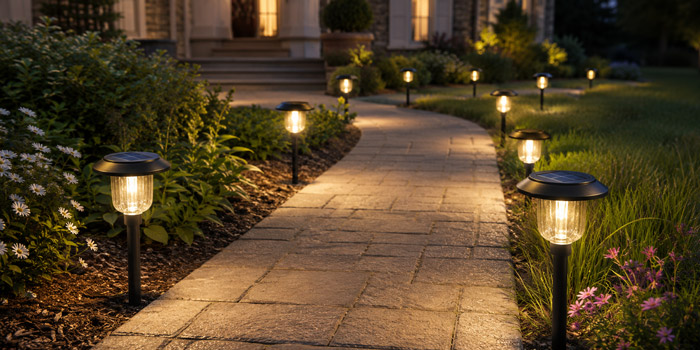
What Are Solar Pathway Lights?
Solar pathway lights are outdoor lighting fixtures that collect energy from the sun during the day and use that stored energy to produce light at night. Unlike wired landscape lights, they do not need to be connected to a household power supply. Each light works as an independent unit, usually mounted on a stake that can be pushed directly into the ground.
Most solar pathway lights are designed for low-level illumination rather than strong security lighting. Their main purpose is to mark walking paths, improve nighttime visibility, highlight landscaping features, and add decorative appeal to outdoor spaces.
A typical solar pathway light includes a small solar panel on top, a rechargeable battery inside, an LED light source, and a sensor that automatically turns the light on and off. During daylight hours, the solar panel converts sunlight into electricity. That electricity charges the battery. When darkness arrives, the light automatically switches on and uses the stored battery power to run the LED.
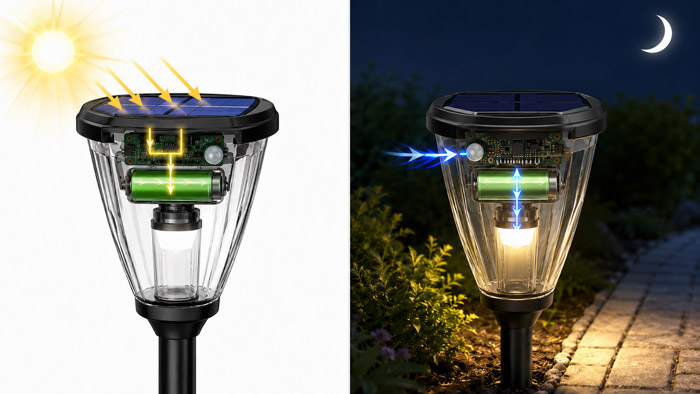
The working process of solar pathway lights can be divided into two main stages: daytime charging and nighttime lighting.
During the day, sunlight hits the solar panel. The solar panel contains photovoltaic cells that convert sunlight into direct current electricity. This electricity is sent to a rechargeable battery inside the light. The battery stores the energy until it is needed.
At night, a light sensor detects that the surrounding environment has become dark. The controller inside the light then allows the battery to supply power to the LED bulb. The LED uses the stored electricity to produce light. When daylight returns, the sensor detects the increase in brightness and turns the LED off. The charging process begins again.
This automatic cycle repeats every day as long as the light receives enough sunlight and the internal components are working properly.
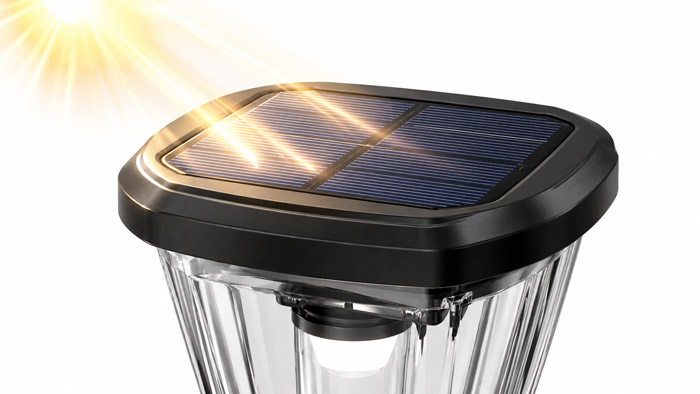
The solar panel is one of the most important parts of a solar pathway light. It is usually located on the top of the fixture so it can receive direct sunlight. Its job is to capture solar energy and convert it into electrical energy.
Most pathway lights use small photovoltaic panels made from materials such as monocrystalline or polycrystalline silicon. When sunlight strikes the surface of the panel, it excites electrons inside the photovoltaic cells. This movement of electrons creates an electric current.
The amount of electricity generated depends on several factors:
Direct sunlight produces more energy than shade.
A larger or more efficient solar panel can charge the battery faster.
Clean solar panels absorb sunlight better than dirty or dusty panels.
The angle and placement of the light affect how much sunlight the panel receives.
Weather conditions influence charging performance.
If a solar pathway light is placed under a tree, near a wall, or in a heavily shaded area, the solar panel may not collect enough energy during the day. As a result, the light may appear dim, turn off early, or fail to work at night.
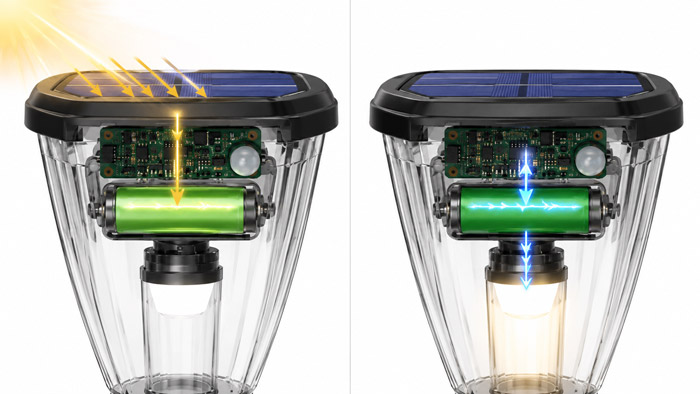
The rechargeable battery stores the electricity produced by the solar panel. Without the battery, the light would only work while the sun is shining. Because pathway lights are needed at night, energy must be collected during the day and saved for later use.
Common battery types used in solar pathway lights include nickel-metal hydride batteries and lithium-ion batteries. Some older or cheaper lights may use nickel-cadmium batteries, though these are less common in newer designs.
The battery’s capacity affects how long the light can stay on after sunset. A higher-capacity battery can store more energy, allowing the light to operate for more hours. However, even a good battery depends on proper charging. If the solar panel does not receive enough sunlight, the battery will not fully charge.
Rechargeable batteries do not last forever. Over time, they lose their ability to hold a charge. If a solar pathway light becomes weak after working well for many months or years, the battery may need to be replaced. In many models, battery replacement is simple and can restore much of the light’s original performance.
See also: Solar Powered Garden Lights Battery Life: How Long Does It Last?
Why Solar Pathway Lights Use LEDs
Most solar pathway lights use LED bulbs because LEDs are highly energy efficient. LED stands for light-emitting diode. Compared with traditional incandescent bulbs, LEDs use much less electricity to produce the same amount of light. This is especially important for solar lights because the available energy is limited by the size of the solar panel and battery.
LEDs also last a long time and produce very little heat. Since solar pathway lights are often small and enclosed, low heat output helps protect the internal components. In addition, LEDs can be designed in different color temperatures, from warm white to cool white, allowing homeowners to choose the style of lighting they prefer.
The brightness of a solar pathway light is usually measured in lumens. Decorative pathway lights may produce only a few lumens, while brighter models can provide stronger illumination for steps, driveways, or garden paths. However, higher brightness usually requires more battery power, so very bright lights may need larger solar panels and better batteries to operate throughout the night.
The Light Sensor and Automatic Operation
One of the most convenient features of solar pathway lights is automatic operation. Most models turn on by themselves at dusk and turn off at dawn. This is made possible by a light sensor, often called a photocell.
The sensor measures the amount of surrounding light. During the day, when the sensor detects brightness, the controller keeps the LED turned off and allows the solar panel to charge the battery. When the sensor detects darkness, the controller activates the LED and begins using stored battery power.
This automatic function means users do not need to manually switch the lights on and off every day. However, the sensor must be exposed to natural light conditions. If a solar pathway light is placed too close to porch lights, streetlights, or other artificial light sources, the sensor may think it is still daytime and prevent the light from turning on properly.
The Controller Inside the Light
Although it is usually hidden inside the fixture, the controller is a key part of how solar pathway lights work. It manages the flow of electricity between the solar panel, battery, and LED.
The controller helps direct electricity from the solar panel into the battery during the day. At night, it allows the battery to power the LED. It also works with the light sensor to determine when the light should turn on or off.
In better-quality solar pathway lights, the controller may include protective features that prevent overcharging, excessive battery drain, or unstable current flow. These protections help extend the life of the battery and improve the reliability of the light.
Some advanced solar pathway lights also include different lighting modes, such as low brightness, high brightness, motion-activated lighting, or timed operation. In these models, the controller manages how much power is used and when different modes are activated.
Step-by-Step: How Solar Pathway Lights Work During the Day
During the day, the solar pathway light is mainly in charging mode. The LED remains off because the light sensor detects daylight. At the same time, the solar panel absorbs sunlight and converts it into electricity.
That electricity flows through the internal circuit and charges the rechargeable battery. The stronger the sunlight and the longer the exposure, the more energy the battery can store. Ideally, the light should receive several hours of direct sunlight each day.
If the day is cloudy, rainy, or shaded, the solar panel still may generate some electricity, but the amount will be lower. This means the battery may not reach a full charge. As a result, the light may not stay on as long during the night.
Step-by-Step: How Solar Pathway Lights Work at Night
At night, the solar pathway light changes from charging mode to lighting mode. When the light sensor detects darkness, it sends a signal to the controller. The controller stops the charging function and allows electricity to flow from the battery to the LED.
The LED turns on and produces light. The light continues operating until one of three things happens: the battery runs low, the controller reaches a programmed shutoff point, or daylight returns.
When morning comes, the sensor detects brightness again. The controller turns off the LED and returns the light to charging mode.
The performance of solar pathway lights depends heavily on placement. Since they rely on sunlight, they must be installed where the solar panel can receive enough direct exposure during the day.
A common mistake is placing solar lights in attractive but shaded areas. For example, a pathway under dense trees may seem like a perfect place for lighting, but the solar panels may not receive enough sunlight to charge fully. Similarly, placing lights close to tall fences, walls, shrubs, or buildings can reduce charging efficiency.
For best results, solar pathway lights should be placed in areas that receive several hours of direct sunlight. The solar panel should not be covered by leaves, snow, dirt, or garden debris. If the light has an adjustable panel, angling it toward the sun can improve charging performance.
Spacing is also important. If pathway lights are placed too far apart, the walkway may have dark gaps. If they are too close together, the lighting may look crowded or uneven. The ideal spacing depends on the brightness of the lights and the width of the path.
How Long Do Solar Pathway Lights Stay On?
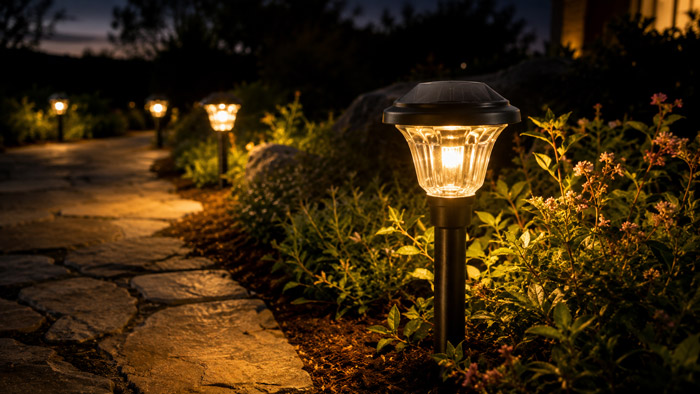
The operating time of solar pathway lights varies depending on the battery capacity, solar panel efficiency, LED power consumption, weather, and amount of sunlight received during the day.
Many standard solar pathway lights can stay on for several hours after a full day of charging. Higher-quality models may last most of the night under good conditions. However, performance can drop during winter, cloudy weather, or periods of heavy shade.
Shorter days also affect performance. In summer, longer daylight hours usually allow the battery to charge more fully. In winter, reduced sunlight may lead to shorter nighttime operation. Cold temperatures can also affect battery efficiency.
If a solar pathway light turns off after only a short time, the most likely causes are insufficient sunlight, a dirty solar panel, an aging battery, or a low-quality battery with limited storage capacity.
Why Solar Pathway Lights Sometimes Become Dim
Solar pathway lights can become dim for several reasons. The most common reason is that the battery is not receiving or holding enough charge. This may happen because the solar panel is shaded, dirty, damaged, or poorly positioned.
Another common cause is battery aging. Rechargeable batteries lose capacity over time. A battery that once powered a light for eight hours may eventually only power it for two or three hours.
The LED itself usually lasts a long time, but dirt, moisture, or corrosion inside the fixture can reduce performance. Cloudy covers or scratched lenses can also make the light appear dim even if the LED is still working properly.
Cleaning the solar panel and lens, moving the light to a sunnier location, and replacing the battery are often enough to improve brightness.
Do Solar Pathway Lights Work on Cloudy Days?
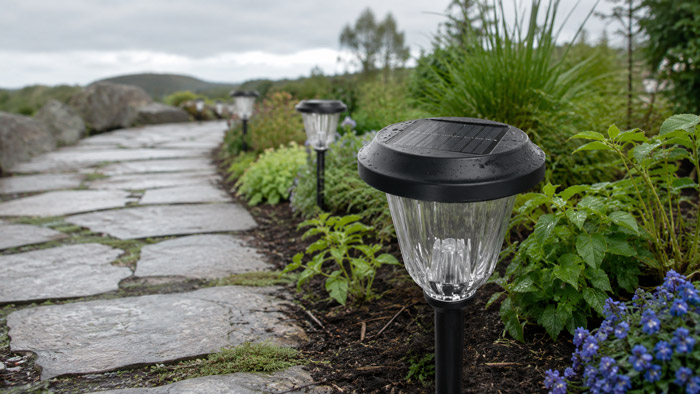
Solar pathway lights can work on cloudy days, but they usually do not charge as efficiently as they do in direct sunlight. Solar panels can still collect diffused sunlight through clouds, but the energy output is lower.
After several cloudy days in a row, the battery may not fully recharge. This can lead to dimmer light or shorter operating time at night. High-quality solar lights with efficient panels and larger batteries usually perform better in cloudy conditions than cheaper models.
For areas with frequent cloudy weather, it is better to choose solar pathway lights with larger solar panels, higher-capacity batteries, and efficient LEDs. Proper placement becomes even more important in these conditions.
Are Solar Pathway Lights Waterproof?

Solar pathway lights are designed for outdoor use, so most are built to resist rain and moisture. However, not all models offer the same level of weather protection. Some are water-resistant, while others are better sealed against heavy rain, sprinklers, and dust.
The durability of the housing, seals, and battery compartment matters. If water enters the fixture, it can damage the battery, circuit board, or LED. Over time, moisture can cause corrosion and reduce performance.
When choosing solar pathway lights, it is helpful to look for models with strong weather-resistant construction. Lights used in areas with heavy rain, snow, or irrigation should have better sealing and durable materials.
See also: What Is IP65? The Waterproof Rating of Garden Lights
Common Components of a Solar Pathway Light
A solar pathway light may appear simple from the outside, but it includes several coordinated parts:
The solar panel collects sunlight and converts it into electricity.
The rechargeable battery stores energy for nighttime use.
The LED produces light using stored electricity.
The light sensor detects day and night conditions.
The controller manages charging, discharging, and automatic operation.
The housing protects the internal components from outdoor conditions.
The lens or diffuser spreads the light and affects the appearance of the glow.
The ground stake supports the light and keeps it positioned along the path.
Each part plays a role in the overall performance. If one component is weak or damaged, the entire light may work poorly.
Advantages of Solar Pathway Lights
Solar pathway lights offer several practical advantages. Their biggest benefit is that they do not require wiring. This makes installation simple and avoids the cost of hiring an electrician. Most lights can be installed by pushing the stake into the ground and turning the unit on.
They also do not add to the electric bill because they use sunlight as their energy source. Once installed, they operate automatically with very little daily effort.
Solar pathway lights are also flexible. They can be moved easily if landscaping changes or if a different lighting layout is desired. This makes them useful for gardens, rental properties, seasonal decorations, and temporary outdoor arrangements.
Another advantage is safety. Because most solar pathway lights operate at low voltage and do not require buried electrical cables, they reduce the risks associated with outdoor wiring.
Limitations of Solar Pathway Lights
Although solar pathway lights are convenient, they also have limitations. Their performance depends on sunlight, so they may not work well in shaded areas or during long periods of poor weather. They are generally not as bright as wired landscape lights, especially low-cost models.
Battery life is another limitation. Rechargeable batteries eventually need replacement. Cheaper lights may use lower-quality batteries that degrade quickly.
Solar pathway lights also vary widely in quality. Some inexpensive models may have weak panels, poor weather sealing, dim LEDs, or fragile plastic stakes. Higher-quality lights usually cost more but tend to provide better brightness, longer runtime, and greater durability.
How to Make Solar Pathway Lights Work Better
To get the best performance from solar pathway lights, proper installation and maintenance are important. Place the lights where they receive direct sunlight for as many hours as possible. Avoid locations under trees, roof overhangs, or dense shrubs.
Keep the solar panels clean. Dust, pollen, bird droppings, snow, and leaves can block sunlight and reduce charging. Wiping the panels with a soft damp cloth can improve energy collection.
Check the batteries if the lights become dim or stop working. Replacing old rechargeable batteries can often restore performance. Make sure replacement batteries match the type and specifications recommended by the manufacturer.
During winter or long cloudy periods, expect shorter lighting times. This does not always mean the light is defective; it may simply be receiving less solar energy.
Also make sure the light sensor is not affected by nearby artificial lights. If a solar pathway light does not turn on at night, move it away from porch lights, streetlights, or bright windows.
Choosing Better Solar Pathway Lights
When choosing solar pathway lights, it is important to look beyond appearance. A beautiful design is useful, but performance depends on the quality of the solar panel, battery, LED, and weather-resistant construction.
For decorative garden lighting, low-lumen lights may be enough. For walkways, steps, and driveways, brighter lights are usually better. If you want longer nighttime operation, choose models with higher-capacity batteries and efficient solar panels.
The material of the housing also matters. Metal and strong weather-resistant plastic are usually more durable than thin, brittle plastic. A good lens or diffuser can improve the spread of light and create a more attractive glow.
Consider the color temperature as well. Warm white lights create a softer, more inviting atmosphere, while cool white lights can appear brighter and more modern. The best choice depends on the style of the outdoor space and the purpose of the lighting.
Solar pathway lights work by collecting sunlight during the day, storing that energy in a rechargeable battery, and using it to power an LED at night. The process is automatic, relying on a solar panel, battery, light sensor, and controller to manage charging and lighting.
Their effectiveness depends mainly on sunlight exposure, battery quality, solar panel efficiency, LED brightness, and proper placement. When installed in sunny locations and maintained correctly, solar pathway lights can provide reliable, attractive, and energy-efficient outdoor illumination.
They are not complicated devices, but their performance depends on each component doing its job well. By understanding how solar pathway lights work, homeowners can make better choices, avoid common installation mistakes, and enjoy brighter, longer-lasting pathway lighting.
Can solar pathway lights charge through glass?
Solar pathway lights can charge through glass, but charging efficiency is much lower because glass blocks part of the sunlight and reduces UV exposure.
For best performance, the solar panel should be placed outdoors in direct sunlight without a window, screen, or cover between the panel and the sun.
How many lumens are best for solar pathway lights?
For general pathway marking, 10 to 30 lumens per light is usually enough. For brighter walkways, steps, or driveways, 50 to 100 lumens may be more suitable.
The right brightness depends on the path width, spacing between lights, and whether the goal is decoration or practical visibility.
What IP rating should solar pathway lights have?
A good solar pathway light should have at least an IP44 rating for basic outdoor use. For areas with heavy rain, sprinklers, dust, or snow, IP65 or higher is a better choice.
A higher IP rating means stronger protection against water and solid particles entering the fixture.
Do solar pathway lights attract insects?
Solar pathway lights can attract some insects, especially if they produce cool white or bluish light.
Warm white LEDs are usually less attractive to bugs than cooler light tones. Choosing lower color temperatures and avoiding overly bright lights can help reduce insect activity around pathways.
See also: What Impact Do Garden Lights Have on Plants and Animals?
Are solar pathway lights better than wired pathway lights?
Solar pathway lights are better for easy installation, low running cost, and flexible placement.
Wired pathway lights are better for consistent brightness, long operating hours, and areas with limited sunlight. The better option depends on whether convenience or stronger, more reliable illumination is the priority.
