
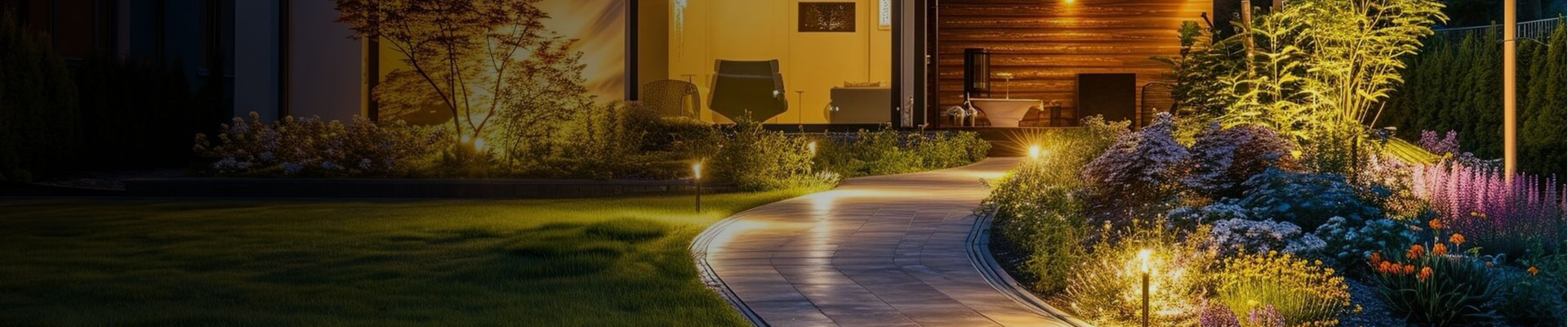

Why Nighttime Light Is Biologically Powerful
Effects on Plants
1. Photoperiod Disruption: Flowering and Seasonal Timing
2. Growth Form and Resource Allocation
3. Plant Stress, Pest Pressure, and Indirect Reproductive Effects
Effects on Animals
1. Insects: Attraction and Food-Web Ripples
2. Bats: Mixed Outcomes by Species
3. Birds, Amphibians, and Small Mammals
What Determines Impact? The Key Lighting Variables
Practical Design Guidance With Fewer, Higher-Impact Points
Common Garden Light Types and Typical Ecological Considerations
A Balanced Conclusion
FAQs
Garden lighting makes outdoor spaces safer, more usable, and visually striking after dark. But it also introduces artificial light at night (ALAN), which can act like an ecological “signal” that many organisms interpret as day, dusk, or a shortened night. Darkness is not simply the absence of light; it is a functional environmental condition that helps regulate growth cycles in plants and daily/seasonal behaviors in animals. When a garden is illuminated—especially with bright, blue-rich, poorly shielded, or long-duration lighting—plants and wildlife may change how they develop, feed, navigate, reproduce, and interact.
Why Nighttime Light Is Biologically Powerful
Many organisms rely on predictable day–night patterns. Circadian rhythms synchronize physiology and behavior to a 24-hour cycle, while photoperiodism allows plants and some animals to use the length of the night as a seasonal calendar. Artificial lighting can disrupt both systems. Importantly, it’s not only brightness that matters: spectrum (color), timing, direction, and contrast between lit and unlit areas strongly shape ecological outcomes.
In residential areas, gardens are numerous and closely spaced. A single yard light may seem minor, but many together can form a network of bright spots and “skyglow” that reshapes the local nighttime environment.
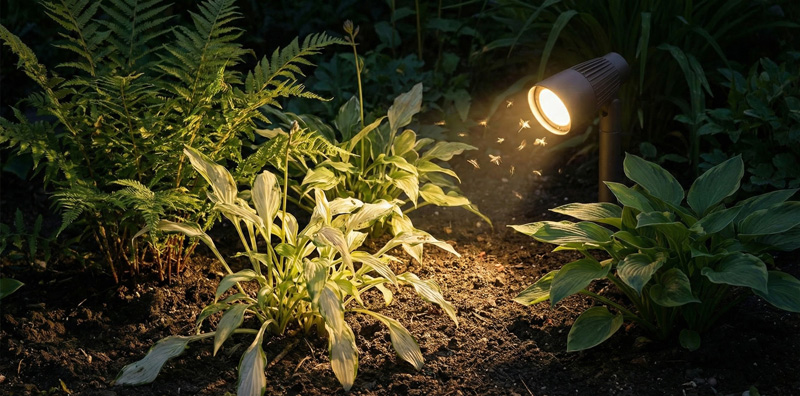
Plants detect and interpret light using photoreceptors that respond to different wavelengths. These receptors feed into hormonal pathways that regulate growth, flowering, dormancy, and defense. Because many of these processes depend on uninterrupted darkness, even modest nighttime lighting can influence plant development in noticeable and subtle ways.
1. Photoperiod Disruption: Flowering and Seasonal Timing
Many species use night length to decide when to flower or enter dormancy. If lighting extends the perceived “day” or interrupts the dark period, plants may flower earlier or later than expected, or produce fewer flowers. In temperate climates, a common visible effect is uneven autumn behavior: shrubs or trees near lights may keep leaves longer on the illuminated side, or break dormancy earlier in spring, which can increase vulnerability to late frosts.
2. Growth Form and Resource Allocation
Light spectrum can also influence plant architecture. When plants receive unusual nighttime cues, some may shift toward “shade-avoidance”-like growth patterns—elongating stems, altering branching, or changing leaf orientation. These changes can weaken structure, reduce drought resilience, and affect how plants compete for space and resources in mixed plantings.
3. Plant Stress, Pest Pressure, and Indirect Reproductive Effects
Plants integrate light cues with defense pathways. Night lighting can alter stress physiology and, in some settings, change susceptibility to herbivores or disease. Even if the plant looks healthy, its reproduction may still be affected indirectly: if lights reduce visits from nocturnal pollinators such as moths, pollination success and seed set can decline.

Artificial light at night influences animals in two broad ways: it changes behavior (where animals go, when they feed, how they avoid predators) and it changes physiology (sleep, hormone regulation, and timing of reproduction). Gardens often sit at the boundary between human-built areas and habitat patches, so lighting can either function like a barrier or like a trap, depending on the species.
1. Insects: Attraction and Food-Web Ripples
Many nocturnal insects are drawn to lights or become disoriented by them. Circling a light source wastes energy and increases exposure to predators, while time spent near lights reduces time spent feeding and mating. Because insects are foundational to food webs, changes in insect abundance or behavior can ripple outward—affecting birds, bats, amphibians, and plant pollination.
2. Bats: Mixed Outcomes by Species
Some bat species exploit lights because insects concentrate there, effectively turning lamps into feeding stations. However, many light-averse bats avoid illuminated areas, losing access to foraging grounds and commuting corridors along hedgerows or tree lines. This can shift local bat communities toward a few tolerant species and away from more sensitive ones.
3. Birds, Amphibians, and Small Mammals
Birds can experience altered timing of dawn song and activity, and migratory birds may become disoriented by bright nighttime lighting—especially in low cloud or fog. Amphibians are often highly sensitive to illumination near water and vegetation edges; lighting can reduce breeding calls, alter movement, and increase predation risk. Small mammals may avoid lit patches to reduce visibility, which can fragment their routes and change predator–prey dynamics.
What Determines Impact? The Key Lighting Variables
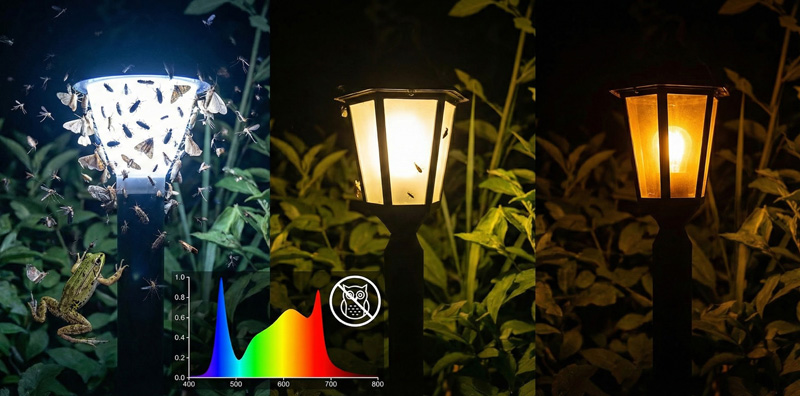
Different garden lights have very different ecological footprints. In practice, the strongest predictors of impact are:
- Intensity and contrast: Brighter lights and stark transitions between bright and dark increase disruption.
- Spectrum: Blue-rich white light tends to attract more insects and interfere more broadly with animal physiology than warm or amber light.
- Duration and timing: All-night lighting generally has much greater effects than short, targeted use.
- Directionality: Unshielded fixtures spill light into habitat and the sky, expanding the affected area far beyond the walkway or patio.
- Flicker: Some LEDs and drivers produce flicker that humans barely notice but some animals may detect, potentially adding another layer of disturbance.
Practical Design Guidance With Fewer, Higher-Impact Points
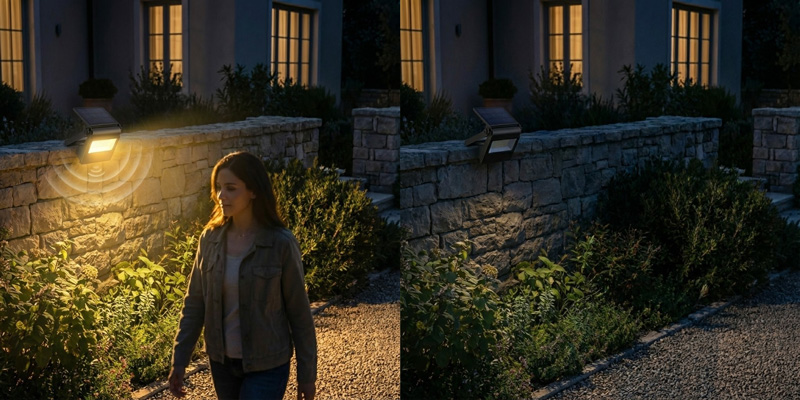
The most effective mitigation strategies are simple and tend to work together. If you apply only a few changes, choose these:
-
Use light only when needed. Timers and motion sensors dramatically reduce exposure time, especially for decorative or security lighting.
-
Aim it down and shield it well. Fully shielded fixtures limit spill into vegetation, windows, and the sky, shrinking the ecological “reach” of each lamp.
-
Choose warm or amber tones. Warmer spectra usually attract fewer insects and reduce many wildlife impacts compared with cool white lighting.
-
Keep brightness modest. Most home pathways and steps need far less light than people assume—lower levels reduce glare for humans and reduce disturbance for wildlife.
-
Protect sensitive zones. Keep permanent lights away from water features, hedgerows, native plant patches, and tree canopies that function as wildlife corridors.
A helpful way to think about it is: shorter + warmer + dimmer + better aimed.
Common Garden Light Types and Typical Ecological Considerations
| Light type / setting | Typical spectrum impression | Likely insect attraction | Plant photoperiod risk | Best-use scenario | Notes for lower impact |
|---|---|---|---|---|---|
| Cool white LED (blue-rich) | “Bright white” | High | Moderate–High | Rarely necessary in gardens | Reduce duration; avoid near flowers/hedges; strong shielding |
| Warm white LED (low blue) | “Soft white” | Moderate | Moderate | Steps and paths | Use low output; downward aim; timer-based shutoff |
| Amber / PC-amber LED | “Amber” | Lower | Lower–Moderate | Wildlife-sensitive yards | Very effective with shielding + limited hours |
| Solar path lights (varies) | Variable | Variable | Variable | Simple wayfinding | Choose warm/amber models; avoid overly bright units |
| Decorative string lights | Often warm, many points | Moderate | Moderate | Short-term ambience | Use for limited hours; keep out of dense vegetation |
| Unshielded flood/security lights | Often white | High | High | Only if truly needed | Motion activation + shielding + strict downward aim |
Garden lighting is not inherently “bad,” but it is a strong ecological lever. Plants may shift flowering and seasonal timing, and animals may become disoriented, displaced, or drawn into risky feeding and predation patterns. The good news is that lighting is among the most quickly reversible environmental factors: you can reduce its impact immediately by changing brightness, spectrum, aiming, and operating hours.
With a few high-value choices—warm tones, shielding, modest brightness, and limited duration—you can keep the garden welcoming for people while preserving the night as a functional habitat for plants and animals.
What lighting metrics should I evaluate to predict ecological impact in a garden?
Focus on illuminance at the ground (lux), spectral profile (especially blue content), operating duration, and fixture optics such as shielding and beam control.
Two installations with the same wattage can have very different ecological effects depending on whether light is tightly aimed downward or spilling into vegetation and upward into the sky.
Can garden lights affect plant flowering or dormancy even if the garden does not appear very bright?
Yes. Many plants respond to the length and continuity of nighttime darkness, known as photoperiod.
Relatively low-level light can act as a night-break signal that alters flowering timing or delays dormancy, especially for photoperiod-sensitive species and plants located close to fixtures or reflective surfaces.
Why do insects cluster around some lights more than others, and what does that mean for the garden ecosystem?
Insects are generally more attracted to blue-rich light and bright point sources.
Clustering increases energy expenditure and predation risk while reducing time spent feeding and mating.
Because insects support pollination and food webs, concentrated attraction near lamps can alter pollination patterns and redistribute prey availability for bats, birds, and spiders.
If some bats feed near lights, does that mean lighting is beneficial for bats overall?
Not necessarily. While some fast-flying, light-tolerant bat species exploit insects near lamps, many light-averse species avoid illuminated corridors such as hedgerows and tree lines.
This avoidance reduces habitat connectivity and foraging access, often shifting local bat communities toward tolerant species and away from sensitive ones.
Which mitigation measures reduce ecological impact the most without sacrificing human safety?
The most effective measures include:
- Shortening operating time using timers and motion sensors
- Fully shielding fixtures and aiming light downward
- Choosing warm or amber-toned light sources
- Keeping brightness modest and task-focused
These steps typically maintain safe visibility for paths and entrances while greatly reducing the area and duration of nighttime ecological exposure.
