
1. The Anatomy of a Solar Mushroom Light
2. Technical Functionality and Efficiency
3. Aesthetic Categories and Design Languages
4. Why Choose Mushroom Solar Lights? (The Benefits)
5. The Buyer’s Guide: What to Look For
6. Installation and Landscaping Strategies
7. Maintenance and Troubleshooting
FAQs
In the evolving landscape of residential garden design, lighting has transitioned from a purely functional necessity to a pivotal element of aesthetic expression. Among the myriad options available to the modern homeowner—from stark floodlights to geometric path markers—one trend has captured the imagination of landscape architects and hobbyists alike: Mushroom Solar Garden Lights.
These fixtures, designed to mimic the organic shapes of fungi while harnessing photovoltaic technology, represent a fascinating intersection of whimsy, sustainability, and practical engineering. Whether aiming to cultivate a "cottagecore" aesthetic, a fairy-tale ambiance, or simply looking for an eco-friendly way to delineate a garden path, these lights offer a unique solution.
This comprehensive guide explores the mechanics, design philosophy, installation best practices, and technical considerations required to select and maintain high-quality mushroom solar lighting.
1. The Anatomy of a Solar Mushroom Light
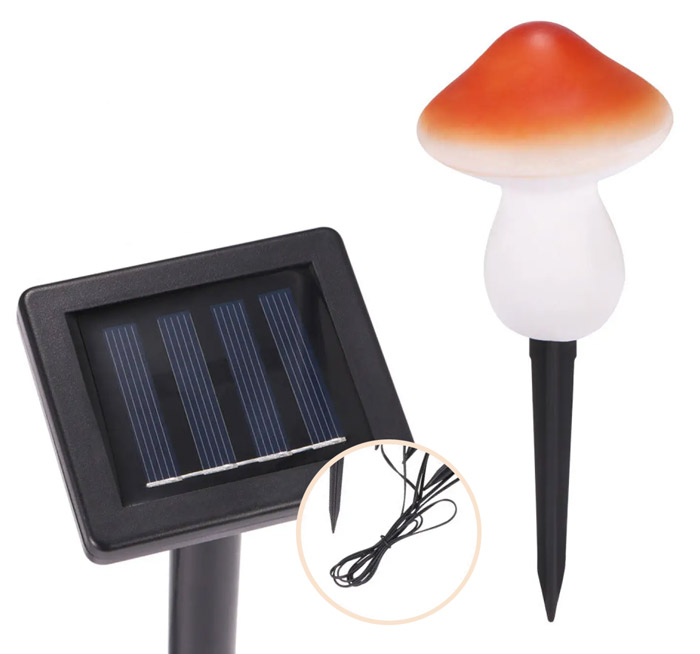
To understand the value proposition of these lights, one must first understand their construction. Unlike traditional low-voltage landscape lighting which requires trenching and transformers, mushroom solar lights are self-contained systems. A high-quality unit is a marvel of miniaturized integration.
At the apex of the unit—usually integrated into the "cap" of the mushroom or situated on a separate stake connected by a wire—lies the photovoltaic (PV) panel. In modern iterations, these are typically polycrystalline silicon panels, favored for their balance of cost and efficiency in partial shade conditions common in gardens.
Beneath the exterior housing lies the energy storage unit, generally a rechargeable AA or AAA Ni-MH (Nickel-Metal Hydride) battery. This battery stores the energy converted during the day to power the Light Emitting Diode (LED) at night. The housing itself varies significantly, ranging from high-impact ABS plastic to hand-painted resin or blown glass, materials chosen to withstand the rigors of outdoor exposure while maintaining translucency for light diffusion.
The Core Components
- The Solar Array: Usually 2V/100mA to 2V/200mA panels designed to charge low-capacity batteries over 6–8 hours.
- The Controller Board: A small circuit utilizing a photoresistor (or voltage detection from the panel itself) to detect dusk and dawn, automatically toggling the light.
- The Diffuser: The mushroom "stem" or "cap" acts as a lens, softening the harsh point-source light of an LED into a glow.
- The Spike: A ground stake, usually plastic or metal, that anchors the unit into the soil.
2. Technical Functionality and Efficiency
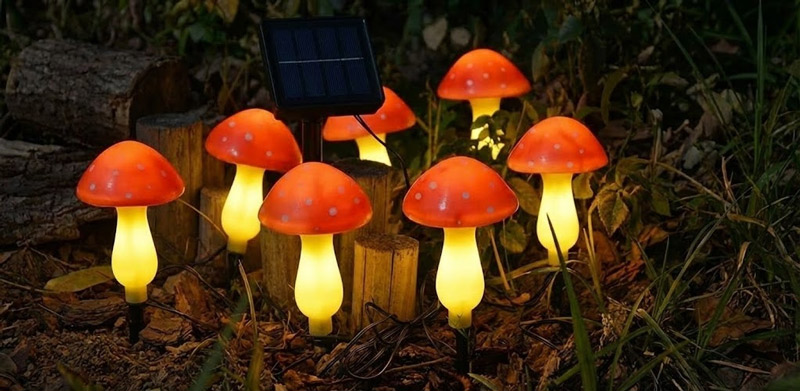
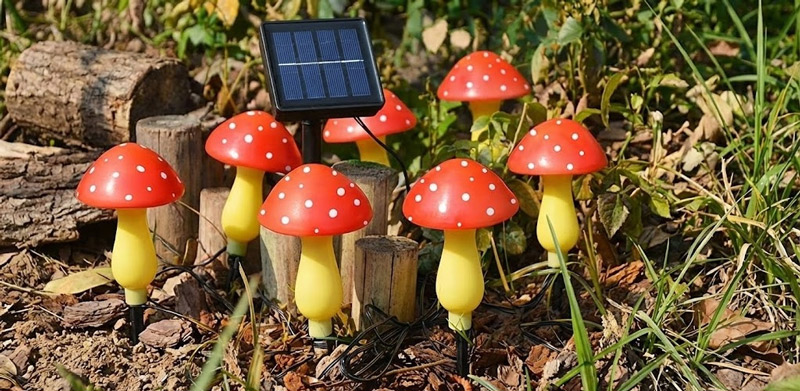
The operation of mushroom solar lights is governed by the photovoltaic effect. During daylight hours, photons strike the solar panel, knocking electrons free from atoms and generating a flow of electricity. This electricity flows into the rechargeable battery.
The efficiency of this process is heavily dictated by the quality of the solar panel and the positioning of the light. It is important to note that mushroom lights are categorized as accent lighting, not security lighting.
Standard path lights might output 20 to 50 lumens. Mushroom solar lights, by contrast, typically output between 2 to 10 lumens. This lower output is intentional; it preserves battery life (allowing for smaller, cheaper batteries) and creates a soft, ethereal ambiance rather than a stark spotlight.
3. Aesthetic Categories and Design Languages
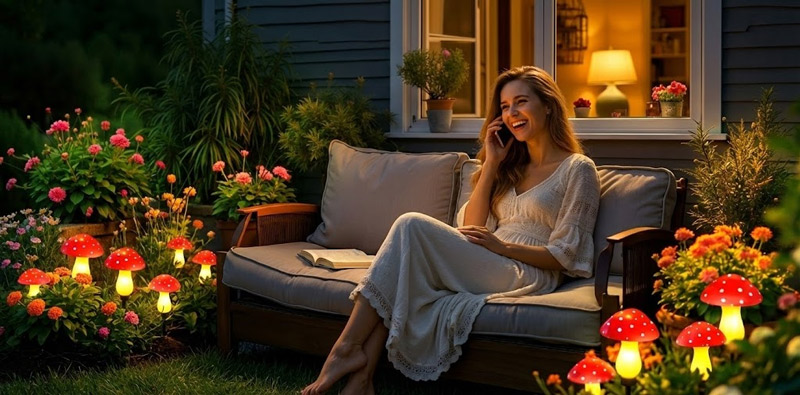
The market for mushroom solar lights is diverse, catering to different landscaping philosophies. Choosing the right style is just as critical as checking the technical specs.
Realistic vs. Whimsical
The most significant design divide is between realism and fantasy.
Realistic Botanical Replicas: These units are designed to look like actual fungi (such as Amanita muscaria or Boletus edulis) during the day. They feature textured resin stems, painted caps, and natural colors. The goal here is integration; the fixture should disappear into the foliage during the day and only reveal itself as a light source at night. These are preferred by serious gardeners who want to maintain a naturalistic look.
Stylized and Abstract: These designs prioritize the "light" over the "mushroom." They often feature clear acrylic stems with bubbles, fiber optic strands, or cartoonish shapes. They are often part of "fairy garden" setups. While they look artificial during the day, they often provide a more spectacular light show at night, utilizing RGB color-changing LEDs to cycle through the spectrum.
Material Considerations
- Resin: The gold standard for realistic lights. It is durable, weather-resistant, and takes paint well. However, cheap resin can fade under UV exposure.
- Glass: Used in premium models. Glass caps provide the most beautiful light refraction and do not yellow over time like plastic. They are, however, fragile.
- Plastic (ABS/PVC): The most common and affordable. While durable against impact, clear plastics can become cloudy (oxidized) after a few seasons of intense sun.
4. Why Choose Mushroom Solar Lights? (The Benefits)
Beyond the obvious aesthetic appeal, there are functional arguments for choosing this specific form factor over standard stick lights or wired systems.
1. Simplicity of Installation (Plug and Play) The barrier to entry for wired landscape lighting is high, often requiring an electrician or significant DIY skill to manage voltage drops and safe cabling. Mushroom solar lights are strictly wireless. They can be installed in seconds by simply pushing the stake into the ground. This allows for dynamic garden designs; if a plant grows and covers the light, you can move the light three feet to the left without digging up cables.
2. Low Light Pollution In an era where light pollution is a growing concern for wildlife and human circadian rhythms, mushroom lights are "Dark Sky friendly" by nature. Their low lumen count and downward or diffused light projection ensure they provide wayfinding and ambiance without casting light upwards into the sky or blinding neighbors.
3. Safety for Pets and Children Because these systems operate on very low voltage (usually 1.2V), there is zero risk of electric shock if a wire is chewed by a dog or cut by a lawnmower. The units remain cool to the touch, unlike halogen bulbs which can cause burns.
5. The Buyer’s Guide: What to Look For
Navigating the marketplace for these lights can be difficult due to the prevalence of low-quality generic products. To ensure you are purchasing a "high-quality" fixture, specific metrics must be evaluated.
IP Rating (Ingress Protection)
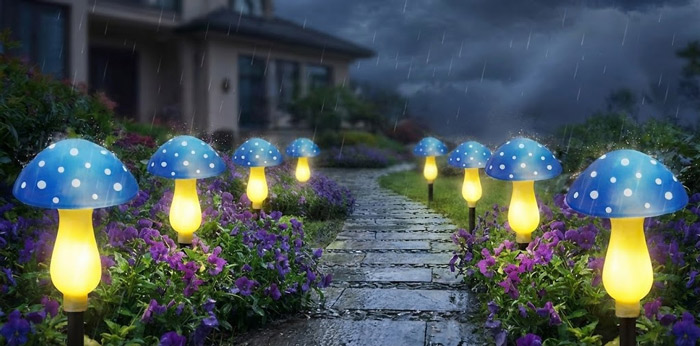
This is the most critical specification for longevity. You need a light that can withstand rain, sprinklers, and dust.
- Avoid: IP44 (Splashing water only).
- Target: IP65 (Water jets and dust tight). This ensures the internal electronics won't corrode after the first heavy thunderstorm.
Battery Capacity
Check the milliamp-hour (mAh) rating of the battery.
- Low End: 200–300 mAh. These will die halfway through the night.
- High Quality: 600–800 mAh. This capacity is necessary to store enough energy during a cloudy day to power the light through the night.
Panel Type
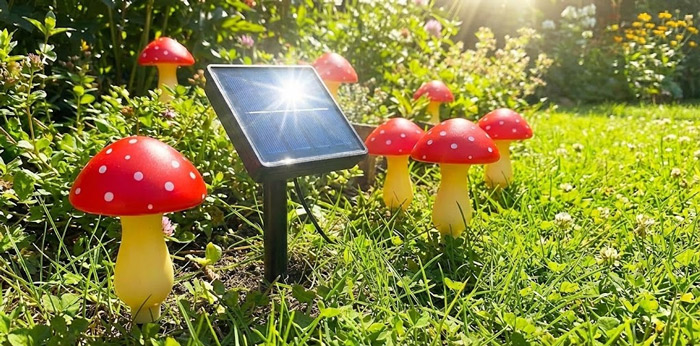
While difficult to discern from product photos, look for Monocrystalline panels if available, as they are more efficient than Polycrystalline or Amorphous panels. However, in the decorative light market, large Polycrystalline panels are acceptable if they are sized correctly relative to the battery.
Wire Management
For mushroom lights where a string of small mushrooms is connected to a single solar panel (a common configuration), check the length of the lead wire. A lead wire of at least 6 feet is essential. This allows you to place the mushrooms in a shaded area (under a fern) while positioning the solar panel in direct sunlight.
6. Installation and Landscaping Strategies
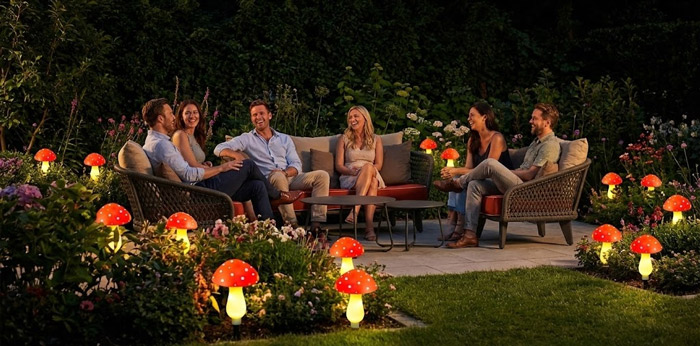
Proper installation is the difference between a disappointing glow and a magical landscape. The primary rule of solar lighting is Sunlight Access.
The solar panel requires direct line-of-sight to the sun for at least 6 hours a day. Shadows from trees, fences, or the building itself will drastically reduce performance. If you are using individual units (where the panel is on the mushroom cap), they cannot be placed under dense foliage. In these cases, you must use the "string" style where the panel is separate.
Grouping and Layering
Professional landscapers rarely place lights in a straight, soldier-like row. This looks artificial, like an airport runway.
- Clustering: Place mushroom lights in groups of three or five (odd numbers are visually more pleasing) at varying heights.
- Depth: Place lights at different depths in the flower bed. One near the path, one tucked slightly behind a hosta, and one further back. This creates a sense of depth and mystery in the garden at night.
Color Temperature Integration
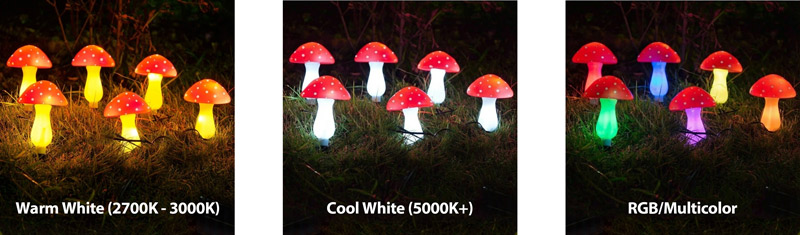
Pay attention to the Kelvin (K) rating of the LED.
- Warm White (2700K - 3000K): Mimics incandescent bulbs. Best for relaxing, traditional gardens. Matches well with wood and stone.
- Cool White (5000K+): Has a bluish tint. Often looks harsh and "technological" in a garden setting. Generally avoided for mushroom lights unless aiming for a specific "ice" look.
- RGB/Multicolor: Best for festive occasions or specific whimsical themes, but can look tacky if overused.
7. Maintenance and Troubleshooting
Solar lights are low maintenance, not no maintenance. To keep them running for years rather than months, a seasonal routine is required.
Cleaning the Panel The solar panel is the lifeline of the unit. Pollen, dust, bird droppings, and hard water stains from sprinklers can form a film over the glass/plastic, reducing charging efficiency by up to 50%.
- Action: Wipe the panels with a damp cloth and mild soap once a month. Do not use abrasive scrubbers, which can scratch the plastic coating.
Battery Replacement Rechargeable Ni-MH batteries have a finite lifespan, usually around 500 charge cycles (roughly 1.5 years). If you notice your lights are dimming after only 2 hours, the light isn't broken—the battery is just tired.
- Action: Most quality units have a battery compartment secured by screws. Open it, check the size (usually AA or AAA), and replace it with a new rechargeable battery of equal or higher mAh capacity.
Winter Storage In regions with harsh winters, freezing temperatures can damage the battery chemistry, and snow cover renders the panels useless.
- Action: It is recommended to bring the lights indoors during deep freezes. Turn the switch to "Off" and remove the batteries to prevent corrosion during storage.
FAQs
Can mushroom solar lights charge effectively on cloudy days or in full shade?
Solar panels still charge on cloudy or overcast days because UV rays penetrate cloud cover, but efficiency drops sharply.
On heavily overcast days, panels may only produce 20–30% of normal output, resulting in much shorter nighttime runtime.
Important: Full shade is different from cloudy weather. Under dense trees or decks, panels receive almost no usable light and often fail to turn on.
If your garden is shaded, choose models with a remote solar panel so the panel can sit in full sun.
Why do my mushroom lights sometimes act like a strobe light?
This is usually caused by low-voltage cycling or light feedback.
- Battery depletion: Voltage drops, the light shuts off, rebounds, and turns back on repeatedly.
- Light feedback: Reflected or nearby light hits the sensor, confusing day/night detection.
Move the light away from reflective surfaces and replace weak batteries.
Will nearby porch lights or streetlights stop my mushroom lights from turning on?
Yes. Mushroom solar lights use a sensitive dusk-to-dawn sensor.
Bright artificial light hitting the solar panel at night can make the unit think it’s daytime and stay off.
Test: Cover the panel at night—if the light turns on, relocation or re-aiming is required.
Can I replace the LED bulb inside the mushroom?
In almost all cases, no. The LED is hard-soldered to the circuit board.
LEDs are rated for 50,000–100,000 hours and usually outlast the battery, panel, and housing.
If a new battery doesn’t fix the issue, corrosion or wiring failure is the more likely cause.
Why has the solar panel turned milky or white?
This is caused by UV degradation of the epoxy or plastic coating over the solar cells.
The cloudy surface blocks sunlight and significantly reduces charging efficiency.
A light polish can temporarily help, but severe clouding usually means the panel is nearing end-of-life. For longevity, choose glass-laminated panels.
