

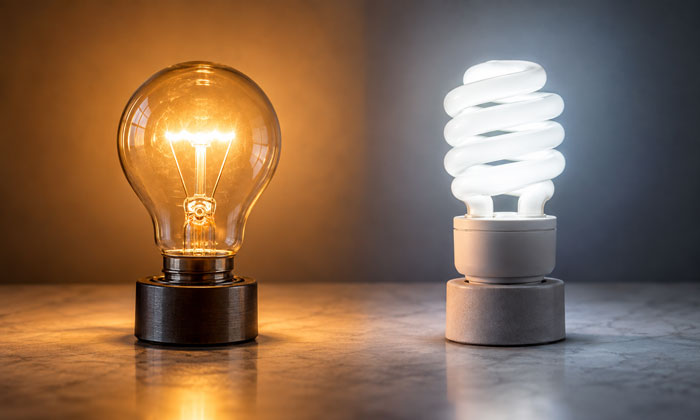
When evaluating traditional lighting technologies, understanding the fundamental difference between incandescent and fluorescent lamps is essential for homeowners, facility managers, and lighting designers alike. While both technologies have illuminated homes, offices, and commercial facilities for decades, they generate light through entirely different physical mechanisms, resulting in major disparities in energy efficiency, lifespan, heat emission, light quality, and environmental impact.
1. Operating Principle: How Each Light Source Works
The most distinct contrast between incandescent and fluorescent lights lies in the physics of how they produce visible illumination.
Incandescent Lighting: Thermal Radiation
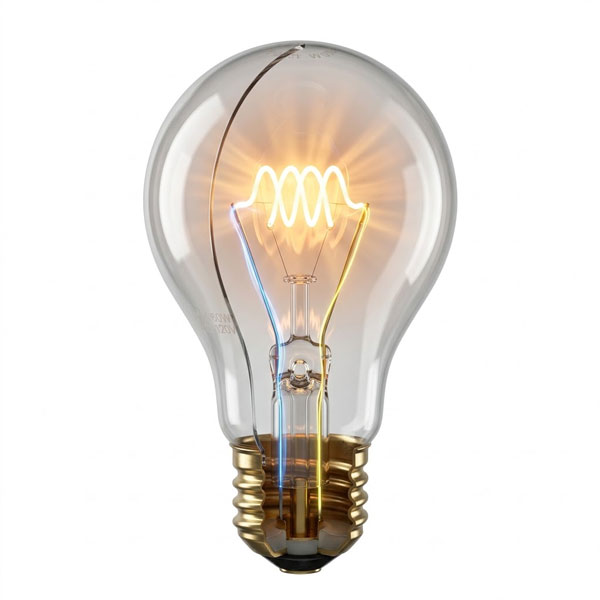
Incandescent technology relies on the principle of incandescence—the emission of visible light from a heated solid object. Inside an airtight glass bulb filled with an inert gas mixture (typically argon and nitrogen), an electric current passes through a slender tungsten filament.
As the electrical resistance of the tungsten resists current flow, the filament heats up to extreme temperatures (roughly 2,200°C to 2,700°C / 4,000°F to 4,900°F). At this glowing thermal state, it radiates a broad spectrum of electromagnetic energy. Most classic residential lamps, such as the traditional A19 lamp fitted into a standard E26 socket, operate using this straightforward thermal design.
Fluorescent Lighting: Gas Discharge and Phosphor Excitation
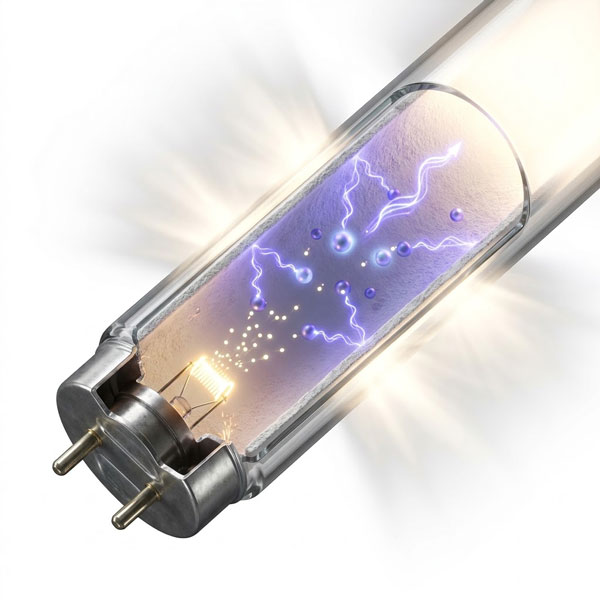
Fluorescent technology produces light without relying on an intensely heated filament. Instead, it belongs to the gas-discharge category. A glass tube or compact bulb is filled with low-pressure argon gas and a minute quantity of vaporized mercury, with electrodes sealed into each end.
When voltage is applied across the electrodes, an electrical arc forms through the gas mixture. Flowing electrons collide with vaporized mercury atoms, exciting their electrons and releasing invisible ultraviolet (UV) radiation. The interior wall of the glass envelope is coated with phosphor powder. When UV photons strike this phosphor coating, the atoms absorb the energy and fluoresce, re-emitting visible light. To regulate the electric current and prevent the lamp from burning out, fluorescent fixtures require a magnetic or electronic ballast.
2. Energy Consumption and Luminous Efficacy
Evaluating electrical efficiency requires looking closely at what the wattage of a light bulb indicates—which simply measures electrical power draw—versus the true lumens in light bulbs, which quantifies actual visible brightness.
- Incandescent Efficacy: Incandescent bulbs are notoriously inefficient. They convert only about 10% of their consumed electrical power into visible light; the remaining 90% is dissipated as radiant heat. Their luminous efficacy ranges between 10 and 17 lumens per watt (lm/W). Producing an output of 800 lumens typically demands a 60-watt incandescent bulb.
- Fluorescent Efficacy: Because fluorescent lamps do not depend on heating a filament to white-hot levels, their luminous efficacy reaches 50 to 100 lumens per watt (lm/W). A compact fluorescent lamp (CFL) requires only 13 to 15 watts to generate the same 800 lumens, using roughly 75% less electricity than its incandescent counterpart.
3. Lifespan and Operational Durability
Bulb longevity affects both maintenance schedules and the total cost of ownership.
- Incandescent Lifespan: Tungsten filaments undergo gradual evaporation during operation. Over time, microscopic thinning creates weak spots where the wire eventually ruptures. When evaluating how long incandescent lights last, standard ratings fall between 750 and 1,200 hours, requiring frequent bulb replacements in daily-use fixtures.
- Fluorescent Lifespan: Fluorescent tubes and compact lamps offer a substantially longer operating life, typically rated between 8,000 and 15,000 hours—approximately 8 to 15 times longer than incandescent bulbs.
However, fluorescent lifespan is sensitive to switching cycles. Every time a fluorescent fixture powers on, high starting voltage sputters away a small portion of the emissive chemical coating on the cathode filaments. Turning a fluorescent lamp on and off frequently (such as in closets or sensor-activated areas) prematurely degrades the cathodes, reducing overall operational life.
4. Light Quality: Color Temperature and Color Rendering
Light appearance significantly impacts visual comfort, architectural atmosphere, and interior design.
Incandescent Light Color Temperature
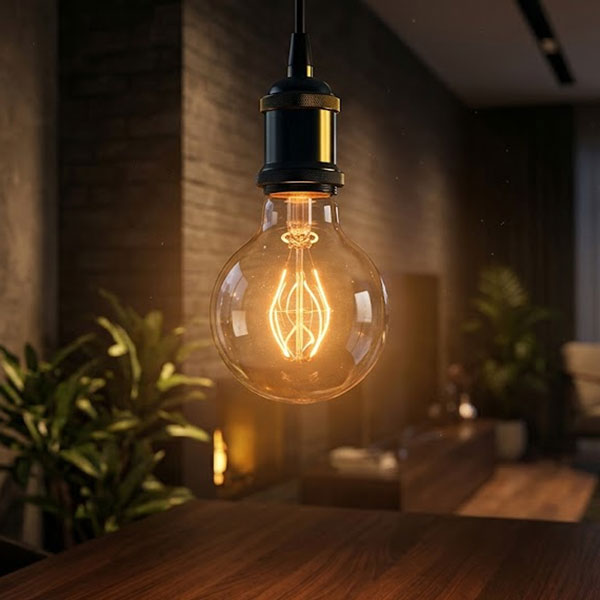
The natural incandescent light color temperature sits consistently in the warm amber band between 2,600K and 2,800K (standard 2,700K Soft White), closely resembling the warm glow of candlelight or sunset.

Fluorescent Light Color Temperature
By contrast, fluorescent lamps achieve variable correlated color temperatures by altering the chemical composition of their internal phosphor blend. They can be formulated across a wide range—from warm white (2,700K) to neutral white (3,500K–4,000K), up to daylight (5,000K–6,500K).
Color Rendering Index (CRI)
Color fidelity determines how accurately colors appear beneath an artificial light source:
- Incandescent lamps provide a perfect 100 CRI because their thermal radiation yields a continuous, smooth electromagnetic spectrum identical to a standard blackbody radiator. Flesh tones, warm woods, and rich fabrics appear vibrant and natural.
- Standard fluorescent lamps typically rate between 60 and 85 CRI. Because their emission relies on discrete elemental emission lines from mercury and specific phosphors, their spectral power distribution contains distinct peaks and valleys, sometimes causing muted color rendering or a subtle greenish cast. Balancing these characteristics requires evaluating both CCT and CRI for any planned installation.
5. Heat Dissipation and Thermal Management
Thermal output dictates where fixtures can safely operate and directly impacts indoor cooling loads:
- Incandescent Bulbs: Operating temperatures on the glass envelope of an incandescent bulb frequently surpass 150°C to 250°C (300°F to 480°F). In confined fixtures or recessed cans without adequate ventilation, this intense heat can bake wiring insulation, deteriorate lamp sockets, and place extra strain on building HVAC air-conditioning systems.
- Fluorescent Lamps: Operating at much higher thermodynamic efficiency, fluorescent tubes remain relatively cool to the touch (typically between 35°C and 45°C / 95°F to 115°F). This cool operation reduces the risk of accidental burns and minimizes unwanted ambient heat gains inside conditioned living spaces.
6. Dimming, Startup Performance, and Electrical Noise
Control capabilities represent a critical operational distinction:
- Dimming Simplicity: Incandescent bulbs feature completely seamless, continuous dimming from 0% to 100% using standard, inexpensive resistive or phase-cut TRIAC wall dimmers. As power decreases, the filament cools, creating an appealing "warm dim" shift down toward deeper amber hues.
- Fluorescent Complexities: Dimming a fluorescent fixture is far more complex. Standard fluorescent ballasts cannot handle reduced input voltages; doing so results in extinguishing, heavy buzzing, or severe cathode degradation. Dimming requires dedicated electronic dimming ballasts and matched control wiring. Furthermore, aging magnetic ballasts or faulty glow starters frequently suffer from hum, stroboscopic cycling, or erratic flashes, requiring homeowners to diagnose and fix flickering lights.
7. Environmental Footprint and Safe Disposal
- Incandescent: Standard incandescent bulbs contain no hazardous substances. The glass envelope, aluminum or brass screw base, and tungsten filament can be discarded in regular municipal solid waste, though their high energy consumption yields a larger indirect carbon footprint over time.
- Fluorescent: Fluorescent tubes and compact bulbs contain trace quantities of elemental mercury (typically 1.5 to 5 milligrams per bulb), which is essential for gas discharge. If a fluorescent bulb breaks, mercury vapor is released into the room. Fluorescent lamps cannot be discarded in household trash; environmental regulations require them to be recycled at certified hazardous waste collection points to prevent mercury contamination in soil and groundwater.
FAQs
1. Can an incandescent bulb and a fluorescent tube run on the same dimmer switch?
No. Standard rotary or slide wall dimmers work via phase-cut TRIAC switches designed specifically for resistive filament loads. Connecting a standard fluorescent ballast to a conventional incandescent dimmer will cause immediate malfunction, loud buzzing, severe strobing, and potential ballast fire hazards. Fluorescent dimming requires a dedicated electronic dimming ballast paired with a compatible low-voltage (such as 0-10V) or manufacturer-matched fluorescent control system.
2. Why do fluorescent lamps take significantly longer to reach full brightness in winter or cold spaces?
Fluorescent light output depends directly on the vapor pressure of the internal mercury. When cold ambient temperatures surround the glass tube, the mercury condenses on the tube walls instead of vaporizing into the gas arc. Until electrical current heats the interior to its optimal operating temperature (usually around 25°C to 40°C), UV emission remains suppressed, causing the lamp to emit a dim pinkish-orange glow for several minutes upon startup. Incandescent bulbs, which rely entirely on internal filament resistance within an insulated vacuum/gas shell, reach 100% brightness instantaneously regardless of sub-zero temperatures.
3. Do fluorescent lights emit harmful ultraviolet (UV) radiation compared to incandescent bulbs?
Yes, in very small quantities. While the internal glass envelope and phosphor coating absorb the vast majority of UV radiation produced by the mercury discharge, tiny fractions of UVA and UVB can escape through microscopic imperfections in the phosphor layer. For individuals with extreme photosensitivity, prolonged close-proximity exposure (under 30 cm) may cause mild skin or eye irritation. Standard incandescent bulbs emit almost zero UV radiation; their excess non-visible emissions occur entirely in the infrared (heat) portion of the electromagnetic spectrum.
4. Why does turning fluorescent lights on and off frequently cause premature failure?
Each startup requires a momentary high-voltage electrical surge to establish the gas arc between electrodes. This strike voltage physically sputters away a fraction of the barium, strontium, and calcium oxide coating applied to the cathode filaments. Once this emissive coating is exhausted, the electrodes cannot emit electrons efficiently, resulting in black rings near the tube ends and subsequent lamp failure. For optimal longevity, fluorescent tubes should remain on for at least 15 minutes per activation cycle.
5. What is the proper emergency protocol if a fluorescent bulb breaks in an enclosed room?
Because fluorescent lamps contain vaporized and particulate mercury, an immediate safety protocol must be followed:
- Evacuate all people and pets from the room immediately.
- Open exterior windows and doors to ventilate the space for at least 10 to 15 minutes, while shutting off central HVAC heating/cooling systems to prevent circulating vapor.
- Never use a vacuum cleaner or broom, which aerosolizes mercury beads into breathable air. Instead, use stiff cardboard or index cards to scoop up glass fragments, followed by sticky tape to pick up tiny shards and powder.
- Place all debris and cleaning materials into an airtight glass jar or sealable plastic bag and transport it to a certified hazardous waste disposal facility.