

The Meaning of A19
Why A19 Lamps Are So Common
Common Features of an A19 Lamp
A19 Lamp Dimensions and Technical Overview
A19 Lamp vs. Other Bulb Types
Where Are A19 Lamps Used?
A19 LED Lamps: The Modern Standard
How to Choose the Right A19 Lamp
A19 Lamp and E26: What Is the Difference?
Advantages of Using A19 Lamps
Are There Any Limitations?
FAQs
When shopping for light bulbs, many people come across technical terms such as A19, E26, lumens, Kelvin, and watt equivalency. Among these, A19 lamp is one of the most frequently mentioned terms, especially in the United States and other markets that use standard household bulb fittings. But what exactly is an A19 lamp, and why is it so widely used?
In simple terms, an A19 lamp is a standard pear-shaped light bulb commonly used in homes, offices, and commercial spaces. It is the bulb shape that most people imagine when they think of a traditional light bulb. Although the term may sound technical, understanding it is actually quite easy. Once you know what the “A” and “19” stand for, you will be able to choose the right bulb more confidently for your lighting needs.
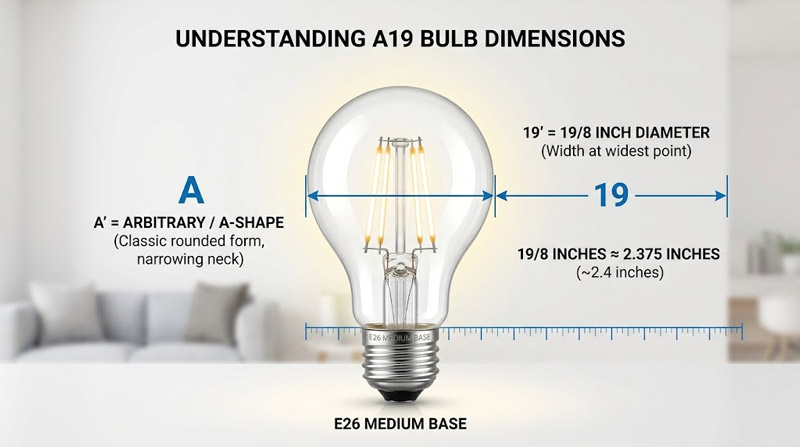
The term A19 refers to the shape and size of the bulb. The letter “A” stands for Arbitrary, or more commonly A-shape, which describes the classic rounded bulb form that gradually narrows into a neck. The number “19” indicates the bulb’s diameter in eighths of an inch. In other words, an A19 bulb measures 19/8 inches, which equals 2.375 inches, or approximately 2.4 inches, at its widest point. This size has become the standard for many everyday lighting applications, which is why A19 lamps are so commonly used in household lamps, ceiling fixtures, vanity lights, and other general-purpose lighting settings.
A19 lamps are popular because they are highly versatile. They fit many standard sockets and provide a familiar balance of brightness, size, and energy efficiency. For decades, incandescent A19 bulbs were the default option in households. Today, although incandescent bulbs are becoming less common due to energy regulations, the A19 shape remains the standard, especially in LED and CFL versions.
Most consumers buy A19 bulbs without even realizing it. If you have ever replaced a regular table lamp bulb, bedroom light bulb, or kitchen fixture bulb, there is a good chance it was an A19 lamp.
Common Features of an A19 Lamp
Although A19 refers mainly to shape and size, most A19 bulbs also share several common characteristics:
-
Standard household shape
The bulb has a rounded top and a narrow neck, making it suitable for a wide range of fixtures. -
Typical medium screw base
In North America, most A19 bulbs use an E26 base, which is the standard screw-in base for household fixtures. -
Available in multiple technologies
A19 lamps can be found as incandescent, halogen, CFL, and LED bulbs, although LED is now the most popular option. -
Wide range of brightness levels
They are available in different lumen outputs, from soft decorative light to bright task lighting. -
Different color temperatures
A19 lamps may produce warm white, cool white, or daylight-style illumination, depending on user preference.
A19 Lamp Dimensions and Technical Overview
The following table provides a general overview of the typical specifications of an A19 lamp:
|
Feature |
Description |
|---|---|
|
Bulb Shape |
A-shape (classic household bulb) |
|
Diameter |
2.375 inches (19/8 inch) |
|
Typical Length |
Around 4.1 to 4.4 inches |
|
Common Base Type |
E26 medium screw base |
|
Main Technologies |
Incandescent, CFL, LED |
|
Typical Household Use |
Table lamps, floor lamps, ceiling fixtures, wall sconces |
|
Common Wattage Range |
5W to 14W for LED, 40W to 100W for incandescent equivalent |
|
Common Brightness |
450 to 1600 lumens |
|
Color Temperature Options |
2700K, 3000K, 4000K, 5000K |
|
Dimmable Options |
Available in many models |
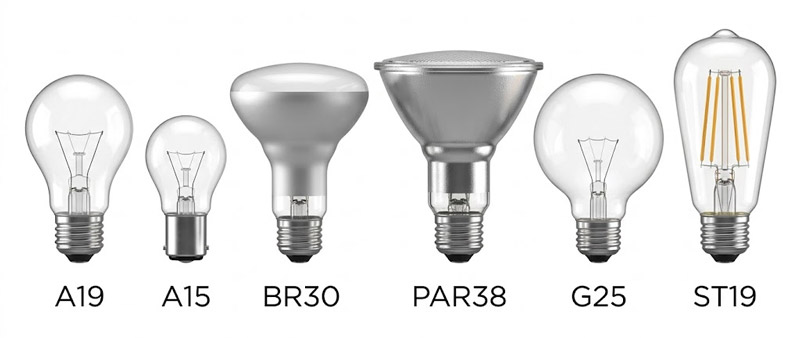
To better understand A19 lamps, it helps to compare them with other common bulb types.
|
Bulb Type |
Shape |
Typical Use |
Key Difference from A19 |
|---|---|---|---|
|
A19 |
Classic pear shape |
General household lighting |
Standard everyday bulb |
|
A15 |
Smaller A-shape |
Appliances, ceiling fans, decorative fixtures |
Smaller than A19 |
|
BR30 |
Bulged reflector |
Recessed cans, flood lighting |
Wider body, directional light |
|
PAR38 |
Parabolic reflector |
Outdoor security, spot lighting |
Larger and more focused beam |
|
G25 |
Globe shape |
Vanity mirrors, decorative fixtures |
Rounder and more decorative |
|
ST19 |
Vintage tubular shape |
Decorative pendant lights |
More stylish, less conventional |
This comparison shows that A19 is the all-purpose choice, while other bulb types are designed for more specialized or decorative functions.
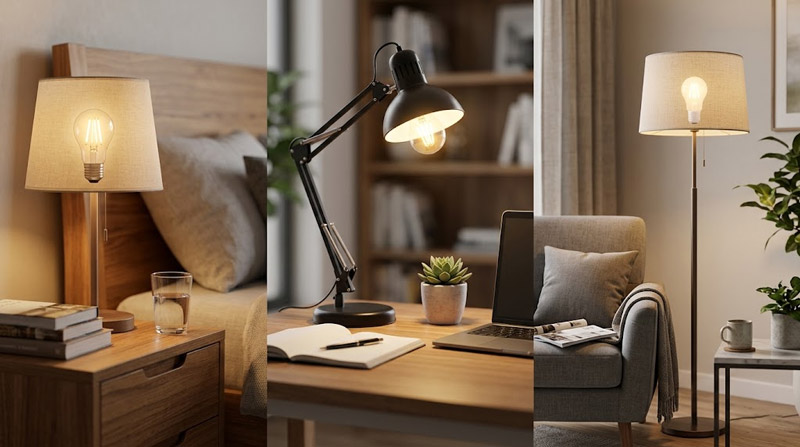
A19 lamps are used in a wide range of indoor applications. Their popularity comes from their compatibility with many standard fixtures.
1. Table Lamps
A19 bulbs are commonly used in bedside lamps, desk lamps, and living room table lamps. Their shape fits well inside lamp shades, and they provide balanced illumination.
2. Ceiling Fixtures
Many flush-mount or semi-flush ceiling fixtures are designed for A19 bulbs. In bedrooms, hallways, and kitchens, they are often the default option.
3. Floor Lamps
A19 bulbs work well in floor lamps used for ambient lighting or reading.
4. Wall Sconces
In hallways, bathrooms, and living areas, wall-mounted fixtures often support A19 bulbs.
5. Bathroom Vanity Fixtures
Depending on fixture design, A19 lamps may be used in bathroom lighting, although some decorative setups prefer globe bulbs.
6. Office and Commercial Settings
A19 LED bulbs are also common in offices, retail spaces, and hospitality environments where energy efficiency matters.
A19 LED Lamps: The Modern Standard
Today, when people refer to an A19 lamp, they often mean an A19 LED bulb. LED technology has transformed the lighting industry by making bulbs more efficient, longer-lasting, and environmentally friendly.
Here are some key benefits of A19 LED lamps:
Energy Efficiency
An LED A19 bulb can provide the same brightness as a 60-watt incandescent bulb while consuming only about 8 to 10 watts of electricity. This can significantly reduce energy bills over time.
Longer Lifespan
A typical LED A19 bulb may last 15,000 to 25,000 hours, much longer than traditional incandescent bulbs, which often last only around 1,000 hours.
Lower Heat Output
LED bulbs generate much less heat than incandescent lamps, making them safer and more efficient.
Variety of Light Colors
Consumers can choose from warm, neutral, or daylight tones depending on the mood and function of a room.
Smart Lighting Options
Many A19 LED bulbs now come in smart versions that can connect to Wi-Fi or Bluetooth, allowing users to control brightness, schedules, and even color through mobile apps or voice assistants.
How to Choose the Right A19 Lamp
Not all A19 lamps are the same. When buying one, it is important to look beyond the shape and consider several additional factors.
1. Brightness
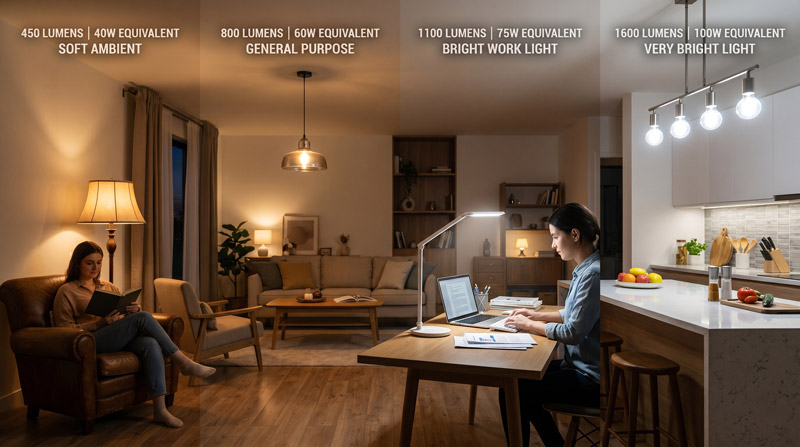
Instead of focusing only on watts, modern buyers should pay attention to lumens, which measure actual light output.
|
Brightness Level |
Approximate Lumens |
Traditional Equivalent |
|---|---|---|
|
Soft light |
450 lumens |
40W incandescent |
|
Standard household light |
800 lumens |
60W incandescent |
|
Bright task light |
1100 lumens |
75W incandescent |
|
Very bright light |
1600 lumens |
100W incandescent |
2. Color Temperature
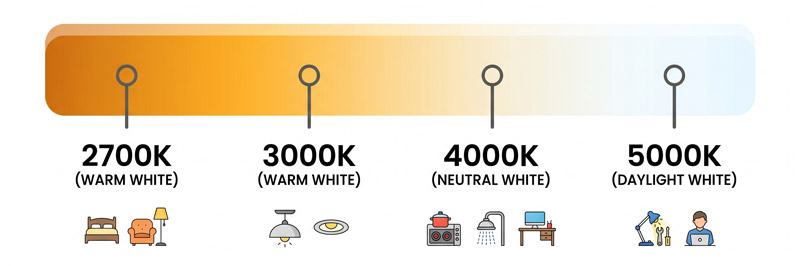
The color of light greatly affects the atmosphere of a room.
- 2700K: Warm, soft, cozy light for bedrooms and living rooms
- 3000K: Warm white for comfortable general lighting
- 4000K: Neutral white for kitchens, bathrooms, and offices
- 5000K: Daylight white for task lighting and workspaces
3. Base Compatibility
Most A19 bulbs use an E26 base, but users should always verify socket compatibility, especially in international markets where other base types may be common.
4. Dimmability
Not all LED A19 bulbs are dimmable. If the bulb will be used with a dimmer switch, make sure the packaging clearly says dimmable.
5. Enclosed Fixture Rating
Some light fixtures trap heat. If the bulb will be used in a fully enclosed fixture, it should be rated for that purpose.
6. Smart Features
For modern homes, smart A19 bulbs can provide additional convenience through app control, automation, and voice integration.
A19 Lamp and E26: What Is the Difference?
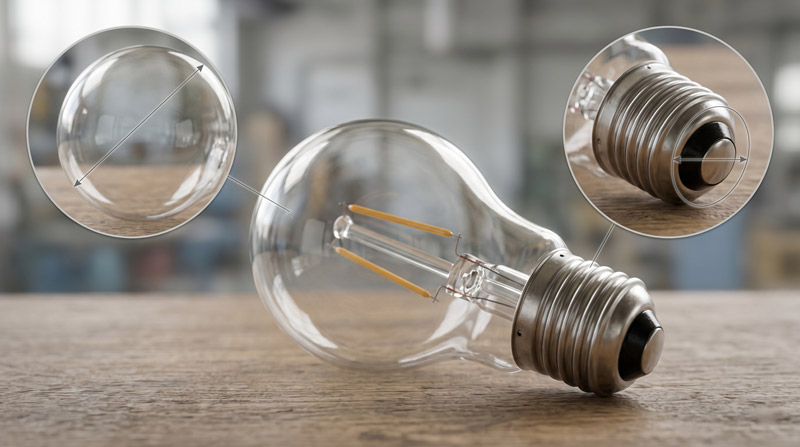
A common source of confusion is the difference between A19 and E26, but these two terms actually refer to different parts of a light bulb. A19 describes the shape and size of the bulb, while E26 refers to the base type, specifically the standard screw base commonly used in household lighting in the United States. In practical terms, this means a bulb can have an A19 shape and an E26 base at the same time, which is true for most standard household bulbs. Understanding this distinction is important when choosing a replacement, because a bulb may have the correct overall shape but the wrong base for the socket, or it may fit the socket while having a shape that is unsuitable for the fixture. For that reason, it is always a good idea to check both the bulb shape and the base type before buying a new one.
See also: Is A19 the Same as E26?
A19 lamps continue to be the preferred choice for general lighting for many practical reasons. They are easy to find in both physical stores and online marketplaces, and they fit a wide variety of common household fixtures, which makes them especially convenient for everyday use. In addition, they are available in many brightness levels and color temperatures, allowing users to choose the most suitable lighting effect for different rooms and purposes. LED versions are particularly popular because they save energy, last longer, and reduce maintenance needs over time. Their classic shape also helps provide balanced, non-directional illumination, making them ideal for general ambient lighting. Another advantage is that A19 bulbs are sold in both affordable and premium options, so they can meet the needs of different budgets and preferences. Because of this overall flexibility and convenience, A19 bulbs are often the first recommendation for people upgrading their home lighting.
Although A19 lamps are highly practical, they are not perfect for every situation. In some cases, they may not fit compact fixtures that are specifically designed for smaller bulbs, and they are generally not the best choice for spotlighting or other applications that require a more focused, directional beam of light. In addition, certain decorative fixtures may look better with globe, candle, or vintage-style bulbs instead of the standard A19 shape. Another point to consider is that not every A19 LED bulb performs well with older dimmer switches, which can sometimes lead to flickering or reduced dimming performance. Even so, for everyday general lighting, these limitations are relatively minor, and A19 lamps remain one of the most practical and widely used lighting options.
Can an A19 bulb be used in an enclosed fixture?
Yes, but only if the bulb is specifically rated for enclosed fixtures. Enclosed fixtures trap heat, and not all A19 LED bulbs are designed to handle that extra temperature buildup.
Using a bulb that is not enclosure-rated may shorten its lifespan or affect performance, so it is important to check the packaging or product specifications before installation.
Are A19 bulbs suitable for outdoor use?
A19 bulbs can be used outdoors only when the product is rated for outdoor, damp, or wet locations, depending on the environment.
A covered porch may only require a damp-rated bulb, while direct exposure to rain or snow may require a wet-rated model. Temperature resistance is also important, especially in very hot or cold climates.
What voltage do A19 bulbs use?
Most A19 bulbs sold for residential use in the United States operate on 120 volts, which matches standard household electrical systems.
In other countries, voltage requirements may differ, so users should always confirm the bulb’s voltage rating before purchase. Using the wrong voltage can lead to poor performance or bulb failure.
What is a good CRI for an A19 bulb?
A good A19 bulb should usually have a CRI of 80 or higher, while premium models may offer 90+ CRI for better color accuracy.
CRI, or Color Rendering Index, measures how accurately a light source reveals the true colors of objects. Higher CRI bulbs are especially useful in kitchens, bathrooms, workspaces, and anywhere color clarity matters.
Do smart bulbs come in A19 size?
Yes, many smart bulbs are made in the A19 format because it is the standard shape for household lighting.
Smart A19 bulbs may support features such as app control, voice assistant integration, scheduling, remote access, dimming, and color adjustment. They are commonly used in bedrooms, living rooms, and other spaces where convenience and automation are important.
