


What Is a Lumen in Lighting?
Lumens vs. Watts: Understanding the Difference
How Many Lumens Do You Need?
Why Lumens Matter When Buying LED Bulbs
Common Misunderstandings About Lumens
FAQs
When choosing a light bulb, many people focus on watts because traditional bulbs were commonly identified by their wattage. However, modern lighting technology has changed the way brightness is measured. The term lumens is now the key specification for understanding how much light a bulb produces. A lumen is a unit that measures the total amount of visible light emitted by a light source, meaning a higher lumen rating generally indicates a brighter bulb.
What Is a Lumen in Lighting?
A lumen (lm) measures the amount of visible light produced by a bulb. It describes the light output rather than the amount of electricity a bulb consumes. For example, two bulbs can use different amounts of power but provide a similar level of brightness if they produce the same number of lumens.
This measurement is especially useful for LED bulbs because LEDs are designed to produce more light while using less energy. A bulb with a higher lumen rating will deliver stronger illumination, while a bulb with fewer lumens will create a softer and dimmer lighting effect.
Lumens vs. Watts: Understanding the Difference
Lumens and watts describe two different aspects of a light bulb. Lumens measure the amount of visible light produced by a bulb, while watts indicate the amount of electrical power it uses. Although wattage was once commonly used to estimate brightness, modern LED technology has changed this approach because bulbs with different watt ratings can produce similar levels of light.
Lumens and watts describe different aspects of lighting performance, which is why a bulb’s power consumption does not always directly reflect its brightness. Wattage refers to the electricity used by a bulb, while lumen output shows the amount of light produced. The difference between these measurements explains why wattage plays a different role in bulb selection compared with the brightness rating consumers use when choosing lighting.
LED technology has changed the way people compare bulbs, allowing lower-wattage options to replace traditional incandescent bulbs without reducing brightness. Comparing equivalent ratings between bulb types makes it easier to select suitable replacements, especially when looking at LED and incandescent wattage conversions and the different power levels required to produce similar illumination.
Choosing bulbs based on lumens rather than watts provides a more accurate way to match lighting needs. While wattage remains useful for checking energy consumption and fixture requirements, lumen output shows the actual brightness a bulb delivers. This distinction allows consumers to select efficient lighting without sacrificing the desired level of illumination.
How Many Lumens Do You Need?
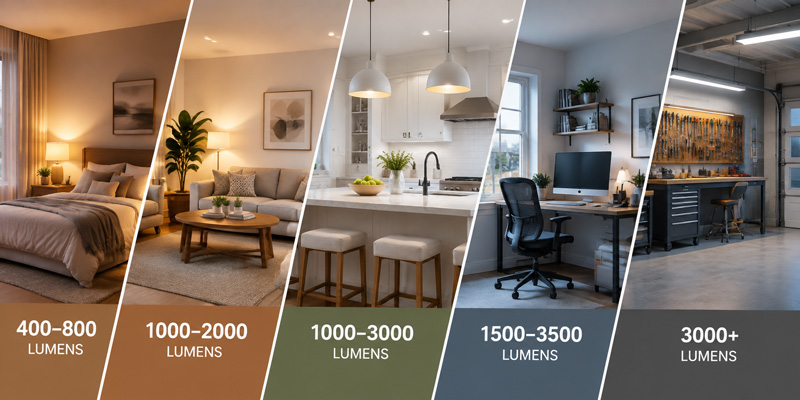
The right lumen level depends on the purpose of the room, the size of the space, and the type of activities performed there. Different areas require different amounts of light output. A bedroom or living room usually benefits from softer illumination, while kitchens, workspaces, and garages often need higher lumen levels for better visibility.
The following table shows common lumen ranges for different applications and helps compare the brightness of everyday lighting needs:
| Application | Recommended Lumens | Typical Use |
|---|---|---|
| Bedroom | 400–800 lumens | Creates a soft and comfortable atmosphere for relaxing and sleeping areas |
| Living Room | 1,000–2,000 lumens | Provides balanced lighting for general activities such as watching TV or socializing |
| Kitchen | 1,000–3,000 lumens | Offers brighter illumination for cooking, food preparation, and detailed tasks |
| Workspace / Office | 1,500–3,500 lumens | Supports focused activities such as reading, writing, and computer work |
| Workshop / Garage | 3,000+ lumens | Delivers strong lighting for repairs, DIY projects, and precision work |
| 60-watt Incandescent Equivalent | About 800 lumens | Provides similar brightness to a traditional 60-watt incandescent bulb |
| 75-watt Incandescent Equivalent | About 1,100–1,200 lumens | Matches the brightness of a traditional 75-watt incandescent bulb with modern LED efficiency |
These lumen ranges provide a general guideline for selecting bulbs, but the best choice may vary depending on room layout, fixture design, and personal lighting preferences. Choosing bulbs based on lumens rather than wattage helps ensure the right level of brightness while supporting modern energy efficiency. For instance, a 75-watt equivalent bulb today does not actually use 75 watts of power. Instead, its brightness depends on the amount of light it produces, which is measured in lumens. A typical example can be seen with 75-watt bulb brightness in lumens, where the lumen output shows how modern bulbs achieve similar brightness with lower energy consumption.
Why Lumens Matter When Buying LED Bulbs
LED bulbs have made lumens more important because they offer high brightness with lower energy consumption. A low-wattage LED can produce the same or even greater light output than a higher-wattage traditional bulb.
Checking lumens before purchasing helps match a bulb to the purpose of the space. A decorative lamp may only need a few hundred lumens, while ceiling fixtures or task lighting may require much higher output. This approach allows homeowners to create suitable lighting without wasting energy.
Common Misunderstandings About Lumens
One common misconception is that more lumens are always better. While higher lumen ratings mean more light output, the best choice depends on the environment. Excessively bright lighting can create glare and an uncomfortable atmosphere, while insufficient lumens may make a room difficult to use.
Lumens represent only one part of a bulb’s overall performance. Other elements, including color temperature, beam angle, and bulb design, also affect the way light is distributed and experienced in a room. The changes in bulb design and lighting technology over time have shaped the way modern bulbs work today, with many notable developments in light bulb history reflecting the continuous improvement of lighting solutions.
FAQs
Are higher lumens always better for a light bulb?
Higher lumens mean a bulb produces more light, but the brightest option is not always the best choice.
The ideal lumen output depends on the room size, lighting purpose, and desired atmosphere. A bulb with excessive lumens may create glare, while too few lumens can make a space feel dim.
How are lumens measured in a light bulb?
Lumens are measured by testing the total amount of visible light emitted from a bulb in all directions.
Manufacturers use standardized testing methods to determine the lumen output listed on product packaging, allowing consumers to compare brightness between different bulb types.
Do LED bulbs have more lumens than incandescent bulbs?
LED bulbs are not automatically higher in lumens, but they are usually more efficient because they can produce similar lumen output with less energy.
This means an LED bulb can replace a traditional incandescent bulb while using fewer watts and maintaining comparable brightness.
Does bulb size affect the number of lumens?
The physical size of a bulb does not directly determine its lumen output.
A small LED bulb can produce more lumens than a larger traditional bulb because brightness depends on the light source technology and efficiency rather than the bulb’s dimensions.
Can two bulbs with the same lumens look different?
Yes. Two bulbs with the same lumen rating can appear different because factors such as color temperature, beam angle, and light distribution affect how illumination is perceived.
A warm white bulb and a cool white bulb may provide the same brightness but create different visual experiences in a room.