
How Long Do Incandescent Lights Last in Days and Months?
Do All Incandescent Bulbs Last About 1,000 Hours?
Why Do Incandescent Lights Burn Out?
How Can You Make Incandescent Lights Last Longer?
How Do Incandescent Lights Compare With LEDs?
What Should You Check Before Replacing an Incandescent Bulb With an LED?
FAQs
Most standard incandescent lights last about 750 to 1,000 hours of use. At three hours per day, that works out to approximately eight to eleven months. At eight hours per day, the same bulb may last only three to four months. These are typical estimates for general household bulbs, rather than a guaranteed replacement schedule.
The most useful number is the rated life printed on your bulb’s packaging. Different designs have different lifespans, and the fixture, electrical supply, and operating conditions can affect how long an individual bulb actually works.
How Long Do Incandescent Lights Last in Days and Months?
To estimate how long a bulb will last in your home, divide its rated operating hours by your average daily use:
Estimated lifespan in days = Rated life in hours ÷ Hours used per day
For a bulb rated at 1,000 hours, the calculation looks like this:
| Daily use | Estimated days of use | Approximate calendar lifespan |
|---|---|---|
| 1 hour | 1,000 days | 2.7 years |
| 2 hours | 500 days | 1.4 years |
| 3 hours | 333 days | 11 months |
| 4 hours | 250 days | 8 months |
| 6 hours | 167 days | 5.5 months |
| 8 hours | 125 days | 4 months |
| 12 hours | 83 days | 2.7 months |
| 24 hours | 42 days | 6 weeks |
These figures are calculated estimates based on a 1,000-hour rating. They do not account for early failures or bulbs that exceed their rated life.
This explains why identical bulbs can appear to have very different lifespans. A bedside lamp used briefly each evening may go years between replacements, while a porch light left on overnight uses up its operating hours much faster.
Do All Incandescent Bulbs Last About 1,000 Hours?
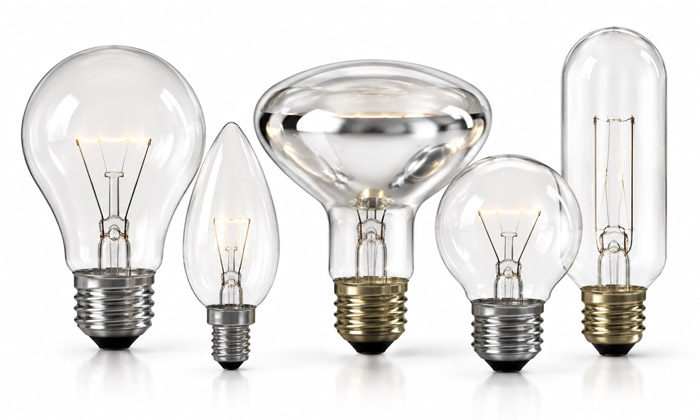
No. Around 1,000 hours is a useful reference for ordinary household incandescent bulbs, but it does not describe every incandescent product.
Some reflector and specialty incandescent bulbs are rated for around 2,000 hours or more, depending on their design and intended use. These longer ratings apply to specific models, so always check the product specifications rather than assuming all incandescent bulbs last equally long.
When checking a replacement, look at its:
- Rated life in hours.
- Operating voltage.
- Actual wattage.
- Base and bulb shape.
- Approved fixture and environmental conditions.
Do not assume two bulbs have the same lifespan simply because they have the same wattage or fit the same socket.
Why Do Incandescent Lights Burn Out?
An incandescent bulb produces light by passing electricity through a filament until it becomes hot enough to glow. This process also produces substantial heat. Unlike LEDs, incandescent bulbs depend on maintaining a very hot filament to generate their light.
As the filament ages, it becomes more vulnerable to failure. Eventually, it breaks and interrupts the electrical circuit, leaving the bulb dark.
However, a bulb that stops working unusually quickly may have a problem beyond ordinary wear. Repeated failures in the same fixture are especially worth investigating.
Incorrect Bulb or Fixture Specifications
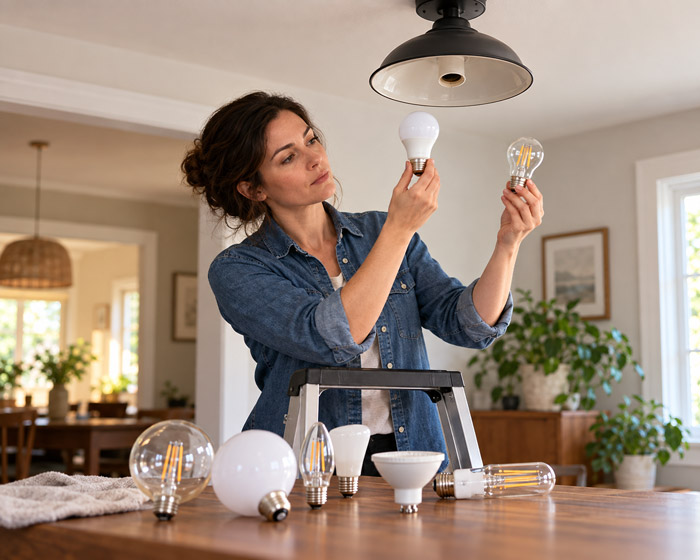
A bulb must match the fixture’s voltage, wattage limit, and permitted bulb shape. GE Lighting specifically advises checking those requirements when bulbs burn out too quickly. It also identifies worn fixtures and wiring problems as possible causes of repeated failures.
Before installing another bulb, compare the fixture label with the replacement’s specifications. A bulb fitting into the socket does not automatically make it suitable.
Problems With the Fixture or Electrical Supply
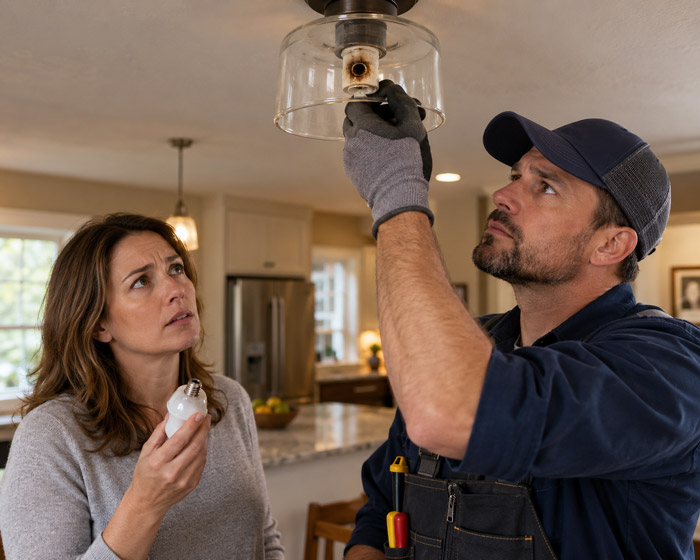
If several replacements fail in one location, record how quickly they fail and whether you notice flickering or other changes. That information can help distinguish a defective bulb from a recurring fixture or supply problem.
Persistent flickering, a damaged socket, or a burning smell should not be treated as a normal sign that a bulb is getting old. Stop using the affected fixture and have the problem checked before continuing to replace bulbs.
How Can You Make Incandescent Lights Last Longer?
The most practical approach is to use the correct bulb under its intended conditions and avoid unnecessary operating hours.
Turn Lights Off When They Are Not Needed
Reducing daily use extends the calendar time between replacements. A 1,000-hour bulb used for two hours each evening reaches its rated operating time much later than one used for ten hours every night.
Leaving an incandescent light on continuously also consumes electricity throughout that time. It is not a sensible way to make the bulb last longer in days or months.
Follow the Fixture’s Requirements
Stay within the fixture’s actual wattage limit and use the specified bulb type. If the fitting repeatedly causes early failures, address the fitting rather than assuming another replacement bulb will solve the problem.
Track Installation Dates
Write down when you install a bulb and estimate its daily operating hours. A bulb that lasts four months at eight hours per day has accumulated roughly 960 hours, which is close to a 1,000-hour rating.
The same four-month lifespan at one hour per day represents only about 120 operating hours. That is a very different situation and gives you a clearer reason to investigate.
How Do Incandescent Lights Compare With LEDs?
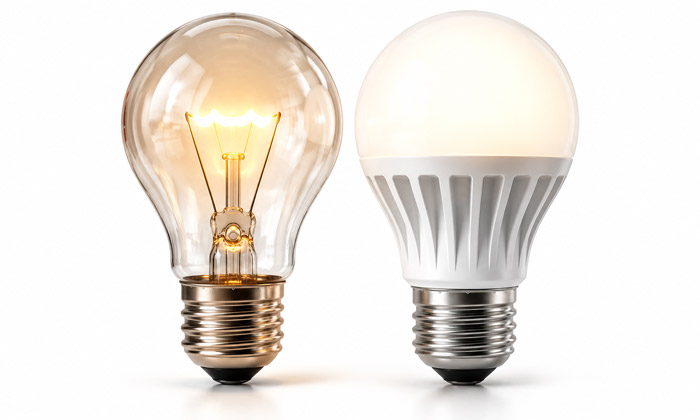
LEDs generally provide a much longer service life while using less electricity. The U.S. Department of Energy’s consumer lighting guide states that LEDs can use up to 90% less energy and last up to 25 times longer than incandescent bulbs. The actual difference depends on the products being compared.
U.S. Department of Energy. (2021). Energy savings forecast of solid-state lighting in general illumination applications.
For a simple example, compare a 1,000-hour incandescent bulb with an LED labeled for 15,000 hours:
| Comparison | Incandescent bulb | LED bulb |
|---|---|---|
| Example rated life | 1,000 hours | 15,000 hours |
| Calculated lifespan at 3 hours per day | About 11 months | About 13.7 years |
| Rated operating-time ratio | 1 | 15 |
These are calculations from the stated ratings, not guarantees that either bulb will reach that calendar age.
A longer rating also does not eliminate compatibility requirements. GE advises checking whether an LED is approved for enclosed fixtures, where unsuitable operating conditions can reduce its life and light output.
What Should You Check Before Replacing an Incandescent Bulb With an LED?
Start with brightness. When comparing different lighting technologies, lumens measure light output, while watts describe electrical power consumption. Matching watts alone can produce a very different lighting result.
Next, check whether you can use LED light bulbs in your existing fixtures. Confirm the base, operating voltage, physical clearance, enclosure suitability, and compatibility with any dimmer or control.
For outdoor fixtures, check the product’s approved installation conditions as well. The replacement needs to suit the actual location, including its exposure to moisture.
These checks help you choose a replacement that delivers the brightness you need and can operate properly in the fitting.
FAQs
Does Dimming Incandescent Lights Extend Their Lifespan?
Yes. Lowering the brightness of an incandescent bulb reduces filament temperature, which can slow filament wear and extend operating life.
The actual improvement depends on the bulb type and dimming level. A compatible dimmer should be used, and longer lifespan comes with reduced light output.
Why Do Incandescent Bulbs Turn Black Inside?
Blackening inside an incandescent bulb is usually caused by tungsten from the filament evaporating and collecting on the inside surface of the glass.
This reduces light transmission as the bulb ages. While it indicates normal wear, it does not accurately predict the remaining operating time before failure.
Do Halogen Bulbs Last Longer Than Regular Incandescent Bulbs?
Many halogen bulbs have a longer rated lifespan than traditional incandescent bulbs, but performance varies by model.
Halogen technology uses a chemical cycle that helps return evaporated tungsten to the filament and reduces glass darkening. Check the rated lifespan of each product instead of assuming all halogen bulbs last the same amount of time.
Do Edison Bulbs Have the Same Lifespan as Incandescent Bulbs?
Not necessarily. “Edison” usually describes a vintage-style appearance rather than a specific lighting technology.
Traditional filament Edison bulbs are incandescent, while LED Edison-style bulbs use LED technology and typically provide a much longer lifespan. Always check the product specifications to identify the actual light source.
Can You Get the Warm Glow of Incandescent Lights With a Longer-Lasting Bulb?
Yes. Warm-white and vintage-style LED bulbs can create a similar appearance while offering a longer rated lifespan.
Around 2700K provides a familiar warm-white look, while lower color temperatures can create a more amber, candle-like effect. For a warmer color shift while dimming, choose LEDs specifically labeled “dim-to-warm.”
