

What Does an E26 Socket Look Like?
How Does an E26 Socket Work?
E26 vs. E27 vs. E12 vs. A19
What Voltage and Wattage Does an E26 Socket Support?
How to Choose a Bulb for an E26 Socket
Can You Use an E26 Socket Outdoors?
FAQs
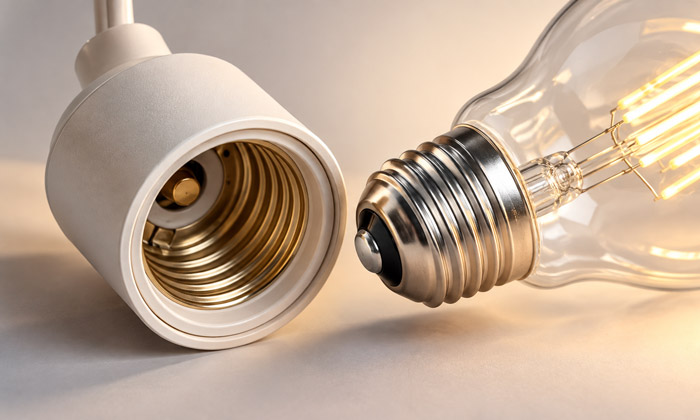
An E26 socket is a screw-type lamp holder designed to accept a light bulb with an E26 base. The “E” stands for Edison screw, and “26” refers to the bulb base’s nominal diameter of approximately 26 millimeters, or about one inch. It is a common connection in household lighting across the United States and Canada.
The socket is the part inside the light fixture; the base is the threaded part attached to the bulb. Matching them is the first step in choosing a replacement. You also need to check voltage, wattage, bulb dimensions, and the fixture’s operating conditions.
What Does an E26 Socket Look Like?
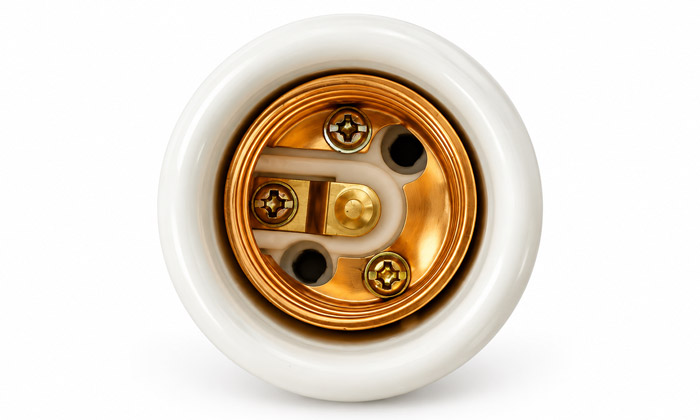
An E26 socket has an internally threaded opening that accepts the bulb’s screw base. Inside, a contact at the bottom touches the tip of the bulb when it is properly seated.
The surrounding holder may look different from one fixture to another, so its outside appearance is not a reliable way to identify the connection.
Check the fixture label or instruction manual for “E26” or “medium base.” In North American household lighting, “medium” commonly refers to E26. The old bulb’s markings can provide another clue, but the fixture specification should guide your replacement choice.
How Does an E26 Socket Work?
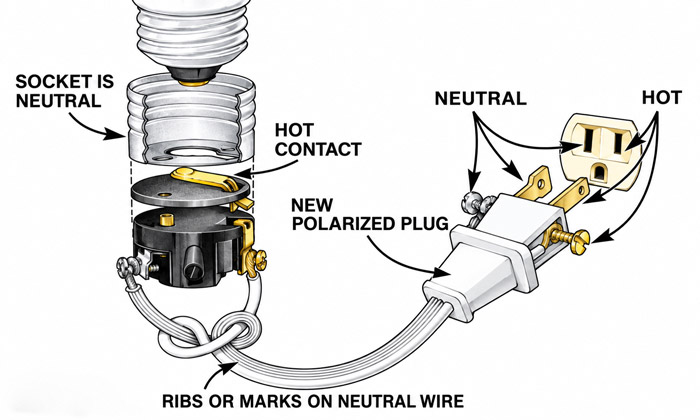
A diagram showing a conventional E26 lamp socket and polarized electrical connection, illustrating the neutral connection to the threaded shell and the live connection to the bottom contact.
The threaded connection holds the bulb in place and provides an electrical connection. In a correctly wired conventional fixture, the threaded shell connects to neutral, while the bottom contact connects to the live supply. The bulb lights when the circuit is complete.
E26 describes this connection, rather than the technology producing the light. LED, incandescent, and compact fluorescent bulbs can all use an E26 base. E26 sockets appear in table lamps, floor lamps, ceiling fixtures, pendants, and some outdoor lights.
E26 vs. E27 vs. E12 vs. A19
These labels are easy to confuse because they appear together on bulb packaging. However, they do not all describe the same feature.
| Label | What it describes | What it means when choosing a bulb |
|---|---|---|
| E26 | Edison screw base, nominally 26 mm | A common medium base in North American fixtures |
| E27 | Edison screw base, nominally 27 mm | Common in regions using 220–240V household supplies; verify compatibility |
| E12 | Edison screw base, nominally 12 mm | A smaller candelabra base that does not directly fit an E26 socket |
| A19 | Bulb envelope shape and size | Often paired with E26 in North America, but the base must be checked separately |
E26 and E12 differ in base size, while A19 describes the bulb above the base. E27 closely resembles E26, but physical fit alone does not establish safe interchangeability.
Is E26 the Same as A19?
No. A bulb can be both A19 and E26: A19 identifies its familiar pear-shaped envelope, while E26 identifies its screw base.
When buying a replacement, check both specifications. A bulb with the correct base may still be too wide or too tall for the shade or enclosure.
Can an E27 Bulb Fit an E26 Socket?
E26 and E27 bases are similar enough that they can often screw into each other’s sockets. However, they differ in dimensional and insulation requirements, and the bulbs may require different supply voltages.
That is why E27 bulb compatibility involves more than checking the threads. Use the base specified by the fixture manufacturer and confirm that the bulb’s input voltage matches the supply. Do not connect a 120V-only bulb to a 220–240V supply.
If a product is explicitly labeled for both E26 and E27 applications, follow its stated voltage range and installation requirements.
What Voltage and Wattage Does an E26 Socket Support?
E26 does not specify one universal wattage limit or tell you the operating voltage of every bulb that fits.
Three different ratings matter:
- Bulb input voltage: The supply voltage the bulb is designed to use.
- Socket rating: The electrical limits of the lamp-holder component.
- Fixture rating: The limits for the complete assembled light.
For example, Leviton sells a medium-base lamp holder rated at 660W/250V. That component marking does not mean a finished household fixture can accept a 660W bulb, or that a connected bulb should operate at 250V. The fixture’s own labeling and the bulb’s voltage requirements still apply.
Actual Watts vs. Equivalent Watts
LED packaging often shows both actual power consumption and an incandescent-equivalent rating. These numbers serve different purposes.
A bulb labeled “60W equivalent” provides light comparable to a conventional 60W incandescent bulb; it does not necessarily consume 60 watts. Around 800 lumens is a common reference point for that replacement brightness.
When comparing LED watts with incandescent watts, use lumens to compare light output and actual watts to assess power consumption. Follow any separate LED wattage limit or bulb-type restriction printed on the fixture.
Lower power consumption also does not automatically make an LED suitable for a sealed enclosure. Enclosed-fixture approval is a separate requirement.
How to Choose a Bulb for an E26 Socket
Work through these checks before purchasing a replacement.
1. Match the Base and Supply Voltage
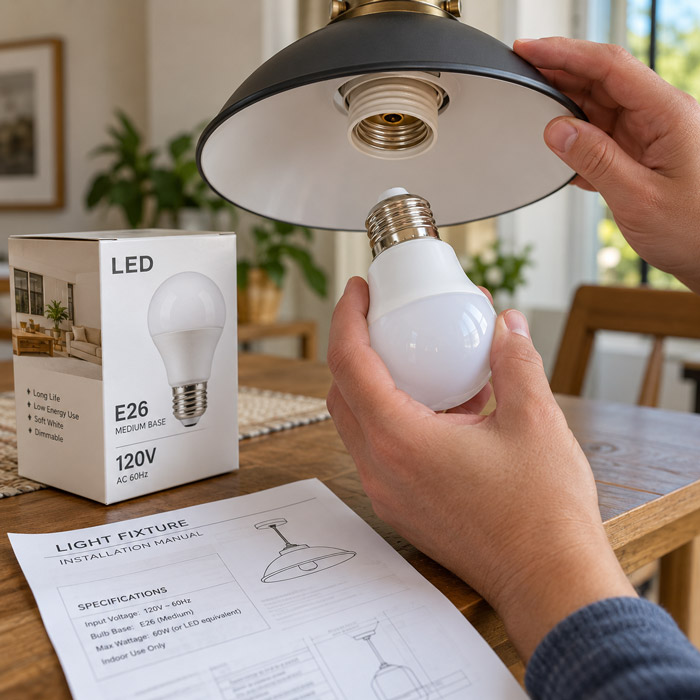
Look for an E26 base and an input-voltage rating appropriate for the fixture’s supply. For a typical U.S. household installation, this is usually 120V.
If the fixture is imported or its specifications are unclear, consult its documentation instead of relying on the old bulb or the socket’s appearance.
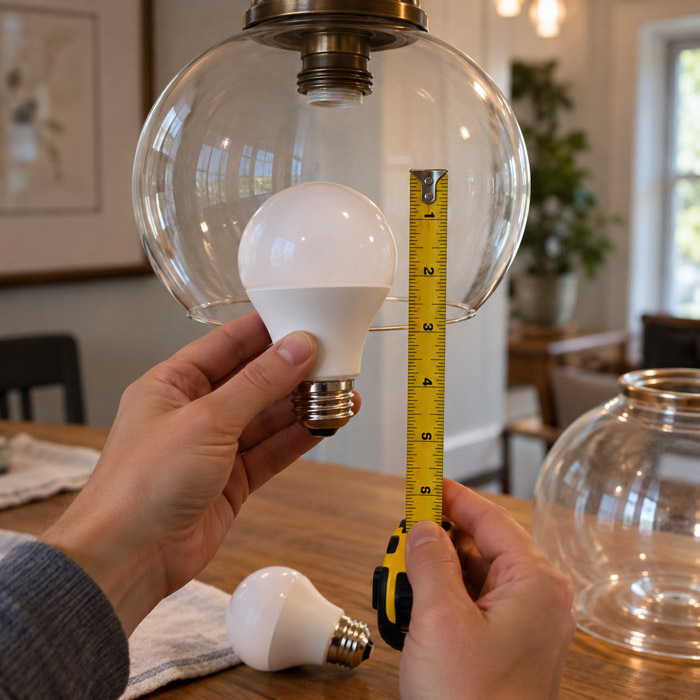
2. Check the Bulb’s Overall Size
Confirm that the bulb fits inside the shade, globe, or lantern. Check its length and widest diameter, especially when replacing a compact bulb with a larger LED or smart bulb.
The correct screw base does not guarantee adequate clearance.
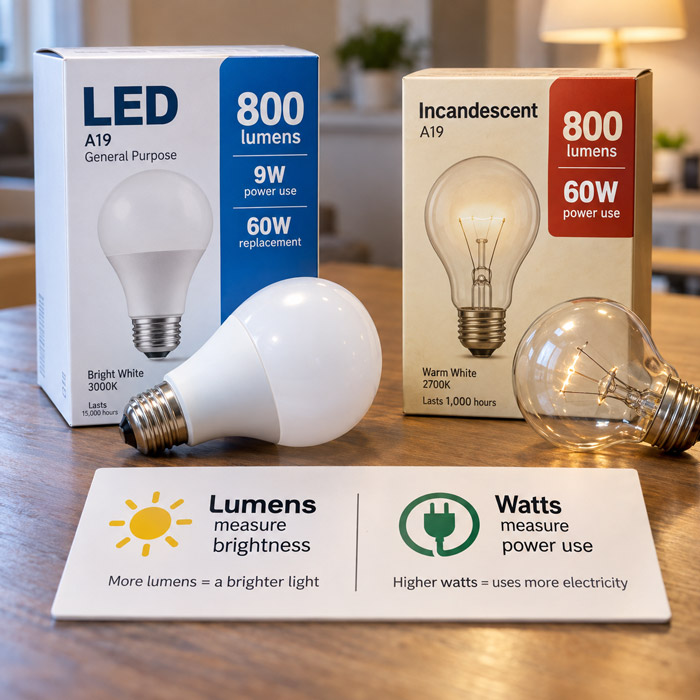
3. Choose Brightness in Lumens
Lumens measure light output. Watts measure power consumption.
If you liked the brightness of the previous bulb, use its lumen rating as your starting point. For example, approximately 800 lumens is a common replacement target for a traditional 60W incandescent bulb. LED wattage varies with efficiency, so compare the labeled lumens rather than assuming all LEDs of the same wattage are equally bright.
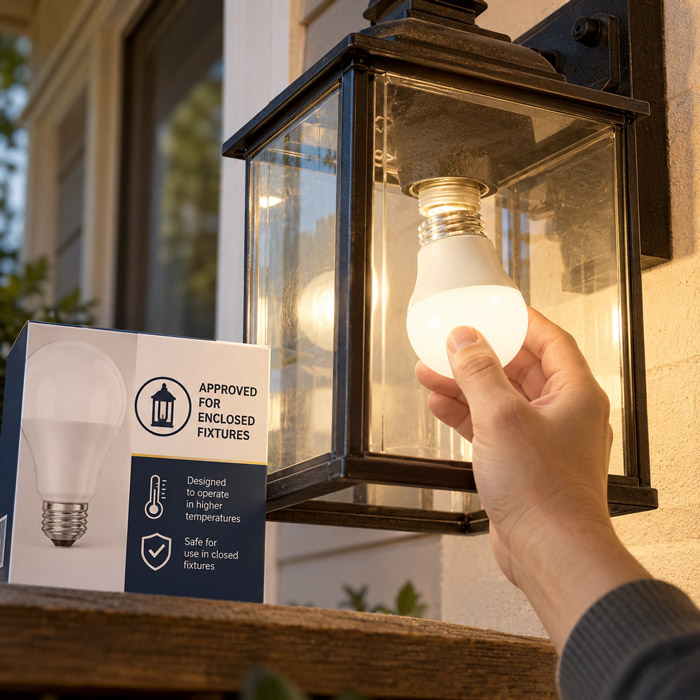
4. Check Enclosed-Fixture Approval
If the bulb sits inside a closed globe or lantern, choose an LED specifically approved for that installation. Trapped heat can affect its electronics even when its actual wattage is below the fixture limit.
Follow the bulb manufacturer’s instructions, including any restrictions on sealed or gasketed fixtures.
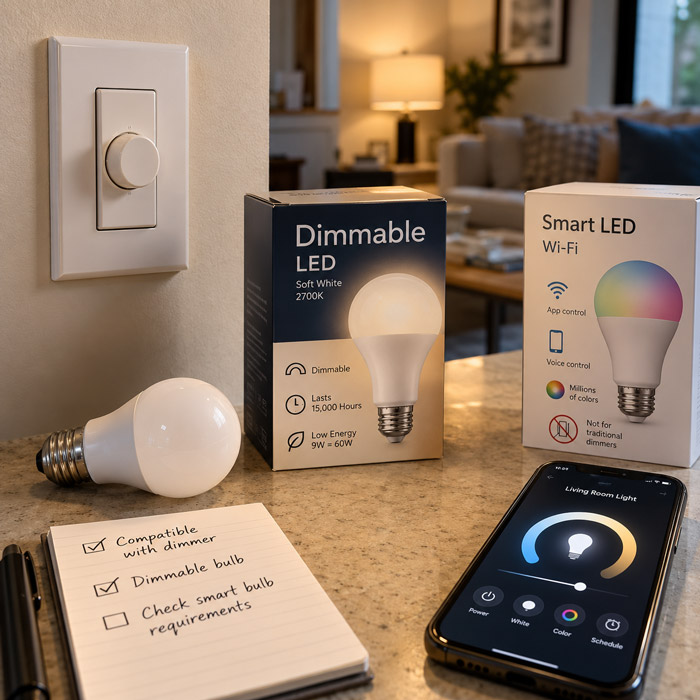
5. Match the Controls
For a fixture connected to a dimmer, select a dimmable bulb and check compatibility with the dimmer model. An E26 base alone does not make a bulb dimmable. An incompatible pairing can cause flickering or other performance problems.
Smart bulbs need their own control checks. Some use built-in electronic dimming and are not intended for conventional wall dimmers. Follow the specific product instructions.
Can You Use an E26 Socket Outdoors?
Yes, when it is part of a fixture designed for the outdoor location. E26 identifies the bulb connection; it does not establish weather resistance.
For a porch light or garden lantern, check the complete fixture’s environmental rating and the bulb’s permitted use. A damp-location bulb needs protection from direct weather exposure. Where the bulb is exposed to rain or splashing, select a product approved for the applicable wet-location conditions.
An enclosure’s IP65 rating describes dust and water-ingress protection. It is separate from the E26 base designation and does not mean the fixture is suitable for submersion.
For an enclosed outdoor lantern, verify both moisture suitability and enclosed-fixture approval. Meeting one requirement does not establish the other.
FAQs
What Does “Keyless” Mean on an E26 Socket?
A keyless E26 socket has no built-in on/off switch. Instead, the light is controlled by a separate wall switch, cord switch, or another external control.
“Keyless” describes how the socket is switched, not how the bulb attaches.
Do All E26 Sockets Support Three-Way Bulbs?
No. Conventional three-way bulbs need a matching three-way socket to provide all three brightness settings.
These sockets have an additional electrical contact and a switching mechanism that selects different circuits. An ordinary single-circuit E26 socket cannot provide the full three-way function.
What Is the Shade Ring on an E26 Socket For?
A shade ring secures a compatible lampshade to the outside of the socket assembly. It screws onto external threads, separate from the internal threads that hold the bulb.
When replacing one, match the ring to the socket’s external thread and shade fitting; the E26 designation alone does not identify the correct shade ring.
Can an E26 LED Bulb Be Used Inside an Oven?
An ordinary E26 LED bulb should not be used inside an oven. Oven temperatures require a purpose-built appliance bulb, and standard LED electronics are not designed for that level of heat.
Use the replacement bulb specified by the oven manufacturer.
How Should You Dispose of a Used E26 CFL Bulb?
Take it to a collection point that accepts compact fluorescent lamps. CFL bulbs contain mercury, so they should be handled through an appropriate recycling or collection program.
Check local disposal and collection requirements before discarding a used CFL bulb.
