


Check the Light Fixtures and Main Components First
Inspect Wiring Connections and Power Supply
Protect Garden Lights From Moisture Problems
Examine Bulb Compatibility and Lighting Settings
Troubleshoot the Landscape Lighting System Step by Step
Improve Long-Term Reliability of Garden Lighting
FAQs
Flickering garden lights can quickly affect the beauty and function of an outdoor space. A pathway that should create a warm and welcoming atmosphere may become distracting when fixtures blink, dim, or lose brightness unexpectedly. In landscape lighting systems, flickering is usually connected to issues with power supply, wiring, connections, fixtures, or environmental exposure. Identifying the source of the problem helps restore stable illumination while protecting the long-term performance of outdoor lights.
Garden lighting works in a challenging environment. Unlike indoor fixtures, landscape lights are exposed to rain, soil moisture, temperature changes, and seasonal maintenance activities. A small connection problem or damaged component can interrupt the electrical flow and cause inconsistent lighting across the garden. Understanding how the system works makes troubleshooting more efficient and prevents repeated flickering problems.
Check the Light Fixtures and Main Components First
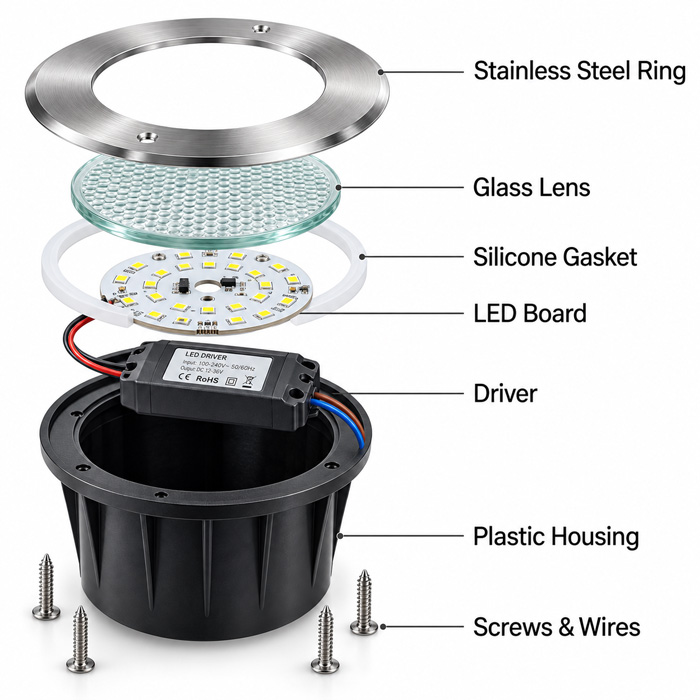
The fixture itself is one of the first places to inspect when garden lights begin flickering. LED landscape lights rely on several internal parts working together, including the light source, housing, driver, connectors, and wiring terminals. A failure in any of these areas can create unstable performance.
A clear understanding of outdoor fixture structures makes it easier to locate potential faults. Flickering problems are often connected to specific elements within the fixture, such as the driver, internal connections, or protective housing. These key elements of garden lighting fixtures work together to maintain stable illumination, making them useful areas to inspect during troubleshooting.
Common fixture-related causes include:
- Loose bulbs or LED modules that are not making proper contact inside the housing.
- Aging LED drivers that cannot maintain stable current output.
- Corrosion around sockets, connectors, or internal electrical contacts.
- Damaged seals that allow moisture to enter the fixture.
- Poor-quality replacement components that do not match the original lighting system.
Replacing a damaged fixture or internal component may solve the problem, but checking the connection points first is often the fastest way to locate the issue.
Inspect Wiring Connections and Power Supply
Landscape lighting systems depend on continuous electrical connections throughout the garden. A loose wire connection can cause intermittent power delivery, making lights appear to flicker or randomly turn brighter and darker. This is especially common in low-voltage landscape lighting where multiple fixtures share the same cable run.
Start by checking the connection between each light fixture and the main cable. Look for loose connectors, exposed wires, damaged insulation, or signs of oxidation. Garden maintenance activities such as digging, planting, or trimming can accidentally damage underground cables and create unstable lighting performance.
The transformer should also be inspected because it controls the power supplied to many outdoor lighting systems. An overloaded transformer, incorrect output, or aging transformer can cause voltage fluctuations throughout the garden.
Voltage selection has a direct effect on landscape lighting stability. Amp and volt ratings in outdoor lighting systems can influence how efficiently power reaches each fixture, particularly when lights are installed across larger garden areas with longer cable runs. Matching the electrical setup to the lighting requirements helps maintain consistent brightness and prevents unnecessary fluctuations.
Protect Garden Lights From Moisture Problems

Water exposure is one of the most common challenges for outdoor lighting. Although landscape fixtures are designed for exterior use, damaged seals, poor installation, or aging materials can allow moisture to reach electrical components.
After heavy rain or garden watering, flickering lights may indicate moisture inside the fixture or connector area. Inspect the housing, cable entry points, and protective covers for water accumulation.
Outdoor lighting protection depends heavily on the waterproof rating of each fixture. Moisture, dust, and weather exposure can gradually affect electrical connections and lead to unstable lighting performance. A proper protection level helps outdoor fixtures maintain reliable operation, and IP65-rated garden lights are designed to provide better resistance against common outdoor conditions. Selecting fixtures with suitable protection helps reduce problems caused by environmental exposure.
Rain does not always damage outdoor lighting immediately, but repeated exposure combined with poor protection can gradually weaken electrical connections. Proper installation, sealed connectors, and regular inspections help maintain reliable performance throughout changing weather conditions.
Examine Bulb Compatibility and Lighting Settings
Not every flickering problem comes from wiring. In some landscape systems, the issue may come from incompatible bulbs, drivers, or control devices.
LED landscape lights require compatible electrical components. Using a bulb with the wrong wattage, installing an unsuitable dimmer, or combining different types of LED products may create inconsistent output.
When replacing garden lighting components, match the specifications of the existing system. The light source, transformer capacity, and control settings should work together to avoid unnecessary strain on the electrical system.
Troubleshoot the Landscape Lighting System Step by Step
A systematic approach makes it easier to find the exact reason behind flickering lights. Instead of replacing multiple parts at once, test each section of the lighting system separately.
A practical troubleshooting process includes:
- Turn off the power and inspect visible wiring connections around each fixture.
- Test individual lights to determine whether the problem affects one fixture or the entire system.
- Check the transformer output and confirm it matches the lighting requirements.
- Look for moisture, corrosion, or damaged cable sections near the affected lights.
- Replace faulty bulbs, connectors, or fixtures only after identifying the damaged component.
This method prevents unnecessary replacements and helps maintain the original landscape lighting design.
Improve Long-Term Reliability of Garden Lighting
Fixing flickering lights solves the immediate issue, but preventing future problems requires attention to installation quality and regular maintenance. Outdoor lighting systems perform better when cables are properly positioned, connectors are protected, and fixtures are selected for the surrounding environment.
Modern landscape lighting systems also benefit from improved installation methods and regular maintenance. Small issues with wiring, connections, or component selection can gradually lead to flickering and performance problems. Applying practical solutions from landscape lighting repair and maintenance helps keep outdoor lighting systems working consistently over time.
A flickering garden light is usually a sign that one part of the lighting system needs attention. By checking fixtures, wiring, voltage supply, moisture protection, and component compatibility, homeowners can restore smooth and reliable illumination while keeping their outdoor spaces attractive and functional.
FAQs
Can a timer or smart controller cause landscape lights to flicker?
Yes, a faulty timer, smart controller, or incompatible lighting control system can sometimes create unstable power signals that make garden lights flicker.
Checking controller settings, compatibility, and connections can help determine whether the control device is affecting lighting performance.
See also: Everything You Need to Know About Landscape Lighting Timer
Why do my landscape lights flicker only at certain times of the night?
Landscape lights that flicker at specific times may be affected by scheduled settings, automatic sensors, power demand changes, or other devices connected to the same electrical source.
Tracking when the flickering happens can help narrow down the possible cause.
Can adding too many garden lights make existing lights flicker?
Adding extra fixtures to an existing landscape lighting system can increase the electrical load and reduce system stability.
When the total demand exceeds what the system can support, lights may show inconsistent brightness or intermittent flickering.
Why do my LED landscape lights flicker after replacing old bulbs?
New LED bulbs may flicker when they are not fully compatible with the existing transformer, dimmer, or control equipment.
Matching replacement lights with the original system specifications helps maintain smooth and stable operation.
How can I prevent landscape lights from flickering in the future?
Regular maintenance, proper system planning, and using compatible components can reduce the chance of future flickering issues.
Periodically checking fixture performance, electrical connections, and system capacity helps keep garden lighting reliable over time.