
Recommended Spacing Between Solar Pathway Lights
Spacing Solar Lights Along Garden Paths
Spacing Solar Lights in Flower Beds and Landscaping
How Solar Light Brightness Changes Spacing Requirements
Spacing Solar Lights in Different Outdoor Areas
The Effect of Weather and Charging Conditions on Placement
Common Solar Light Spacing Mistakes
FAQs
Solar lights are a popular choice for gardens, pathways, driveways, patios, and outdoor decorative areas because they provide illumination without complicated wiring. The spacing between solar lights has a major impact on brightness, visual balance, and overall outdoor appearance. Placing lights too close together can create excessive brightness and clutter, while placing them too far apart may leave dark sections and reduce the effectiveness of the lighting layout.
The ideal distance between solar lights depends on the type of light, the area being illuminated, the brightness level, and the purpose of the installation. A pathway light arrangement requires different spacing compared with decorative garden lighting or security-focused outdoor illumination.
Recommended Spacing Between Solar Pathway Lights
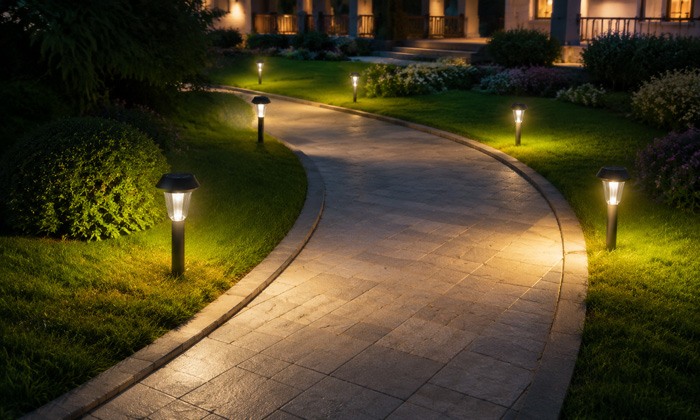
For most solar pathway lights, a distance of 6 to 10 feet between each light is a common starting point. This spacing creates a steady line of illumination while maintaining a natural appearance along walkways, garden paths, and driveways.
Lights with stronger brightness output can usually be placed farther apart, while smaller decorative models may need closer spacing. The height of the light also affects coverage. Taller solar lights generally spread light across a wider area, allowing for greater distance between fixtures.
| Solar Light Type | Recommended Spacing | Suitable Areas | Main Purpose |
|---|---|---|---|
| Pathway solar lights | 6–10 feet | Walkways, garden paths, driveways | Safe navigation and balanced lighting |
| Small decorative solar lights | 3–6 feet | Flower beds, borders, landscaping | Decorative atmosphere |
| Solar spotlights | 8–15 feet | Trees, walls, outdoor features | Highlighting specific objects |
| Security solar lights | 10–20 feet | Entrances, garages, larger outdoor spaces | Wider area illumination |
| String-style solar lights | 1–3 feet between bulbs | Patios, balconies, fences | Decorative lighting effects |
Spacing decisions also need to consider the charging conditions of the solar panel. A light placed in an area with limited sunlight may not provide the same brightness duration as a light receiving full sun exposure. The performance of solar lighting in different environments connects with factors such as whether solar lights charge in shade, since placement affects both energy collection and nighttime operation.
Spacing Solar Lights Along Garden Paths
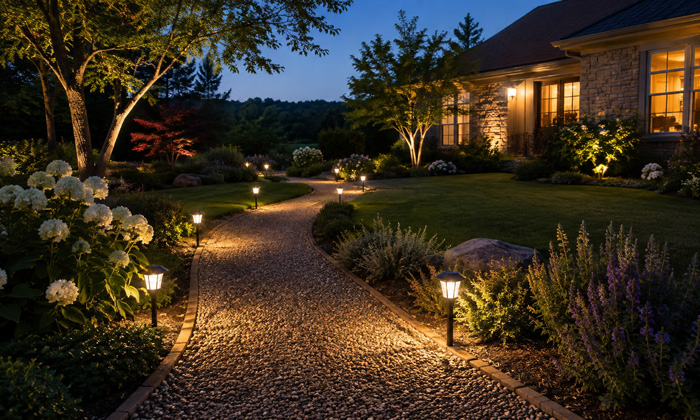
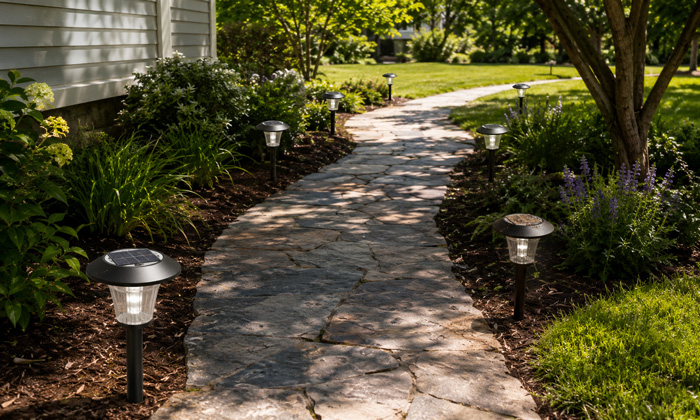
Garden pathways benefit from evenly distributed lighting rather than concentrated brightness in one location. A spacing range of 6 to 8 feet often works well for narrow paths, creating a comfortable glow that guides movement without making the area look overly bright.
For wider walkways, lights can be positioned on alternating sides instead of placing them directly opposite each other. This approach creates a more natural landscape effect and prevents the path from appearing like a runway.
The placement of solar lights should take sunlight conditions into account, especially in areas affected by trees, buildings, or seasonal changes in shade. A location with better daylight exposure allows the solar panel to collect more energy and helps maintain reliable nighttime performance. Choosing the right position also depends on how much direct sunlight solar lights need throughout the day, as proper placement helps maximize charging efficiency.
Spacing Solar Lights in Flower Beds and Landscaping
Decorative garden lighting usually requires closer spacing than pathway lighting because the goal is to create visual depth rather than provide strong illumination.
Small solar lights placed around plants, shrubs, or garden borders often look best with 3 to 6 feet between each fixture. Placing lights too close together can make the landscape appear crowded, while wider gaps may cause individual plants to lose their visual focus.
For larger garden features such as trees, fountains, or sculptures, solar spotlights are often positioned farther apart. A distance of 8 to 15 feet allows each light to highlight a specific feature without overlapping too much.
The durability of solar lights also plays a role in deciding where they should be installed. Lights placed in open gardens, along pathways, or near plants are often exposed to rain and humidity, so weather resistance becomes an important consideration. A suitable IP65 rating for garden lights provides better protection against outdoor conditions, helping maintain consistent lighting performance after installation.
How Solar Light Brightness Changes Spacing Requirements
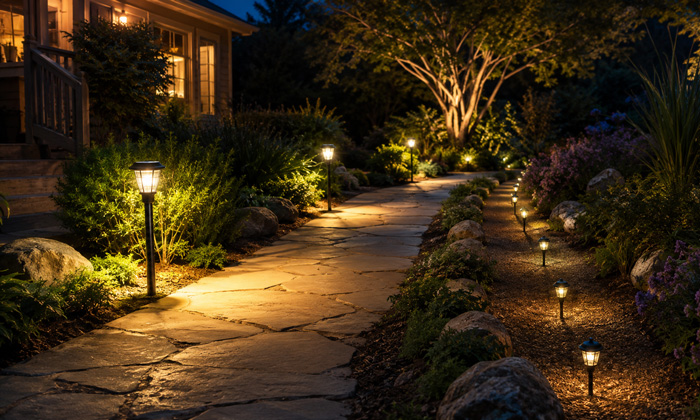
Brightness is one of the biggest factors affecting solar light spacing. A high-lumen solar light covers a larger area, allowing fewer fixtures to achieve the same lighting effect. Lower-lumen decorative lights often need shorter distances between units to create consistent visibility.
The color temperature of the light also changes the visual impression. Warm white lighting often feels softer and more decorative, while cooler white lighting may appear brighter and more functional.
Battery capacity influences how long a solar light can maintain brightness after sunset. A light that receives strong daytime charging can often maintain stable output for longer periods. Factors affecting storage and operation are connected with solar-powered garden light battery life, since longer-lasting batteries support more reliable nighttime performance.
Spacing Solar Lights in Different Outdoor Areas
Different outdoor locations require different spacing strategies. A driveway needs wider coverage, while a small garden border focuses more on appearance. The surrounding environment, landscape design, and intended function all influence the final arrangement.
| Installation Area | Suggested Distance Between Lights | Placement Style |
|---|---|---|
| Narrow garden path | 5–8 feet | One side or alternating sides |
| Wide driveway | 8–15 feet | Both sides for balanced coverage |
| Patio area | 4–8 feet | Around seating and activity areas |
| Flower border | 3–6 feet | Follow plant shapes and garden curves |
| Large lawn area | 10–20 feet | Highlight key landscape points |
Outdoor conditions also influence how consistently solar lights perform throughout the year. Winter seasons may bring shorter daylight hours and weaker sunlight, making placement more challenging. Solar lights may require better positioning during colder months to capture enough energy during the day and maintain reliable illumination at night. Factors related to solar powered lights in winter can affect placement decisions when creating an outdoor lighting layout that works throughout the year.
The Effect of Weather and Charging Conditions on Placement
Solar lights need a suitable balance between lighting coverage and solar panel exposure. A perfect spacing layout cannot compensate for poor charging conditions caused by heavy shade, dirt, or limited daylight.
Cloudy weather can reduce charging efficiency, although many solar lights can still collect energy under overcast conditions. To maintain stable nighttime lighting, the installation location should provide as much natural daylight as possible during the day. Factors affecting solar lights charging on cloudy days can influence where lights should be placed for better overall performance.
The position of the solar panel should also avoid areas where leaves, dust, or moisture frequently block sunlight. Regular maintenance helps preserve charging efficiency and keeps the lighting arrangement consistent.
Common Solar Light Spacing Mistakes
One common mistake is installing too many lights in a small area. Excessive fixtures can reduce the decorative effect and create uneven brightness. Another mistake is placing lights according to property boundaries rather than actual lighting needs.
Incorrect positioning of solar panels can also reduce performance. A beautifully arranged pathway may still have weak nighttime lighting when the lights receive insufficient daytime energy.
Moisture buildup can affect outdoor solar lights as well. Fogging inside a light cover may reduce brightness and appearance over time. Conditions that cause condensation are discussed in why solar lights fog up, providing useful considerations when selecting placement locations.
FAQs
Can solar lights be placed too far apart?
Yes. When solar lights are placed too far apart, dark gaps may appear between fixtures, reducing pathway visibility and making the outdoor area look uneven.
The ideal spacing depends on the light output, installation height, and the area that needs illumination.
Should solar lights be installed in a straight line or staggered pattern?
A staggered pattern is often a better choice for pathways and garden areas because it creates more balanced lighting coverage and a more natural landscape appearance.
A straight-line arrangement may work well for driveways or areas that require a clear visual boundary.
How many solar lights are needed for a garden path?
The number of solar lights depends on the path length, light brightness, and desired lighting effect.
Measuring the area first and applying consistent spacing helps create even illumination without using unnecessary fixtures.
Do brighter solar lights need to be spaced farther apart?
Yes. Solar lights with higher brightness output usually cover a larger area, allowing greater distance between fixtures.
Lower-lumen lights may require closer placement to achieve similar lighting coverage.
Can changing the solar light position improve nighttime brightness?
Yes. Moving solar lights to locations with better sunlight exposure, fewer obstructions, and cleaner solar panels can improve energy collection.
This can help maintain stronger illumination after dark.
