

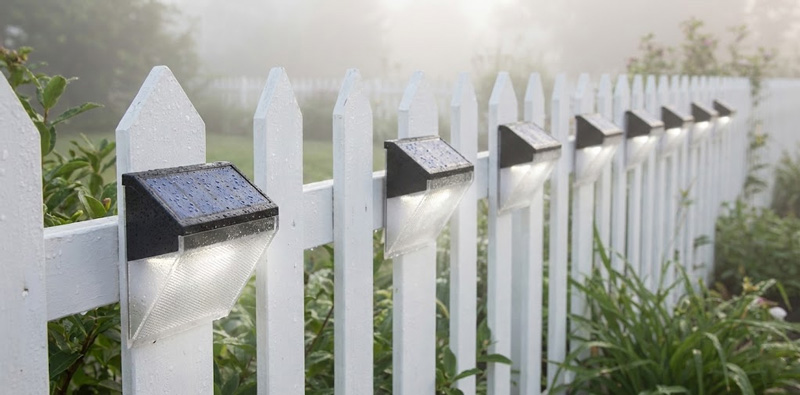
The Main Reasons Solar Lights Fog Up
Why Solar Garden Lights Are Especially Prone
Is Fogging Always a Problem?
Practical Ways to Prevent and Reduce Fogging
When to Replace the Light
FAQ
Solar lights are designed to be used outdoors, so they are hindered when you notice the lenses becoming blurry, cloudy, or mixed with moisture from the inside. This "obscured up" phenomenon is particularly common in the case of solar garden lights, where the apparent cap is larger than the conductor and electronics appreciate a bantam greenhouse. The good news is that light fogging is regularly occurring; the bad news is that frequent or heavy condensation may indicate a waterproofing or ventilation obstacle which reduces the life of the light.
By its core, it's happening when warm, damp air gets trapped inside the lamp and then cools down afterward. The temperature swings, a sunny afternoon followed by chilly nights, are caused by the wind in the light, which is expanding and contracting. If humid breath enters the breathing cycle, it can condense on the inner surface of the lens when the temperature drops. Since a lot of solar garden lights use fake lenses and compact housings, they heat up quickly in the sunlight and cool swiftly at night, producing more predictable condensation.
The Main Reasons Solar Lights Fog Up
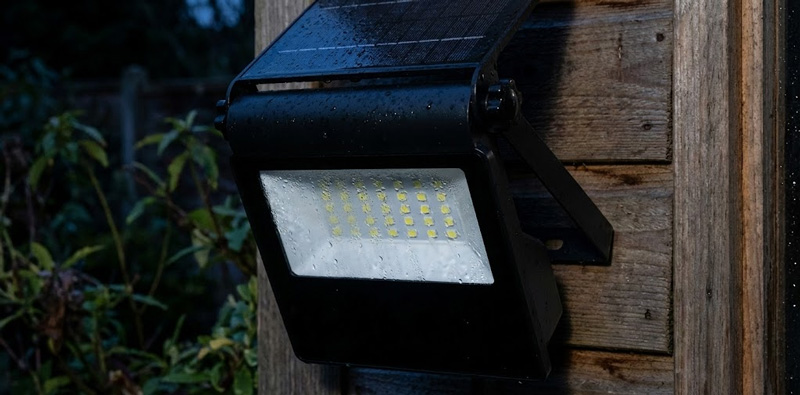
Figure 1. Model: LM-SP04.
Solar lights obscured for a wide range of overlap reasons, and the exact cause is usually dependent on the design of the lights and their second location.
-
Natural temperature cycling (normal condensation):
An impermanent mist can be seen even in well-crafted outdoor lights. The building warms up during the day and cools down at night. As long as the inner sky is moist, it can condense briefly. Unless the fog breaks out again at the next dawn, it's usually not a serious matter. -
Small gaps or aging seals letting humidity in:
Solar garden lights often have snap-together parts, a joint that sleeps together, or a thin shell. UV rays, heat, and soil may damage the protective wax beyond its age. As soon as the bantam nerve pathway opened, a humid aura came in and then expanded during a cool night. -
"Breathing" through pressure changes:
When the house warms up, the pressure inside goes up; when it cools, the pressure goes down. This difference in pressure may draw the external air through the micro-gaps, especially after rain, watering, or humid days. -
Infiltration from rainwater entry or sprinkler usage/cleaning:
Some lights are “weather-resistant” and not waterproof. A strong stream of water from the sprinkler, focused on the top of the light, coupled with water accumulating in the area around the seam, may blow water inside the light. When water enters the light, it is likely that the fogging problem becomes chronic. -
Poor drainage or retained moisture in manufacturing/assembly:
In some cases, a light comes with residual moisture inside it, or it’s manufactured in a moist environment. Just the first heating and cooling cycles can make this known by means of fogging. -
Cracks and Hairline Fractures in Plastic Lenses:
Plastic may develop micro-fractures from an impact, freeze/thaw process, or UV exposure. Such fractures may not be noticeable, with the ability to allow water vapor passage through.
Why Solar Garden Lights Are Especially Prone
Typically, the design of the solar-powered garden lights will include a top-mounted solar panel with a clear roof or dome and a small box. This design is quite effective and economical; however, it represents the ideal environment for the formation of condensation. Imagine the heat of the sun accumulating within the dome; this rapidly cools at night. Add some humidity from the grass or the soil due to irrigation, and the chances of fogging become significantly greater.
Placement is important too. With your lighting close to sprinklers or in areas that are shaded but wet, or in locations where water tends to collect around the bottom of the light fixtures, your exposure to moisture in your local environment has risen greatly.
Is Fogging Always a Problem?
Not always. A simple check is to look at the pattern:
- If there is fog at night that clears during the daytime, this might just be normal condensation.
- There could be cloud cover for an extended period, water droplets, or standing water, which would mean more serious conditions.
- If the brightness level is reduced, the battery runtime is shortened, and spots of corrosion develop on the battery contacts and circuitry, it is likely the battery is exposed
Practical Ways to Prevent and Reduce Fogging
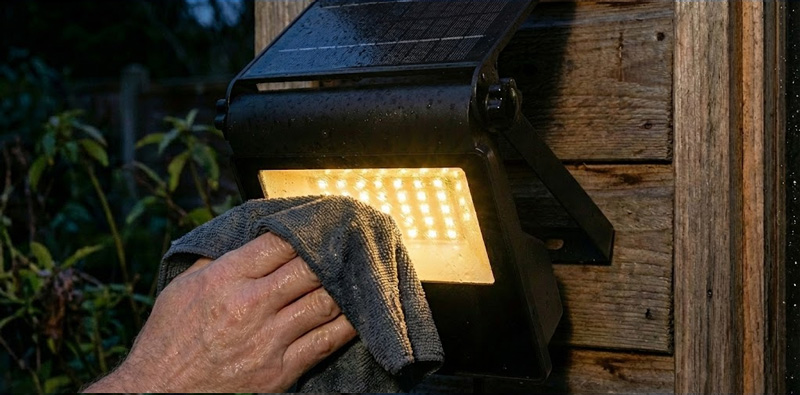
Weather cannot be prevented, however, conditions that cause trapped moisture can be reduced.
-
Enhance placement:
Avoid placing your solar-powered garden lights directly under the spray of sprinklers or where water tends to collect. Raising the stake or relocating the light to better-drained soil will improve the situation. -
Check & Clean Sealing Surface:
If you are not satisfied Dirt, sand, or plant material in the seam might prevent a seal from occurring. Remove any debris by cleaning the edges so pieces lieflat.
-
Let the light dry completely if you open it:
If disassembly is possible in the design, dry the case in the house (but avoid direct heat if plastic warps easily). Reassemble only when it is completely dry. -
Use a moisture absorber (if possible):
A small quantity of silica gel (the type used for packing purposes) can also help, provided that it does not come into contact with sensitive electronics and that it does not inhibit airflow. -
Avoid sealing too tightly with no ventilation:
Sounds crazy, but some outside lights have vents to sealextremely small amounts to create equal pressure. Sealing a room tightly by applying lots of sealant everywhere can create a moisture trap. Do reseal, and focus on the obvious openings and make sure drainage/venting functions work, if it has that capability. -
Replace brittle gaskets or damaged lenses:
If there is persistent fogging, if there is damage to the lens or if there is flattening of the gasket, it may simply be necessary to replace it. Otherwise, moisture will continue to accumulate.
When to Replace the Light
If you find repeated heavy condensation plus any of the following, replacement is generally more cost-effective than repair for ordinary solar garden lights:
- Corrosion on battery terminals or circuit board
- Water accumulation inside the lens
- Swollen or leaking battery compartment
- Murkiness that never clears, coupled with weak light output.
FAQs
Does fogging reduce the solar panel’s charging efficiency?
Yes. If condensation forms on or under the solar panel cover (or the panel sits beneath a cloudy cap), it can scatter and block sunlight, reducing charge current.
Even a small drop in irradiance can shorten nighttime runtime, especially in winter or shaded yards.
Can fogging cause premature LED failure, or is it mainly a battery issue?
Both can be affected.
Moisture can accelerate contact oxidation and create leakage paths on the circuit board, stressing driver components.
Over time, repeated damp/dry cycles can also degrade LED phosphor and encapsulation, leading to color shift or dimming—not just reduced battery runtime.
Why do some solar garden lights fog up more after battery replacement?
Opening the housing can disturb gasket compression, misalign threads, or pinch O-rings.
If the battery compartment door is slightly cross-threaded or the gasket is twisted, the enclosure can lose ingress protection and pull humid air in during pressure changes.
Is there an IP rating I should look for to minimize fogging and moisture problems?
Higher ingress protection helps. As a rule of thumb, IP65 or above is better for exposed garden areas (dust-tight and water-jet resistant).
For harsher locations (near sprinklers or coastal wind-driven rain), consider IP66 or IP67 models depending on mounting and exposure.
Can salt air (coastal environments) make fogging and internal damage worse?
Yes. Salt-laden moisture is more conductive and corrosive than fresh water vapor, accelerating rust and galvanic corrosion on terminals and solder joints.
Coastal conditions can turn occasional fogging into frequent electrical faults unless the light uses corrosion-resistant materials and improved sealing or venting design.