

What Do GU10 and MR16 Actually Mean?
GU10 vs MR16 at a Glance
Key Differences That Affect Your Choice
1. Voltage and Power Supply Compatibility
2. Physical Fit and Fixture Depth
3. Brightness and Beam Distribution
4. Color Temperature and Color Rendering
5. Energy Consumption and Running Costs
6. Dimming Compatibility
Which Should You Choose for Your Installation?
1. Existing GU10 Fixtures
2. Existing 12V MR16 Fixtures
3. New Indoor Lighting
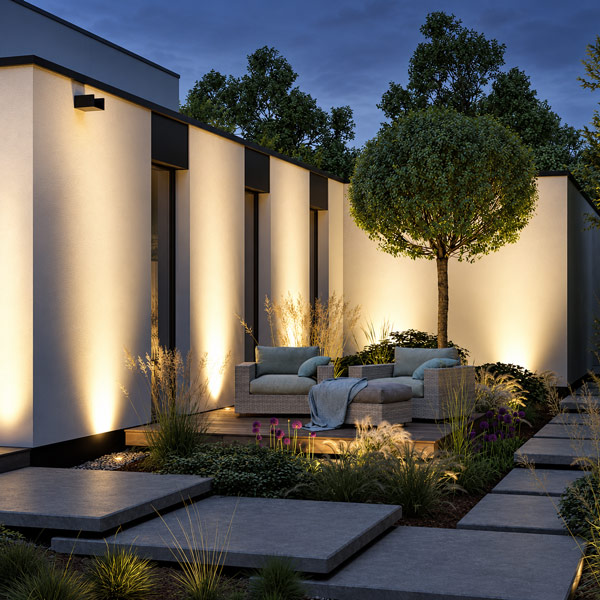
4. Garden and Landscape Lighting
Can You Replace MR16 With GU10?
FAQs
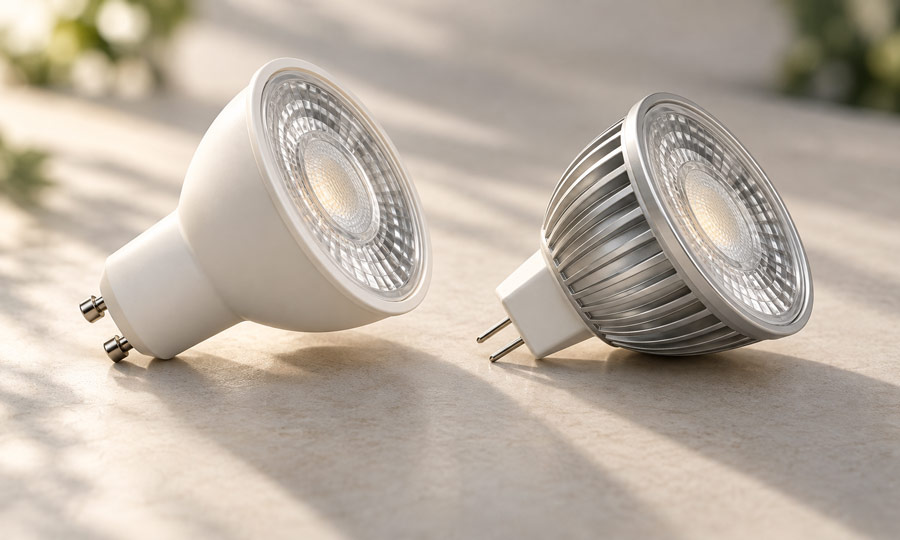
GU10 and MR16 spotlights can look almost identical from the front, but choosing a replacement requires more than matching their appearance. The common versions use different bases and operate on different electrical systems.
A typical GU10 spotlight uses a twist-lock base and runs on mains voltage. A typical MR16 spotlight with a GU5.3 base operates at 12V through an external transformer or suitable power supply. These differences affect installation, replacement compatibility, dimming, and maintenance.
Understanding the terminology first makes the comparison much easier.
What Do GU10 and MR16 Actually Mean?
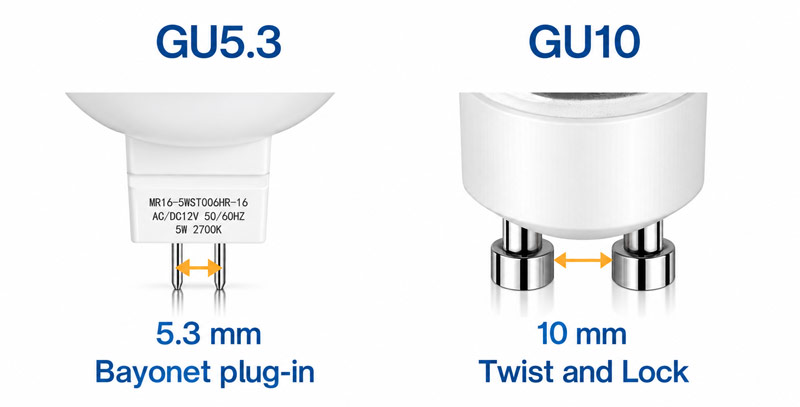
GU10 describes a lamp base. It has two short pins with enlarged ends, spaced 10 mm apart. The bulb pushes into the matching socket and locks with a short twist.
MR16 describes a reflector lamp shape and size. MR originally stands for “multifaceted reflector,” while 16 indicates a nominal diameter of 16 eighths of an inch: 2 inches, or approximately 50 mm.
Because these names describe different features, a lamp can have an MR16 shape and a GU10 base. However, retailers commonly use “MR16” to mean the low voltage version fitted with a GU5.3 base.
Throughout this article, MR16 refers to the common 12V GU5.3 version. Always confirm the markings on the actual lamp before buying a replacement.
GU10 vs MR16 at a Glance
| Feature | Typical GU10 Spotlight | Typical MR16 GU5.3 Spotlight |
|---|---|---|
| Base connection | Two short pins with enlarged ends | Two thin, straight pins |
| Pin spacing | 10 mm | 5.3 mm |
| Installation method | Push and twist to lock | Push straight into the socket |
| Operating voltage | Commonly 120V or 220–240V, depending on the market | Commonly 12V; check AC/DC requirements |
| External transformer | Usually unnecessary | Required when supplied from a mains circuit |
| Front diameter | Commonly around 50 mm | Nominally around 50 mm |
| Dimming requirements | Compatible dimmable bulb and dimmer | Compatible bulb, transformer, and dimmer combination |
| Common applications | Mains-powered downlights, spotlights, and suitable outdoor fixtures | Existing low voltage downlights and landscape spotlights |
The similar front diameter does not make these bulbs interchangeable. Their sockets and electrical requirements must match the installation.
Key Differences That Affect Your Choice
1. Voltage and Power Supply Compatibility
A mains-rated GU10 LED bulb connects to the voltage specified on its label. Its internal electronics provide the power conversion needed by the LEDs, so the installation normally requires no separate 12V transformer.
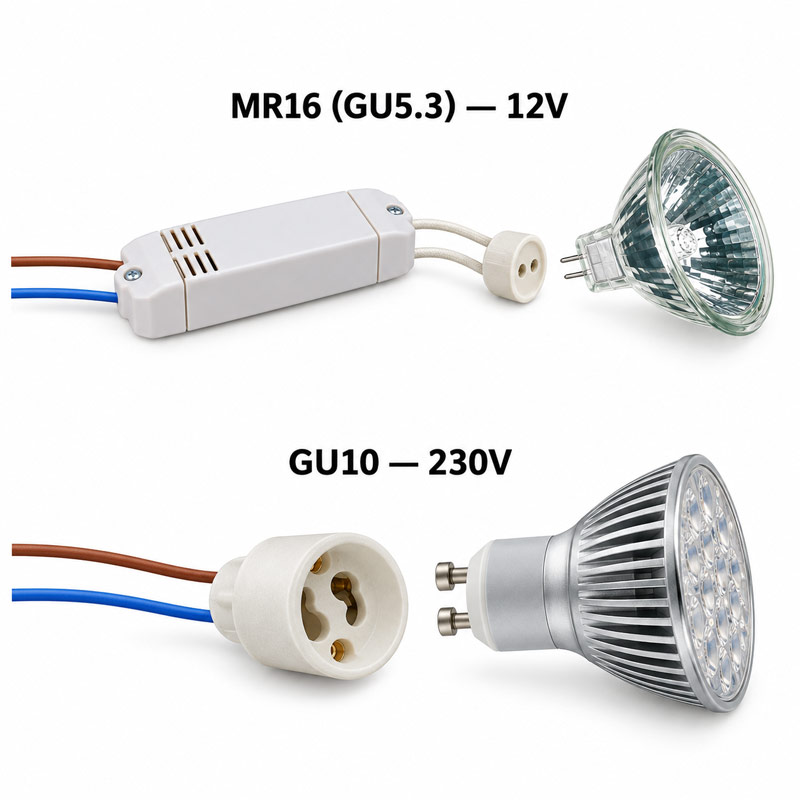
An MR16 GU5.3 system supplies the lamp through an external transformer or another compatible low voltage power supply.
The input specification matters. An MR16 LED may be marked 12V AC, 12V DC, or 12V AC/DC. These markings should be checked individually. A 12V label alone does not establish compatibility with every transformer output.
Older halogen transformers also require attention when upgrading to LEDs. Some have a minimum operating load that a small LED replacement does not meet. Transformer type, output characteristics, and the number of connected lamps can all affect performance.
Check the lamp manufacturer’s compatibility information before deciding whether the existing transformer can stay.
2. Physical Fit and Fixture Depth
Matching the front diameter is only part of checking fit.
LED replacements can have different overall lengths, rear profiles, and heat sink dimensions. A bulb may enter the socket but prevent a retaining ring from seating correctly or a fixture cover from closing.
Before purchasing, compare:
- The base type and pin arrangement.
- The lamp’s overall length and maximum diameter.
- The available space behind the socket.
- The fixture’s retaining mechanism and permitted lamp specifications.
Measure the existing installation when space is tight. Product dimensions provide a more reliable answer than photographs.
3. Brightness and Beam Distribution
Neither GU10 nor MR16 automatically produces brighter light. Brightness depends on the individual lamp and its optics.
Compare lumens to understand total light output. For spotlighting, also examine beam angle and, where available, center beam intensity in candela.
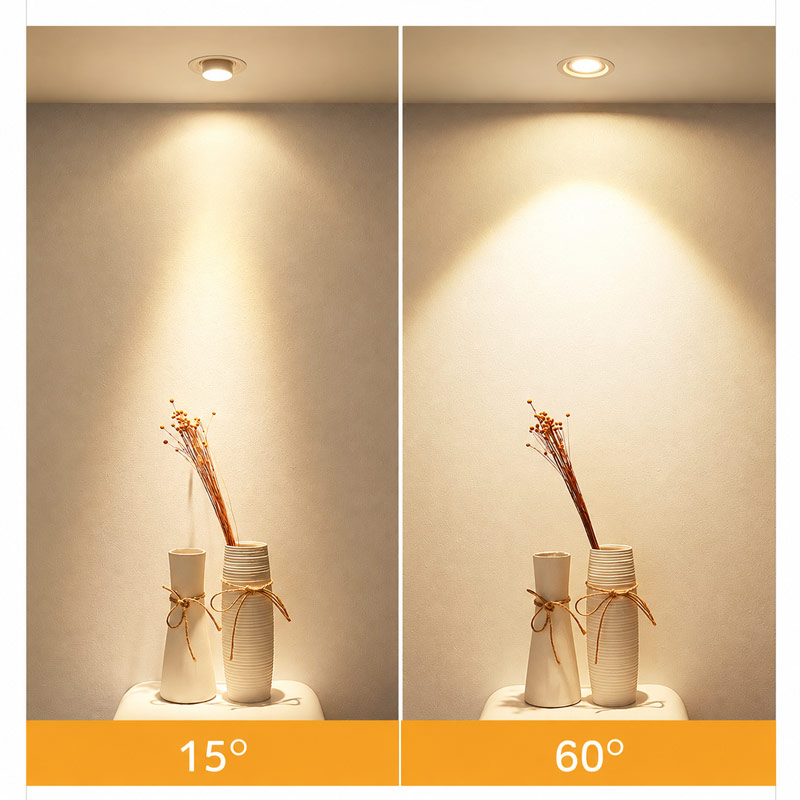
Two lamps with similar lumen ratings can create very different results. A narrow beam concentrates light on a smaller target, while a wider beam distributes it across a larger area.
For example, a 15° beam can highlight a sculpture or architectural detail. A 60° beam can provide broader coverage across planting or a wall. The appropriate beam angle depends on the target’s size, the mounting position, and the distance between the lamp and the illuminated surface.
When replacing a spotlight, match its useful lighting effect as well as its total output. A higher lumen rating cannot compensate for a beam that spreads light beyond the intended target.
4. Color Temperature and Color Rendering
The base type does not determine whether the light looks warm, cool, or natural.
Compare color temperature and CRI separately:
- Color temperature, measured in kelvin, describes the appearance of the light. Around 2700K–3000K is a common starting point for warm residential and garden lighting.
- Color rendering index, or CRI, describes how faithfully a light source renders object colors compared with a reference source.
For artwork, colorful flowers, timber, or decorative stone, consider lamps with a CRI of 90 or above. For a consistent appearance, check these specifications across all lamps serving the same area.
Both GU10 and MR16 LEDs are available with different color characteristics. Select the specifications that suit the space.
5. Energy Consumption and Running Costs
A lower operating voltage does not automatically mean lower electricity consumption. A 12V lamp can consume more power than a mains-voltage lamp if its wattage is higher.
Compare the power needed to deliver the required light output. For MR16 installations, account for transformer losses when evaluating the complete system.
As an illustration, replacing a 50W halogen lamp with a 6W LED that meets the required lighting performance reduces lamp power consumption by 88%.
At four operating hours per day, the difference is approximately:
44W × 4 hours × 365 days ÷ 1,000 = 64.2 kWh saved per lamp annually.
Multiply that figure by the local electricity tariff to estimate annual savings, allowing for any change in transformer losses.
The suitable LED wattage depends on the required output and beam. Compare actual specifications rather than assuming every lamp with the same base performs equally.
6. Dimming Compatibility
Both GU10 and MR16 LEDs can support dimming, but only when the selected products are designed to work together.
For a GU10 installation, confirm that the lamp is dimmable and approved for the chosen dimmer.
For an MR16 installation, check the complete combination of:
- The LED lamp.
- The transformer.
- The dimmer.
- The number of lamps connected.
A dimmable lamp does not guarantee compatibility with an existing halogen dimmer. Incorrect combinations can cause uneven adjustment, reduced dimming range, or dimmer-related flickering.
For installations with several lamps, test a representative combination before replacing the entire group.
Which Should You Choose for Your Installation?
Existing GU10 Fixtures
For a serviceable GU10 fixture, a compatible GU10 LED replacement is usually the most straightforward choice.
Match the supply voltage, physical dimensions, desired output, beam angle, and dimming requirements. Keeping the existing base avoids unnecessary changes to the electrical system.
Existing 12V MR16 Fixtures
If the fixtures and transformer remain suitable, retaining the MR16 system can avoid conversion work.
The important question is whether the proposed LED lamps are compatible with the existing equipment. Some installations accept an appropriate LED replacement directly; others need a different transformer or control arrangement.
Obtain the transformer model and lamp specifications before deciding that a complete conversion is necessary.
New Indoor Lighting
GU10 can be practical for new mains-powered spotlights and downlights because it removes the need to accommodate a separate 12V transformer.
MR16 remains useful where the lighting design already calls for a low voltage system. The final choice should reflect the fixture design, maintenance access, control requirements, and installation cost.
Garden and Landscape Lighting
MR16 GU5.3 lamps can suit low voltage garden spotlights powered by a compatible 12V landscape lighting transformer.
GU10 lamps can also serve outdoors when installed in fixtures specifically designed for the supply voltage and environmental exposure.
Neither base type establishes weather resistance. Outdoor suitability depends on the complete fixture, seals, connections, installation position, and product instructions.
Check the required IP44 or IP65 protection against the actual exposure. IP44 addresses splashing water, while IP65 provides dust protection and resistance to water jets. Neither rating establishes suitability for continuous immersion.
Can You Replace MR16 With GU10?
A common 12V GU5.3 MR16 lamp cannot be replaced directly with a mains-rated GU10 lamp.
Changing between these systems involves more than exchanging bulbs. A qualified electrician must assess whether the fixture is suitable for the proposed mains-voltage arrangement, including the lampholder, wiring, insulation, and power supply.
Some installations may permit an approved conversion. Others require replacement of the complete fixture.
A mechanical socket adapter does not convert voltage or establish that a low voltage fixture is suitable for mains operation. Compare the cost of a compliant conversion with retaining the existing system and fitting compatible MR16 LEDs.
FAQs
1. Can GU10 and MR16 LED Bulbs Be Used in Fully Enclosed Fixtures?
Only use an LED lamp in a fully enclosed fixture when its manufacturer explicitly permits that application.
A closed housing can retain heat around the lamp’s electronics and reduce performance or service life. Approval varies between models, including lamps with the same base and similar appearance. Check the enclosure rating and permitted operating temperature in the product specifications.
2. Why Do Some LED Spotlights Glow When the Switch Is Off?
One possible cause is a small current passing through the lamp from an electronic switch or dimmer.
Some controls without a neutral connection draw standby power through the lighting load. Sensitive LED electronics can respond to that current with a faint glow or occasional flash. Have the control compatibility and wiring checked before assuming the bulb is defective.
3. Can I Mix Halogen and LED MR16 Bulbs on One Transformer?
For an LED retrofit, plan to replace the lamps sharing a transformer with compatible LED models unless the equipment manufacturer explicitly approves a mixed load.
Keeping one halogen lamp can conceal a minimum-load problem that appears when the final halogen is removed. Mixed lamps may also respond differently during dimming. Verify the intended final LED configuration before completing the upgrade.
4. Can Smart GU10 or MR16 Bulbs Work With an Ordinary Wall Dimmer?
Most smart bulbs require continuous, undimmed power and adjust brightness through their internal electronics.
Use the manufacturer’s approved app, wireless controller, or compatible control system. An ordinary phase-cut wall dimmer may interfere with operation, even when set to maximum. Check the specific smart bulb instructions before retaining an existing dimmer.
5. Why Are MR16 Landscape Lights Dimmer Farther From the Transformer?
Excessive voltage drop can leave distant lamps receiving insufficient voltage.
Long cable runs, undersized conductors, heavy loads, and poor connections can contribute. Depending on their input regulation, LED lamps may dim or stop operating when voltage falls outside their specified range.
Check voltage under operating load at the affected fixture. The appropriate correction may involve thicker cable, shorter runs, improved connections, or redistributing lamps across separate runs.
