

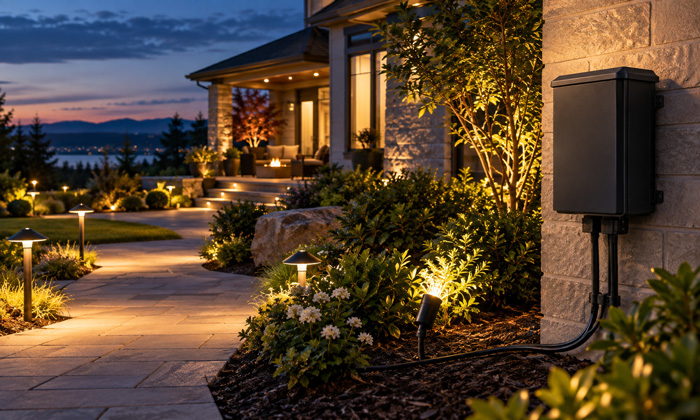
Understanding the Role of a 12V Low Voltage Landscape Lighting Transformer
Core Components of a Professional 12V Landscape Lighting Transformer
Selecting the Correct Transformer Capacity for Landscape Lighting
Transformer Compatibility with Modern LED Landscape Lighting
Safety Features of 12V Landscape Lighting Transformers
Installation Planning and Transformer Placement
Timer Controls and Smart Features in Landscape Lighting Transformers
Manufacturing Quality Standards for 12V Landscape Lighting Transformers
Choosing a Reliable 12V Landscape Lighting Transformer Manufacturer
FAQs
A low voltage landscape lighting transformer 12V is the central power supply component of an outdoor lighting system. It converts standard household electricity into a safer 12V output that powers pathway lights, garden lights, spotlights, deck lighting, and other landscape fixtures. A reliable transformer ensures stable power delivery, improves lighting performance, and extends the service life of the entire system.
For manufacturers, developing a high-quality 12V landscape lighting transformer requires careful consideration of electrical design, material selection, protection performance, and compatibility with modern LED lighting technology. This guide covers the essential manufacturing aspects of professional low voltage landscape lighting transformers and explains how these products support efficient outdoor lighting solutions.
Understanding the Role of a 12V Low Voltage Landscape Lighting Transformer
A landscape lighting transformer reduces standard input voltage into a low voltage output suitable for outdoor lighting applications. Most residential and commercial landscape lighting projects use 12V systems because they provide reliable illumination while improving installation safety and flexibility.
The transformer distributes power through low voltage cables connected to multiple lighting fixtures. This design allows lighting systems to cover gardens, walkways, patios, and architectural areas without requiring complex high voltage installation methods.
Low voltage lighting systems are widely used in outdoor applications because they simplify installation and provide greater flexibility for different landscape layouts. When planning a lighting project, understanding how low voltage solutions compare with traditional high voltage options can help determine the most suitable approach. A detailed look at low voltage pathway lights vs high voltage lighting shows how these systems differ in installation methods, energy use, and practical applications.
Core Components of a Professional 12V Landscape Lighting Transformer
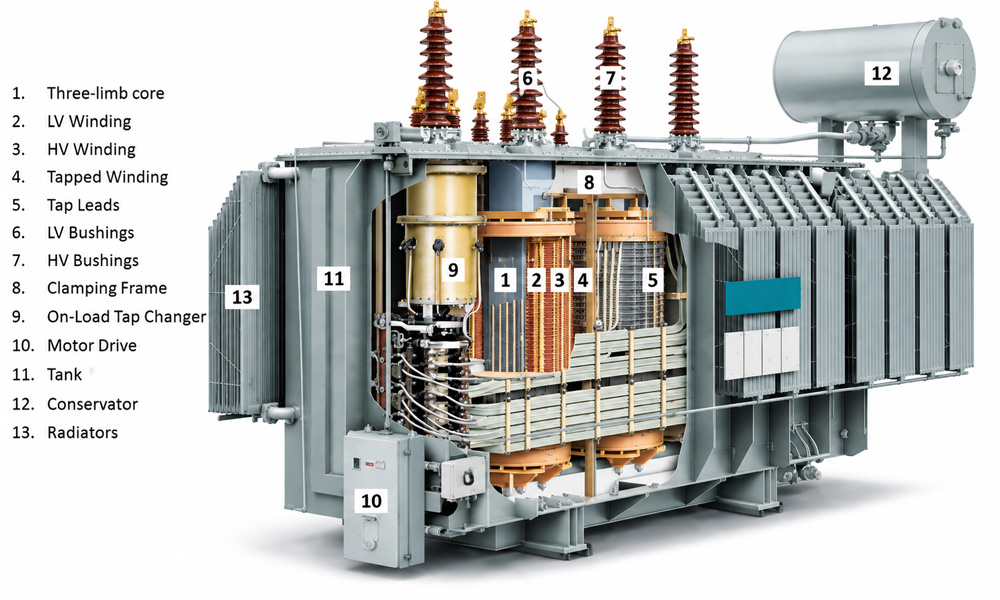
The internal structure of a transformer directly affects its efficiency, reliability, and service life. Manufacturers need to carefully select transformer cores, wiring materials, insulation components, and protection systems to ensure stable operation.
A high-quality transformer core helps reduce energy loss and improves voltage consistency during continuous operation. This is particularly important for LED landscape lighting because unstable voltage may affect brightness and shorten fixture lifespan.
The outer housing also plays an important role in outdoor applications. Since landscape transformers are exposed to changing weather conditions, the enclosure must provide resistance against moisture, dust, corrosion, and temperature fluctuations.
Outdoor lighting products are exposed to rain, humidity, and dust throughout the year, so waterproof protection plays an important role in maintaining reliable performance. The level of protection provided by a fixture depends on factors such as enclosure structure and resistance to environmental conditions, with standards like what IP65 means for garden lights helping define the protection requirements for outdoor applications.
Selecting the Correct Transformer Capacity for Landscape Lighting
Transformer capacity determines whether a lighting system can operate efficiently over a long period. Manufacturers calculate the required power rating based on the total wattage of connected fixtures, cable distance, and possible future expansion.
A transformer with insufficient capacity may experience overheating or unstable performance, while an oversized transformer may increase unnecessary costs. Professional landscape lighting designs usually include additional power capacity to support future lighting additions.
Cable selection plays an important role in maintaining stable transformer output, especially in landscape lighting systems with extended cable runs. As the distance between the transformer and fixtures increases, voltage drop can affect brightness and overall system performance. Selecting the appropriate wire size according to power requirements and installation distance helps maintain efficient energy distribution, while a proper wire sizing approach for landscape lighting systems can help ensure reliable operation across different project layouts.
Transformer Compatibility with Modern LED Landscape Lighting
LED technology has become the standard choice for many outdoor lighting applications because of its energy efficiency and long operational life. Landscape lighting transformer manufacturers need to design products that work effectively with LED fixtures and modern control systems.
A suitable transformer should support different lighting configurations, including residential gardens, commercial landscapes, and architectural lighting projects. Stable output voltage helps LED fixtures maintain consistent brightness and reduces maintenance requirements.
Many advanced transformers are also designed to work with smart controls, timers, and automated lighting systems. These features allow users to manage lighting schedules more efficiently while reducing unnecessary energy consumption.
Safety Features of 12V Landscape Lighting Transformers
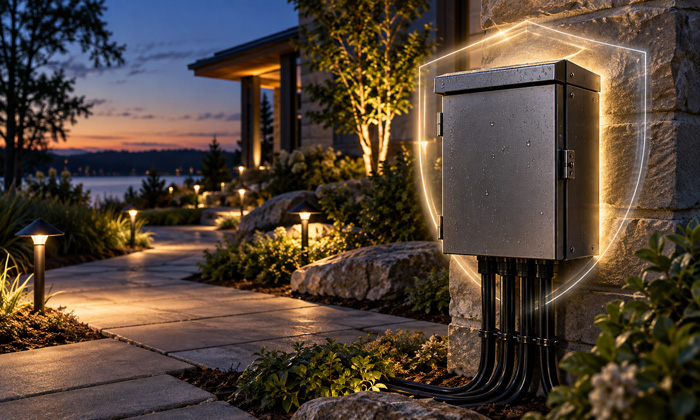
Although 12V lighting systems operate at a lower voltage level, transformer safety remains a critical manufacturing requirement. Professional products include multiple protection functions to maintain reliable operation in outdoor environments.
Common safety features include:
- Overload protection: Prevents damage when connected lighting fixtures exceed the transformer’s rated capacity.
- Short circuit protection: Reduces risks caused by damaged cables or incorrect electrical connections.
- Thermal protection: Helps prevent overheating during extended operation.
- Electrical isolation: Maintains separation between input and output circuits for safer performance.
These protection systems improve product reliability and help transformers operate safely under different installation conditions.
Installation Planning and Transformer Placement
The performance of a low voltage landscape lighting transformer depends on both product quality and installation planning. Proper placement helps improve heat dissipation, protect electrical components, and maintain stable power output.
Transformers are typically installed in accessible locations with sufficient ventilation while keeping cable connections protected from water exposure. Careful planning of fixture locations, cable routes, and power distribution helps reduce installation problems.
A complete lighting layout should consider fixture placement, cable routes, and the desired visual effect before installation begins. Careful planning of lighting positions and coverage areas helps create a more balanced outdoor environment while improving the overall performance of the system. Elements such as fixture arrangement, light distribution, and visual hierarchy are all part of an effective landscape lighting design process.
During installation, proper wiring methods and connection techniques help ensure reliable operation over time. Factors such as cable placement, fixture connections, and installation procedures all influence the final performance of a low voltage lighting system. Following suitable practices for installing low voltage garden lighting helps create a safer and more efficient outdoor lighting setup.
Timer Controls and Smart Features in Landscape Lighting Transformers
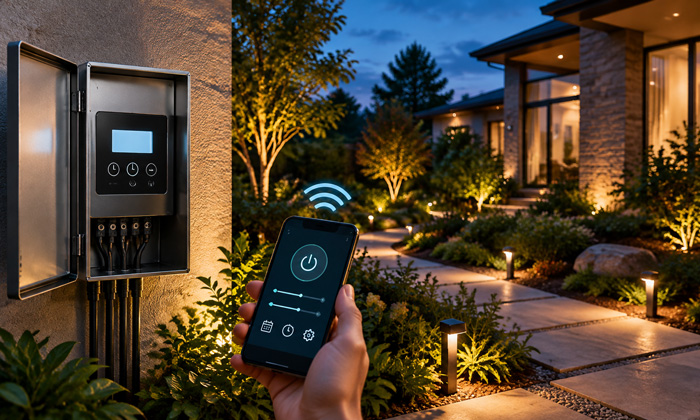
Modern landscape lighting transformers increasingly include timer functions and smart control compatibility. These features allow lighting systems to operate automatically based on preset schedules.
Timer controls help homeowners and commercial property managers reduce energy usage while maintaining consistent nighttime illumination. Automated operation also minimizes manual adjustments and improves overall system convenience.
Manufacturers are increasingly integrating digital interfaces, remote control options, and smart home compatibility into landscape lighting transformers to support more convenient and efficient operation. Automated scheduling features allow users to manage lighting periods more effectively while reducing unnecessary energy consumption. These functions are closely connected with the use of automated timer control solutions for landscape lighting in modern outdoor lighting systems.
Manufacturing Quality Standards for 12V Landscape Lighting Transformers
A professional transformer manufacturer must maintain strict quality control throughout the production process. Material inspection, electrical testing, and environmental testing ensure that each unit can perform reliably in outdoor conditions.
Manufacturers typically evaluate transformer performance through:
- Electrical performance testing: Checking output voltage stability, load capacity, and insulation performance.
- Material quality inspection: Ensuring housing materials, wiring components, and internal parts meet durability requirements.
- Environmental testing: Simulating outdoor conditions such as humidity, temperature changes, and long-term operation.
These procedures help create transformers that meet the expectations of residential and commercial landscape lighting markets.
Choosing a Reliable 12V Landscape Lighting Transformer Manufacturer
Selecting the right manufacturer involves evaluating product quality, engineering capability, production experience, and technical support. A dependable supplier provides transformers designed for real-world outdoor applications rather than simple power conversion products.
Manufacturers serving professional lighting markets need to consider different project factors, including system scale, installation conditions, and long-term maintenance requirements. Budget planning is also influenced by elements such as transformer capacity, fixture quantity, wiring layout, and installation methods. These factors are part of the overall evaluation process when estimating the investment required for landscape lighting projects.
FAQs
What is the difference between a magnetic and electronic 12V landscape lighting transformer?
Magnetic transformers use traditional coil and core technology to provide stable power output, while electronic transformers use high-frequency conversion methods to reduce size and weight.
For landscape lighting applications, magnetic transformers are often preferred for their durability, compatibility, and ability to support longer cable runs.
How long does a 12V landscape lighting transformer typically last?
A quality 12V landscape lighting transformer can often operate for many years when properly installed and protected from excessive moisture, heat, and overload conditions.
Product lifespan depends on component quality, operating environment, load management, and manufacturing standards.
Can a 12V landscape lighting transformer work with different types of outdoor lighting fixtures?
A 12V transformer can support various low voltage fixtures, including pathway lights, garden lights, spotlights, and accent lighting, as long as the total load and electrical specifications remain within the transformer’s rated capacity.
Fixture compatibility should also be considered when integrating LED lighting systems.
What factors should manufacturers consider when designing transformers for commercial landscape lighting projects?
Commercial applications require transformers with higher durability, flexible circuit management, reliable protection features, and the ability to handle larger lighting networks.
Manufacturers need to consider operating hours, environmental exposure, maintenance requirements, and future system expansion when developing products.
Why are multi-tap 12V landscape lighting transformers used in outdoor lighting systems?
Multi-tap transformers provide different voltage output options, allowing installers to compensate for voltage loss caused by longer cable distances or complex lighting layouts.
This flexibility helps maintain consistent fixture performance across different areas of an outdoor lighting project.
