
1. Start With the Outdoor Location
2. Check the Weather-Resistance Rating
3. Choose Materials That Can Handle the Landscape Environment
4. Match the Fixture Size to the Outdoor Structure
5. Pay Attention to Light Distribution
6. Select the Right Color Temperature
7. Consider Brightness Without Overlighting the Garden
8. Look for Good Glare Control
9. Make Sure It Works With the Rest of the Landscape Lighting
10. Choose a Style That Supports the Garden Design
11. Consider Insects and Maintenance
12. Check LED and Dimming Options
13. Consider Coastal or High-Humidity Conditions
14. Check Installation Height and Clearance
FAQs
Outdoor lighting flush mounts are a practical choice for covered patios, garden pavilions, pergolas, porches, gazebos, and other landscape structures where ceiling height is limited. Unlike pendant lights or chandeliers, flush-mount fixtures sit close to the ceiling, keeping outdoor spaces visually clean while reducing the risk of interference with doors, plants, furniture, or people walking underneath.
For a garden or landscape setting, however, choosing a flush mount should involve more than selecting an attractive fixture. Weather resistance, light distribution, color temperature, fixture size, material durability, and compatibility with the surrounding landscape all affect how well the lighting performs over time.
Here are the main factors to consider.
1. Start With the Outdoor Location
The first question is where the flush mount will be installed.
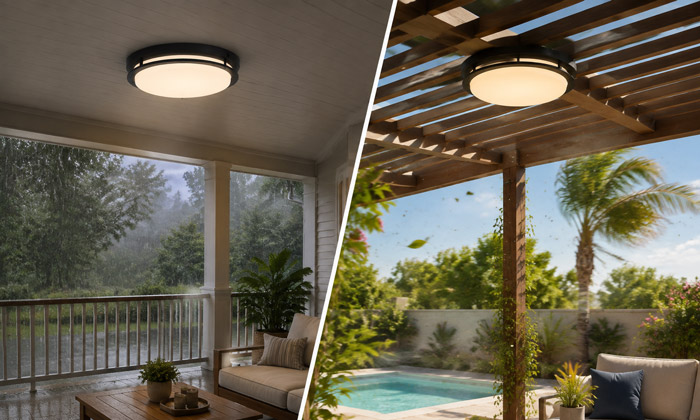
A fixture beneath a fully enclosed porch roof faces different conditions from one installed in a semi-open pergola near a swimming pool or garden. Even if rain does not fall directly onto the fixture, outdoor humidity, wind-driven moisture, dust, insects, and temperature changes can affect its components.
Common landscape applications include:
- Covered patios
- Garden pavilions
- Gazebos
- Porches and verandas
- Outdoor kitchens
- Poolside structures
- Covered walkways
- Pergolas with solid roofing
- Garden entrances and covered gates
Before buying, determine whether the location is considered damp or wet and select a fixture designed for those conditions.
2. Check the Weather-Resistance Rating
Outdoor lighting should be specifically rated for exterior use.
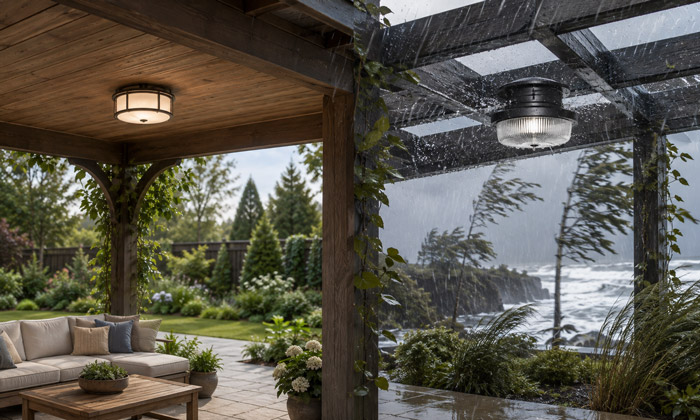
For protected garden structures where the ceiling stays relatively dry, a damp-location-rated fixture may be sufficient. Areas exposed to rain, water spray, or strong wind-driven moisture require fixtures designed for wet locations.
An IP rating can also provide useful information about protection against dust and water.
| Installation Environment | Recommended Protection | Typical Landscape Application |
|---|---|---|
| Fully covered and protected | Damp-rated outdoor fixture | Enclosed porch or covered veranda |
| Partially exposed | Higher moisture resistance | Pergola, gazebo, garden pavilion |
| Exposed to rain or water spray | Wet-rated fixture / suitable IP rating | Poolside shelter or open outdoor structure |
| Dusty garden environment | Good dust and insect sealing | Garden pavilion or covered path |
Avoid using indoor-only flush mounts outdoors simply because the ceiling is covered. Moisture and temperature fluctuations can still shorten the fixture's lifespan.
3. Choose Materials That Can Handle the Landscape Environment
Outdoor fixtures are continuously exposed to humidity, airborne dirt, pollen, insects, heat, and changing temperatures. Material quality therefore matters.
Common materials include aluminum, stainless steel, brass, copper, and engineered outdoor-grade composites.
Powder-coated aluminum is popular because it is lightweight and corrosion resistant. It works especially well in contemporary gardens and modern landscape designs.
Stainless steel provides a clean appearance and good durability, although the appropriate grade should be selected for humid or coastal environments.
Brass and copper suit traditional, rustic, Mediterranean, and naturalistic gardens. These metals may develop a patina over time, which can become part of the landscape character.
Also examine the finish. Outdoor-grade powder coating or another weather-resistant finish can significantly reduce fading, peeling, and corrosion.
See also: Comparing Copper Garden Lights With Stainless Steel Garden Lights
4. Match the Fixture Size to the Outdoor Structure
A flush mount should be proportionate to the ceiling and surrounding architecture.
A fixture that is too small may disappear visually and fail to distribute enough light. An oversized fixture can make a compact porch or gazebo ceiling feel crowded.
Consider:
- Ceiling dimensions
- Ceiling height
- Patio or pavilion size
- Furniture arrangement
- Distance between multiple fixtures
- Nearby architectural features
For large covered patios, several evenly spaced medium-sized flush mounts often provide better illumination than one extremely bright central fixture.
In a small garden gazebo or entrance canopy, one appropriately scaled fixture may be enough.
5. Pay Attention to Light Distribution
Landscape lighting is most effective when it creates comfortable layers of light rather than excessive brightness.
Flush mounts generally provide broad illumination from above, making them useful for circulation and general visibility. However, different shades and diffusers distribute light differently.
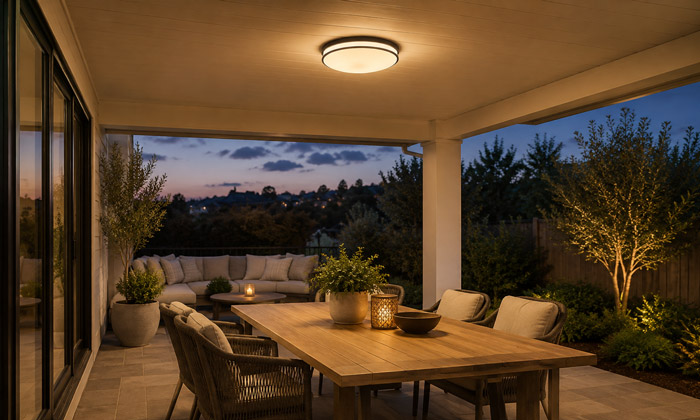
A fixture with an opal or frosted diffuser produces softer, more even illumination and reduces glare. This is often suitable for patios, outdoor dining areas, and seating spaces.
Clear glass may produce stronger sparkle but can expose the bulb and create more glare at eye level.
For garden environments, the goal is usually to illuminate the activity area without overpowering surrounding plants or competing with accent lighting elsewhere in the landscape.
6. Select the Right Color Temperature
Color temperature has a major influence on how a garden feels at night.
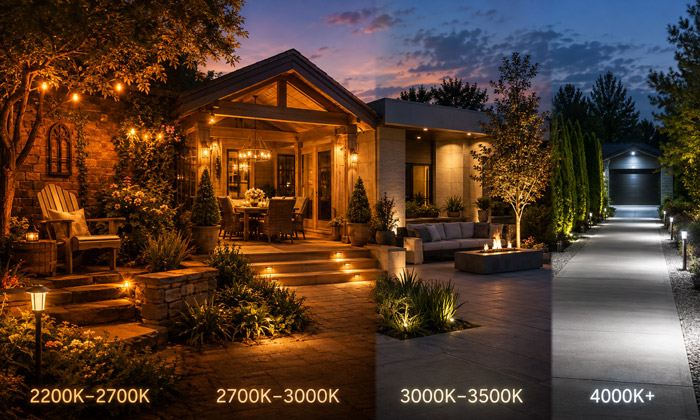
For most residential landscapes, warm light is preferable because it complements wood, stone, brick, foliage, and natural materials.
| Color Temperature | Visual Effect | Suitable Landscape Use |
|---|---|---|
| 2200K–2700K | Very warm, soft atmosphere | Rustic gardens, intimate patios, traditional landscapes |
| 2700K–3000K | Warm and comfortable | Porches, gazebos, outdoor dining areas |
| 3000K–3500K | Clean but still relatively warm | Contemporary patios and modern landscapes |
| 4000K+ | Cooler and brighter appearance | Primarily functional areas where visibility is the priority |
For garden entertaining areas, approximately 2700K to 3000K usually provides a comfortable balance between visibility and atmosphere.
Very cool white light can make planting areas appear harsh and may conflict with warmer landscape lighting elsewhere.
7. Consider Brightness Without Overlighting the Garden
More lumens do not automatically create a better outdoor space.
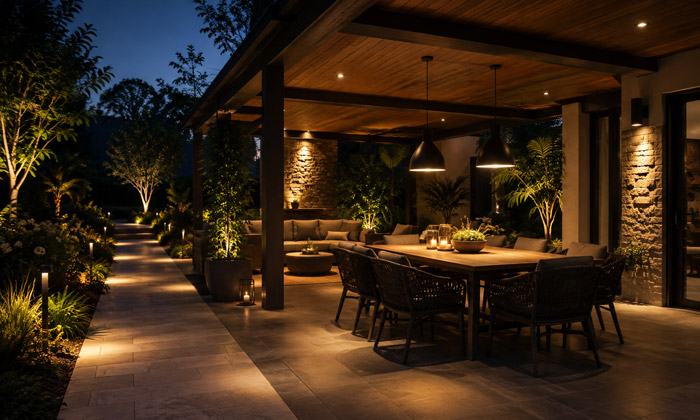
A covered patio needs enough light for walking, dining, or conversation, but excessive overhead brightness can flatten the landscape and reduce the effect of nearby path lights, uplights, and planting illumination.
Think about what happens beneath the fixture.
An outdoor dining table may need stronger illumination than a quiet seating corner. A passageway requires enough light for safe movement but does not need to resemble an indoor office.
Dimmable fixtures are especially valuable in landscape settings because brightness can be adjusted according to the activity.
8. Look for Good Glare Control
Glare is one of the most common problems with outdoor ceiling lighting.
Because flush mounts are positioned above seating and circulation areas, exposed high-output LEDs can become uncomfortable when people look upward.
Choose designs with:
- Frosted glass
- Opal diffusers
- Recessed LEDs
- Shielded light sources
- Wide, evenly illuminated surfaces
Good glare control is particularly important for gazebos, covered dining areas, and outdoor lounges where people spend long periods beneath the fixture.
9. Make Sure It Works With the Rest of the Landscape Lighting
A flush mount should not operate visually as an isolated fixture.
Consider how it interacts with:
- Path lights
- Step lights
- Wall sconces
- Tree uplights
- Garden spotlights
- Bollard lights
- Deck lighting
If the surrounding landscape uses warm 2700K lighting, installing a 5000K flush mount in the pavilion will create an obvious visual mismatch.
Brightness should also be coordinated. The ceiling fixture can provide functional illumination while lower-level landscape lights add depth and highlight plants, textures, and pathways.
The result should feel like one lighting composition rather than several unrelated fixtures.
10. Choose a Style That Supports the Garden Design
Outdoor flush mounts should complement both the architecture and the landscape.
For a modern garden, simple geometric fixtures in black, bronze, or muted metallic finishes usually integrate well with clean paving and structured planting.
For a traditional garden, lantern-inspired flush mounts or fixtures with subtle decorative detailing may work better.
For a rustic or naturalistic landscape, aged brass, copper, dark bronze, or understated textured finishes can coordinate with timber, stone, and dense planting.
The fixture does not need to become the main visual feature. In many landscapes, a restrained design works better because attention remains on the garden itself.
11. Consider Insects and Maintenance
Outdoor lights naturally attract insects, particularly when fixtures have openings around the shade.
A sealed or well-enclosed flush mount can reduce the amount of debris, insects, and dust entering the fixture.
Maintenance should also be considered before installation. A highly decorative fixture with multiple glass sections may look attractive but require frequent cleaning in a garden with trees, pollen, or airborne dust.
See also: How to Clean Garden Lights?
Look for:
- Easy-to-remove diffusers
- Smooth surfaces
- Sealed housings
- Corrosion-resistant screws and hardware
- Replaceable components where possible
A fixture that is easy to maintain is especially valuable when installed on a high patio or pavilion ceiling.
12. Check LED and Dimming Options
Integrated LED flush mounts are increasingly common outdoors because they can provide efficient illumination in a compact design.
When comparing LED fixtures, check:
- Lumen output
- Color temperature
- Color rendering
- Dimming compatibility
- Expected LED lifespan
- Driver quality
- Availability of replacement components
If the outdoor area is used for both practical tasks and evening relaxation, dimming is worth prioritizing.
For example, a patio may need brighter light during food preparation but much softer illumination during dinner.
13. Consider Coastal or High-Humidity Conditions
Gardens near the coast require additional attention because salt-laden air can accelerate corrosion.
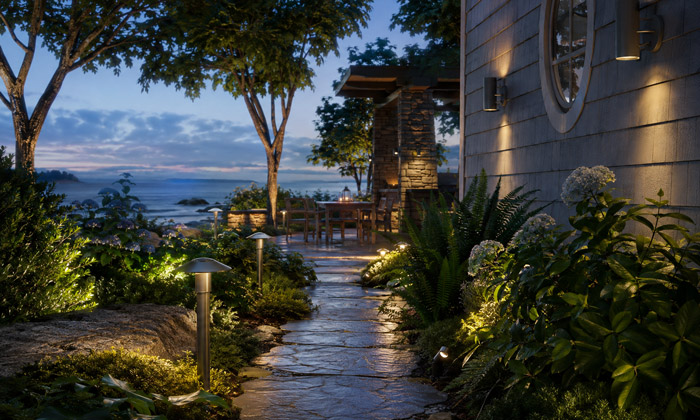
In these environments, look for fixtures specifically designed for coastal exposure or constructed from materials with strong corrosion resistance.
Similarly, gardens in humid climates should avoid finishes and fasteners that deteriorate quickly when repeatedly exposed to moisture.
The exterior finish is not merely decorative—it is part of the fixture's protection system.
14. Check Installation Height and Clearance
One advantage of flush mounts is their low profile.
They are particularly suitable where pendant lights would hang too low, including:
- Low-ceiling patios
- Compact gazebos
- Covered entrances
- Areas near opening doors
- Outdoor spaces with ceiling fans or beams
Before purchasing, check the fixture's total depth rather than only its diameter.
Also consider surrounding beams, ceiling fans, skylights, and structural elements to ensure light can spread without obstruction.
FAQs
Do Outdoor Flush Mount Lights Need to Be UL or ETL Listed?
Yes. Choosing a UL- or ETL-listed outdoor flush mount provides additional assurance that the fixture has been tested to recognized electrical safety standards.
For exterior installations, the certification should match the intended outdoor environment and local electrical requirements.
Can Outdoor Flush Mount Lights Work With Motion Sensors?
Many outdoor flush mounts can be paired with compatible motion sensors.
This is useful for garden entrances, covered walkways, porches, and side passages where lighting is mainly needed when someone approaches. Always confirm that the sensor is compatible with the fixture and LED driver.
Are Dusk-to-Dawn Controls Suitable for Outdoor Flush Mount Lighting?
Yes. A photocell or compatible dusk-to-dawn controller can automatically switch outdoor ceiling lights on after sunset and off after sunrise.
This setup is particularly practical for covered garden entrances, verandas, and frequently used outdoor circulation areas.
Can Outdoor Flush Mount Lights Be Connected to Smart Home Systems?
Many models can work with smart switches, relays, or compatible smart bulbs, allowing scheduled operation, remote control, and automation.
Before installation, check whether the fixture, LED driver, and chosen smart control system are electrically compatible.
How Can Outdoor Flush Mount Lights Reduce Light Pollution?
Choose fixtures that direct most of their output downward and keep unnecessary light from spilling beyond the covered area.
Controlled beam distribution and appropriate output help maintain nighttime visibility while reducing unwanted illumination across planting beds, neighboring properties, and the night sky.
