
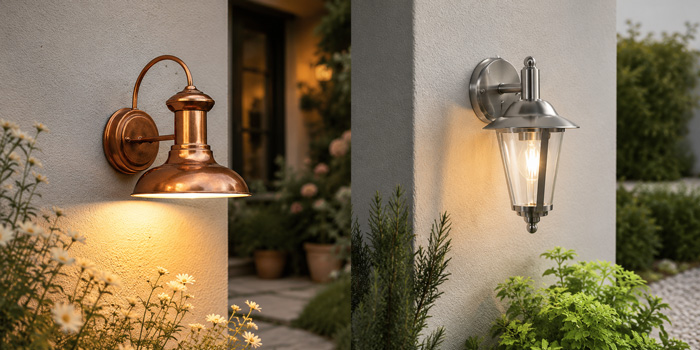
Copper Garden Lights
Stainless Steel Garden Lights
Copper vs. Stainless Steel Garden Lights
Durability and Weather Resistance
Maintenance Requirements
Design and Lighting Style
Cost and Long-Term Value
Which Material Is Better?
FAQs
Choosing the right material for garden lighting affects not only appearance but also durability, maintenance, and long-term value. Copper and stainless steel are two popular materials for outdoor lights, but they perform differently in garden environments. Understanding these differences can help homeowners, landscape designers, and property managers make a more suitable choice.
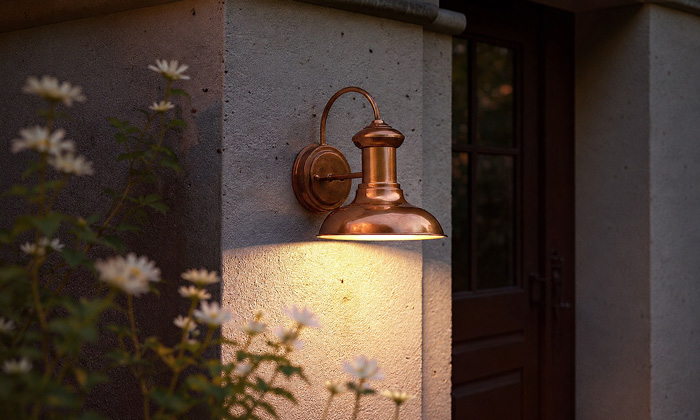
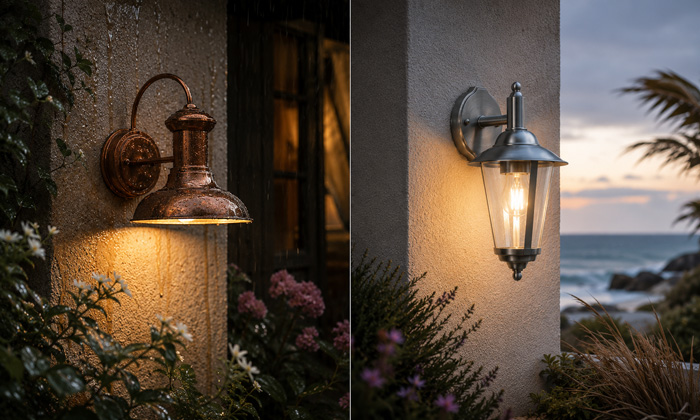
Copper garden lights are known for their warm, natural appearance. New copper has a reddish-brown finish, but exposure to air and moisture gradually changes the surface. Over time, it develops a darker patina and may eventually form a greenish protective layer.
This aging process is one of copper’s most distinctive features. Instead of looking worn, high-quality copper lights often gain character as they mature. They are especially suitable for traditional gardens, cottage-style landscapes, historic properties, and outdoor spaces that use natural materials such as stone and wood.
Copper also provides good corrosion resistance. The patina that forms on the surface helps protect the underlying metal from further deterioration. However, copper is relatively soft and may be more easily scratched or dented than stainless steel.
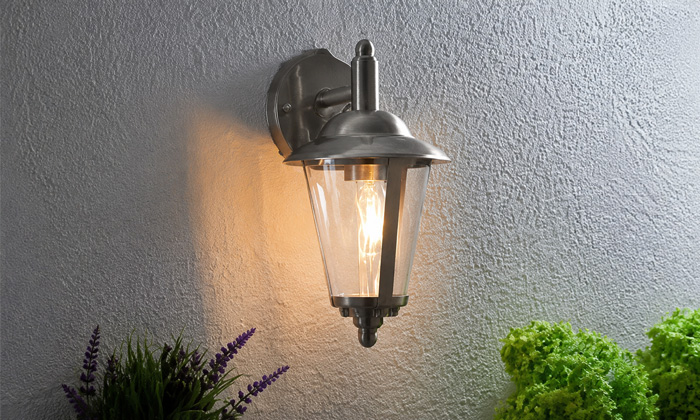
Stainless steel garden lights have a clean, modern appearance. Their smooth metallic finish works well with contemporary architecture, minimalist landscaping, paved paths, and structured garden designs.
The main advantage of stainless steel is its strength. It is harder and more resistant to dents and physical damage than copper. High-quality stainless steel can also resist rust and corrosion effectively, especially when suitable grades are used.
However, not all stainless steel performs equally outdoors. Grade 304 stainless steel is commonly used in general garden environments, while grade 316 offers better protection in coastal areas or locations exposed to salt, chemicals, and high humidity. Poor-quality stainless steel may develop surface rust if it is not properly manufactured or maintained.
Copper vs. Stainless Steel Garden Lights
|
Feature |
Copper Garden Lights |
Stainless Steel Garden Lights |
|---|---|---|
|
Appearance |
Warm, natural, and traditional |
Clean, polished, and modern |
|
Surface Changes |
Develops a natural patina |
Usually retains its original finish |
|
Corrosion Resistance |
Excellent after patina formation |
Very good when the correct grade is used |
|
Physical Strength |
Softer and easier to dent |
Stronger and more impact-resistant |
|
Maintenance |
Can be left to age or polished regularly |
Requires cleaning to prevent marks and surface contamination |
|
Best Design Style |
Rustic, classic, cottage, and heritage gardens |
Modern, minimalist, and architectural gardens |
|
Coastal Suitability |
Generally good |
Grade 316 is preferable |
|
Typical Cost |
Often more expensive |
Varies by grade and construction |
|
Long-Term Character |
Becomes more distinctive with age |
Maintains a consistent appearance |
Durability and Weather Resistance
Both materials can provide long service lives, but their durability depends on product quality and environmental conditions.
Copper naturally reacts with the environment, but this reaction creates a protective surface rather than causing destructive rust. It performs well in rainy and humid conditions, although its finish will continue to change.
Stainless steel relies on a thin protective chromium oxide layer to resist corrosion. If this layer is damaged or contaminated, rust spots may appear. For this reason, stainless steel lights should be cleaned periodically, particularly in coastal or industrial locations.
In areas close to the sea, 316 stainless steel is usually a better choice than 304 stainless steel because it contains molybdenum, which improves resistance to salt-related corrosion.
Copper garden lights require little maintenance when the natural patina is desired. Dirt can usually be removed with mild soap and water. Homeowners who want to preserve the original bright copper finish will need to polish the fixtures regularly and may need to apply a protective coating.
Stainless steel lights should be wiped with a soft cloth and mild cleaning solution. Fingerprints, water spots, dirt, and airborne salt can affect the appearance of the surface. Abrasive cleaners and steel wool should be avoided because they may scratch the finish or introduce particles that can cause rust staining.
Copper therefore offers easier maintenance for people who accept natural aging, while stainless steel may be preferable for those who want a stable finish and are willing to clean it occasionally.
See also: How to Clean Garden Lights?
Material choice should complement the surrounding landscape.
Copper blends naturally with plants, timber, gravel, brick, and stone. Its warm surface becomes less visually prominent as it ages, allowing the light effect to remain the main focus. It is well suited to subtle path lighting, tree uplighting, garden-wall lighting, and decorative landscape features.
Stainless steel creates a stronger architectural statement. Its reflective surface looks particularly effective beside concrete, glass, dark paving, metal furniture, and geometric planting arrangements. It is commonly used for modern bollard lights, recessed lights, spotlights, and contemporary wall fixtures.
Copper garden lights often have a higher initial price because copper is a valuable material and is frequently used in premium outdoor fixtures. Nevertheless, their corrosion resistance, repairability, and attractive aging process can make them a strong long-term investment.
Stainless steel products are available across a wider price range. Lower-cost models may use thin metal or unsuitable grades, while premium fixtures made from marine-grade 316 stainless steel can be expensive. Buyers should evaluate the steel grade, fixture thickness, seals, electrical components, and warranty rather than choosing by appearance alone.
Copper garden lights are the better choice when natural aging, warm color, traditional styling, and low-maintenance weathering are priorities. They are particularly effective in established gardens and landscapes designed around natural materials.
Stainless steel garden lights are more suitable when strength, clean lines, and a modern appearance are required. For coastal or highly humid environments, fixtures made from 316 stainless steel should be selected.
Neither material is universally better. Copper offers evolving character and natural corrosion resistance, while stainless steel provides greater physical strength and a more consistent contemporary finish. The best option depends on the garden’s design, local climate, maintenance expectations, and budget.
Are copper and stainless steel garden lights suitable for low-voltage systems?
Yes. Both materials are commonly used for 12V or 24V low-voltage garden lighting.
Fixture material does not determine voltage compatibility, so buyers should check the transformer, cable size, total wattage, and product specifications before installation.
What IP rating should outdoor garden lights have?
Garden lights should generally have an IP65 rating or higher for protection against dust and rain.
Fixtures installed near ponds, fountains, or areas exposed to heavy water spray may require IP67-rated products.
See also: What Is IP65? The Waterproof Rating of Garden Lights
How many lumens are suitable for garden lighting?
Path lights usually require around 100 to 200 lumens per fixture, while accent lights for trees, walls, or architectural features may need 200 to 500 lumens.
The ideal output depends on fixture spacing, beam angle, mounting height, and the desired lighting effect.
What color temperature works best for garden lights?
Warm white light between 2700K and 3000K is suitable for plants, paths, patios, and relaxing garden areas.
Neutral white light around 4000K creates a brighter, more contemporary appearance and may suit modern landscapes or security-focused installations.
How far apart should garden lights be installed?
Path and border lights are commonly positioned 1.5 to 3 meters apart.
The correct spacing depends on lumen output, beam spread, fixture height, and landscape layout. Alternating lights on opposite sides of a path can create more balanced illumination.
