

Table of Contents
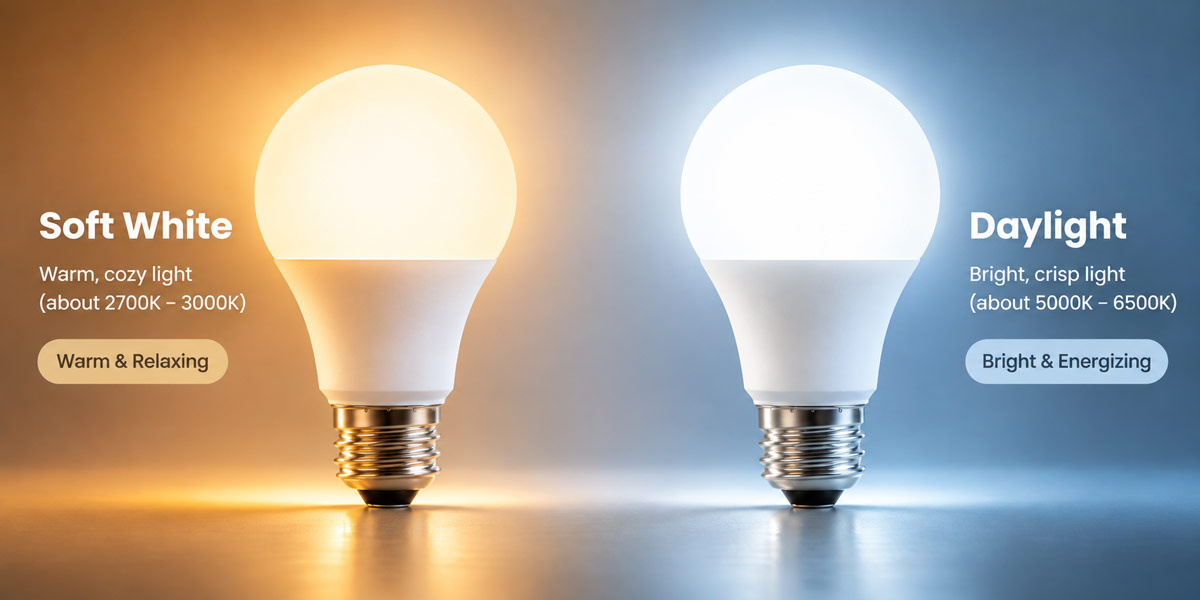
Soft white is a warm, yellow-leaning white, typically around 2,700 K. Daylight is a cooler white, typically 5,000–6,500 K, with a more pronounced blue-white cast toward the upper end. Both terms describe correlated color temperature, or CCT, which is measured in kelvins (K).
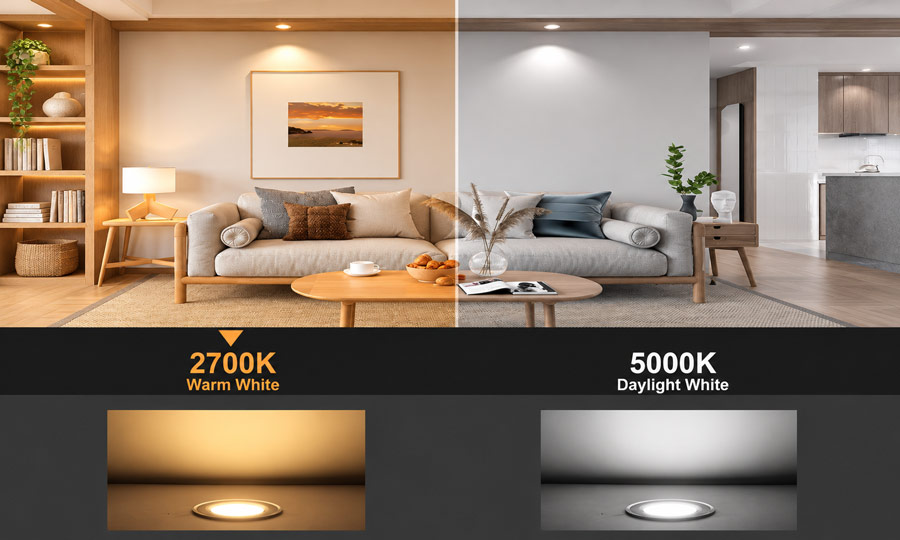
If you’re choosing between the two, start with what you spend time looking at. The same bulb can make a white backsplash look crisp and make the wood dining table beside it feel cooler than you’d like. Those are two different lighting jobs, even when they share a room.
Soft White and Daylight on the Kelvin Scale
| Common package label | Typical color temperature | Where to try it first |
|---|---|---|
| Soft white | 2,700 K | Living room lamps, bedside lamps, and rooms with warm wood or cream finishes |
| Warm white | 3,000 K | Kitchens and living areas that share one set of overhead lights |
| Neutral white | 3,500 K | Bathroom mirrors or work surfaces where you want a little less yellow |
| Cool white | 4,000–4,100 K | Kitchen counters, laundry rooms, and other everyday work areas |
| Daylight | 5,000 K | A dedicated craft table, workbench, or utility room where you prefer a cool white |
| Daylight | 6,500 K | A dedicated workspace where you deliberately want a stronger blue-white appearance |
Some packaging uses soft white for bulbs near 3,000 K as well. Check the printed Kelvin rating when you shop, especially if you’re replacing a bulb or choosing between two packages that both say daylight. A 5,000 K bulb and a 6,500 K bulb can look noticeably different in the same fixture.
Why Two Bulbs Can Make the Same Room Look So Different
The light output and the light on the surface
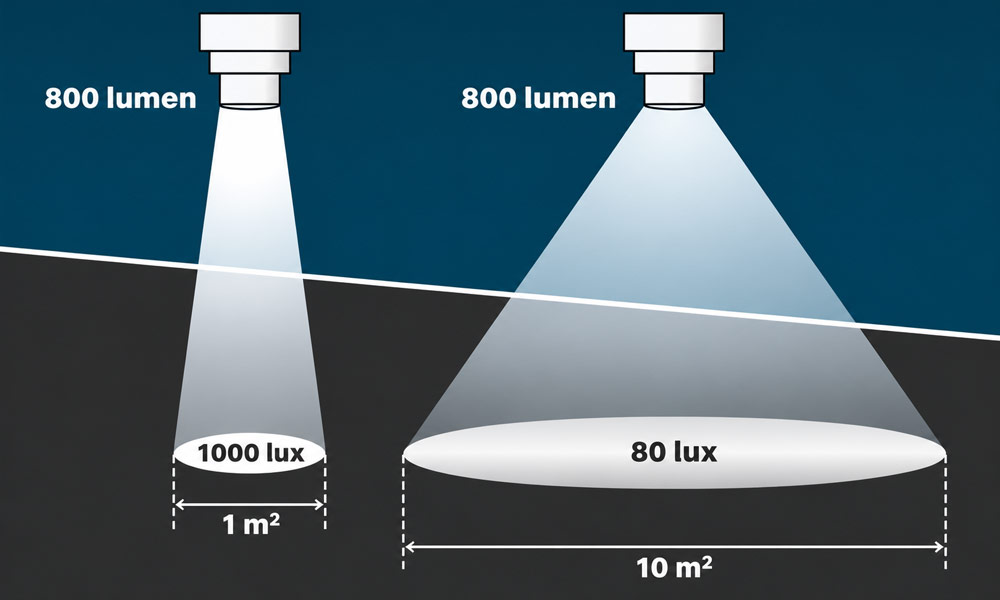
Two lights rated at 800 lumens can produce different levels of illuminance (lux) because a narrower beam concentrates light onto a smaller area.
An 800-lumen soft white bulb and an 800-lumen daylight bulb have the same rated total output. A bulb’s lumen rating describes how much visible light it emits. How much of that light reaches the page, cutting board, or workbench depends on the fixture, its distance from the surface, and where it directs the light. The amount of light falling on a surface is called illuminance, measured in lux.
A daylight bulb can make white paper look cooler and crisper. If your hand casts a shadow over the part you’re reading or writing on, move the light to the other side and compare again. That simple change tells you whether placement will help before you spend money on a different bulb.
The color of the light and the colors of objects
CCT describes the appearance of the light itself. The color rendering index (CRI) gives you an indication of how faithfully a bulb renders object colors compared with a reference light at a similar color temperature. If you regularly compare paint samples, cosmetics, or fabrics, a CRI of 90 or higher is a practical starting point. When deep reds matter, look for the supplemental R9 value, which measures how faithfully the bulb renders a saturated red sample.
Imagine comparing two upholstery samples, one oatmeal and one pale gray. First decide how warm you want the room to feel. Then check whether you can still tell the samples apart under the lamp you plan to keep. A bulb can give you a white you like while making two finishes look more alike than they did in the showroom.
The edge of a shadow
A small, exposed soft white bulb can cast a sharp shadow and appear glaring from a seat. A daylight fixture with a broad diffuser can produce gentler shadow edges. When the complaint is that a lamp feels harsh, look at it from your usual position. If you can see the exposed bulb directly, a shade that hides it may make a bigger difference than a change in color temperature.
How to Choose by Room and Task
Living rooms and bedrooms
Soft white is a good starting point when the light falls mainly on curtains, upholstery, wood, and other surfaces you see in the evening. Try it in a shaded lamp near the sofa or bed and look at the room from where you sit. A bulb you like from across the room can feel quite different when the shade is at eye level.
If you also read in that spot, light the page separately. Position a lamp beside the chair so it can illuminate the book without your shoulder blocking the beam. With glossy pages, hold the book at your normal reading angle and check for reflections. You can keep the rest of the room warm while giving the page more light.
Kitchen counters
Stand where you usually prep food and look down at the counter. A ceiling fixture over the center aisle can leave the cutting board in your shadow. An under-cabinet light can fill that shadow and make the work surface easier to see.
Once the counter is evenly lit, choose the white you prefer. Try 3,000 K around timber cabinetry or cream tile. If white counters look too yellow under that light, compare a 3,500 K or 4,000 K sample before jumping to daylight. If you like the cooler look of 5,000 K near a sunny kitchen window, check the same spot after sunset, when the electric light sets the color on its own.
Bathroom mirrors
When choosing a color temperature for bathroom lighting, try 3,000 K if you want the vanity to feel at home with warmer finishes. Compare 3,500–4,000 K if you prefer a more neutral appearance for grooming. Judge the light on your face from your usual distance at the mirror. Tile and skin can respond differently to the same bulb.
If the area under your eyes or chin looks dark, check where the light comes from. Diffuse fixtures on both sides of the mirror can illuminate the face more evenly than a single overhead light. That placement change can address shadows while keeping the color temperature you prefer.
Desks, workbenches, and garages
A 5,000 K bulb is a reasonable first sample if you prefer a cooler white for paperwork, detailed craftwork, or a dedicated utility bench. Put the light where you need to distinguish detail. A bright garage ceiling can leave the vertical labels on a parts shelf hard to see. At a desk, aim the lamp at the document and check for reflections in the monitor from your seated position.
For most people considering daylight, 5,000 K is a useful place to start. Try 6,500 K when you have a specific preference for a stronger cool cast and can see the bulb in the workspace before buying a full set.
Porches, paths, and patios

For residential paths and patios after dark, 2,700 K or lower is a sensible starting point. Use shielded fixtures aimed at the walking surface, steps, or path edges, with enough output to see the route. Check glare from the direction people actually approach. A fixture that looks subdued from the house can shine directly into view when you’re coming up the path.
DarkSky International. (2025, December 18). DarkSky’s home outdoor lighting assessment.
If you’re comparing 2,700 K and 3,000 K for landscape lighting, look at the same section of paving under each. Pale concrete and warm brick can pick up the difference in different ways. Check the steps first, then look back at the house to see how the path light sits beside the porch light.
Can You Mix Soft White and Daylight in the Same Room?
Yes. The place to check is the surface both lights reach. If soft white pendants and daylight downlights illuminate the same kitchen island, a white countertop can look creamier at one end and cooler at the other. A common color temperature across those fixtures gives the island a more consistent appearance.
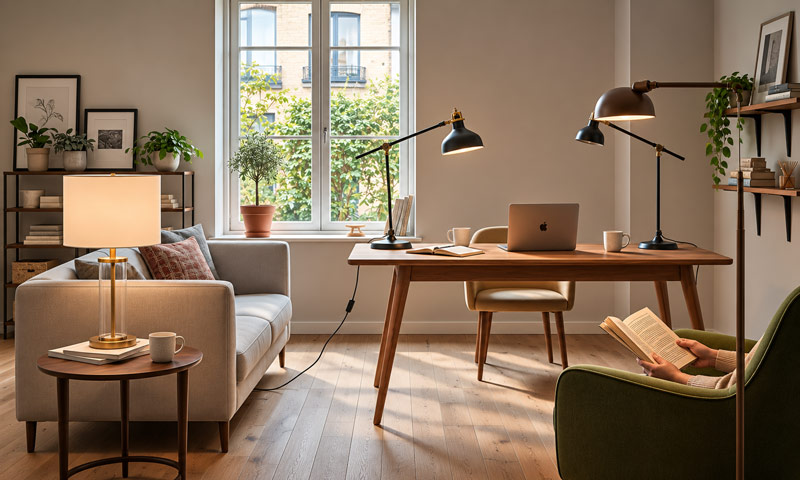
A bigger difference can work when the lights serve separate tasks. In a living room with 2,700 K lamps, a shaded 5,000 K desk lamp can illuminate papers in a work corner. Aim it down at the desk and give it its own switch. Then turn on both sets of lights and look from the sofa. If the desk lamp spills onto the wall beside a warm lamp, adjust the aim or try a closer color temperature.
How to Compare Two Bulbs Before Buying a Full Set
- Use the same fixture. Choose two bulbs with similar rated lumens, shape, and beam spread. Try them one at a time with the other electric lights off. Give your eyes a moment to adjust before judging the color.
- Compare a white surface and a finish you care about. Put white paper next to a paint sample, cabinet door, or fabric swatch where you usually see it. The paper makes the warm or cool cast easier to spot. The finish tells you whether you like what that cast does to the room.
- Turn the other lights back on. Look from your normal working or seated position, then from the doorway. Check the room at the times you use it most. If you usually cook after sunset, give the evening comparison more weight than the one you did at noon.
If you like the colors but struggle to see the task, adjust the amount or direction of light reaching it. If the surface is well lit and the white still looks too yellow or too blue, try a neighboring Kelvin setting. Changing one thing at a time makes it easier to tell which purchase will solve the problem.
FAQs
1. Do daylight LED bulbs use more electricity than soft white LED bulbs?
Electricity use varies by model. A daylight LED and a soft white LED with the same input wattage use the same amount of electricity over the same number of hours. When comparing two bulbs with similar lumen ratings, check the actual watts on the package. A 60-watt equivalent claim refers to the light output of the older bulb it is intended to replace.
2. Why do two bulbs with the same Kelvin rating look different?
Kelvin gives you the warm-to-cool position of a bulb’s white light. Two bulbs at the same nominal rating can still differ in tint, with one leaning slightly green and another slightly pink. Lighting specifications may report this difference as Duv, which describes how far and in which direction the white point sits from a reference curve. For fixtures you see side by side, start with the same bulb model and compare the replacement in place.
3. Can one LED bulb switch between soft white and daylight?
Yes, if both settings are within the product’s specified range. A selectable-CCT bulb or fixture may have a small switch that lets you set the color during installation. If you want to change it routinely, look for a tunable-white model with a supported app, remote, or wall control. Check that its range includes the specific settings you want, such as 2,700 K and 5,000 K.
4. Can a regular daylight LED bulb grow indoor plants?
It can provide supplemental light if enough plant-usable light reaches the leaves for enough hours. When comparing regular bulbs and grow lights, look for PPFD at the distance you plan to place the light. Short for photosynthetic photon flux density, PPFD describes how much usable light reaches a given area each second. A grow light with a published PPFD chart makes it easier to judge coverage for seedlings or other plants with higher light needs.
5. Do daylight bulbs attract more insects than soft white bulbs?
They can. Many night-flying insects respond strongly to short wavelengths, and attraction depends on the bulb’s spectrum and the insects present. One field study found similar catches for the particular warm-white and cool-white LEDs it tested, so the Kelvin rating alone is a rough guide. If insects regularly gather around your porch fixture, amber outdoor lighting is worth trying.
