
Understanding Light From a Plant’s Perspective
What Are Regular Lights Designed For?
What Makes Grow Lights Fundamentally Different?
Key Technical Differences Between Grow Lights and Regular Lights
Biological Impacts on Plant Growth
Practical Differences in Real-World Applications
FAQs
Lighting is fundamental to both human environments and plant growth, yet not all light sources are created with the same purpose in mind. A common question asked by home gardeners, commercial growers, and even engineers new to horticultural lighting is: What is the difference between grow lights and regular lights? While both types of lighting may appear similar to the naked eye—and both can technically emit light that plants can absorb—their design goals, spectral characteristics, efficiency, and biological impacts are profoundly different. Understanding these differences requires looking beyond brightness and into plant physiology, photobiology, and lighting technology.
Understanding Light From a Plant’s Perspective
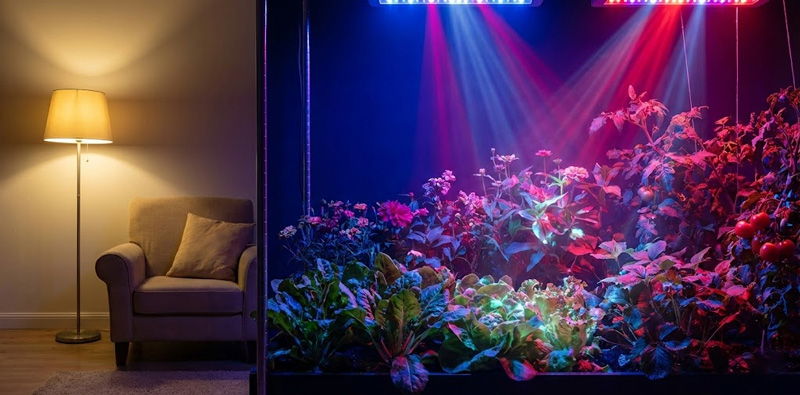
To humans, light is primarily about visibility and comfort. Our eyes are most sensitive to wavelengths in the green-yellow range, which is why conventional lighting is optimized to make indoor spaces look bright and natural to us. Plants, however, “see” light very differently. Through photosynthesis and photomorphogenesis, plants respond to specific wavelengths that regulate growth, leaf expansion, flowering, and fruiting.
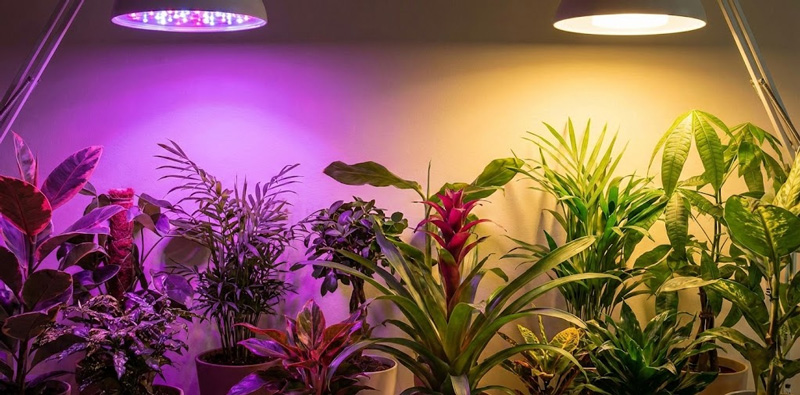
Photosynthesis mainly relies on Photosynthetically Active Radiation (PAR), which spans wavelengths from approximately 400 to 700 nanometers. Within this range, blue light (around 400–500 nm) and red light (around 600–700 nm) are particularly important. Blue light influences vegetative growth, leaf thickness, and compact structure, while red light plays a key role in flowering, fruiting, and stem elongation. Far-red light (just beyond PAR) also affects plant signaling, especially flowering timing and shade responses.
This biological reality is the foundation upon which grow lights are designed—and it is where they diverge sharply from regular lights.
What Are Regular Lights Designed For?

Regular lights—such as incandescent bulbs, fluorescent tubes, and standard LED household lamps—are designed primarily for human illumination. Their goals include visual comfort, accurate color rendering, energy efficiency for indoor use, and aesthetic appeal. Metrics such as lumens, correlated color temperature (CCT), and color rendering index (CRI) are used to evaluate how pleasant and functional the light appears to people.
Although regular lights emit some wavelengths that plants can use, this emission is incidental rather than intentional. A typical warm white LED, for example, may have strong output in the yellow and green regions, which plants use inefficiently compared to red and blue light. As a result, much of the energy consumed by regular lights is effectively wasted from a plant-growth standpoint.
That said, plants can grow under regular lights, especially for short periods or at early seedling stages. However, growth is often slower, less compact, and less predictable, particularly when light intensity and spectrum are not carefully controlled.
What Makes Grow Lights Fundamentally Different?
Grow lights are engineered specifically to support plant life across different growth stages. Instead of optimizing for human vision, they are optimized for plant response and efficiency. This difference manifests in multiple dimensions, including spectrum design, light output measurement, and long-term operational performance.
Grow lights often use LEDs with targeted wavelengths, allowing manufacturers to tailor the spectral output to specific crops or growth phases. Modern full-spectrum grow lights aim to mimic natural sunlight while still emphasizing the wavelengths most critical to photosynthesis and plant signaling.
In addition, grow lights are designed to deliver light more uniformly over plant canopies, ensuring that leaves at different heights receive adequate illumination. This is particularly important in controlled environments such as greenhouses, vertical farms, and indoor grow tents.
Key Technical Differences Between Grow Lights and Regular Lights
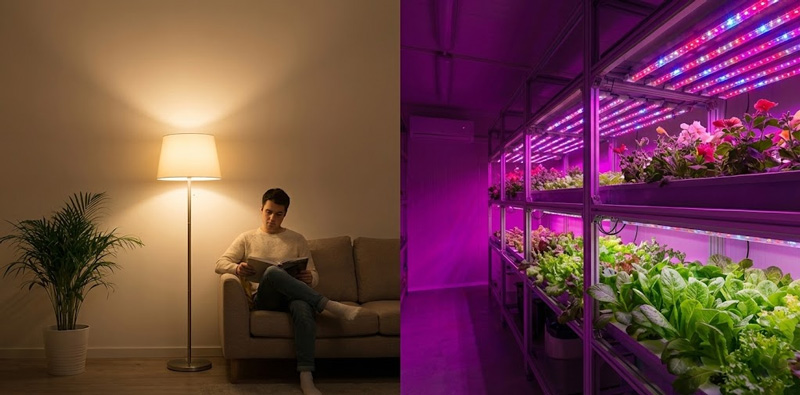
While the overall distinction can be summarized as “plant-optimized versus human-optimized,” the differences become clearer when examined in more specific terms.
1. Light Spectrum
- Regular lights prioritize balanced white light for visual comfort.
- Grow lights prioritize red, blue, and sometimes far-red wavelengths that drive photosynthesis and development.
- Advanced grow lights allow spectral tuning to match growth stages (seedling, vegetative, flowering).
2. Measurement Standards
- Regular lights are rated in lumens, which measure brightness as perceived by human eyes.
- Grow lights are rated using PPF (Photosynthetic Photon Flux) and PPFD (Photosynthetic Photon Flux Density), which quantify how much usable light reaches plants.
- This difference means a “bright” household bulb may deliver very little usable energy to plants.
3. Efficiency for Plant Growth
- Regular lights waste a significant portion of energy on non-optimal wavelengths.
- Grow lights maximize photosynthetic efficiency per watt, often delivering significantly more plant-usable light for the same energy input.
4. Heat Management
- Incandescent and some older lighting technologies produce excessive heat, which can damage plants or require greater spacing.
- Modern grow lights, especially LEDs, are designed with thermal management systems that reduce radiant heat while maintaining high output.
Biological Impacts on Plant Growth
The differences between grow lights and regular lights are not merely technical—they result in tangible biological outcomes. Plants grown under dedicated grow lights typically exhibit faster growth rates, stronger stems, deeper root systems, and more predictable flowering cycles.
Under regular lights, plants often stretch toward the light source, a phenomenon known as etiolation, caused by insufficient blue light or overall intensity. Leaves may appear pale, and flowering plants may fail to bloom or produce poor yields. These issues are not necessarily due to poor care but to inappropriate light quality and quantity.
Grow lights, by contrast, allow growers to precisely control photoperiods (light/dark cycles), which is essential for crops that are sensitive to day length. This level of control is nearly impossible to achieve reliably with standard household lighting.
Practical Differences in Real-World Applications
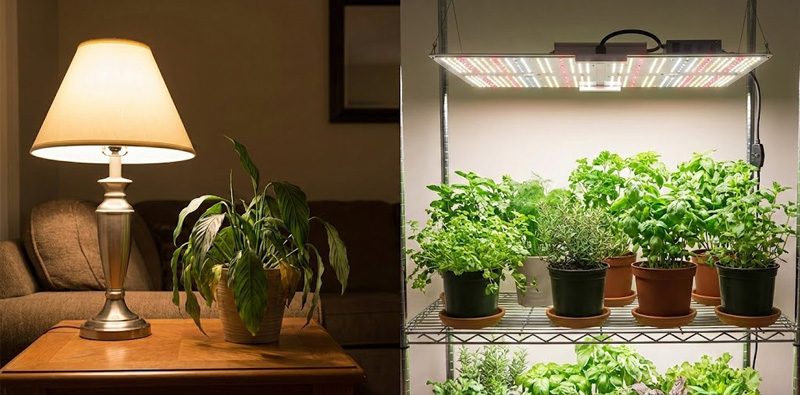
From a practical standpoint, choosing between grow lights and regular lights depends on the goal. For decorative houseplants that require low light, a bright room with supplemental regular lighting may be sufficient. However, as soon as productivity, consistency, or plant health becomes a priority, the limitations of regular lights become evident.
Grow lights are commonly used in:
- Indoor gardening and hydroponics
- Commercial greenhouses
- Vertical farming systems
- Research laboratories
- Seasonal light supplementation in low-sunlight regions
Regular lights, on the other hand, remain suitable for:
- General home or office lighting
- Temporary or incidental plant exposure
- Situations where aesthetics outweigh growth optimization
FAQs
Can regular LED lights permanently replace grow lights in indoor farming?
In most cases, no.
While regular LED lights may support short-term plant survival or low-light maintenance, they lack the spectral efficiency and photon output required for consistent, high-yield indoor farming.
How does mounting height affect the performance of grow lights compared to regular lights?
Grow lights are engineered to deliver usable photon density across plant canopies at specific mounting heights.
Regular LED lights are optimized for human spaces and rapidly lose effective intensity as the distance from plants increases.
Are “full-spectrum” grow lights truly equivalent to sunlight?
No. Full-spectrum grow lights approximate sunlight only within the photosynthetically active radiation (PAR) range.
They cannot fully replicate solar dynamics such as infrared balance, ultraviolet variability, or natural diurnal and seasonal changes.
Do different plant species require different grow light spectra?
Yes. Different crops respond uniquely to spectral composition.
Leafy greens, flowering plants, and fruiting crops each rely on different balances of blue, red, and far-red light.
As a result, professional cultivation often uses crop-specific spectrum selection rather than a one-size-fits-all approach.
Why do professional growers avoid using lumens when selecting plant lights?
Lumens measure brightness as perceived by the human eye.
They do not indicate how much light is usable for photosynthesis.
Because of this, lumens are unreliable for evaluating horticultural lighting performance, and growers instead rely on plant-relevant metrics such as photon output.