
What Do 2700K and 3000K Mean?
2700K vs 3000K Landscape Lighting Comparison
When Is 2700K Better for Landscape Lighting?
When Is 3000K Better for Landscape Lighting?
Which Color Temperature Makes Plants Look Better?
Can You Mix 2700K and 3000K Outdoors?
Does 3000K Provide More Light Than 2700K?
How to Choose the Right Color Temperature
FAQs
Choosing between 2700K and 3000K landscape lighting may seem like a small decision, but color temperature has a major impact on how your yard looks and feels after dark. Both options produce warm white light, yet they create noticeably different effects on plants, pathways, architecture, and outdoor living spaces.
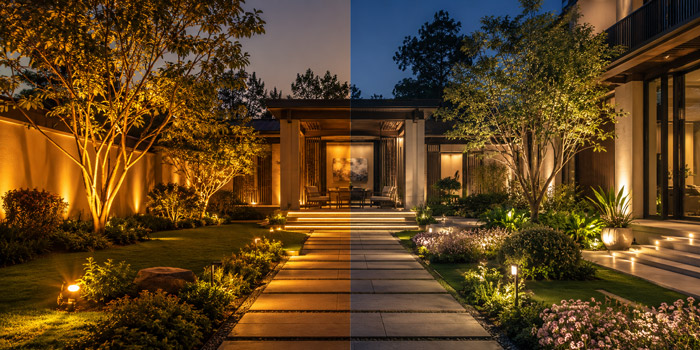
For most residential landscapes, 2700K is better for creating a soft, relaxing atmosphere, while 3000K is better for producing a cleaner, brighter, and more modern appearance. The right choice depends on your home’s design, the materials in your yard, and the purpose of each lighting fixture.
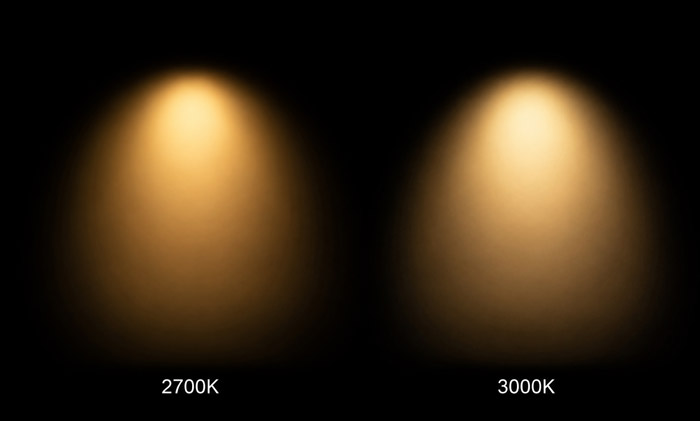
Color temperature is measured in Kelvin, abbreviated as K. A lower Kelvin rating produces warmer, more yellow or amber light, while a higher rating produces cooler, whiter light.
A 2700K landscape light has a warm tone similar to a traditional incandescent bulb. It creates a comfortable, inviting glow that works well around patios, gardens, trees, and traditional homes.
A 3000K light is still considered warm white, but it appears slightly brighter and more neutral. It provides better visual clarity and often complements modern architecture, stone surfaces, concrete, and contemporary landscaping.
The 300K difference may sound minor, but it becomes more visible when multiple fixtures illuminate large outdoor areas.
2700K vs 3000K Landscape Lighting Comparison
|
Feature |
2700K Landscape Lighting |
3000K Landscape Lighting |
|---|---|---|
|
Light appearance |
Soft, warm, slightly golden |
Warm white, cleaner and more neutral |
|
Overall mood |
Cozy, relaxing, intimate |
Crisp, polished, modern |
|
Best for |
Gardens, patios, trees, wood, traditional homes |
Pathways, stonework, façades, modern homes |
|
Plant appearance |
Enhances greens, browns, and autumn colors |
Creates clearer detail and stronger contrast |
|
Architectural effect |
Softens surfaces and textures |
Highlights lines, edges, and structural details |
|
Perceived brightness |
Slightly softer |
Slightly brighter |
|
Glare potential |
Generally lower |
More noticeable if fixtures are poorly aimed |
|
Ideal design style |
Rustic, classic, Mediterranean, cottage |
Modern, contemporary, transitional |
|
Main advantage |
Creates a welcoming atmosphere |
Improves visibility and definition |
|
Main drawback |
May look too yellow in modern settings |
May feel less intimate in relaxing spaces |
When Is 2700K Better for Landscape Lighting?
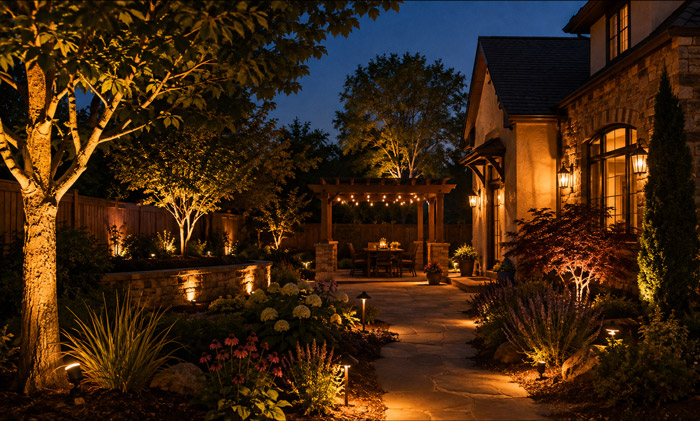
2700K is usually the better choice when the main goal is to create warmth and comfort. Its golden tone makes outdoor environments feel calm and inviting rather than overly bright or commercial.
Patios and Outdoor Seating Areas
Patios, decks, pergolas, and outdoor dining spaces benefit from softer illumination. A 2700K light creates an atmosphere similar to indoor living-room lighting, making it suitable for entertaining, relaxing, or dining outdoors.
Because the light is less stark, it also tends to feel more comfortable when fixtures are installed close to eye level.
Trees, Shrubs, and Garden Beds
Warm light works particularly well with natural materials and vegetation. It brings out the rich colors of tree bark, mulch, ornamental grasses, and warm-toned flowers.
2700K is especially attractive in landscapes featuring:
- Mature trees
- Wood fencing
- Red or brown brick
- Autumn foliage
- Natural mulch
- Rustic garden structures
The softer light can make a garden feel more natural and less artificially illuminated.
Traditional Architecture
Homes with classic, farmhouse, cottage, Mediterranean, or craftsman-style architecture often look best under 2700K lighting. The warm color complements brick, stucco, wood, and aged metal finishes without making them appear harsh.
It is also a good match for lantern-style fixtures and decorative wall lights.
When Is 3000K Better for Landscape Lighting?
3000K is a strong option when visibility, contrast, and architectural definition are priorities. It produces a clearer white light while still avoiding the cold or bluish appearance associated with higher color temperatures.
Pathways, Steps, and Driveways
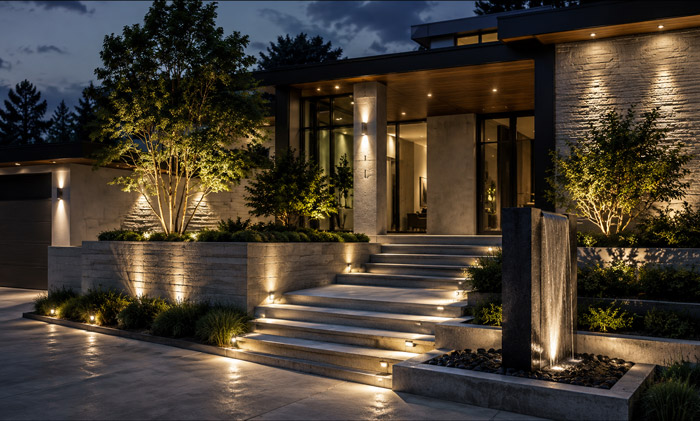
For areas where safe movement matters, 3000K can provide slightly better visual clarity. It helps define the edges of steps, paths, retaining walls, and driveways.
However, brightness and fixture placement are more important for safety than color temperature alone. A properly positioned 2700K fixture can still provide effective pathway lighting.
Modern Architecture
Contemporary homes often feature clean lines, neutral paint colors, concrete, glass, steel, and light-colored stone. The cleaner appearance of 3000K emphasizes these materials and helps preserve a modern aesthetic.
It is particularly effective for:
- Wall washing
- Façade lighting
- Column lighting
- Hardscape illumination
- Modern water features
- Sculptures and architectural details
Compared with 2700K, it creates sharper contrast and makes structural elements appear more defined.
Gray Stone and Concrete
Warm yellow light can sometimes make cool-gray materials look muddy or discolored. A 3000K color temperature usually presents gray stone, slate, concrete, and silver-toned metal more accurately.
For yards dominated by hardscaping rather than dense vegetation, 3000K may provide a cleaner overall result.
Which Color Temperature Makes Plants Look Better?
Both color temperatures can illuminate plants effectively, but they emphasize different qualities.
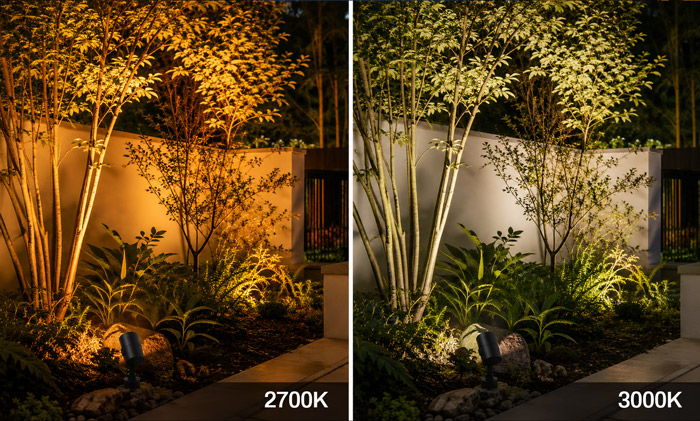
2700K gives plants a softer and richer appearance. It works well for warm green foliage, brown tree trunks, red leaves, and yellow flowers. It also helps create depth and shadow, which can make gardens feel more dramatic.
3000K produces a more neutral presentation. It can reveal finer details in leaves, branches, and landscape textures. Deep green plants may appear slightly crisper under 3000K, particularly when contrasted with pale walls or gray hardscaping.
For a natural and romantic garden atmosphere, choose 2700K. For sharper definition and a more contemporary display, choose 3000K.
Can You Mix 2700K and 3000K Outdoors?
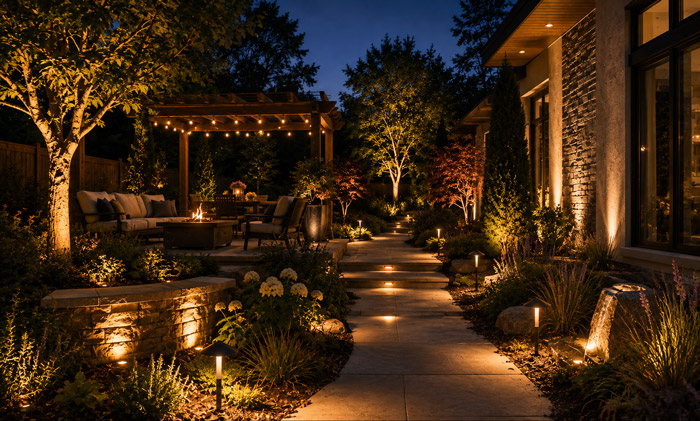
Yes, but the two color temperatures should be used intentionally.
A practical approach is to use 2700K in areas designed for relaxation and 3000K in areas that require stronger definition. For example, a yard might use 2700K around a patio and garden beds while using 3000K along steps or on a modern stone façade.
Avoid placing 2700K and 3000K fixtures directly next to each other when they illuminate the same surface. The difference may make one fixture appear yellow and the other appear unusually white.
To keep the design consistent:
- Use one color temperature within each visual zone.
- Match fixtures that illuminate the same wall, tree, or pathway.
- Create gradual transitions between different areas.
- Do not mix color temperatures randomly.
In smaller yards, using one color temperature throughout usually produces a more cohesive appearance.
Does 3000K Provide More Light Than 2700K?
Not necessarily. Color temperature describes the appearance of light, not its actual output. Brightness is measured in lumens.
A 2700K fixture and a 3000K fixture can produce the same number of lumens. However, 3000K often appears slightly brighter because its whiter light creates stronger contrast and clearer visibility.
When selecting landscape lights, compare the lumen output, beam angle, wattage, fixture position, and color temperature rather than assuming that a higher Kelvin rating automatically means more brightness.
How to Choose the Right Color Temperature
Consider the dominant features of your property.
Choose 2700K when your yard includes warm materials, abundant planting, traditional architecture, or intimate entertainment spaces. It is the safer option for homeowners who want landscape lighting to feel subtle and welcoming.
Choose 3000K when your property features modern architecture, gray stone, concrete, geometric landscaping, or areas that benefit from clearer visual definition.
It is also helpful to test both options at night before installing every fixture. Exterior paint, stone, plants, and surrounding ambient light can change how each color temperature appears.
Does 2700K or 3000K landscape lighting attract fewer insects?
2700K generally attracts slightly fewer insects because it contains less short-wavelength light than 3000K.
However, fixture brightness, ultraviolet output, placement, and operating time usually have a greater effect on insect activity than the 300K color difference.
Does color temperature affect landscape lighting energy consumption?
Color temperature alone does not determine energy use. A 2700K and a 3000K LED fixture with the same wattage may consume equal amounts of electricity.
Energy efficiency depends primarily on lumens per watt, fixture quality, transformer losses, and operating hours.
Is 2700K or 3000K better for outdoor security cameras?
3000K is often preferred around security cameras because its more neutral light can improve visible contrast and color recognition.
Camera performance still depends on illumination level, beam coverage, sensor quality, and whether the camera uses infrared night vision.
What CRI is recommended for 2700K and 3000K landscape lights?
A Color Rendering Index of at least 80 is suitable for general landscape lighting, while CRI 90 or higher is recommended for premium gardens, architectural details, artwork, and outdoor entertaining areas where accurate colors are important.
Are 2700K and 3000K lights suitable for dark-sky-friendly installations?
Both can be used in dark-sky-friendly designs, although 2700K is often preferred because it produces less short-wavelength light.
Proper shielding, downward aiming, low lumen output, timers, and motion controls are more important than color temperature alone.
