
Table of Contents
Task lighting is lighting directed at a specific activity, such as reading, preparing food, writing, or working with small components. It increases illumination where the activity takes place and can give the person doing the work more control over how the light reaches that area.
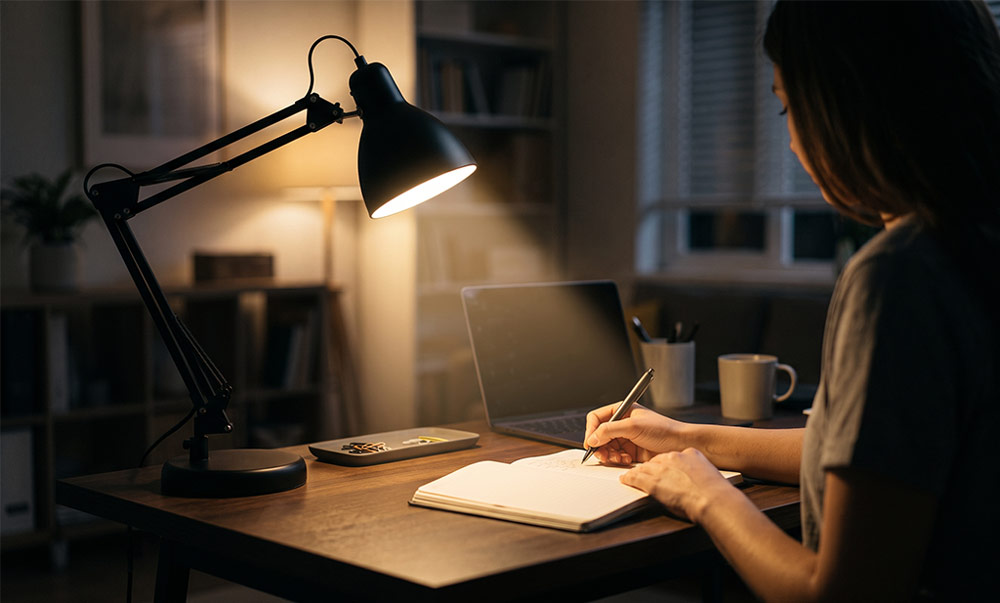
A desk lamp illuminating a notebook is task lighting. So is an under-cabinet fixture lighting a chopping board or a carefully positioned light above an outdoor preparation counter.
Yet a room can look bright and still provide poor task lighting. Stand at a kitchen counter with the ceiling light behind you, and your body may cast a shadow over the food. Add a powerful spotlight above a polished worktop, and its reflection may obscure the detail you want to see.
Effective task lighting starts with a more useful question: What information does this activity require you to see clearly?
Task Lighting, Ambient Lighting, and Accent Lighting
These lighting layers serve different purposes, although a single fixture can contribute to more than one.
| Lighting layer | Main purpose | Example |
|---|---|---|
| Ambient lighting | Provide general illumination throughout a space | Ceiling lighting across a kitchen |
| Task lighting | Support a particular visual activity | A light illuminating the food preparation area |
| Accent lighting | Draw attention to a feature | A spotlight highlighting a textured wall |
The fixture’s shape does not determine its role. A pendant may provide task lighting over a worktable, while a similar pendant elsewhere mainly contributes to the room’s atmosphere.
This distinction matters when choosing lights. A fixture that creates an attractive pool of light still needs to provide suitable coverage, direction, and visibility before it can serve a particular task well.
Choose Light for the Detail You Need to See
Reading printed instructions, matching fabric colors, and checking a surface for unevenness involve different visual demands. Treating them as the same lighting problem can lead to disappointing results.
Text and markings need clear contrast
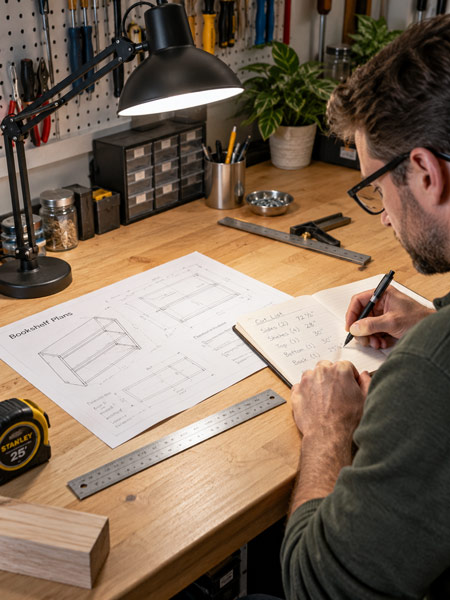
For reading, measuring, and following printed instructions, the important detail is often a dark mark against a lighter background.
The light should cover the relevant material without producing a bright reflection across it. A concentrated spot that illuminates three lines brilliantly while leaving the rest of the page much darker can be less useful than a broader, more consistent distribution.
Consider the complete working area: the instructions, the ruler beside them, and the place where you record a measurement.

Color decisions need more than a preferred white tone
Color temperature describes whether white light appears warmer or cooler. It does not establish how faithfully that light renders the colors of objects.
When comparing fabrics, paint samples, ingredients, or finishes, the color rendering index becomes relevant. A CRI of 90 or above is a useful selection target for tasks where color fidelity matters. For demanding work involving saturated reds, additional information such as the R9 value can help because the general CRI score does not fully describe their rendering.
Warm white and neutral white can both support effective task lighting. Choose the appearance you prefer while assessing color rendering and illumination separately.

Surface inspection can benefit from deliberate shadows
Shadows sometimes reveal useful information.
Light arriving at a shallow angle creates small shadows that make surface texture and irregularities easier to distinguish. This principle is used in conservation examination to reveal texture and surface damage.
For a home workbench, a practical application is checking a sanded board with light coming from one side. The same surface can then be viewed under broader illumination when measuring or assembling it.
This leads to a more precise design principle: Judge a shadow by whether it reveals or hides the feature you need to inspect.
A shadow across printed instructions is an obstruction. A small shadow outlining an uneven surface may be valuable.
How Much Light Does Task Lighting Need?
Two measurements help answer this question:
- Lumens describe the total visible light output of a source.
- Lux describe the light arriving on a surface, with one lux equal to one lumen per square meter.
Understanding what lumens mean in light bulbs helps when comparing products. Evaluating task lighting also requires attention to where that output goes.
Two lights with the same lumen rating can produce different illumination on a desk because of their mounting distance, optics, and distribution.
The following reference ranges illustrate how illumination needs increase with visual difficulty:
| Visual task | Illustrative illuminance range |
|---|---|
| Reading clear print or performing work with large, high-contrast details | 200–500 lux |
| Food preparation or work involving smaller or lower-contrast details | 500–1,000 lux |
| Demanding inspection involving very small, low-contrast details | 1,000–2,000 lux |
These ranges describe groups of tasks. The final setting depends on the specific activity, surface, and person using the space.
A simple calculation explains why bulb output is only a starting point
Suppose a working area measures 0.4 square meters and receives an average of 500 lux.
The light arriving across that area is:
500 lux × 0.4 m² = 200 lumens reaching the working surface.
The required source output must also account for light directed elsewhere and losses within the fixture. A bulb labeled 200 lumens therefore cannot automatically be expected to produce that result.
The beam angle also affects coverage. A narrow beam can concentrate light into a small area while leaving the surrounding workspace poorly illuminated.
Compare fixtures using illumination information at the intended working distance whenever it is available.
Plan Around Hands, Eyes, and Reflective Surfaces

An empty desk is an incomplete test of task lighting. The person, materials, and tools all change how light reaches the work.
Allow for the movement of your hands
For handwriting, placing the lamp on the side opposite the writing hand is a useful starting arrangement. Move it as needed so the hand’s shadow falls away from the active writing area.
For food preparation, check the light with your body in its normal position. A ceiling fixture behind you may illuminate the counter well until you stand between the source and the work.
The same applies to shelves, cabinet edges, and equipment. Each can interrupt the light before it reaches the relevant detail.
Keep the bright source out of normal viewing positions
Check the fixture while sitting, standing, and leaning forward as the activity requires.
A shade, recessed source, or appropriate shielding can help direct light onto the work while limiting direct brightness in your eyes. The arrangement should allow a natural working position without needing to duck beneath the light or move sideways to escape it.
Check where reflections travel
Glossy paper, polished counters, metal tools, and computer screens can redirect light toward your eyes.
When a bright reflection covers the detail you need to see, changing the light’s position or angle may help more than increasing its output. For a desk containing paperwork and a monitor, direct the task light toward the paper while keeping its reflection off the screen.
Also examine the area surrounding the task. An intensely illuminated patch surrounded by deep darkness creates a different viewing experience from a working area supported by gentle background illumination. Check for troublesome reflections and frequent transitions between extremes of light and dark.
Outdoor Task Lighting Should Follow Activities
A garden lighting plan can make the landscape attractive while leaving practical activities difficult to perform.
Outdoor task lighting works best when planned around specific places where people do things.
Outdoor cooking and preparation
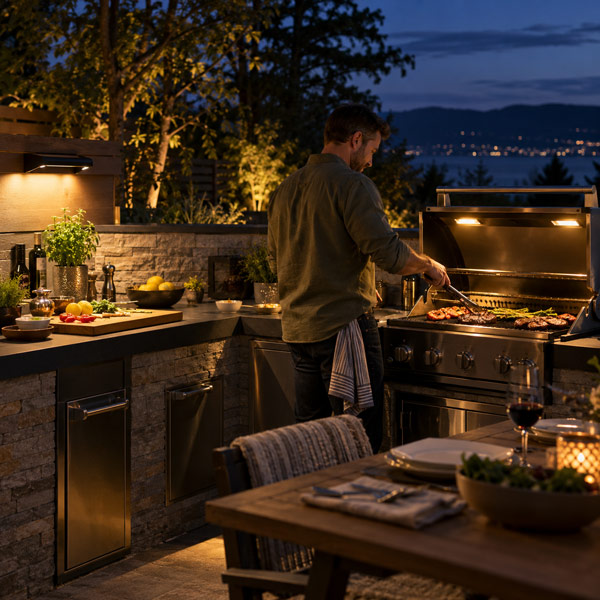
Evaluate the preparation counter and cooking surface separately. A light that reaches the chopping board may be blocked from the cooking area by a raised lid or overhead structure.
Stand where the work happens and check both surfaces. Include the places where ingredients, utensils, and serving dishes will sit.

Potting and garden work
At a potting bench, useful illumination may need to cover a seed packet, plant ties, tools, and the container being handled.
A light aimed only at the middle of an empty bench can miss much of this activity. Plan coverage around the area occupied during the job.
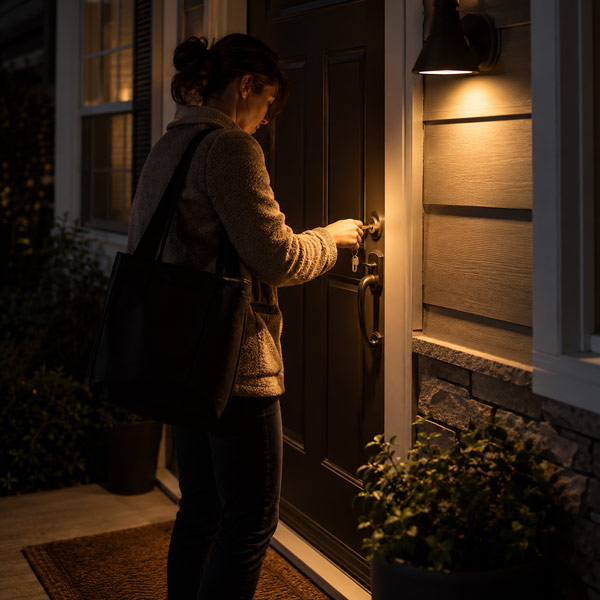
Entrances and service areas
Some outdoor tasks take place on vertical surfaces: finding a keyhole, reading a delivery label, or locating a control.
Check the surface involved in the activity. Illumination measured only at ground level will not describe how well those details can be seen.
Across these settings, keep the light directed within the necessary working area, limit unnecessary brightness, use warmer light where suitable, and switch it off when the activity ends. These practices follow established principles for responsible outdoor lighting.
Test the Setup With the Work in Place
A practical evaluation should reproduce the conditions in which the lighting will actually be used.
- Put the real materials in position. Include the objects, instructions, tools, and equipment involved.
- Check illumination across the working area. Use a light meter at the relevant surface, including the center and edges, with the person in their normal position.
- Perform the normal movements. Write, reach, turn a page, or move materials to identify shadows that appear during use.
- Inspect normal viewing angles. Look for exposed bright sources and reflections that obscure details.
- Repeat the check at the relevant time. Daylight may conceal a weakness that becomes apparent after dark.
This approach combines illumination checks with observation of glare, shadows, and the surrounding visual conditions.
Change one thing at a time during adjustment. Move or re-aim the fixture, repeat the activity, and assess whether the relevant detail becomes easier to see. Increase output or add another source when the remaining problem calls for it.
FAQs
1. Can task lighting be dimmable?
Yes, provided the complete lighting product supports dimming. Check the bulb or integrated fixture specifications and confirm compatibility with the intended control system. A dimmable LED product still needs a compatible dimmer or driver arrangement; the label alone does not establish compatibility with every control.
2. Can I add task lighting without hardwiring?
Yes. Plug-in desk lamps, clamp lights, and rechargeable fixtures can provide local illumination without changing fixed wiring. Choose a secure base or mounting point, sufficient reach, and a position that keeps cables clear of the activity. For rechargeable options, check whether the mounting arrangement makes regular charging convenient.
3. Can solar lights provide dependable outdoor task lighting?
They can, if the system supplies enough working illumination for the full duration of the activity. Solar lighting used after dark relies on stored energy, so panel charging and battery capacity matter alongside light output.
When choosing between solar and low-voltage outdoor lighting, compare runtime at the required working output and assess performance under the charging conditions your location actually provides.
4. What IP rating does outdoor task lighting need?
Choose protection according to the installation’s exposure. The distinction between IP44 and IP65 is useful: IP44 includes protection against splashing water, while IP65 is dust-tight and provides protection against water jets under defined test conditions.
Also verify suitability for the complete installation, including the power supply and connections. An IP rating alone does not establish suitability for heat near cooking equipment or every outdoor environment.
5. Why does an LED task light flicker?
LED light output responds quickly to changes in the current supplied by its driver. The driver, control waveform, loading, and operating level can therefore affect flicker performance.
If the light flickers when dimmed, check the specified control compatibility and supported dimming range. Flicker that also occurs at full output warrants checking the fixture and power supply rather than assuming the dimmer is responsible.
