
What Is Solar Outdoor Lighting?
What Is Low-Voltage Outdoor Lighting?
Brightness and Light Quality
Reliability
Installation
Cost
Energy Use
Maintenance
Durability and Weather Resistance
Design Flexibility
Safety
Performance in Winter
Environmental Impact
Best Uses for Solar Outdoor Lighting
Best Uses for Low-Voltage Outdoor Lighting
Solar vs Low Voltage: Side-by-Side Comparison
Which Option Looks Better?
Which Option Is Better for Security?
Which Option Is Better for Pathways?
Which Option Is Better for Large Yards?
Can You Combine Solar and Low-Voltage Lighting?
FAQs
Outdoor lighting can completely change how a home looks and functions after dark. It improves curb appeal, makes pathways safer, highlights landscaping, and allows patios, decks, and gardens to be used at night. When choosing an outdoor lighting system, two of the most common options are solar lighting and low-voltage lighting.
Both can work well, but they are not equal in brightness, reliability, cost, installation, maintenance, or long-term performance. The right choice depends on where the lights will be installed, how much light is needed, how dependable the system must be, and how much effort the homeowner is willing to put into installation and upkeep.
This article compares solar and low-voltage outdoor lighting in detail so you can choose the best option for your space.
What Is Solar Outdoor Lighting?
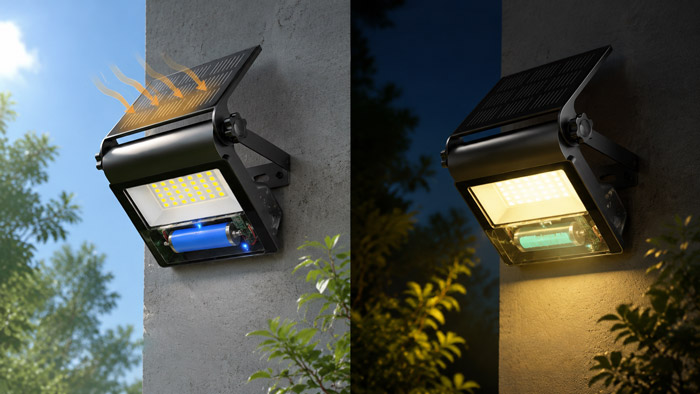
Solar outdoor lighting uses small solar panels to collect sunlight during the day. That energy is stored in rechargeable batteries inside the fixture. At night, the stored energy powers the light, usually an LED bulb.
Most solar lights are self-contained. Each fixture has its own panel, battery, sensor, and light source. Many turn on automatically at dusk and turn off at dawn or when the battery runs out.
Solar lighting is commonly used for:
- Garden borders
- Pathway lights
- Decorative landscape lighting
- Fence lights
- Deck step lights
- Accent lights
- Small security lights
- Areas where wiring is difficult
The biggest appeal of solar lighting is simplicity. There is no wiring, no transformer, and no connection to the home’s electrical system. In many cases, installation is as easy as pushing a stake into the ground or mounting a fixture with screws.
What Is Low-Voltage Outdoor Lighting?
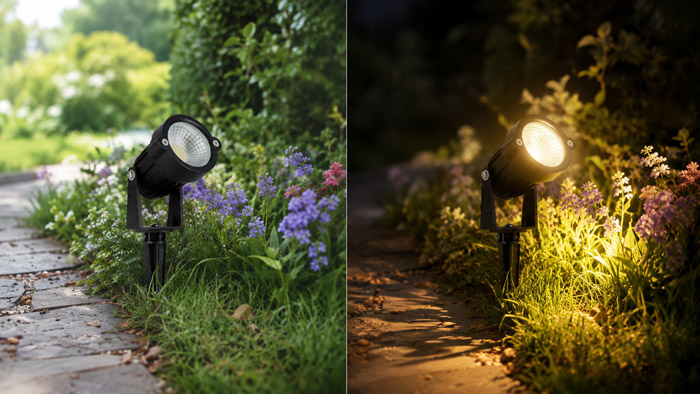
Low-voltage outdoor lighting is powered by electricity from the home, but the voltage is reduced by a transformer. Standard household voltage is typically too high for landscape lighting, so a transformer converts it to a safer lower voltage, commonly 12 volts.
A low-voltage system usually includes:
- A transformer
- Outdoor-rated cable
- Lighting fixtures
- Connectors
- Timer, photocell, or smart controller
- Low-voltage lighting is commonly used for:
- Pathway lighting
- Driveway lighting
- Uplighting trees
- Highlighting architecture
- Patio and deck lighting
- Retaining wall lighting
- Garden lighting
- Outdoor living spaces
- Security and visibility lighting
Low-voltage lighting requires more planning and installation work than solar lighting, but it usually delivers stronger, more consistent, and more professional-looking results.
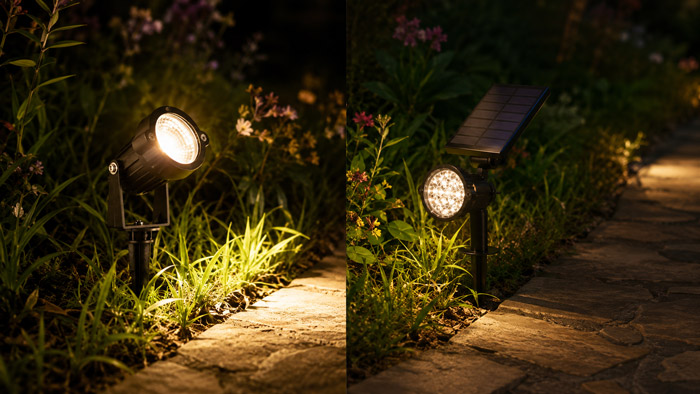
Brightness is one of the biggest differences between solar and low-voltage outdoor lighting.
Solar lights are usually less bright because they depend on stored battery power. Even when fully charged, many solar fixtures are designed for soft decorative lighting rather than serious illumination. They can mark a path, add a glow to a flower bed, or create atmosphere, but many models are not powerful enough to light large areas clearly.
Low-voltage lights are generally brighter and more consistent. Because they are connected to a steady power source, they can produce stronger light for longer periods. This makes them better for areas where visibility matters, such as steps, driveways, entrances, patios, and walkways.
Light quality also tends to be better with low-voltage systems. The beam is often more controlled, the color temperature is more consistent, and the fixtures are available in a wider range of professional designs. Low-voltage lighting can create dramatic effects such as tree uplighting, wall washing, shadowing, and architectural highlighting.
Solar lighting can look attractive, but it often has a softer and less precise effect. For decorative use, that may be enough. For polished landscape design, low voltage usually performs better.
Solar lighting depends heavily on sunlight. If the fixture does not receive enough direct sun during the day, it may not stay on long at night. Cloudy weather, shade, short winter days, dirty solar panels, and weak batteries can all reduce performance.
This makes solar lighting less reliable in areas with:
- Heavy shade
- Frequent cloudy weather
- Long winter nights
- Dense tree cover
- North-facing locations
- Obstructed sunlight
Low-voltage lighting is much more reliable because it does not depend on daily sunlight. As long as the power supply and transformer are working, the lights can operate consistently every night. Timers, photocells, and smart controls can automate the system without depending on battery charge.
For decorative garden lighting, occasional inconsistency may not matter. But for safety, security, or high-use outdoor spaces, low-voltage lighting is usually the better choice.
Solar lighting is easier to install. Most solar lights require no electrical knowledge and no trenching. Stake lights can be placed directly into the soil, while wall-mounted solar fixtures can be attached with basic hardware.
This makes solar lighting attractive for renters, beginners, and homeowners who want a quick upgrade without tools or wiring.
Low-voltage lighting requires more work. The transformer must be installed near an outdoor power outlet, cables must be laid out, fixtures must be connected, and wires are often buried slightly below the surface. The system also needs to be planned carefully so the transformer has enough capacity and voltage drop is controlled.
However, low-voltage installation is still much safer and simpler than standard high-voltage electrical work. Many homeowners install basic low-voltage systems themselves, though larger or more complex systems may benefit from professional installation.
In short, solar wins for ease of installation. Low voltage wins for performance and control.
See also: Low Voltage Pathway Lights vs. High Voltage Lighting: Which Is Better for Outdoor Use?
Solar lighting usually has a lower upfront cost, especially for small projects. Since each fixture operates independently, there is no need to buy cable, a transformer, connectors, or control equipment. A homeowner can start with a few lights and add more over time.
However, very cheap solar lights often have short lifespans. Low-quality batteries, weak panels, thin plastic housings, and poor weather sealing can cause them to fail quickly. Replacing cheap solar lights repeatedly can reduce the cost advantage.
Low-voltage lighting usually costs more upfront. The fixtures are often more durable, and the system requires additional components. Professional installation can also increase the total cost.
But low-voltage lighting often provides better long-term value for permanent outdoor lighting. Quality fixtures can last many years, LED bulbs are energy-efficient, and the lighting effect is usually stronger and more attractive.
For temporary or decorative use, solar is often more affordable. For a long-term landscape lighting system, low voltage may be the better investment.
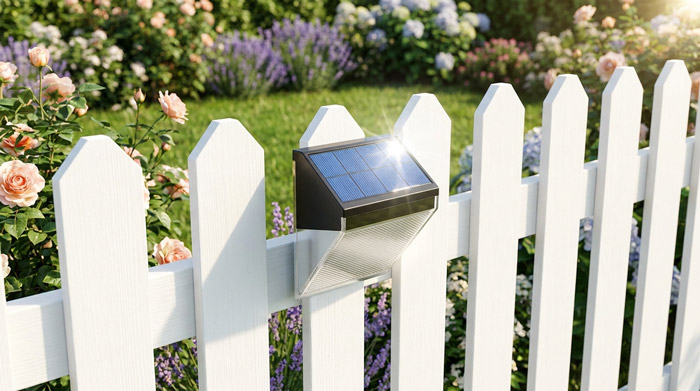
Solar lighting uses free energy from the sun, so it does not add to the electric bill. This is one of its strongest advantages. It is also appealing to homeowners who want a more energy-conscious outdoor lighting option.
Low-voltage lighting does use electricity, but modern LED systems are very efficient. A well-designed LED low-voltage system can run for hours each night while using relatively little power. The operating cost is usually modest, especially compared with older outdoor lighting systems that used halogen bulbs.
Solar has the advantage in direct energy cost. Low voltage has the advantage in dependable energy supply.
Solar lighting requires battery and panel maintenance. The solar panel must stay clean and exposed to sunlight. Over time, rechargeable batteries weaken and need replacement. Inexpensive solar lights may stop working once the battery or internal components fail.
Common solar maintenance includes:
- Cleaning solar panels
- Replacing rechargeable batteries
- Repositioning lights for better sun exposure
- Removing dirt, leaves, snow, or debris
- Replacing failed fixtures
Low-voltage lighting also needs maintenance, but it is usually more system-based. Fixtures may need cleaning, wires may need checking, and connections may need occasional repair. LED lamps or integrated LED modules may eventually need replacement.
Common low-voltage maintenance includes:
- Cleaning lenses
- Adjusting fixture angles
- Checking wire connections
- Replacing damaged cables
- Replacing lamps or fixtures when needed
- Inspecting the transformer and timer
Solar systems are simple, but individual fixtures may fail more often. Low-voltage systems are more complex, but good-quality systems can be very durable.
Durability and Weather Resistance
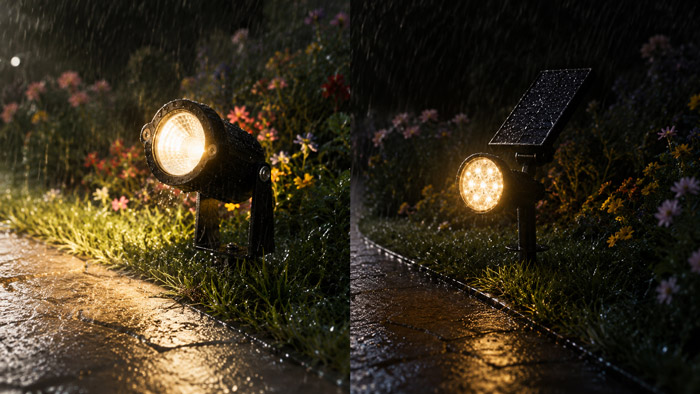
Outdoor lighting must handle rain, wind, heat, cold, moisture, dust, and temperature changes. Durability depends heavily on fixture quality.
Solar lights range from very cheap plastic models to higher-end metal fixtures. Budget solar lights often degrade faster because they contain more internal components exposed to outdoor conditions: solar panel, battery, sensor, and circuit board.
Low-voltage lights are often available in stronger materials such as brass, copper, aluminum, and stainless steel. Professional-grade fixtures are built for long-term outdoor use and can withstand harsh conditions better than many inexpensive solar lights.
That said, low-quality low-voltage fixtures can also fail. The category itself does not guarantee durability. Material, weather rating, build quality, and installation quality all matter.
For long-term durability, a well-installed low-voltage system usually has the advantage.
See also: Solar Powered Garden Lights Battery Life: How Long Does It Last?
Solar lighting offers flexibility in placement because no wiring is needed. You can place a light almost anywhere that receives enough sun. This is useful for remote garden areas, fence lines, sheds, or spots where running cable would be inconvenient.
However, solar placement is limited by sunlight. A solar light may look best under a tree, beside a shaded path, or near a covered porch, but it may not work well there because it cannot charge properly.
Low-voltage lighting is limited by wiring, but it offers more design control. Fixtures can be placed in shaded areas, under trees, along walls, near steps, and around patios without worrying about sun exposure. As long as cable can be run to the fixture, the light can work reliably.
Low-voltage lighting also offers more fixture types and beam options. You can use spotlights, floodlights, path lights, hardscape lights, well lights, deck lights, wall lights, and underwater lights. This makes it better for layered landscape lighting.
Solar is flexible for quick placement. Low voltage is flexible for serious lighting design.
Both solar and low-voltage lighting are generally safe when used correctly.
Solar lighting has no external wiring, which reduces the risk of electrical issues during installation. It is a good option for simple DIY projects and locations far from power sources.
Low-voltage lighting uses reduced voltage, making it much safer than standard line-voltage outdoor wiring. However, it still requires proper outdoor-rated components, secure connections, and safe transformer placement. Poor installation can lead to system failures, flickering lights, or damaged cables.
For pathway safety, low voltage is usually better because it provides stronger and more reliable illumination. Solar lights can help mark edges and walkways, but if they dim or turn off early, they may not provide dependable safety lighting.
Winter can be challenging for solar lighting. Days are shorter, sunlight is weaker, and cloudy weather may be more common. Snow, frost, and debris can cover panels. Batteries also tend to perform worse in cold conditions.
As a result, solar lights may run for fewer hours in winter or may not turn on at all after several cloudy days.
Low-voltage lighting performs much more consistently in winter. Since it uses household electricity, shorter days and cloudy weather do not reduce its power supply. This is especially important because outdoor lighting is often needed more in winter when darkness comes earlier.
For year-round reliability, low voltage is the stronger choice.
Solar lighting is often viewed as the greener option because it uses renewable energy and does not consume grid electricity during operation. For small decorative lights, this can be a real advantage.
However, solar lights also contain rechargeable batteries, and cheaper fixtures may be replaced frequently. If low-quality solar lights fail after a short time and end up in the trash, the environmental benefit is reduced.
Low-voltage LED lighting uses electricity, but it can be highly efficient and long-lasting. A durable system with replaceable parts may create less waste over time than repeatedly replacing inexpensive solar fixtures.
The more sustainable option depends on quality and lifespan. A durable solar fixture in a sunny location can be environmentally friendly. A long-lasting low-voltage LED system can also be a responsible choice.
Best Uses for Solar Outdoor Lighting
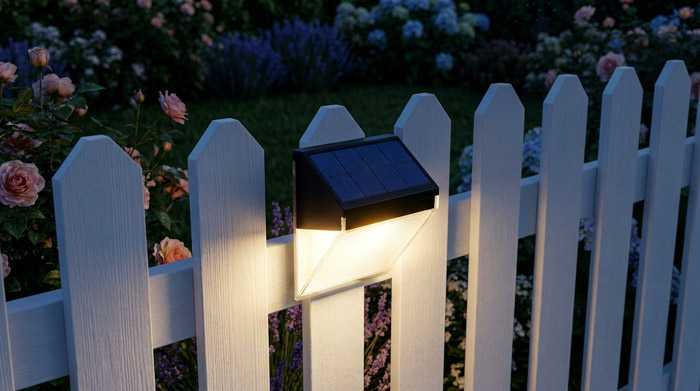
Solar lighting is best when convenience, low cost, and easy installation matter more than maximum brightness or reliability.
Solar lights work well for:
- Decorative garden accents
- Lightly used pathways
- Areas far from electrical outlets
- Temporary or seasonal lighting
- Fence posts and small landscape details
- Rental properties
- DIY projects with minimal tools
- Locations with strong daily sunlight
Solar lighting is a good choice when the goal is atmosphere rather than strong illumination. It is also useful when installing wiring would be too difficult or expensive.
Best Uses for Low-Voltage Outdoor Lighting
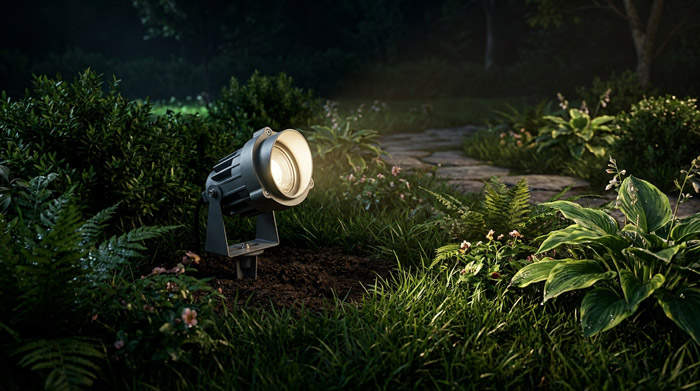
Low-voltage lighting is best when performance, brightness, control, and long-term reliability matter.
Low-voltage lights work well for:
- Front walkways
- Driveways
- Entry areas
- Steps and stairs
- Patios and decks
- Outdoor kitchens
- Large landscapes
- Tree uplighting
- Architectural lighting
- Security lighting
- Professional landscape designs
Low voltage is the better option when lighting needs to be dependable every night. It is also the preferred choice for homeowners who want a polished, high-end outdoor lighting effect.
Solar vs Low Voltage: Side-by-Side Comparison
|
Feature |
Solar Lighting |
Low-Voltage Lighting |
|---|---|---|
|
Power source |
Sunlight and rechargeable batteries |
Home electricity through a transformer |
|
Installation |
Very easy |
Moderate |
|
Wiring |
No wiring required |
Requires outdoor cable |
|
Brightness |
Usually lower |
Usually higher |
|
Reliability |
Depends on sunlight and battery |
Consistent and dependable |
|
Upfront cost |
Usually lower |
Usually higher |
|
Operating cost |
No electric cost |
Low electric cost with LEDs |
|
Maintenance |
Battery and panel care |
Cable, connection, and fixture care |
|
Best for |
Decorative and simple lighting |
Functional and professional lighting |
|
Winter performance |
Often reduced |
Strong and consistent |
|
Design control |
Limited by sun exposure |
Much greater control |
|
Lifespan |
Varies widely |
Usually longer with quality fixtures |
Low-voltage lighting usually creates a more refined and professional appearance. The brightness is more controlled, the fixtures are more powerful, and the system can be designed with layers of light. This allows for better visual depth, stronger focal points, and more balanced outdoor scenes.
Solar lighting can still look beautiful, especially in gardens and casual outdoor spaces. It works well for a soft glow along paths, around flower beds, or near decorative features. However, solar lights often lack the strength and precision needed for dramatic landscape lighting.
For simple charm, solar is often enough. For a premium landscape lighting design, low voltage is usually better.
Which Option Is Better for Security?
Low-voltage lighting is generally better for security. Security lighting needs to be bright, reliable, and consistent. Solar security lights can work in sunny areas, especially models with larger panels and motion sensors, but they may lose performance after cloudy days or during winter.
Low-voltage lights can stay on according to a schedule, work in shaded locations, and provide steady illumination around doors, garages, walkways, and dark corners.
For occasional motion lighting in sunny areas, solar can be useful. For dependable security lighting, low voltage is the safer choice.
Which Option Is Better for Pathways?
Both solar and low-voltage lighting can be used for pathways, but the better choice depends on how important the path is.
Solar pathway lights are fine for casual garden paths or decorative borders. They are easy to install and can make a walkway more visible.
Low-voltage pathway lights are better for main walkways, front entrances, stairs, uneven surfaces, and areas used frequently at night. They provide stronger and more reliable light, which improves safety.
For appearance only, solar may be enough. For safety and everyday use, low voltage is better.
Which Option Is Better for Large Yards?
Low-voltage lighting is usually better for large yards because it can power many fixtures from one system and maintain consistent performance. It can also support different lighting zones and fixture types.
Solar lighting can be used in large yards, but each fixture depends on its own solar exposure and battery. This can create uneven performance, with some lights staying bright and others dimming early.
For large properties, solar may work well in selected sunny areas, but low voltage is better for a complete lighting plan.
Can You Combine Solar and Low-Voltage Lighting?
Yes. In many outdoor spaces, the best solution is a combination of both.
A homeowner might use low-voltage lighting for important areas such as the front path, entryway, patio, and trees, while using solar lighting for decorative garden accents or remote areas where wiring is difficult.
This hybrid approach can balance performance and convenience. Low voltage handles the areas where reliability matters, while solar adds flexible accent lighting in less critical spaces.
Can a landscape lighting timer work with LED lights?
Yes. Most landscape lighting timers can work with LED outdoor lights, as long as the timer is compatible with the transformer and total system load.
LED lights use less power than halogen fixtures, making them ideal for timed landscape lighting systems.
Do I need a special timer for low-voltage landscape lighting?
Yes, low-voltage landscape lighting usually works through a transformer, so the timer must be compatible with that transformer.
Some timers plug into the power source before the transformer, while others are built directly into the transformer.
What is the best timer setting for LED landscape lights?
A common setting is dusk to 11 p.m. or dusk to midnight.
For security areas, lights may stay on longer. For decorative lighting, a shorter evening schedule is usually enough to reduce energy use and extend fixture life.
Can I use one timer for multiple landscape lighting zones?
Yes, but only if the transformer or control system supports multiple zones. A basic timer usually controls all connected lights together.
For separate schedules, you may need a multi-zone transformer, smart controller, or separate timers.
Why does my landscape lighting timer lose its settings?
A timer may lose settings because of power outages, weak backup batteries, incorrect programming, or internal timer failure.
Digital and smart timers with battery backup or memory protection are better for keeping schedules stable.
