
Best Color Temperature for Pergola Lighting
Why 2700K Works Well for Pergolas
When 3000K Is a Better Choice
Is 4000K Too Cool for a Pergola?
What About 2200K or Amber Lighting?
Match Color Temperature to Pergola Activities
Keep Different Pergola Lights Consistent
Consider the Pergola Material and Color
Use Dimmable Pergola Lighting When Possible
Should You Use Tunable White Lights?
FAQs
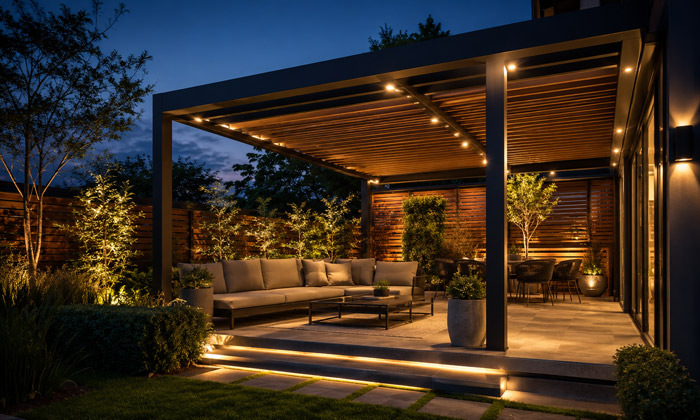
Choosing the right color temperature for pergola lighting has a major impact on how comfortable, attractive, and functional the space feels at night. For most residential pergolas, 2700K to 3000K is the best color temperature range because it creates a warm, inviting atmosphere without making the area look too yellow or too harsh.
The ideal choice, however, can vary depending on how the pergola is used, its design style, and the type of outdoor lights installed.
Best Color Temperature for Pergola Lighting
Color temperature is measured in Kelvin (K). Lower Kelvin values produce warmer, more yellow-toned light, while higher values create cooler, whiter or slightly bluish light.
| Color Temperature | Light Appearance | Best Use for Pergolas | Overall Recommendation |
|---|---|---|---|
| 2200K–2400K | Very warm, amber | Decorative string lights, romantic settings | Good for atmosphere |
| 2700K | Warm white | Dining, relaxing, traditional pergolas | Excellent |
| 3000K | Soft warm white | Modern pergolas, general lighting | Excellent |
| 3500K | Neutral white | Task-oriented outdoor areas | Moderate |
| 4000K | Cool white | Work areas, security lighting | Usually too bright |
| 5000K+ | Daylight white | Utility or commercial spaces | Not recommended for relaxing pergolas |
For most homeowners, 2700K offers the most comfortable ambience, while 3000K provides a slightly cleaner and more modern appearance.
Why 2700K Works Well for Pergolas
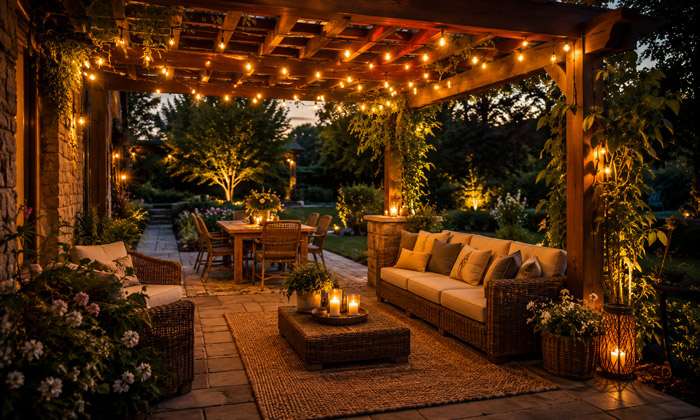
A pergola is usually designed as a place to relax, dine, entertain guests, or enjoy the garden after sunset. Warm white light around 2700K supports these activities because it produces a softer visual environment.
It works particularly well with natural pergola materials such as wood, stone, brick, rattan, and outdoor fabrics. The warm tone enhances these materials instead of making them appear washed out.
A 2700K light source is especially suitable for:
- Pergola dining areas
- Outdoor lounges
- Wooden pergolas
- Romantic or decorative lighting
- String lights and hanging fixtures
- Residential gardens and patios
If the main goal is creating a cozy atmosphere, 2700K is usually the safest choice.
When 3000K Is a Better Choice
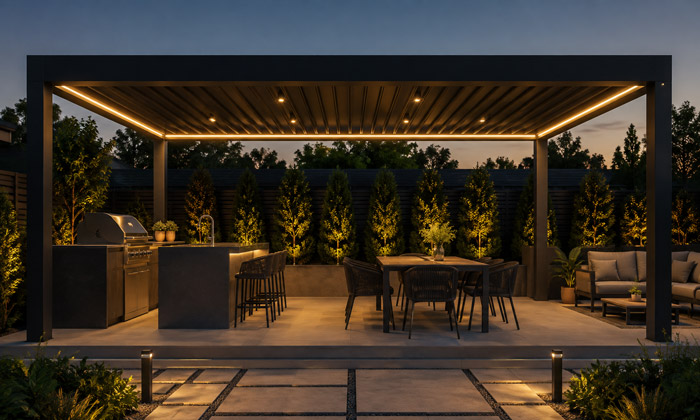
For a contemporary pergola, 3000K may be more suitable. It remains warm enough for outdoor relaxation but appears slightly brighter and more neutral than 2700K.
This makes it useful for pergolas featuring modern architecture, dark metal structures, minimalist furniture, or integrated LED lighting.
A 3000K color temperature can also improve visibility around countertops, outdoor kitchens, dining tables, and pathways without creating the clinical appearance associated with cooler lighting.
Choose 3000K when you want:
- A modern appearance
- Better visibility for dining or cooking
- Integrated LED strip lighting
- Black or aluminum pergola structures
- A balance between ambience and practical illumination
For multifunctional pergolas, 3000K is often the best compromise between comfort and clarity.
Is 4000K Too Cool for a Pergola?
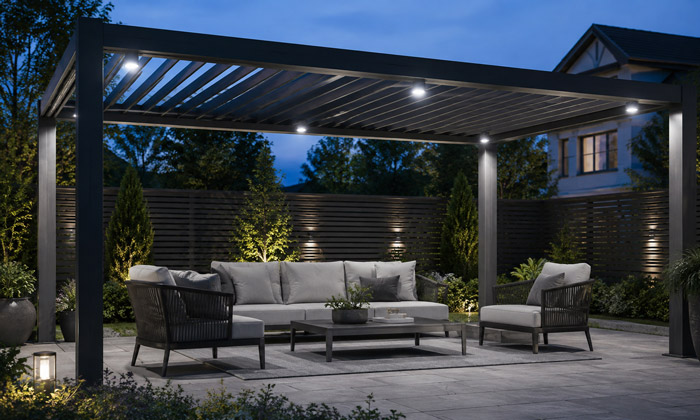
In many residential settings, yes.
At 4000K, outdoor lighting becomes noticeably whiter and cooler. Although this color temperature can improve visibility, it can also make a pergola feel more like a commercial or working environment.
It may be useful near:
- Outdoor cooking stations
- Preparation counters
- Steps and entrances
- Utility areas
- Security zones
However, using 4000K throughout an entire pergola can reduce the warm, relaxing atmosphere most homeowners want.
A better approach is to keep the main pergola lighting between 2700K and 3000K and use brighter task lighting only where necessary.
What About 2200K or Amber Lighting?
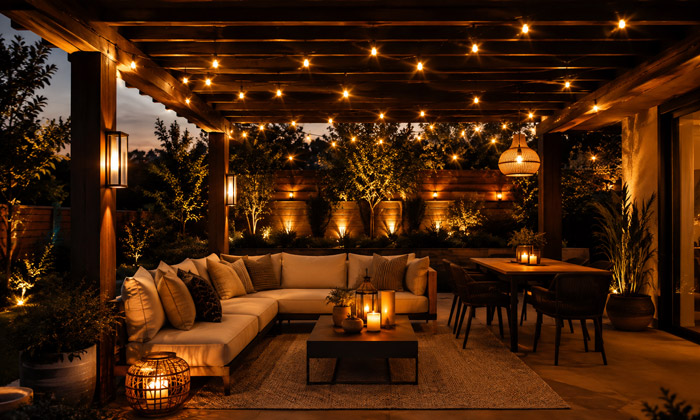
Extra-warm lighting around 2200K to 2400K creates an amber glow similar to candlelight or traditional incandescent bulbs.
This temperature works particularly well for decorative pergola lighting, including string lights, lanterns, and accent fixtures.
It creates a strong sense of warmth but may not provide enough visual clarity for cooking, reading, or other detailed activities. Therefore, it is usually better as accent lighting rather than the only light source.
For example, a pergola could use 2200K string lights for ambience while incorporating subtle 2700K downlights above the dining area.
Match Color Temperature to Pergola Activities
The best lighting temperature should also reflect how the space is used.
| Pergola Activity | Recommended Color Temperature |
|---|---|
| Relaxing and conversation | 2200K–2700K |
| Outdoor dining | 2700K–3000K |
| Entertaining guests | 2700K–3000K |
| Reading | 3000K |
| Outdoor cooking | 3000K–3500K |
| Decorative lighting | 2200K–2700K |
| Pathway illumination | 2700K–3000K |
| Security lighting | 3000K–4000K |
A pergola used primarily for relaxation should stay toward the warmer end of the range. A pergola containing an outdoor kitchen may benefit from slightly cooler task lighting around food preparation areas.
Keep Different Pergola Lights Consistent
One common lighting mistake is mixing too many color temperatures within the same outdoor area.
For example, combining 2700K string lights with 5000K recessed lights can create an unbalanced appearance. The warm fixtures will look yellow while the cooler fixtures may appear blue.
For a cohesive design, keep most visible pergola lights within approximately 300K of each other.
Good combinations include:
- 2200K decorative lights + 2700K ambient lights
- 2700K string lights + 2700K downlights
- 2700K accent lights + 3000K task lights
- 3000K recessed lights + 3000K LED strips
Consistency is especially important when several fixtures are visible at the same time.
Consider the Pergola Material and Color
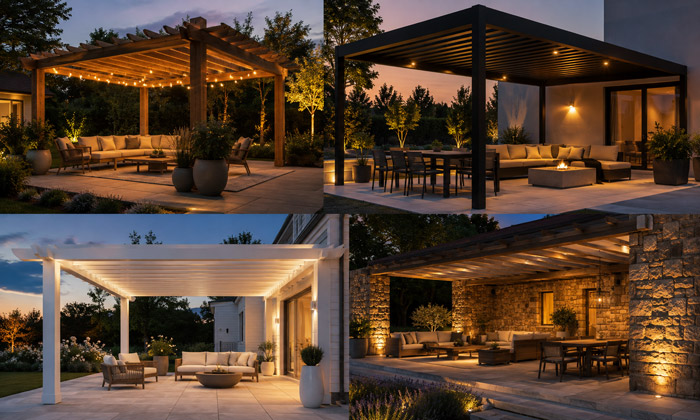
The structure itself can influence which color temperature looks best.
Wood pergolas:
2700K generally complements the natural warm tones of timber.
Black or dark metal pergolas:
3000K can create a clean, contemporary look while remaining comfortable.
White pergolas:
2700K produces a softer appearance, while 3000K creates a brighter and more modern effect.
Stone or brick surroundings:
Warm temperatures between 2700K and 3000K usually enhance natural textures and earth tones.
The goal is to choose lighting that complements the materials rather than visually competing with them.
Use Dimmable Pergola Lighting When Possible
Color temperature determines the tone of the light, while brightness determines its intensity. Both affect comfort.
Even the ideal 2700K lighting can feel uncomfortable if it is excessively bright. Dimmers allow pergola lighting to adapt to different situations.
For example:
- Use brighter lighting during dinner.
- Reduce brightness during conversation.
- Keep decorative lights low for late-night relaxation.
Dimmable fixtures provide greater flexibility without requiring different color temperatures throughout the pergola.
Should You Use Tunable White Lights?
Tunable white LEDs allow the color temperature to be adjusted, often across a range such as 2200K to 4000K or wider.
They can be useful for pergolas that serve several purposes. You might use 3000K while preparing food and then switch to 2200K or 2700K when relaxing afterward.
However, tunable lighting is not essential for most installations. If you prefer a simpler system, selecting high-quality 2700K or 3000K LEDs will usually provide excellent results.
FAQs
How many lumens are ideal for pergola lighting?
For general pergola lighting, around 100–200 lumens per fixture is usually sufficient for ambient illumination.
Dining or task areas may require 300–500 lumens, depending on fixture height, pergola size, and the number of lights installed.
What IP rating should outdoor pergola lights have?
Pergola lights should generally have an IP44 rating or higher for protection against moisture and splashing water.
Fixtures exposed directly to rain should preferably use IP65-rated products for stronger weather resistance and long-term outdoor reliability.
Where should lights be positioned on a pergola?
Lights should be distributed evenly across beams, posts, seating areas, and dining zones to avoid harsh shadows or overly bright spots.
Downlights work well above tables, while accent lights on posts and beams can add depth without creating glare.
Do LED pergola lights attract insects?
LED lights generally attract fewer insects than traditional incandescent or fluorescent bulbs.
Fixtures that emit less ultraviolet and blue-spectrum light are typically less attractive to bugs, making LEDs a practical option for outdoor dining and seating areas.
See also: What Impact Do Garden Lights Have on Plants and Animals?
Are low-voltage lights better for pergolas?
12V or 24V low-voltage lighting is popular for pergolas because it offers greater installation flexibility and is well suited to landscape and accent lighting systems.
It can also simplify the use of integrated LED strips, step lights, and post-mounted fixtures when paired with the correct transformer.
