
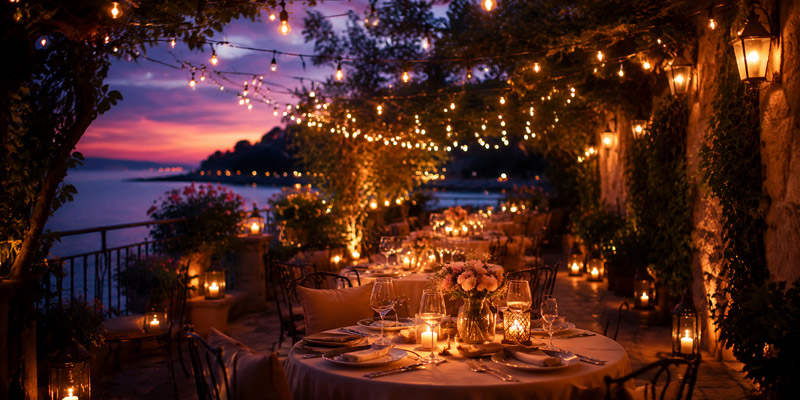
Use Warm, Soft Light
Create Layers of Light
Add Candlelight to the Tables
Highlight Natural Features
Use String Lights Carefully
Control Brightness and Glare
Match the Lighting to the Restaurant’s Style
Use Shadows to Create Privacy
FAQs
Outdoor restaurant lighting plays a major role in shaping how guests feel during a meal. While furniture, music, and décor all contribute to the dining experience, lighting often determines whether an outdoor space feels cold and ordinary or warm and intimate. By using the right brightness, color temperature, placement, and fixture style, restaurants can create a romantic atmosphere that encourages guests to relax, connect, and stay longer.
Warm light is one of the most effective ways to create romance in an outdoor dining area. Light with a warm color temperature produces a soft golden glow similar to candlelight or sunset. It makes the environment feel comfortable and flattering without overwhelming the space.
Bright white or blue-toned lighting can feel harsh and commercial. In contrast, warm lighting creates a sense of privacy and calm. Restaurants can achieve this effect with warm LED bulbs, lanterns, string lights, table lamps, and candles.
The goal is not to make the area completely dark. Guests should still be able to read the menu and see their food clearly. However, the light should remain gentle enough to preserve an intimate mood.
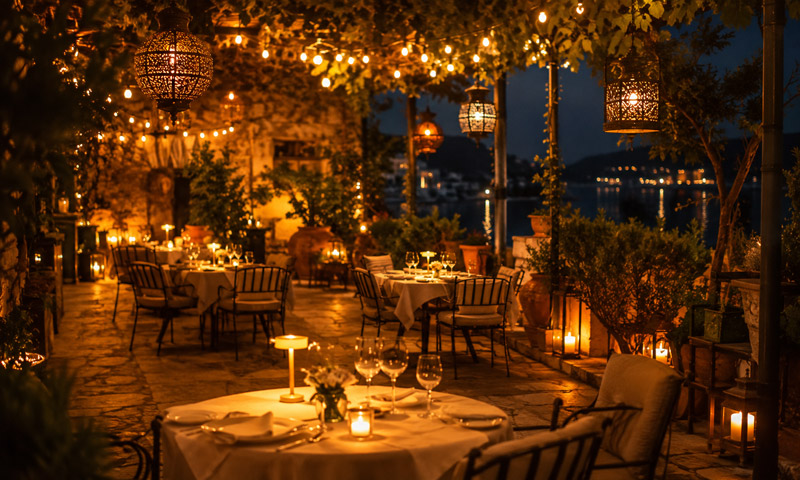
A romantic outdoor setting should not depend on a single light source. Layered lighting creates depth, visual interest, and a more natural atmosphere.
Ambient lighting provides general illumination across the dining area. String lights, overhead pendants, or softly illuminated canopies can serve this purpose. Accent lighting highlights attractive features such as trees, walls, fountains, sculptures, or plants. Table lighting adds a personal glow around each group of diners.
When these layers are combined, the space feels more refined and inviting. Guests experience a balanced environment rather than a flat, overly bright patio.
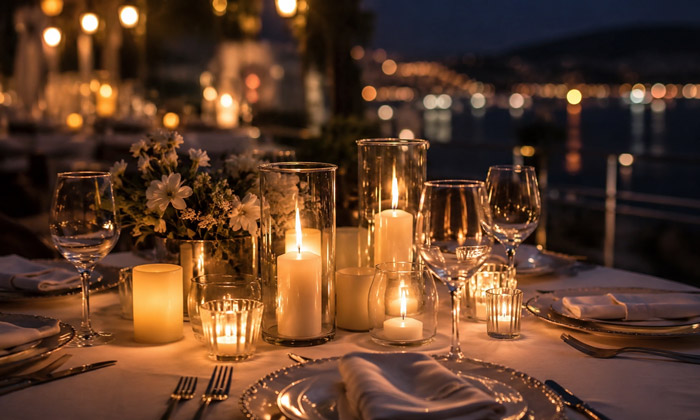
Candlelight remains a classic symbol of romantic dining. Its warm color and gentle movement create an intimate atmosphere that electric lighting cannot fully reproduce.
Small candles in glass holders are practical for outdoor restaurants because the glass protects the flame from wind. Flameless LED candles are another suitable option, especially in locations where open flames are restricted. High-quality versions can imitate the soft flicker of real candles while improving safety and reducing maintenance.
Table lighting should remain low and compact. Large fixtures may block eye contact or make the table feel crowded. A small candle, rechargeable lamp, or shaded lantern can provide enough light while keeping the focus on the guests.
Outdoor dining areas often include trees, flowers, climbing plants, stone walls, or water features. Carefully placed lighting can turn these elements into romantic focal points.
Uplighting a tree can emphasize its shape and create dramatic shadows. Small lights hidden among plants can add depth and mystery. Soft lighting near a fountain or pond can produce attractive reflections and gentle movement.
The fixtures themselves should not dominate the view. Concealed or discreet lighting usually produces a more elegant effect because guests notice the illuminated scenery rather than the equipment.
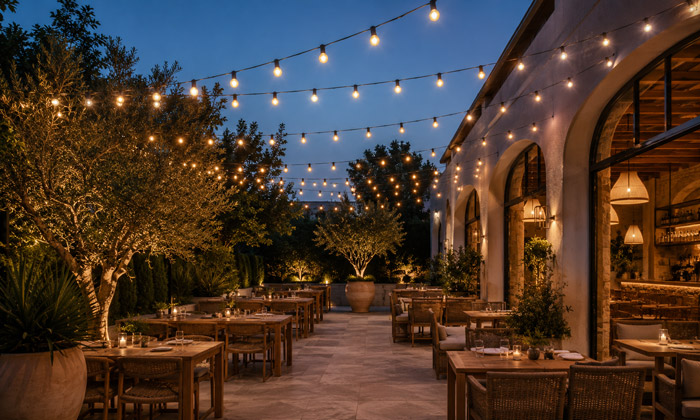
String lights are popular in outdoor restaurants because they create warmth and charm without requiring complex installation. When placed above the dining area, they can make the space feel enclosed and intimate, even in an open environment.
However, string lights should be arranged with purpose. Random or excessive placement may make the area look cluttered. Even spacing, clean lines, and warm bulbs create a more polished appearance.
Restaurants can suspend string lights between trees, across pergolas, or above patios. The lights should be high enough to avoid distracting guests but low enough to create a comfortable visual ceiling.
Romantic lighting should be soft, but it must also be functional. Poorly positioned fixtures can shine directly into guests’ eyes, reflect off tables, or create uncomfortable contrast between bright and dark areas.
Fixtures with shades, covers, or downward-facing designs help control glare. Dimmers are also valuable because they allow the restaurant to adjust brightness as daylight fades. The transition from sunset to evening should feel gradual rather than sudden.
Pathways, stairs, and entrances require additional illumination for safety. These areas can be lit with low-level step lights, bollards, or concealed strips that guide guests without disturbing the overall mood.
Match the Lighting to the Restaurant’s Style
Romantic lighting should support the restaurant’s identity. A rustic venue may use vintage lanterns, exposed bulbs, and candles in wooden holders. A modern restaurant may prefer minimalist table lamps, recessed lighting, and clean architectural accents. A coastal location might use woven pendants, soft wall lights, and warm lighting around natural materials.
Consistency is important. Mixing too many fixture styles can make the outdoor area feel disorganized. A coordinated lighting design creates a stronger visual impression and makes the space feel intentional.
Romance often depends on a sense of privacy. Outdoor restaurant lighting can create this feeling even when tables are relatively close together.
Instead of illuminating every part of the patio equally, restaurants can leave selected areas slightly darker. Plants, screens, curtains, and pergolas can be combined with focused lighting to create smaller visual zones. Each table then feels more personal and separate from the surrounding activity.
This balance between light and shadow adds depth while helping guests feel less exposed.
What IP rating is recommended for outdoor restaurant lighting?
Outdoor restaurant fixtures should generally have an IP65 rating or higher to resist rain, dust, moisture, and changing weather conditions.
Lights installed in partially covered areas may use a lower rating, but fully exposed fixtures require stronger protection.
Why is the color rendering index important for restaurant lighting?
A high color rendering index helps food, drinks, tableware, and skin tones appear natural and attractive.
Outdoor restaurant lights with a CRI of 90 or above can improve food presentation and create a more visually appealing dining experience.
Can solar lighting be used in outdoor restaurant areas?
Solar lighting can support decorative or low-level illumination in locations with sufficient sunlight.
However, its brightness and operating time may vary with weather conditions, so it is usually more reliable as supplementary lighting than as the main lighting source.
How can smart lighting controls benefit outdoor restaurants?
Smart controls allow restaurant staff to schedule lighting, adjust individual zones, reduce energy use, and respond to changing daylight conditions.
Automated systems can also maintain consistent lighting throughout service without frequent manual adjustments.
How often should outdoor restaurant lighting be maintained?
Outdoor lighting should be inspected regularly for damaged wiring, water intrusion, dirty lenses, loose fixtures, and failed bulbs.
Routine cleaning and preventive maintenance help preserve brightness, improve safety, and extend the lifespan of the lighting system.
