
Does Outdoor Lighting Actually Increase Home Value?
How Outdoor Lighting Makes a Property More Appealing
How Much Value Does Landscape Lighting Add?
Which Outdoor Areas Should You Light First?
How to Budget for Outdoor Lighting Before Selling
Design Choices That Help Protect the Investment
Outdoor Lighting Mistakes That Can Undermine Buyer Appeal
A Practical Approach to Increasing Property Appeal
FAQs
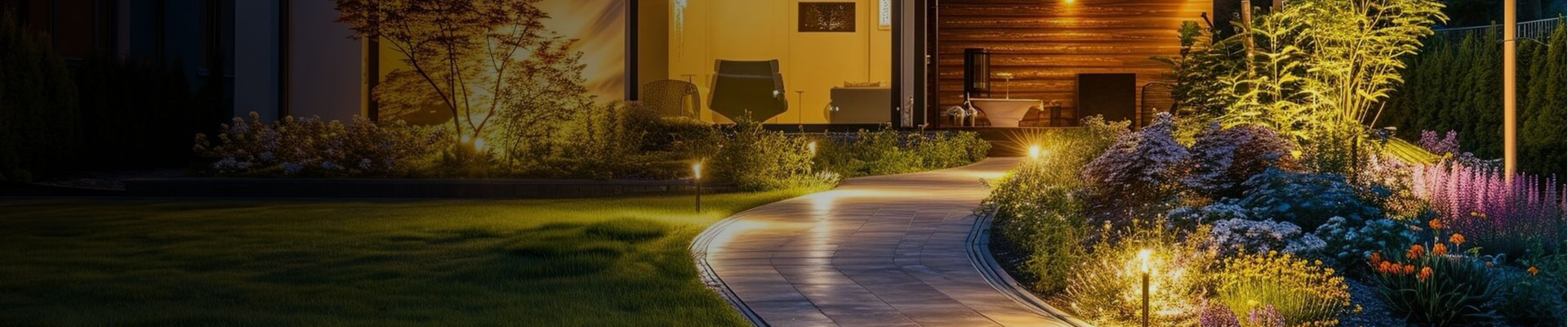
An attractive home should feel welcoming after sunset, too. A clearly lit entrance, visible garden paths, and a comfortable patio help people appreciate features they might otherwise overlook in the dark.
Outdoor lighting can support your property’s value by improving curb appeal, making outdoor areas easier to use, and strengthening the impression of a well-maintained home. However, it does not guarantee a particular increase in selling price. The outcome depends on the lighting design, installation cost, property condition, and local buyer expectations.
Understanding that difference helps you invest in improvements that benefit both everyday living and a future sale.
Does Outdoor Lighting Actually Increase Home Value?
Outdoor lighting contributes to a property in three different ways:
| Type of value | What it means for homeowners |
|---|---|
| Buyer appeal | The home looks more inviting, complete, and thoughtfully maintained. |
| Everyday usefulness | Entrances, paths, and outdoor seating areas become easier to use after dark. |
| Potential resale contribution | Buyers may recognize the improvement when deciding what to offer, depending on the local market. |
These benefits are connected, but they are not interchangeable. A beautifully illuminated garden can make a strong impression without producing a separately measurable increase in an appraisal.
The practical goal is to make the property more appealing and functional while keeping the investment proportionate to the home.
How Outdoor Lighting Makes a Property More Appealing
It Creates a More Welcoming First Impression
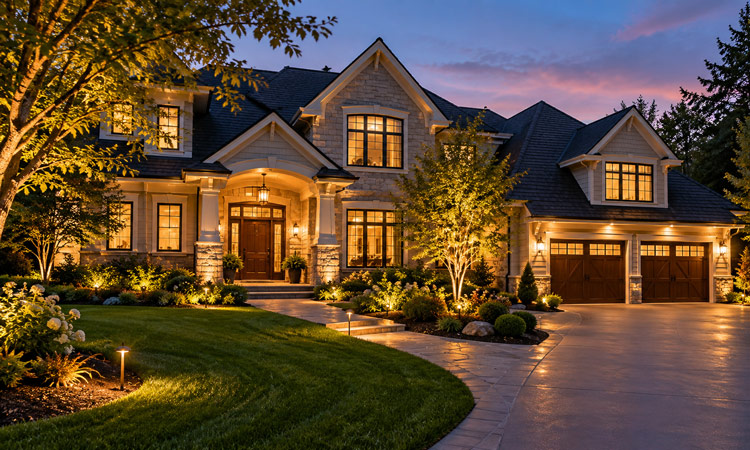
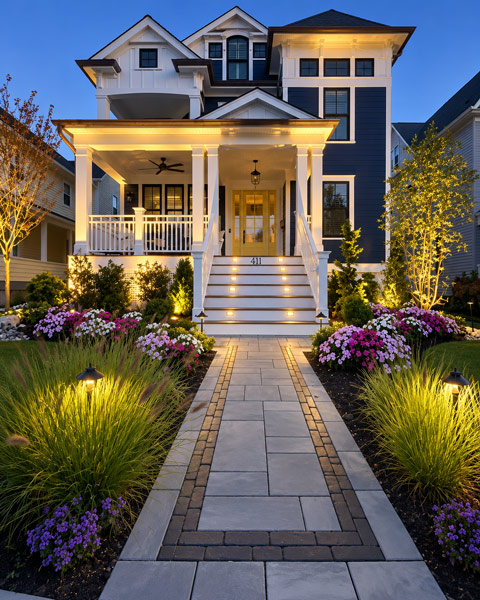
The entrance establishes how visitors experience the house. If the front door is difficult to find or the approach disappears into darkness, even an attractive exterior can feel uninviting.
Thoughtful lighting gives the arrival sequence a clear structure: driveway, walkway, steps, and front door. Architectural details become visible, while the main entrance remains the natural focal point.
Effective curb appeal lighting uses a few deliberate highlights. Lighting every wall, shrub, and tree equally can flatten the scene and make the exterior feel visually crowded.
It Makes Movement Around the Home Easier
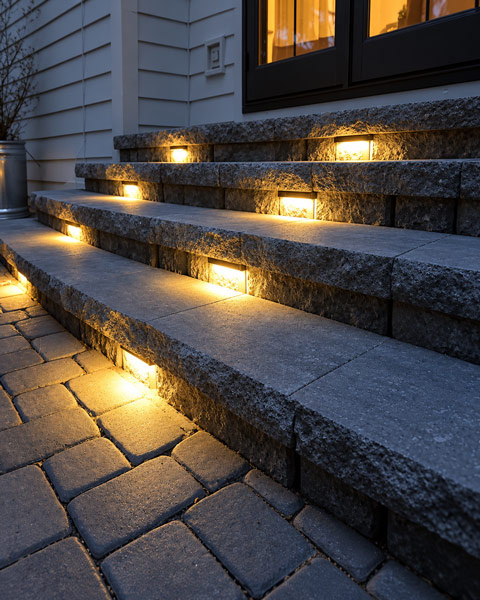
Buyers need to understand how comfortably they could use the property. Visible steps, changes in level, and pathway edges help them navigate unfamiliar outdoor spaces.
Well-positioned exterior stair lights can make individual treads easier to distinguish without shining directly into someone’s eyes.
The aim is useful visibility. Bright fixtures that create glare or deep contrasting shadows can make an area less comfortable to navigate.
Lighting also improves visibility around entrances and side passages, although it should not be presented as a guarantee against crime.
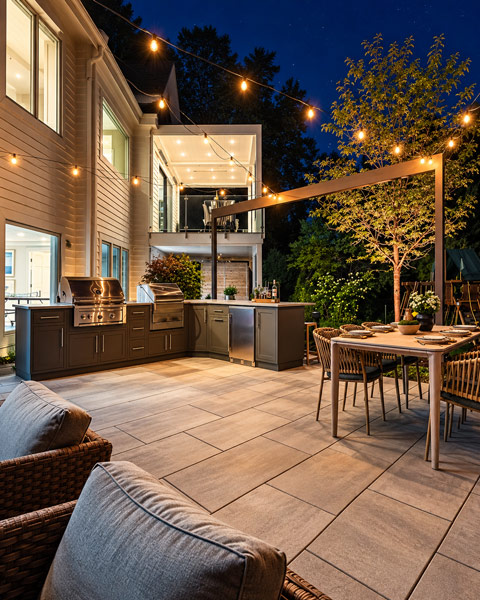
It Makes Outdoor Living Areas More Useful
A patio that becomes difficult to use after sunset offers less everyday convenience than one with comfortable evening illumination.
Lighting can help define places for dining, conversation, and outdoor tasks. A seating area benefits from gentle ambient light, while a preparation surface needs more focused illumination.
This increases the practical use of existing outdoor space. It does not add interior square footage, but it helps buyers see how the garden or deck could fit into their daily lives.
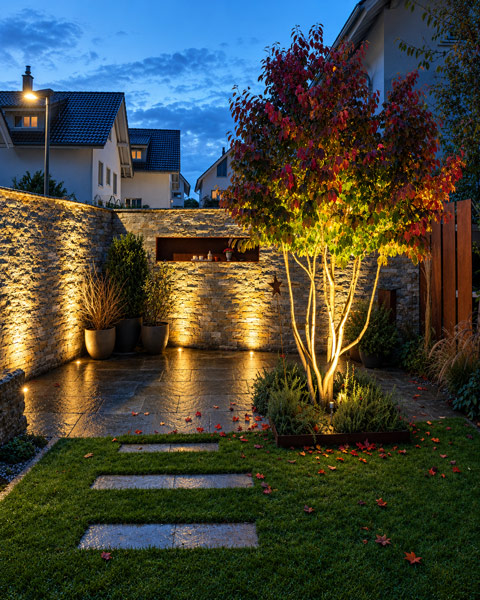
It Draws Attention to Existing Features
Mature planting, textured walls, and attractive hardscaping may already represent a substantial investment. Lighting makes selected features visible after dark.
The strongest results usually come from choosing a limited number of focal points. A softly illuminated wall or a carefully lit planting bed can give the garden depth without overwhelming the house.
The choice between uplighting and downlighting affects both the visual result and where stray light travels. Keep beams contained on their intended surfaces and favor downward illumination where practical.
It Shows Attention to Maintenance
Straight fixtures, clean lenses, and consistent operation suggest that the outdoor space receives regular care.
The opposite can undermine the presentation. A leaning path light, exposed cable, or flickering lamp introduces an obvious unfinished task into the buyer’s experience.
A modest, dependable system can therefore make a better impression than an elaborate installation with visible faults.
How Much Value Does Landscape Lighting Add?
There is no reliable universal percentage that applies to every property.
One useful historical benchmark comes from the 2023 Remodeling Impact Report: Outdoor Features. Its representative landscape lighting project included 20 LED lights and a standard transformer. The estimated installation cost was $6,800, with $4,000 estimated to be recovered at resale—approximately 59% of the project cost. These were professional estimates, not guaranteed outcomes from individual home sales.
2023 Remodeling Impact Report: Outdoor Features (National Association of REALTORS® & National Association of Landscape Professionals, 2023).
That distinction matters. Recovering 59% of a lighting project’s cost does not mean increasing the home’s value by 59%, and it does not mean earning a 59% profit.
The figures also describe a historical project specification. They should not be treated as a current quote or applied automatically to a smaller garden, a larger property, or a different market.
Claims that lighting alone increases a home’s value by a fixed double-digit percentage need stronger evidence than general statistics about landscaping.
A useful way to assess the project is to ask two separate questions:
- How much of the installation cost might local buyers recognize?
- How much practical enjoyment will the system provide while you own the home?
A worthwhile improvement can deliver substantial everyday benefits even when resale does not recover the full installation cost.
Which Outdoor Areas Should You Light First?
Start with areas that solve a clear problem. The following is a practical planning order, rather than a measured ranking of resale returns.
| Area | Main purpose | Design priority |
|---|---|---|
| Front entrance | Make arrival welcoming and straightforward | Illuminate the door and immediate approach comfortably. |
| Steps and main paths | Improve visibility while moving around | Reveal walking surfaces and changes in level. |
| Patio or deck | Support evening outdoor activities | Match light to seating, dining, and task areas. |
| Selected architectural features | Give the exterior depth and character | Highlight a few details without competing with the entrance. |
| Garden focal points | Connect the house visually with the landscape | Use restrained accents and preserve darker areas. |
If the main entrance already works well, a dark route to the patio may deserve attention first. The right order depends on what your property currently lacks.
How to Budget for Outdoor Lighting Before Selling
Match the Project to Your Selling Timeline
If you expect to list soon, begin with repairs and targeted improvements. Restoring an existing installation may be more sensible than replacing it with a much larger system.
If you plan to remain in the home, you can also weigh the value of years of evening use. That may justify a broader project even if the entire cost is unlikely to return at resale.
Compare the Complete Installed Cost
The cost to install landscape lighting includes more than fixtures. Wiring, power supplies, access, controls, labor, and reinstating disturbed surfaces can all affect the total.
Ask for an itemized proposal that identifies what is included. A lower fixture price does not necessarily produce a lower completed project cost.
Where possible, compare proposals based on the same areas and intended lighting effects. Fixture counts alone do not tell you whether two designs deliver comparable results.
Include Running Costs
You can estimate electricity use with a simple calculation:
Monthly energy use = total input watts ÷ 1,000 × operating hours per day × days per month
For example, a system drawing 80 watts and operating for five hours each evening uses approximately 12 kWh over 30 days. At an illustrative electricity rate of $0.20 per kWh, that equals $2.40 per month.
This example excludes maintenance and any consumption not included in the stated input wattage. Use your actual system draw, schedule, and local tariff for a meaningful estimate.
Keep Major Property Needs in Perspective
Lighting works best when the exterior is already reasonably maintained. It cannot resolve damaged paving, neglected planting, peeling finishes, or more substantial property defects.
Before expanding the lighting plan, ask whether another visible repair would make a greater difference to the overall presentation.
Design Choices That Help Protect the Investment
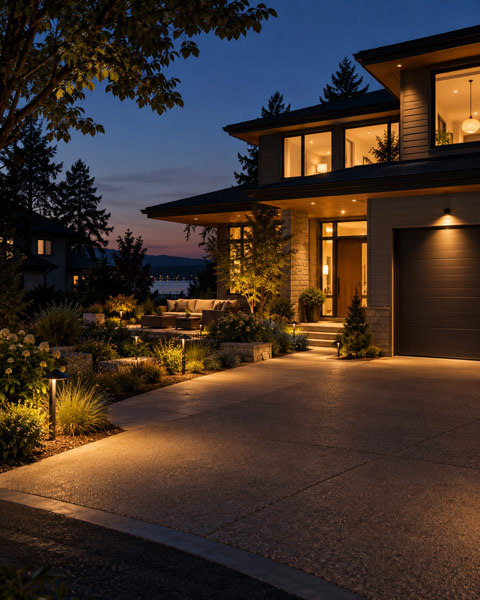
Control Glare and Light Spill
A successful lighting scheme should feel comfortable from the driveway, the seating area, and inside the house.
Use shielding, careful aiming, and appropriate light levels. Keep illumination on the intended area and avoid spilling it into neighboring windows. Timers or occupancy controls can reduce unnecessary operation. These choices align with established principles for responsible outdoor lighting.
Choose Equipment for the Actual Location
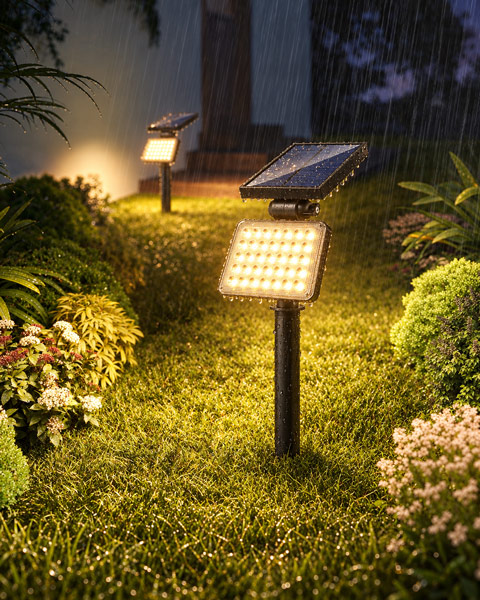
An exposed garden fixture faces different conditions from a light beneath a covered porch. Rain, irrigation, dust, heat, and coastal exposure can affect the equipment you need.
Check the manufacturer’s suitability information for each location, including the fixtures, power supplies, and connections. Weather resistance should apply to the complete installation.
Plan for Maintenance Access
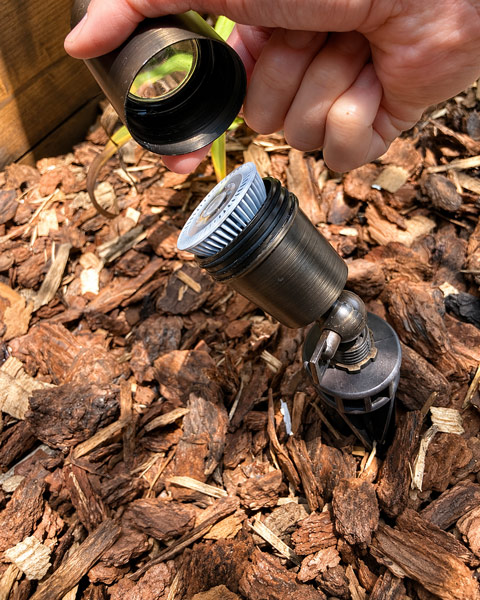
An attractive design should remain serviceable. Consider how someone will reach the fixtures, replace components, and adjust their positions as plants grow.
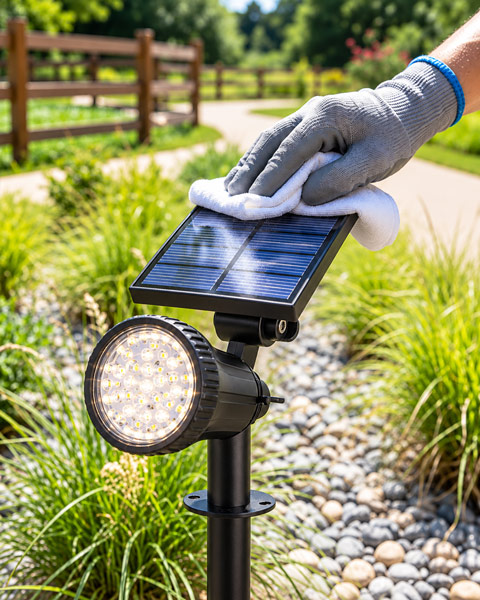
Routine care matters, too. Knowing how to clean garden lights helps preserve useful light output and keeps the installation looking cared for. Follow the fixture instructions and disconnect power before appropriate cleaning or maintenance.
Outdoor Lighting Mistakes That Can Undermine Buyer Appeal
Several avoidable choices can weaken an otherwise attractive exterior:
- Excessive brightness: Glare makes patios and entrances uncomfortable.
- Too many competing focal points: Lighting every feature makes the scene difficult to read.
- Visible installation problems: Loose fittings and untidy cables suggest unfinished work.
- Neglected fixtures: Dirty lenses, corrosion, and failed lamps distract from the property.
- An oversized project: Spending beyond what the home and neighborhood justify can limit cost recovery.
Before signing off on an installation, walk through the property after dark. Check it from the street, along the main paths, from outdoor seating, and through the windows. These viewpoints reveal problems that may not be obvious during daytime installation.
A Practical Approach to Increasing Property Appeal
Outdoor lighting is most useful when it makes a home easier to approach, more comfortable to use, and more attractive after sunset.
Begin with essential routes and the entrance, then add lighting for the outdoor spaces you actually use. Keep the design coordinated, the equipment suitable for its location, and the budget realistic.
That approach gives you a property improvement with a clear purpose today and a credible selling feature in the future.
FAQs
1. Are Solar Lights or Low-Voltage Lights Better When Preparing a Home for Sale?
Either can suit a property, but they solve different problems. Solar fixtures are convenient for sunny decorative areas where wiring would be difficult. Wired low-voltage systems avoid dependence on daily solar charging, which can make them more suitable for important routes used throughout the evening.
When comparing solar vs. low-voltage outdoor lighting, assess actual brightness, runtime, appearance, and site conditions. Neither power source guarantees a particular resale premium.
2. What Color Temperature Makes Outdoor Lighting Look More Inviting?
Warm white light is a useful starting point for many residential exteriors. Between 2700K and 3000K landscape lighting, 2700K has a softer, more golden appearance, while 3000K looks slightly crisper.
Test the light against your actual exterior materials. Brick, pale render, timber, and stone can look different under the same lamp. Keep adjoining areas visually consistent unless there is a clear design reason to vary them.
3. How Many Lumens Do Outdoor Lights Need?
There is no single lumen figure that works for every outdoor area. Lumens describe light output, but mounting height, beam spread, spacing, and surface reflectance determine how much useful light reaches the space.
A narrow beam and a broad beam can produce very different results at the same lumen rating. When deciding how many lumens a patio needs, begin with the activities and layout, then assess coverage and comfort at night.
4. How Should Outdoor Lighting Be Shown in Real Estate Photos?
Include a few genuine dusk photographs alongside daylight images. Show the approach to the front door, a comfortable outdoor living area, and one wider view that explains how the lighting fits the property.
Check that the photographed fixtures work and that the scene resembles what a buyer will experience in person. Avoid editing that invents lighting effects or makes the garden appear substantially brighter than it is.
5. What Should Happen to Smart Lighting Controls When a Home Is Sold?
Plan the handover before completion of the sale. Identify the controllers, hubs, network requirements, and any subscription costs, then check the manufacturer’s ownership-transfer procedure.
Provide operating instructions and a clear description of the lighting zones. Remove the previous owner’s access through the supported process, and have the new owner establish their own account. Demonstrate any available local controls so the system remains understandable without relying entirely on an app.
