

Table of Contents
- Identify the Type of LED Light You Have
- Check What Failed Before Discarding the Whole Light
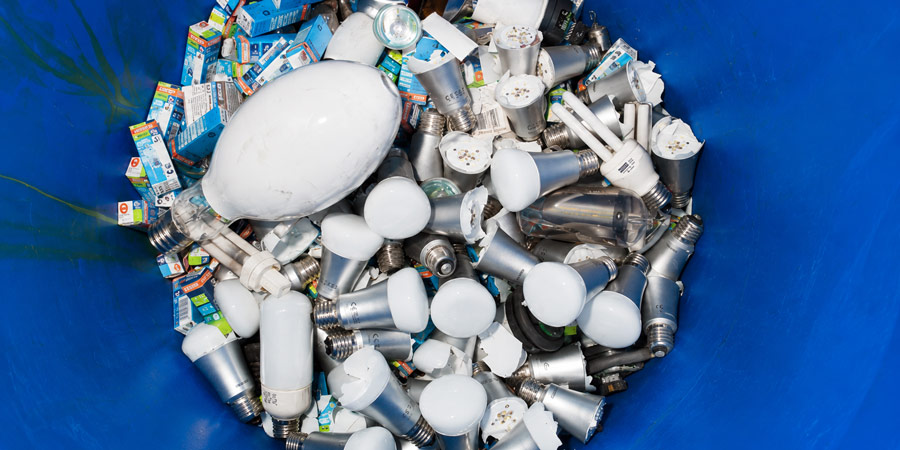
- Can LED Lights Go in the Trash or Recycling Bin?
- How to Prepare LED Lights for Recycling
- How to Dispose of Solar LED Lights and Their Batteries
- What Should You Do With a Broken LED Bulb?
- Use the Failure to Make a Better Replacement Decision
- FAQs
Dispose of LED lights through a collection service that specifically accepts LED bulbs or lighting equipment. Keep them out of ordinary household recycling, protect them from breakage, and send rechargeable batteries to a suitable battery collection program. Check local disposal rules before putting an LED bulb in household trash.
The right route depends on what you are discarding. A screw-in bulb, an integrated garden fixture, a decorative light string, and a solar pathway light all use LEDs, but recycling programs may handle them differently.
Before arranging disposal, identify the product and check which part has actually failed. That small distinction can help you keep a serviceable fixture in use and prepare the remaining waste correctly.
Identify the Type of LED Light You Have
Start with the product label or instruction manual. Appearance alone can be misleading, particularly when distinguishing LED tubes from fluorescent tubes.
| LED product | What to check before disposal | Collection option to confirm |
|---|---|---|
| Replaceable LED bulb | Whether the program accepts LED bulbs specifically | Dedicated lamp collection or an electronics recycler that accepts lamps |
| LED tube | That the tube is labelled LED, plus any length restrictions | A lamp collection program accepting LED tubes |
| Integrated LED fixture | Whether the driver or LED module is serviceable | Lighting equipment or electronics collection |
| LED strip or string lights | Whether the receiver accepts flexible lighting, controllers, and power supplies | A suitable electronics or string-light collection program |
| Solar LED garden light | Battery type and whether the battery is designed for user removal | Battery collection and an accepting electronics program |
These are options to verify with the receiving facility. A general electronics collection point may exclude light bulbs, while a bulb collection container may accept only certain lamp technologies.
Confirm acceptance for the complete product you have, including any battery, rather than relying on a general “recycling available” sign.
Check What Failed Before Discarding the Whole Light
An LED fixture contains several components that can wear out independently: the light source, power electronics, controls, connectors, and housing. Solar models also depend on a charging system and rechargeable battery.
The electronics can fail before the LED light source reaches the end of its useful life. A fixture that stops producing light therefore deserves a brief assessment before complete replacement.
Replaceable bulbs
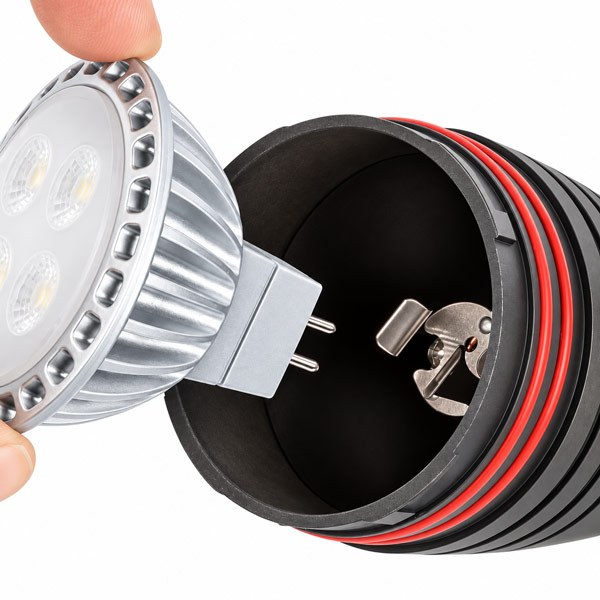
If a fixture uses a replaceable bulb, the failed bulb may be the only item requiring disposal. Keep the housing when its sockets, wiring, seals, and mounting remain suitable for continued use.
For flickering garden lights, compatibility between the bulb, dimmer, and power supply may also need attention. Replacing bulbs repeatedly without checking the cause can create avoidable waste.
Integrated fixtures
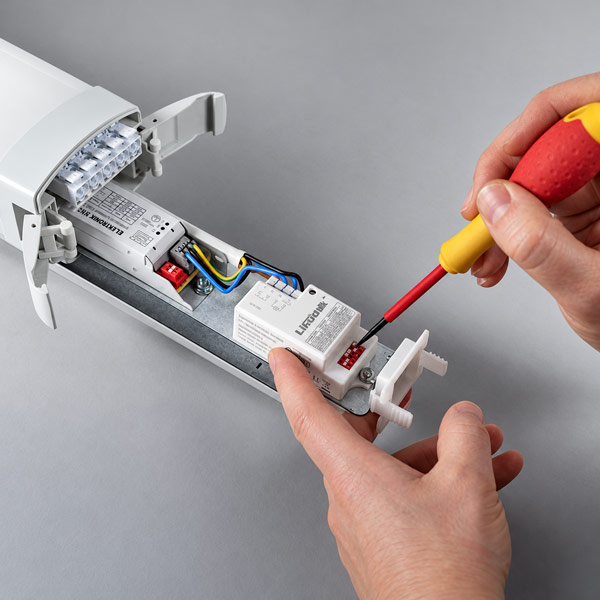
Check whether the manufacturer provides replacement drivers or LED modules. A qualified technician may be able to replace a supported component while retaining a sound enclosure.
Avoid opening sealed electrical assemblies simply to investigate. Repair only makes sense when the product supports it and its electrical safety and weather protection can be maintained.
Solar lights
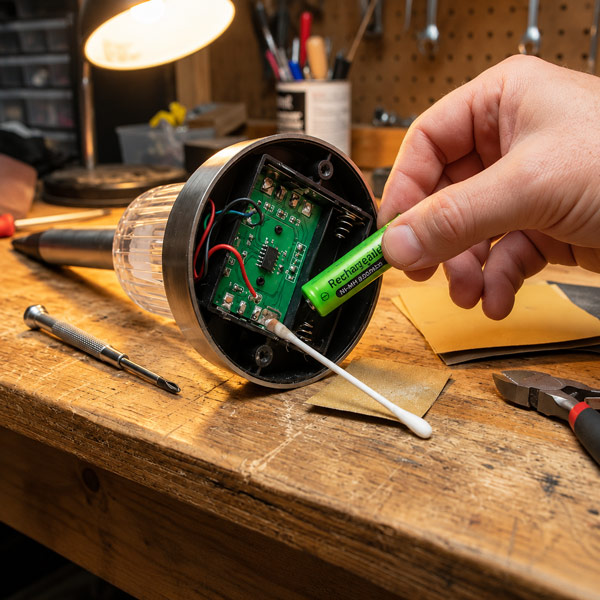
Poor charging and weak batteries are common reasons solar lights stop working. Check sunlight exposure, panel cleanliness, switch settings, and any user-serviceable battery before discarding the complete light.
A useful garden example is a row of pathway lights that all go dark together. Check the shared supply, timer, or controller before classifying every fixture as failed. For independently powered solar lights, consider whether shade or seasonal charging conditions changed across the whole installation.
This approach helps identify the smallest serviceable part that needs replacement.
Can LED Lights Go in the Trash or Recycling Bin?
Two separate decisions matter here: whether household trash is permitted and whether ordinary recycling accepts the product.
Household trash rules depend on location
LED lighting does not use the mercury found in fluorescent lamps. However, that does not automatically make an LED product suitable for every waste stream. Its electronic components and other materials still need appropriate handling.
Local guidance differs. For example, Michigan permits spent LED lights in household trash, while San Francisco directs LED bulbs to special collection. Check the current instructions from your own waste authority before choosing a disposal route.
Michigan Department of Environment, Great Lakes, and Energy. (n.d.). Rules for recycling other materials. State of Michigan.
Use household trash only when local rules expressly allow it for that item. Battery-containing lights require an additional battery disposal check.
Ordinary recycling bins are generally unsuitable
A bulb contains a combination of materials and components that differs from a glass bottle or metal can. Decorative light strings also create tangling problems in sorting machinery.
Keep LED bulbs, fixtures, and strings out of ordinary mixed recycling unless your local service explicitly provides a collection arrangement for them. A material being recoverable does not mean your household recycling system can process the assembled product.
How to Prepare LED Lights for Recycling
Once you have confirmed that disposal is necessary, prepare the light according to the receiving facility’s instructions.
1. Disconnect the power safely
Switch off the light and let it cool before handling it. Unplug portable lights and removable power supplies.
For hardwired fixtures, use a qualified electrician when safe isolation and removal require electrical work. A wall switch alone should not be treated as proof that wiring is safe to handle.
2. Keep different products identifiable
Separate loose bulbs from complete fixtures and flexible light strings. Keep labels readable whenever possible.
For integrated lighting, leave the assembly intact unless the recycler requests specific preparation. Breaking a fixture into loose pieces can make it harder for staff to identify the product and determine how to process it.
Ask whether controllers and power supplies should accompany strip lights or decorative strings.
3. Protect bulbs and tubes from breakage
Use the original packaging when available. Otherwise, place bulbs in a sturdy box with enough cushioning to prevent them from striking one another.
Support long tubes along their length. Keep heavy fixtures in a separate container so they cannot crush smaller lamps during transport.
Do not deliberately break or crush bulbs to save space.
4. Check battery requirements
Tell the collection service if a light contains a battery, even when the battery is hidden inside the housing.
Some services accept complete battery-powered devices. Others require safely removable batteries to enter a separate collection stream. Follow the product instructions and the receiver’s requirements.
5. Confirm the destination before travelling
Start with your municipal waste directory, local lighting collection programs, or the manufacturer’s disposal information. Searching for “LED light recycling near me” together with your city or postal code can help locate possible services.
Before making the trip, confirm:
- Whether the facility accepts your exact product type.
- Whether it accepts broken lamps.
- Whether it accepts lights containing batteries.
- Whether it wants accessories included or separated.
A collection point that accepts fluorescent lamps does not necessarily accept LEDs. Naming the product precisely is more useful than asking whether it accepts “light bulbs.”
How to Dispose of Solar LED Lights and Their Batteries
Solar garden lights need particular attention because the battery and the lighting assembly may require different collection routes.
Read the battery label where it is safely accessible. Solar lights can use different rechargeable chemistries, and battery size alone does not identify the chemistry or its disposal requirements.
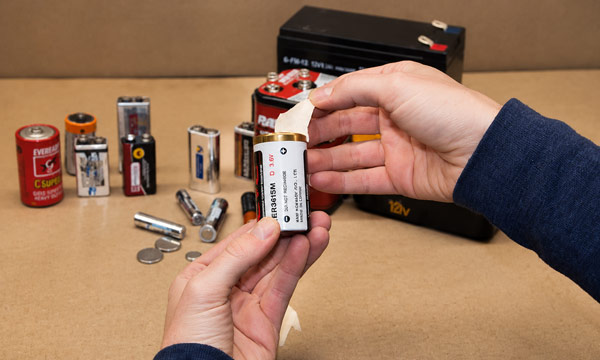
Cover exposed rechargeable battery terminals with non-conductive tape to prevent short circuits and improve battery safety during storage, handling, and recycling.
Remove a battery only when the product is designed for user removal and it can be taken out without force. For removable rechargeable batteries, follow collection instructions for insulating exposed terminals with nonconductive tape or individually containing the batteries to prevent contact.
Rechargeable batteries should not go in household trash or ordinary municipal recycling. When a battery is not user-removable, take the complete light to a program that accepts battery-containing devices.
A leaking solar light battery needs additional assessment before handling. Stop using the light and obtain instructions appropriate to the battery chemistry and condition.
Do not pry out, puncture, or crush a swollen battery. Contact the manufacturer or local hazardous waste service for handling guidance before taking a damaged lithium battery to a routine collection point. Lithium batteries and devices containing them can create fire hazards when crushed in waste equipment.
What Should You Do With a Broken LED Bulb?
First, disconnect power and keep people and pets away from the fragments.

For a confirmed LED bulb without a damaged battery, wear protective gloves and use stiff paper or cardboard to collect larger pieces. Contain sharp fragments securely so they cannot injure anyone handling the waste. Ask the receiving facility how it wants broken bulbs packaged and labelled.
Do not assume that a broken lamp is LED because of its shape or where it was installed. If it may be fluorescent or another mercury-containing lamp, follow the relevant mercury-lamp cleanup guidance before proceeding.
A broken battery-powered light needs separate consideration. Damage to its lens or housing may also have affected the battery, so check for visible damage without dismantling the battery assembly.
Use the Failure to Make a Better Replacement Decision
Before discarding a failed outdoor light, photograph its label and record what happened. Useful notes include water inside the housing, damaged cable entries, repeated flickering, or a battery that no longer holds sufficient charge.
Those observations can improve the next installation.
For example, repeated water damage calls for reviewing fixture placement, drainage, seals, and cable connections alongside the product’s protection rating. Understanding the IP65 rating for garden lights helps you assess whether a replacement suits its exposure conditions.
Alongside advertised lifespan, ask practical questions:
- Can the bulb, battery, or driver be replaced?
- Are compatible spare parts available?
- Can servicing preserve the enclosure’s weather protection?
- Does the manufacturer provide clear maintenance instructions?
These details influence how much equipment you will need to discard when the next component wears out.
FAQs
1. Can you donate LED bulbs that still work?
Yes, provided the recipient accepts used bulbs and they are safe, functional, and undamaged. Include available information about the base, voltage, wattage, and dimming compatibility. Check acceptance first, since some donation programs exclude used electrical items. Keep recalled products, cracked bulbs, and lights with damaged insulation out of donation collections.
2. Is LED light recycling free?
Sometimes. Certain municipal programs provide no-cost collection for eligible residents, while other services charge according to the product, quantity, or customer category. For example, some local programs distinguish between free residential LED collection and paid business disposal. Confirm the charge for your particular items before attending.
3. Should you factory-reset smart LED bulbs before recycling them?
If the bulb still operates safely, remove it from linked accounts and follow the manufacturer’s factory-reset instructions before handing it over. Connected lighting can retain settings or account associations. Do not power up an electrically damaged bulb simply to reset it. Ask the manufacturer about appropriate account-removal steps if the device no longer works.
4. How should you dispose of an old fluorescent ballast during an LED upgrade?
Keep the retired ballast separate for assessment during a fluorescent-to-LED lighting conversion. Some older fluorescent ballasts contain polychlorinated biphenyls, or PCBs, which require specific handling. Have a qualified contractor identify the unit and arrange the appropriate disposal route. Leave suspect ballasts closed and avoid touching leaking material.
5. How do businesses dispose of large quantities of LED lights?
Arrange collection with a recycler that accepts the lighting equipment and associated waste from your project. Prepare an inventory of product types and quantities, confirm packaging requirements, and request collection records for your files. Household programs may exclude commercial waste or impose strict limits, so verify business eligibility before delivery.
