
Table of Contents
- 1. Check the Fixture’s Rating Before Looking at the Old Bulb
- 2. Separate Actual Wattage From Equivalent Wattage
- 3. Use Lumens to Choose the Brightness You Want
- 4. Confirm That the Bulb Fits the Operating Conditions
- 5. Before Increasing Wattage, Check Where the Light Goes
- 6. Apply the Rules to a Realistic Outdoor-Lantern Example
- 7. Compare Efficiency After You Have Suitable Options
- 8. Test One Bulb Before Replacing Every Bulb
- FAQs
To choose the right light bulb wattage, check the fixture’s maximum rating, decide how much light you need in lumens, and select a compatible bulb whose actual wattage stays within the permitted limit. The “60W equivalent” printed on an LED package describes a brightness comparison. Its actual power consumption may be around 9 watts.
There is another part of the decision that wattage alone cannot solve: where the light goes. A bulb can meet the fixture’s electrical requirements and still leave your entrance difficult to see, create an uncomfortable bright spot, or send most of its light in the wrong direction.
The following steps help you choose a bulb that fits the fixture and improves the way the space works.
1. Check the Fixture’s Rating Before Looking at the Old Bulb
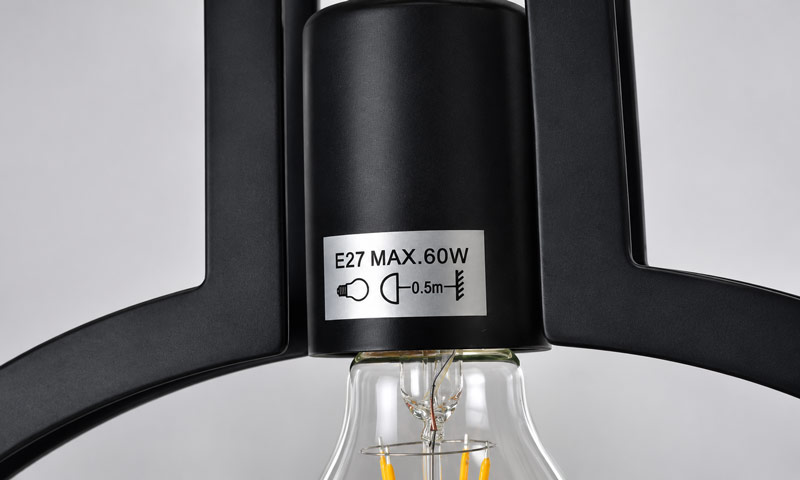
A fixture label marked E27 MAX 60W identifies the bulb base and maximum permitted wattage inside the light fitting.
Find the wattage label on the lamp or light fixture. It may be near the socket, inside the housing, underneath a table lamp, or in the installation instructions. Follow the fixture’s stated bulb requirements and wattage limits.
Electrical Safety Foundation International. (n.d.). Home electrical fires.
Read the complete label. Look for:
- The maximum wattage.
- Any separate limits for LED and incandescent bulbs.
- The permitted bulb type or shape.
- Whether the limit applies to each socket or the entire fixture.
A label that says “MAX 60W” gives you a limit. It does not mean you must install a bulb that consumes 60 watts.
Also, the bulb already installed is only a useful brightness reference. Someone may previously have fitted an unsuitable bulb, so its wattage does not establish what the fixture allows.
If the label is missing or unreadable, identify the fixture and check its instructions before choosing a replacement.
2. Separate Actual Wattage From Equivalent Wattage
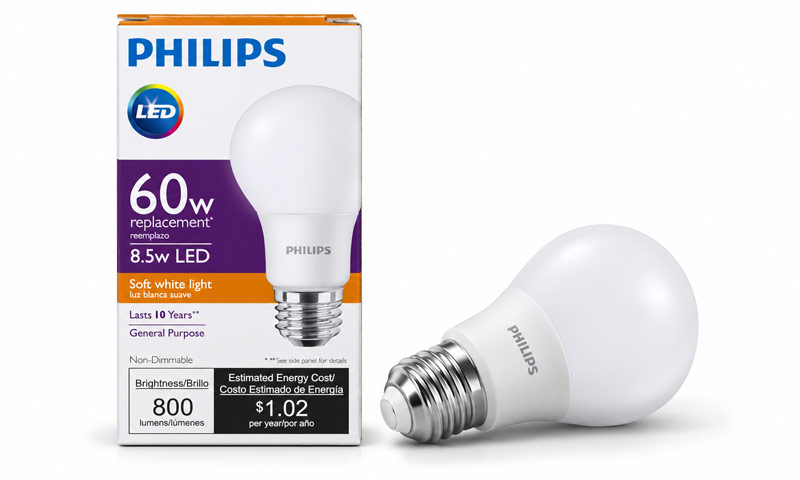
Philips LED bulb packaging shows a 60W incandescent equivalent, using just 8.5W to produce 800 lumens.
LED packaging often displays several numbers together. Each answers a different question.
| Label example | What it means | How to use it |
|---|---|---|
| Fixture: “60W MAX” | A stated power limit, subject to the fixture’s other instructions | Check the replacement against the applicable limit |
| Bulb: “9W” | The bulb’s actual power consumption | Use this figure when comparing power requirements |
| Bulb: “60W equivalent” | An approximate comparison with a traditional incandescent bulb | Use it as a familiar brightness reference |
| Bulb: “800 lumens” | The bulb’s total visible light output | Use it to compare the amount of light produced |
The equivalent-wattage number does not describe the LED’s electrical load. Matching light output also involves distribution, physical fit, and compatibility with the existing lighting system.
For example, a 15W LED advertised as a 100W replacement may be suitable for some fixtures marked “60W MAX.” Its actual consumption is 15W. However, the fixture must permit that LED type and wattage, and the bulb must meet the installation conditions.
That is the important distinction when considering a higher-wattage-equivalent LED bulb. A larger equivalent number does not automatically mean a larger electrical load, but a low actual wattage does not remove other fixture restrictions.
3. Use Lumens to Choose the Brightness You Want
Once you know the permitted wattage, choose the amount of light.
Lumens measure a bulb’s light output. More lumens means more total light emitted. The following comparisons provide a useful starting point when replacing familiar incandescent bulbs.
| Traditional incandescent bulb | Approximate replacement light output |
|---|---|
| 40W | 450 lumens |
| 60W | 800 lumens |
| 75W | 1,100 lumens |
| 100W | 1,600 lumens |
| 150W | 2,600 lumens |
These are general replacement benchmarks, rather than room-by-room lighting requirements.
There is deliberately no fixed LED-wattage column. LEDs vary in efficiency, so two bulbs producing 800 lumens can consume different amounts of power.
If the old bulb provided enough light
Start with a replacement that has similar lumens and a similar light distribution.
If the old package is unavailable, check the markings on the bulb. When only the incandescent wattage is known, use the table as an approximate reference.
If the old bulb was too dim
First establish whether you need more total light or better placement.
A lamp that spreads light around a room may need more lumens. A spotlight that misses the intended surface may need a different beam angle or position.
If there is no old bulb to copy
Use the table to establish a brightness scale. Around 800 lumens provides a familiar reference comparable to a traditional 60W general-purpose bulb.
Treat that as a starting point for a single lamp. It is not a promise that one bulb will illuminate an entire room. Ceiling height, shades, surface finishes, and the number of fixtures all affect the result.
4. Confirm That the Bulb Fits the Operating Conditions
A suitable wattage is one requirement among several. Before buying, check the following.
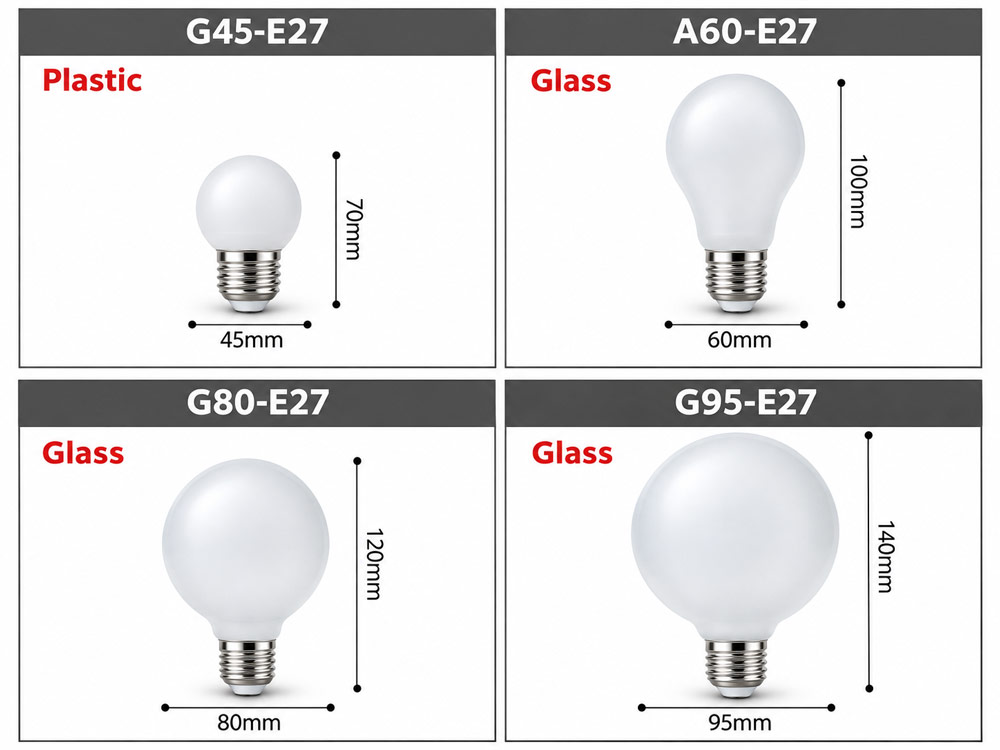
Four E27 LED bulb shapes shown with different heights and diameters, illustrating why bulb size matters when choosing a replacement.
Base and physical dimensions
Match the specified base, bulb shape, and available space inside the fixture.
Do not assume a bulb is suitable simply because it screws into the socket. An E27 bulb base, for example, does not by itself establish the bulb’s operating voltage.
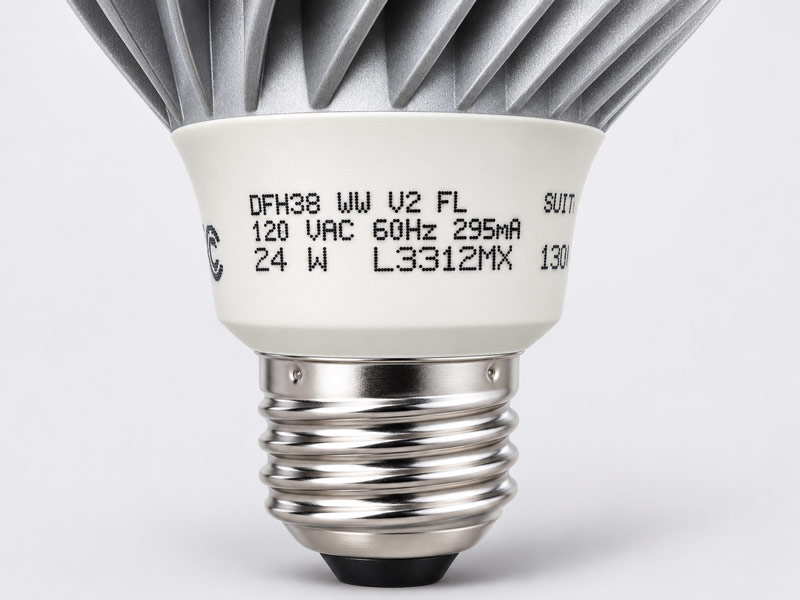
Close-up of an LED bulb showing its printed 120V AC, 60Hz, and 24W electrical ratings.
Rated voltage
The bulb’s input-voltage rating must match the supply.
This is especially relevant when moving between household lighting and low-voltage landscape systems. For low-voltage products, also confirm whether the required supply is AC, DC, or either.
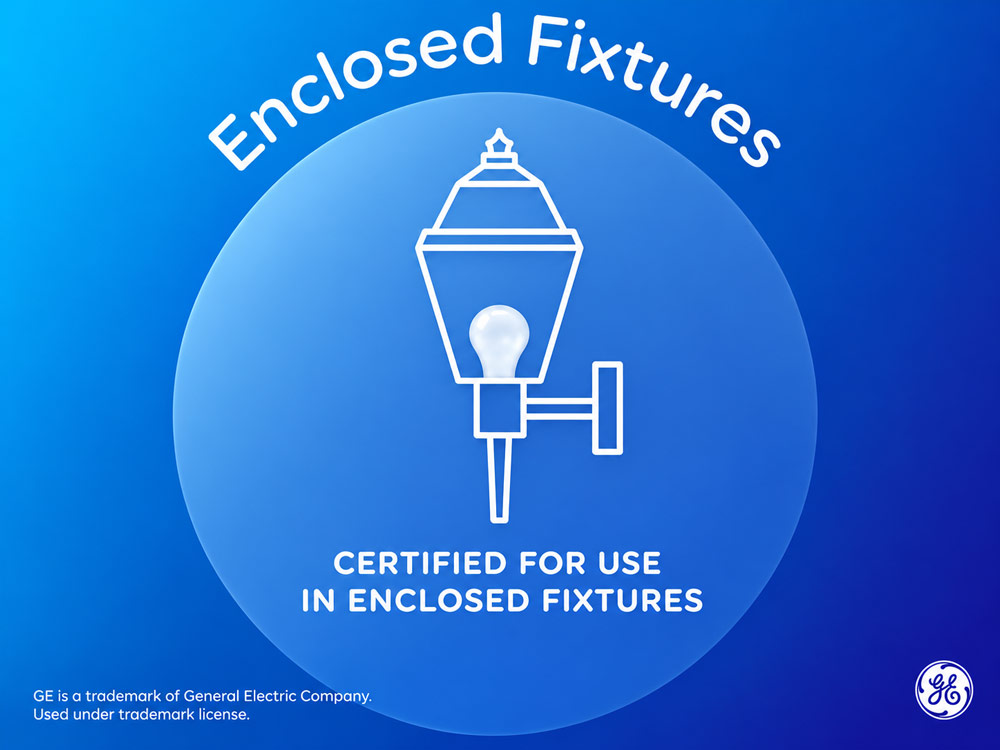
GE LED bulb packaging clearly displays its certification for use in enclosed lighting fixtures.
Enclosed-fixture suitability
If the bulb operates inside a fully enclosed globe or lantern, check for explicit approval for enclosed fixtures.
Enclosures trap heat. A bulb’s low wattage does not establish whether it can operate properly in that environment. Check the packaging or technical specifications.
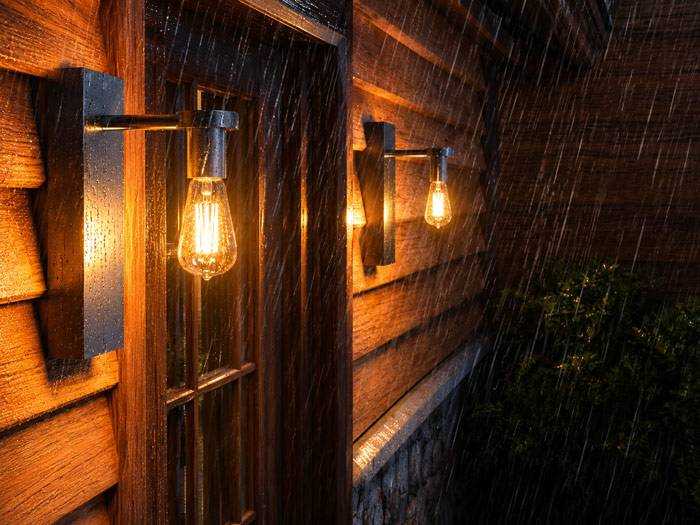
Outdoor LED bulbs designed for wet locations, providing reliable illumination in rainy and damp conditions.
Outdoor exposure
For outdoor installations, check the stated location and weather requirements for both the bulb and fixture.
A sheltered entrance and an exposed garden position create different conditions. Follow the product instructions for the actual installation.
If the fixture contains an integrated LED module rather than a replaceable bulb, check its service instructions before purchasing a conventional replacement bulb.
5. Before Increasing Wattage, Check Where the Light Goes
Lumens describe the light leaving a source. Your practical concern is how much useful illumination reaches the surface you need to see.
That distinction explains why two bulbs with similar lumen ratings can perform differently in the same location. Their distribution may differ, and the fixture can redirect or block part of their output.
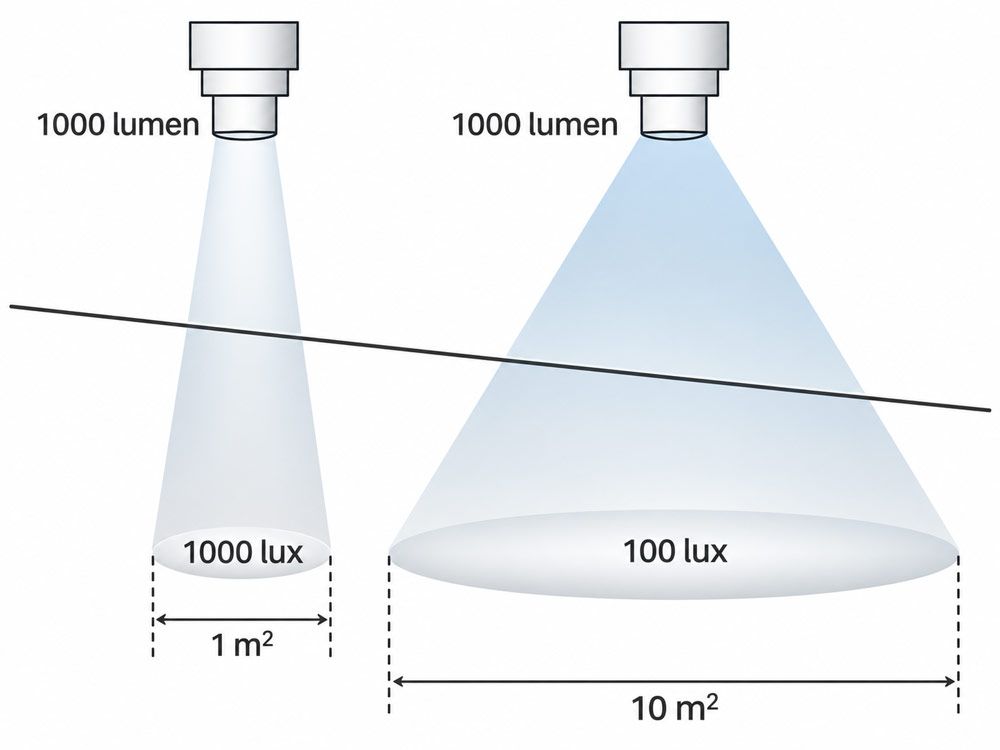
Two 1000-lumen light sources demonstrate how narrow and wide beams produce different illuminance levels across the target surface.
For directional bulbs, the beam angle helps describe how widely the main beam spreads. A narrower beam generally concentrates light into a smaller area, while a wider beam distributes it across more space.
Use the problem you observe to guide the next purchase:
| What you notice | What to investigate first |
|---|---|
| The whole intended area looks evenly lit but too dim | Whether more lumens are needed |
| There is a bright central spot with dark edges | Beam width, aiming, and fixture spacing |
| The bulb looks dazzling, but the ground remains difficult to see | Shielding, fixture position, and light distribution |
| Light shines into nearby windows or beyond the property | Aiming and control of unwanted spill |
Outdoor lighting makes this particularly important. A visible, glaring bulb can make the surroundings harder to assess. Shielding and directing light onto the intended task can improve visibility without increasing output.
National Park Service. (2025, June 17). Outdoor lighting principles.
Judge the light by what you can see while using the space. At an entrance, that might mean identifying the step edge and finding the keyhole comfortably. The apparent brightness of the lantern itself tells you much less.
6. Apply the Rules to a Realistic Outdoor-Lantern Example
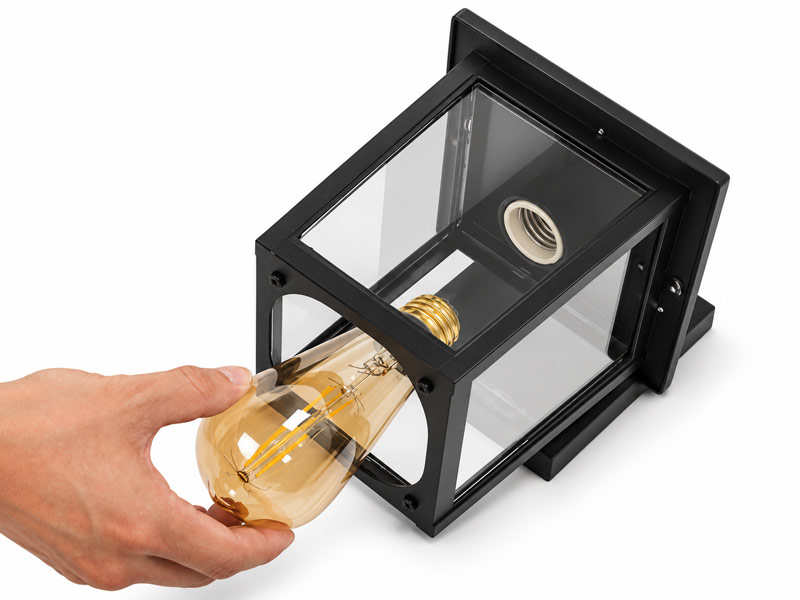
Consider this hypothetical replacement decision.
An enclosed entrance lantern has instructions specifying:
- Maximum 60W incandescent.
- Maximum 10W LED.
- A particular bulb base, shape, and supply voltage.
- You find two bulbs that meet the base, voltage, size, and enclosed-fixture requirements:
- Bulb A: 9W actual consumption, producing 800 lumens.
- Bulb B: 15W actual consumption, producing 1,600 lumens.
Bulb B is below 60 watts, but it exceeds the fixture’s separate 10W LED limit. It is unsuitable for this example.
Bulb A meets the stated power limit and becomes a candidate for an installed trial.
If 800 lumens proves insufficient, look for a compatible bulb with greater output within the permitted 10W LED limit. You could also reassess the fixture’s distribution or the lighting arrangement.
This example shows why comparing the bulb with the largest number on the fixture label can lead to the wrong choice. Use the limit that applies to the bulb technology you are installing.
7. Compare Efficiency After You Have Suitable Options
When two bulbs provide the light output and operating characteristics you need, compare their actual wattage.
Luminous efficacy expresses light output per watt:
Lumens per watt = lumen output ÷ actual watts
For example:
- An 800-lumen bulb using 8W produces 100 lumens per watt.
- An 800-lumen bulb using 10W produces 80 lumens per watt.
The first converts electricity into visible light more efficiently.
Keep the comparison fair. Similar lumen ratings do not guarantee matching distribution or light quality. Confirm suitability first, then use wattage to compare energy consumption.
8. Test One Bulb Before Replacing Every Bulb
For several matching fixtures, buying one candidate first can prevent an expensive mismatch.
Install it according to the instructions and assess it in the normal conditions of use. For outdoor lighting, check after dark. For a shaded lamp, judge the bulb with the shade fitted.
A useful trial examines three things:
- The target: Can you clearly see the surface or object the light is intended to illuminate?
- Your viewing position: Is the light comfortable from where you normally sit, stand, or walk?
- The surrounding area: Does the light reach the necessary edges without spilling into unwanted places?
This trial helps identify what to change next. If coverage is suitable but insufficient, increase lumens within the fixture’s limits. If glare or uneven coverage is the problem, reconsider distribution and placement before purchasing a more powerful bulb.
FAQs
1. Why does my LED bulb flicker even when the wattage is correct?
Correct wattage does not guarantee compatibility with a dimmer. Flickering can result from an unsuitable bulb-and-dimmer combination or operation outside the supported load or dimming range. Check that the bulb is dimmable and verify the exact pairing when investigating a dimmer switch causing lights to flicker.
2. Do I need a special LED bulb for a three-way lamp?
Yes, if you want all three brightness settings. Choose an LED explicitly designed for a compatible three-way socket. A standard dimmable LED does not automatically provide three-way operation. Three-way switching and continuous dimming are separate features, so check both the lamp instructions and the bulb specifications.
3. How much does it cost to leave a 9W LED bulb on all night?
Assuming eight hours of use each night, one 9W bulb consumes:
0.009 kW × 8 hours × 365 days = 26.28 kWh per year
At an example electricity rate of $0.20 per kWh, that costs approximately $5.26 per year. Your actual outdoor lighting costs depend on the electricity tariff, operating hours, and number of lights.
4. Why do LED bulbs get dimmer over time?
LED light output can gradually decrease as the light source ages, a process called lumen depreciation. The bulb may continue operating while producing less light than it did when new. Dirt on the bulb or fixture can also reduce illumination, so check cleanliness and condition before assuming the original wattage was insufficient.
5. What does 90 CRI mean on a light bulb?
A color rendering index of 90 indicates relatively faithful rendering of the standardized test colors compared with a reference source. It describes color rendering rather than brightness or power consumption. Two 800-lumen bulbs can have different CRI ratings, affecting how materials and objects appear under their light.
