
Decide What You Want the Lights to Do
Choose the Right Power Source
Check the Material and Weather Resistance
Select an Appropriate Light Color
Match the Size to the Location
Consider the Garden’s Existing Style
Plan the Placement Carefully
Review Maintenance Requirements
FAQ
Garden angel lights combine outdoor illumination with decorative charm. During the day, they serve as elegant garden ornaments; at night, they create a warm and peaceful atmosphere. However, choosing the right design requires more than simply selecting the most attractive angel figure. You should also consider the light’s purpose, power source, materials, brightness, size, placement, and durability.
Decide What You Want the Lights to Do
Begin by identifying the main purpose of the garden angel lights.
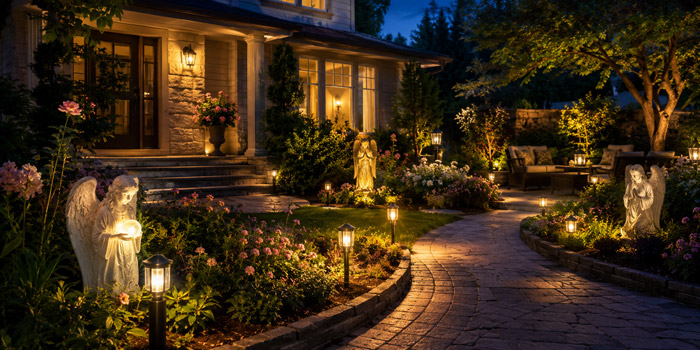
Some homeowners use them as decorative accents among flowers, shrubs, or patio plants. Others place them near pathways, entrances, memorial areas, or quiet garden corners. A small angel with a soft glow works well as a subtle ornament, while a larger and brighter model can become a noticeable focal point.
Garden angel lights are usually better for creating atmosphere than providing strong security lighting. For steps, gates, or dark walkways, choose a model with enough brightness to improve visibility rather than relying only on decorative light.
Solar-powered angel lights are popular because they are easy to install and do not require outdoor wiring. They charge during the day and turn on automatically after dark. They are suitable for sunny areas where the solar panel can receive several hours of direct sunlight.
However, solar lights may appear dimmer during cloudy weather or winter. Avoid placing them under dense trees, roof overhangs, or tall plants that block sunlight.
Battery-powered lights offer greater placement flexibility because they do not depend on direct sunlight. The disadvantage is that batteries must be replaced or recharged regularly.
Plug-in garden lights usually provide more consistent brightness and longer operating times. They are a practical choice for patios, entrances, and permanent garden displays, but they require access to a safe outdoor electrical outlet.
Check the Material and Weather Resistance
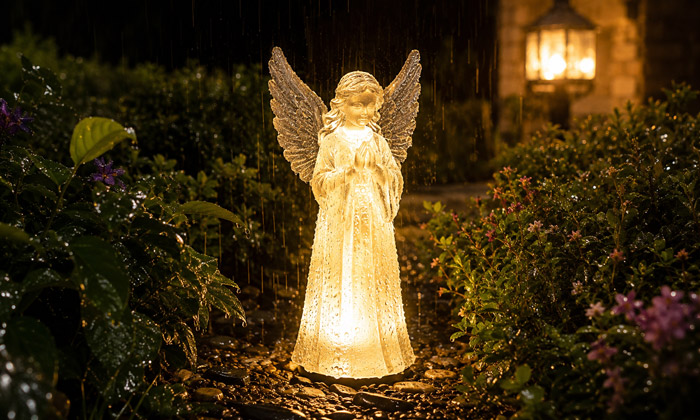
Garden lights remain outdoors for long periods, so durability is essential. Common materials include resin, metal, stone-effect composites, glass, and plastic.
Resin is lightweight, affordable, and suitable for detailed angel designs. Metal can create a more traditional appearance, but it should have a rust-resistant coating. Stone-effect materials offer a classic look, although heavier products may be harder to move. Glass details can produce beautiful light patterns but may require more careful handling.
Check the product’s outdoor rating before buying. A suitable garden light should resist rain, moisture, dust, and temperature changes. Strong construction is especially important in areas with heavy rain, frost, intense sunlight, or strong winds.
Select an Appropriate Light Color
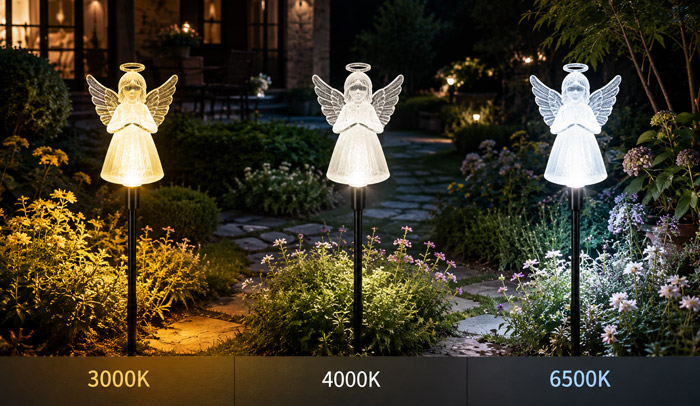
The color temperature affects the mood of your garden.
Warm white light creates a soft, comforting, and traditional appearance. It is often the best choice for angel-shaped decorations because it complements their peaceful design. Cool white light looks brighter and more modern, but it may feel less relaxing. Colored or color-changing lights can suit festive displays, although they may be less appropriate for a calm or elegant garden.
For most homes, a steady warm white LED provides the most versatile result. Flickering effects can imitate candlelight, while slowly changing light patterns may add visual interest. Avoid overly bright or rapidly flashing lights unless they are intended for seasonal decoration.
Match the Size to the Location
The angel light should be proportional to its surroundings.
Small models are suitable for flowerpots, narrow borders, balcony gardens, and tabletop displays. Medium-sized lights work well beside pathways, shrubs, fountains, or garden benches. Large angel figures can serve as central features in lawns, courtyards, or memorial gardens.
Consider the viewing distance as well. A detailed but very small angel may disappear in a large garden, while an oversized figure can overwhelm a compact space. Measure the intended location before purchasing and check both the height of the figure and the length of any stake or mounting base.
Consider the Garden’s Existing Style
Choose a design that fits the character of your home and outdoor space.
Traditional angel figures with folded wings, robes, or stone-like finishes suit cottage gardens, classical landscapes, and memorial areas. Minimalist metal silhouettes work better in modern gardens. Rustic designs complement wooden furniture, natural stone, and informal planting, while delicate fairy-like angels fit romantic flower gardens.
The finish should also coordinate with nearby features. Bronze, black, white, silver, and aged-stone finishes are generally easier to integrate than highly saturated colors.
Good placement improves both appearance and performance. Position the light where the angel can be seen without blocking a walkway or interfering with plants.
Solar models need clear access to sunlight. Stake lights should be installed in firm soil so they remain stable. Freestanding figures need a level surface, especially in windy locations. Keep electrical cables away from water, sharp edges, and areas where people may trip.
For a balanced display, use one angel as a focal point or place several smaller lights at regular intervals. Avoid overcrowding the garden with too many decorative figures, as this can reduce their visual impact.
Review Maintenance Requirements
Outdoor lights need occasional cleaning to perform well. Dust, mud, leaves, and mineral deposits can reduce brightness or prevent solar panels from charging efficiently.
Choose a design with accessible bulbs, batteries, switches, and solar panels. Replaceable rechargeable batteries can extend the life of solar lights. It is also helpful to check whether the LED unit is replaceable or permanently sealed.
In colder regions, delicate lights may need to be stored indoors during winter. A durable, low-maintenance model will provide better value than a cheaper light that fades, cracks, or stops working after one season.
Are garden angel lights safe for children and pets?
Most garden angel lights are safe when they use low-voltage LED technology and remain cool during operation.
For homes with children or pets, choose models with secure battery compartments, smooth edges, stable bases, and protected electrical connections. Avoid placing small detachable parts where they could become choking hazards.
Do garden angel lights attract insects at night?
Garden lights can attract insects, but the effect depends on the type of light they produce.
Warm white, amber, and low-intensity LEDs generally attract fewer insects than bright blue or cool white lights. Keeping the lights away from doors and seating areas can also reduce unwanted insect activity.
See also: What Impact Do Garden Lights Have on Plants and Animals?
How long do LED garden angel lights usually last?
Quality LED bulbs can operate for thousands of hours before losing noticeable brightness.
However, the overall lifespan of a garden angel light also depends on the battery, internal wiring, seals, and electronic components. Well-made models can remain functional for several years when used and stored correctly.
Can garden angel lights be left on all night?
Low-voltage and solar-powered LED angel lights can generally remain on throughout the night.
Many solar models automatically switch off when their stored energy runs out. Plug-in or battery-operated lights should include a timer or automatic shutoff feature to reduce energy use and prevent unnecessary battery drain.
Can garden angel lights be personalized as memorial decorations?
Some garden angel lights can be personalized with names, dates, short messages, plaques, or engraved stones.
Personalized models are often used in remembrance gardens or beside meaningful plants. Before ordering, check the available text space, engraving method, character limit, and whether the personalization is suitable for long-term outdoor exposure.
