

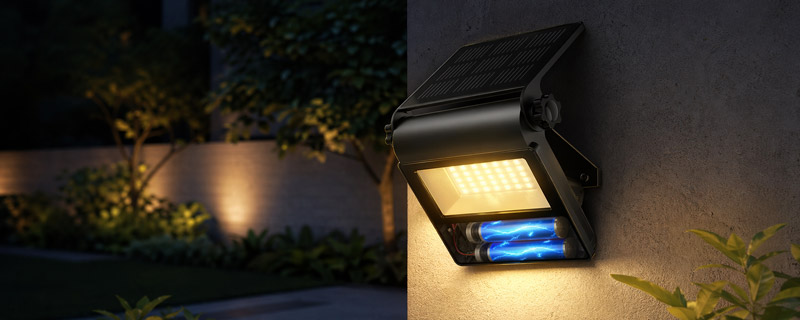
How Solar Lights Work
Why Solar Lights Usually Need Batteries
Are There Solar Lights Without Batteries?
Common Types of Batteries Used in Solar Lights
What Happens When a Solar Light Battery Fails?
Can You Use Regular Batteries in Solar Lights?
Why Some Solar Lights Seem to Have No Battery
Battery Capacity and Solar Light Performance
How to Make Solar Light Batteries Last Longer
FAQs
Solar lights have become one of the most popular outdoor lighting solutions for homes, gardens, pathways, patios, driveways, parks, and commercial spaces. They are easy to install, environmentally friendly, and usually cost very little to operate after purchase. Unlike traditional outdoor lights, solar lights do not need to be connected to the electrical grid. Instead, they collect energy from the sun during the day and use that energy to provide lighting at night.
This simple idea often leads to an important question: Do all solar lights have batteries? The short answer is: almost all practical solar lights have batteries, but not every solar-powered lighting system uses batteries in exactly the same way. In most cases, batteries are essential because solar lights need a way to store energy collected during the day so they can operate after sunset. However, there are some special solar-powered devices or direct-use systems that may work without batteries, though these are not typical nighttime solar lights.
To understand why batteries are so important, it helps to look at how solar lights work, what role batteries play, what types of batteries are commonly used, and whether a solar light can function properly without one.
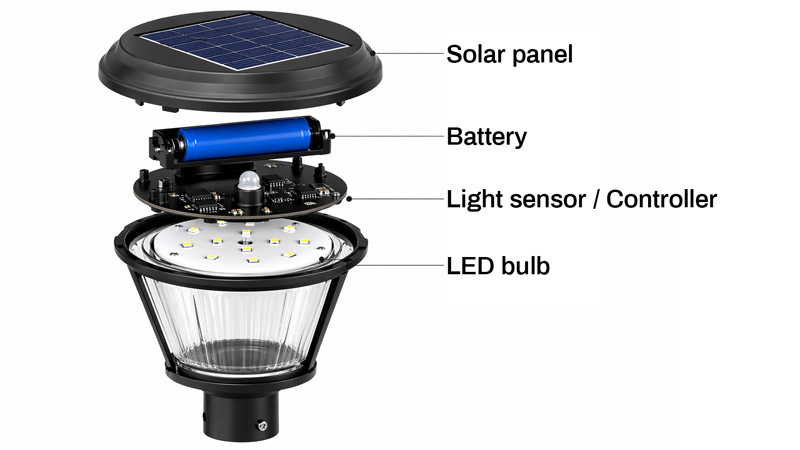
A standard solar light is made up of several key components. The first is the solar panel, which captures sunlight and converts it into electrical energy. This process happens through photovoltaic cells, often called PV cells. When sunlight hits these cells, they generate direct current electricity.
The second major component is the battery. During the day, the electricity produced by the solar panel is stored in the battery. Then, when the sun goes down, the battery releases that stored energy to power the light.
The third component is the LED bulb. Most modern solar lights use LED technology because LEDs are highly energy-efficient and can produce bright light while using very little electricity. This makes them ideal for solar lighting, where stored energy is limited.
Many solar lights also include a light sensor or controller. This sensor detects changes in brightness. When it becomes dark, the sensor automatically turns the light on. When daylight returns, the sensor turns the light off and allows the solar panel to begin charging the battery again.
Because solar lights usually need to operate at night, energy storage is necessary. This is the main reason batteries are found in nearly all solar lights designed for outdoor nighttime use.
Why Solar Lights Usually Need Batteries
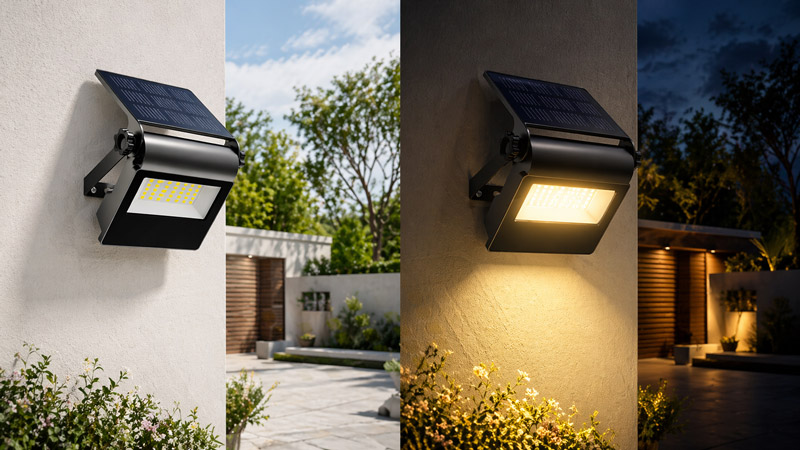
The sun does not shine at night, but solar lights are normally expected to provide light after dark. This creates a timing problem: solar energy is collected during the day, while lighting is needed at night. Batteries solve this problem by acting as an energy storage system.
Without a battery, a solar light could only operate while sunlight is directly hitting the solar panel. That would make it nearly useless as a night light. It might turn on during the daytime, but that defeats the purpose of most solar lighting products. For pathway lights, garden lights, security lights, wall lights, and decorative string lights, batteries are what make nighttime operation possible.
Batteries also help solar lights operate during cloudy weather. On a bright sunny day, the solar panel may fully charge the battery. On a cloudy day, the panel may collect less energy, but a good battery can still store enough power to keep the light running for several hours. Some higher-quality solar lights are designed with larger batteries so they can continue working through multiple nights of poor sunlight.
In other words, batteries are not just an optional extra. For most solar lights, they are one of the most important parts of the system.
Are There Solar Lights Without Batteries?
Although most solar lights have batteries, it is technically possible to have a solar-powered light without one. In such a system, the solar panel powers the light directly. However, this type of setup only works when sunlight is available. As soon as the sunlight becomes weak or disappears, the light turns off.
Battery-free solar lighting may be used in special cases where lighting is only needed during the day, such as certain solar-powered signs, demonstration kits, small educational projects, or direct solar-powered devices. These systems are not common for outdoor lighting because they cannot provide reliable illumination at night.
Some large solar lighting systems may also use energy storage methods that are more complex than a simple replaceable battery pack. For example, commercial solar street lights often include built-in lithium battery systems, charge controllers, and advanced energy management technology. Even then, they still rely on stored energy. The battery may be hidden inside the fixture, mounted in a separate box, or integrated into the pole, but it is still part of the system.
So, while not every solar-powered device must have a battery, almost every solar light intended for nighttime use does have some kind of battery or energy storage component.
Common Types of Batteries Used in Solar Lights
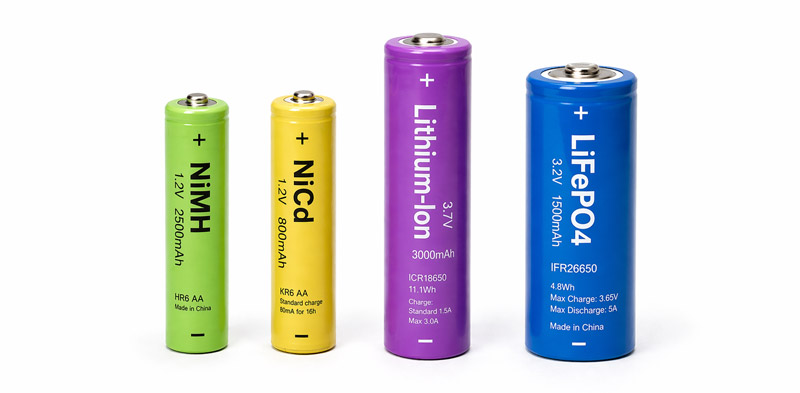
Solar lights use rechargeable batteries to store the energy generated by the solar panel during the day. The battery type directly affects runtime, charging efficiency, service life, temperature tolerance, and long-term maintenance cost.
| Battery Type | Nominal Voltage | Typical Capacity Range | Cycle Life | Best For |
|---|---|---|---|---|
| NiMH | 1.2V | 600–2,500mAh | Medium | Small garden and pathway lights |
| NiCd | 1.2V | 300–1,200mAh | Medium | Older or basic solar lights |
| Lithium-Ion | 3.7V | 1,200–6,000mAh | Medium to high | Wall lights, sensor lights, security lights |
| LiFePO4 | 3.2V | 1,500mAh+ | High | Premium lights, street lights, commercial systems |
Battery chemistry plays an important role in solar light design because each type has different charging behavior, discharge stability, energy density, and environmental impact. For low-power decorative lights, smaller rechargeable cells are usually enough. For high-brightness or dusk-to-dawn lighting, batteries with higher energy density and better cycle stability are more suitable.
- NiMH batteries: These are still common in residential solar lights because they offer a practical balance between cost and performance. They work well for low-output fixtures, but their efficiency may drop in very cold or very hot conditions.
- NiCd batteries: These are now used less often due to environmental concerns related to cadmium. Although they can be durable, many manufacturers have moved toward cleaner and more efficient rechargeable battery technologies.
- Lithium-ion batteries: These are widely used in modern solar lighting because they provide higher energy storage in a compact size. This makes them suitable for lights that need stronger brightness, motion-sensing functions, or longer operating time after dark.
- LiFePO4 batteries: These are often preferred in higher-end solar lighting systems because they offer better thermal stability, longer cycle life, and improved safety compared with standard lithium-ion options. Their higher upfront cost is often offset by longer service life and more reliable performance over time.
A solar light’s battery should match the panel output, LED power demand, and expected working hours. Even with an efficient solar panel and high-quality LED, poor battery selection can lead to short runtime, weak brightness, slow charging, or early system failure.
What Happens When a Solar Light Battery Fails?
A solar light battery does not last forever. Over time, rechargeable batteries lose their ability to hold a charge. When this happens, the solar light may become dim, turn off quickly, or stop working altogether.
Many people assume the solar panel or bulb is broken when their solar light stops working, but the battery is often the real problem. If the light works for only a short time after sunset, the battery may no longer be storing enough energy. If the light does not turn on at all, the battery may be completely dead, improperly installed, corroded, or disconnected.
In many small solar garden lights, the battery can be replaced. The battery compartment is usually located under the top cover or inside the light housing. Replacing an old rechargeable battery with a compatible new one can often restore the light’s performance.
However, not all solar lights are designed for easy battery replacement. Some sealed solar lights have built-in batteries that are difficult or impossible to replace without damaging the unit. This is especially common in cheaper decorative lights. Higher-quality solar lights often provide better access to the battery because manufacturers expect users to maintain them over time.
Can You Use Regular Batteries in Solar Lights?
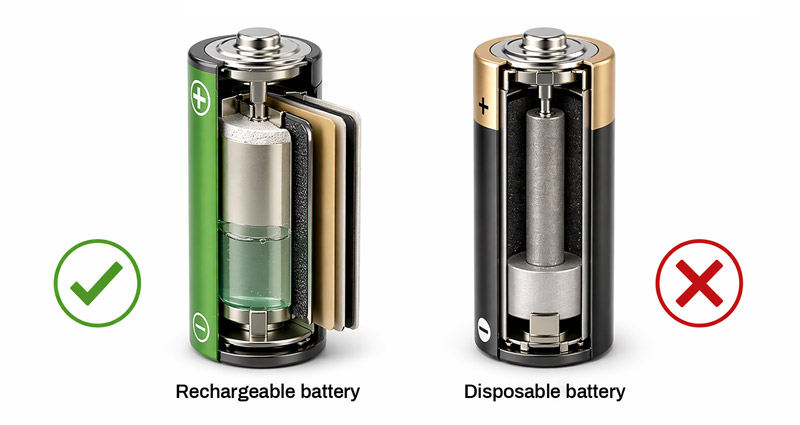
Solar lights require rechargeable batteries. Regular disposable alkaline batteries should not be used as replacements in most solar lights. The reason is simple: the solar panel charges the battery during the day. A disposable battery is not designed to be recharged. Trying to recharge a non-rechargeable battery can cause leakage, overheating, poor performance, or damage to the light.
When replacing solar light batteries, it is important to choose the correct type, size, and voltage. For example, many small solar lights use AA or AAA rechargeable NiMH batteries, but others may use lithium battery packs with specific voltage ratings. Using the wrong battery can reduce performance or even create safety risks.
Before replacing the battery, users should check the label on the old battery or read the product manual. The replacement should match the original battery’s chemistry and voltage as closely as possible.
Why Some Solar Lights Seem to Have No Battery
Some people believe their solar lights do not have batteries because they cannot see them. In many modern designs, the battery is hidden inside the fixture. The light may look like a single sealed unit with only a solar panel and LED visible. But inside, there is usually a rechargeable battery or battery pack.
Integrated solar lights are designed this way for appearance, waterproofing, and convenience. Hiding the battery protects it from rain, dust, insects, and accidental damage. However, this design can make maintenance more difficult. If the battery is not accessible, the entire light may need to be replaced when the battery fails.
This is why it is useful to check product specifications before buying solar lights. A good product description should mention the battery type, capacity, charging time, and working time. If no battery information is provided, that may be a sign of a low-quality or poorly documented product.
Battery Capacity and Solar Light Performance
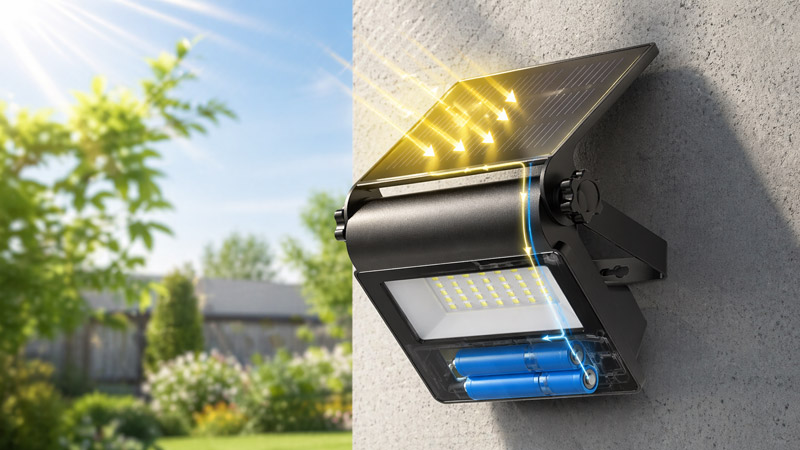
Battery capacity has a major effect on how long a solar light can stay on at night. Capacity is often measured in milliamp-hours, or mAh, for smaller batteries. A battery with a higher capacity can usually store more energy, which allows the light to run longer.
However, battery capacity is not the only factor. Solar panel size, sunlight exposure, LED power consumption, weather conditions, and controller efficiency also matter. A large battery will not help much if the solar panel is too small to charge it fully. Similarly, a powerful LED may drain the battery quickly if the system is not designed properly.
Motion-sensor solar lights often manage battery power more efficiently. Instead of staying bright all night, they may remain dim or off until movement is detected. This saves stored energy and allows the light to provide strong illumination when needed.
Decorative solar lights, on the other hand, may use smaller batteries because they are designed for atmosphere rather than high brightness. Security lights and street lights usually need larger batteries because they must produce stronger light for longer periods.
How to Make Solar Light Batteries Last Longer
Although solar light batteries eventually wear out, proper care can extend their life. The most important step is to place the solar panel where it receives direct sunlight for several hours each day. If the panel is shaded by trees, walls, roofs, or fences, the battery may never charge fully.
See also: Can Solar Lights Charge in Shade?
Cleaning the solar panel also helps. Dust, dirt, pollen, bird droppings, and snow can block sunlight and reduce charging efficiency. A quick wipe with a damp cloth can make a noticeable difference.
See also: How to Clean Garden Lights?
It is also helpful to turn off solar lights during long periods of storage. If lights are stored in a garage or shed without sunlight, the battery may slowly discharge. Some rechargeable batteries can be damaged if left empty for too long.
In colder climates, battery performance may decrease during winter. Shorter days and weaker sunlight mean less charging time, while low temperatures can reduce battery efficiency. This does not always mean the battery is broken; it may simply perform better again when weather conditions improve.
See alsao: Do Solar Powered Lights Work in the Winter?
How many lumens should a solar light have for outdoor use?
For decorative garden lighting, 10–100 lumens is usually enough. Pathway lights often need 100–300 lumens, while security lights, driveway lights, and wall-mounted solar floodlights may require 700–2,000 lumens or more, depending on the coverage area.
Are solar lights waterproof or just water-resistant?
Most outdoor solar lights are water-resistant rather than fully waterproof. An IP rating helps show protection level: IP44 handles light splashes, IP65 is better for rain and dust, and IP67 offers stronger protection for harsh outdoor conditions.
See also: What Is IP65? The Waterproof Rating of Garden Lights
How long does it take to fully charge solar lights?
Most solar lights need about 6–8 hours of direct sunlight to fully charge. Charging time can vary based on solar panel size, battery capacity, weather, season, and whether the panel is placed in direct or partial sunlight.
Can solar lights stay on all night?
High-quality solar lights can stay on for 8–12 hours after a full charge, but cheaper models may only last a few hours. Runtime depends on battery capacity, LED brightness, sunlight exposure, and whether the light uses motion-sensor or dusk-to-dawn mode.
Where is the best place to install solar lights?
Solar lights should be installed where the panel receives direct sunlight for most of the day. Avoid shaded areas under trees, roof edges, walls, or fences, and position the panel facing the strongest sunlight direction for better charging performance.
