

Why Do LED Lights Get Hot?
What Can Make LED Lights a Fire Hazard?
1. Restricted Heat Dissipation
2. Exceeding the Fixture’s Wattage Limit
3. Using the Wrong Power Supply
4. Loose Connections and Unsuitable Wiring
5. Overloaded Extension Cords and Circuits
6. Water Intrusion and Outdoor Exposure
Can LED Strip Lights Catch Fire?
Is It Safe to Leave LED Lights On All Night?
Warning Signs You Should Not Ignore
FAQs
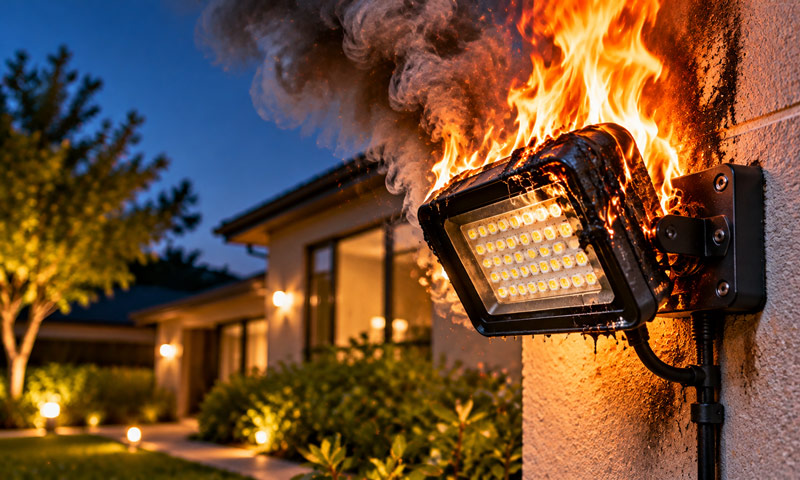
Yes, LED lights can catch fire. Although LEDs use less electricity and generally produce less heat than incandescent lights of comparable brightness, faults in the light, power supply, wiring, or connections can still create a fire hazard. Safety recalls have documented LED lighting products that overheated or produced flames.
For home and garden lighting, safety depends on the complete installation. A well-designed LED fixture needs a compatible power source, correctly sized wiring, adequate heat dissipation, and protection suited to its surroundings.
Understanding how these parts work together makes it easier to recognize problems and prevent avoidable hazards.
Why Do LED Lights Get Hot?
LEDs produce light using semiconductor components rather than a glowing filament. Their efficiency reduces the electricity needed for a given amount of light, but some electrical energy still becomes heat.
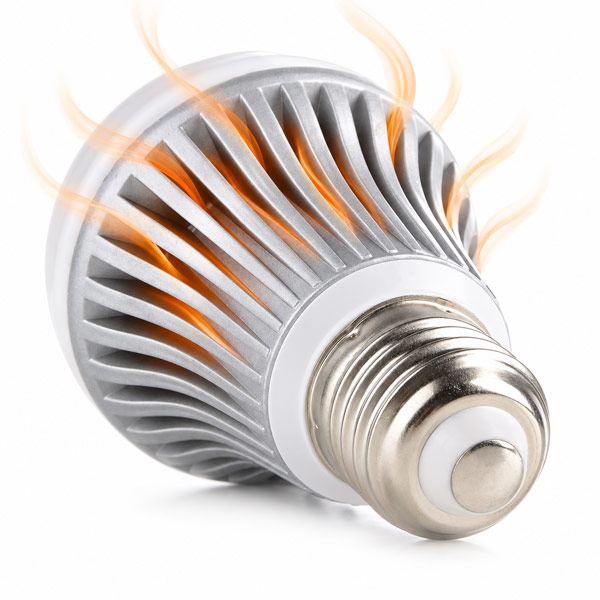
That heat must move away from the LED components. Heat sinks, circuit boards, and fixture housings help transfer it into the surrounding environment. If heat cannot escape effectively, operating temperatures rise and components can deteriorate faster.
The power supply or LED driver also produces heat while converting electricity into the form the light needs. This means the bulb surface is only one part of the system worth considering.
There is no single surface temperature that proves every LED product is safe. A plastic diffuser, metal heat sink, and driver housing can operate at different temperatures. Check the manufacturer’s operating limits and installation requirements rather than judging safety by touch.
What Can Make LED Lights a Fire Hazard?
Several conditions can turn an otherwise suitable lighting product into an unsafe installation.
1. Restricted Heat Dissipation
An LED bulb designed for an open fixture may overheat inside a sealed fitting. Similarly, a driver placed in a tightly packed cabinet can struggle to release heat.
Common problems include:
- Using bulbs that are unsuitable for enclosed fixtures.
- Covering heat sinks or ventilation openings.
- Placing power supplies beneath fabric or stored items.
- Allowing debris to accumulate around outdoor fixtures.
- Operating equipment above its specified ambient temperature.
For a sealed garden lantern, check both the bulb’s enclosed-fixture suitability and its environmental rating. Physical fit alone does not establish compatibility.
2. Exceeding the Fixture’s Wattage Limit
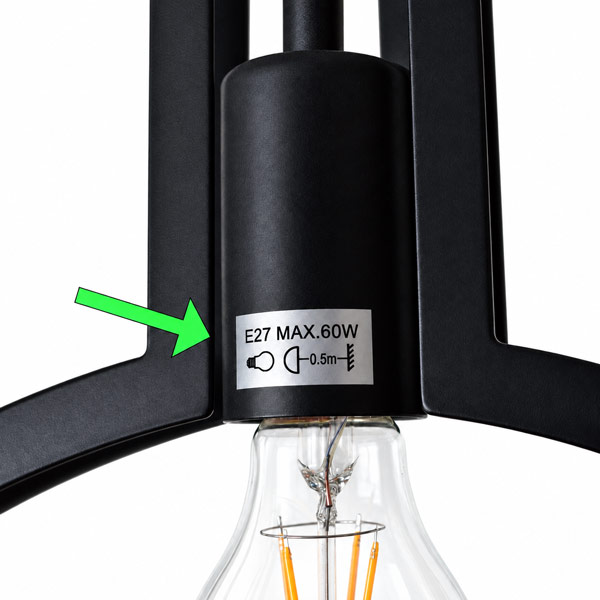
A fixture’s maximum wattage is a safety limit. Installing a bulb with a higher actual wattage than permitted can overheat the fitting, wiring, or nearby combustible materials.
The distinction between actual wattage and equivalent wattage matters here.
For example, a bulb described as “60-watt equivalent” might consume only 9 watts. The 60-watt figure describes its approximate brightness compared with an incandescent bulb. The actual electrical load is 9 watts.
When considering a higher-wattage LED bulb, compare its actual consumption with the fixture’s limit, then check any additional restrictions on bulb type, size, and enclosure use.
A lower electrical load does not override those other requirements.
3. Using the Wrong Power Supply
LED power supplies are not interchangeable simply because their connectors fit.
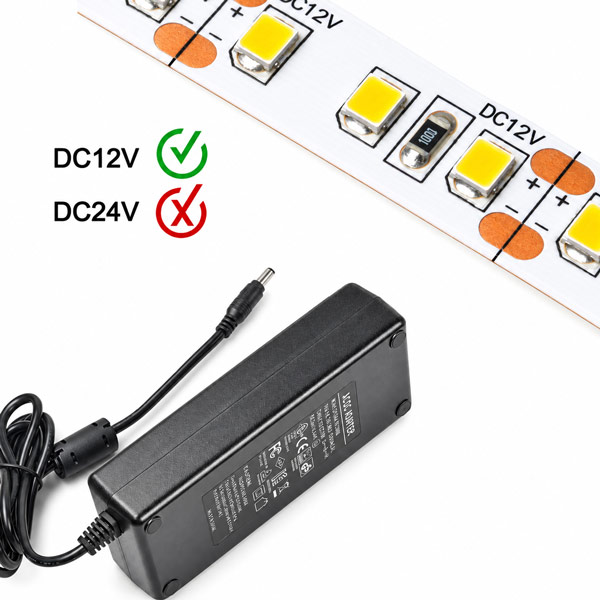
The correct unit must match the lighting system’s voltage, output type, capacity, and environmental requirements. For example, a 12V constant-voltage strip should not be connected to a 24V supply. Constant-current LED modules require a driver with the specified current and a suitable output-voltage range.
Capacity also needs checking before adding more lights.
A five-meter strip rated at 10 watts per meter has a nominal load of:
5 meters × 10 watts per meter = 50 watts
The power supply must support the connected load under the installation’s actual temperature conditions. Apply any loading reserve or temperature derating required by its manufacturer.
Choosing a larger wattage rating alone does not resolve a voltage mismatch, unsuitable driver type, or inadequate wiring.
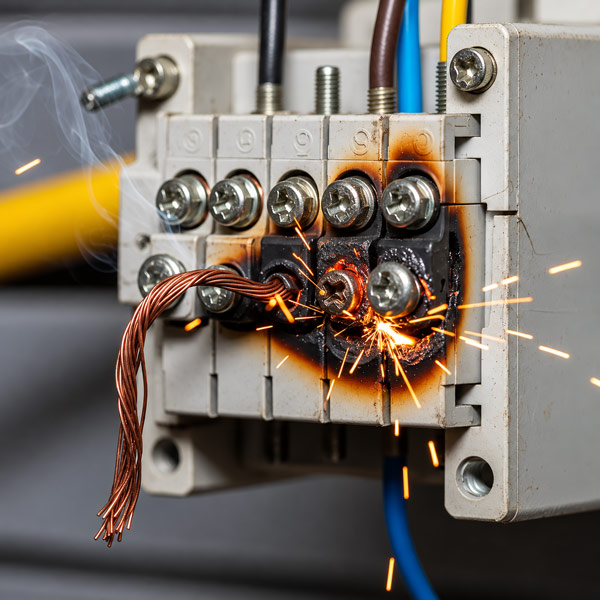
4. Loose Connections and Unsuitable Wiring
Poor electrical connections can create concentrated heating. Damaged insulation can expose conductors, while loose terminals may produce arcing.
In landscape lighting, cables and connectors must handle the current carried by each branch. Long cable runs also introduce voltage drop, making wire selection an important part of system design.
Choosing the correct landscape lighting wire size requires considering the load, cable length, installation conditions, and connector ratings together.
Low operating voltage does not eliminate the possibility of overheating. Safety reports for LED strip products have identified wiring and protective-device defects capable of causing ignition.
Use connectors intended for the cable and application. Leave damaged sockets, internal terminals, and fixed wiring repairs to a qualified electrician.
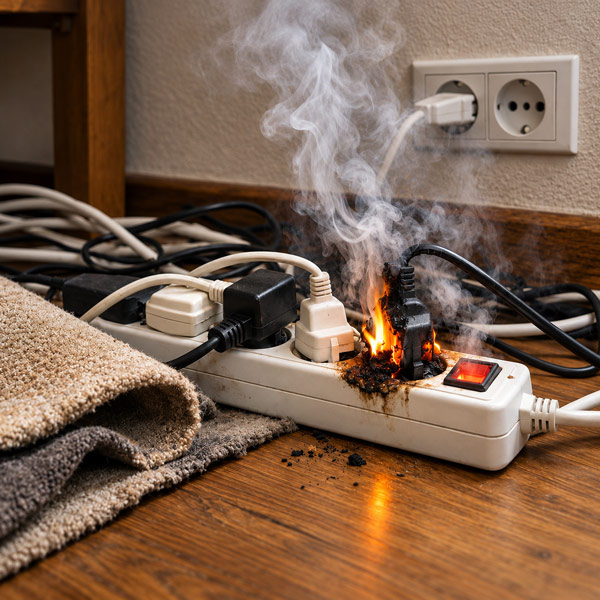
5. Overloaded Extension Cords and Circuits
Individual LED lights may consume relatively little electricity, but a circuit also supplies other connected equipment.
Adding more fixtures, adapters, or appliances can exceed the capacity of an extension cord or another part of the supply arrangement. Damaged cords introduce additional hazards.
Extension cords can overheat and cause fires when overloaded or used improperly. They should serve temporary needs rather than replace permanent wiring.
Before expanding a lighting installation, check the capacity of the circuit, power supply, cables, and connectors. Avoid plugging multiple extension leads or power strips into one another.
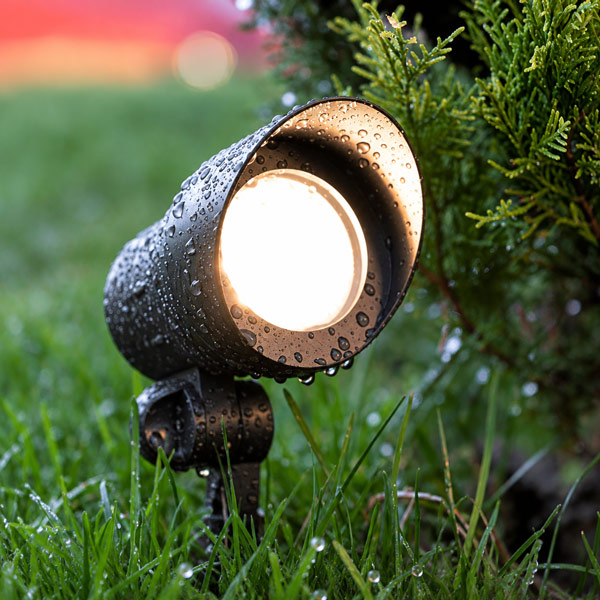
6. Water Intrusion and Outdoor Exposure
Outdoor lighting faces rain, irrigation spray, condensation, dirt, and changing temperatures. A cracked housing or failed cable seal can allow moisture to reach electrical components.
The protection of every component matters. An outdoor-rated light does not make an indoor power adapter suitable for an exposed garden location.
The difference between IP44 and IP65 ratings concerns protection against the ingress of solids and water. An IP rating describes enclosure protection; it does not establish the overall electrical safety of an installation.
Check the fixture, driver, connectors, and cable entries against their actual exposure. Keep water-damaged equipment disconnected until it has been assessed. Drying a fitting does not establish that it is safe to use again.
Can LED Strip Lights Catch Fire?
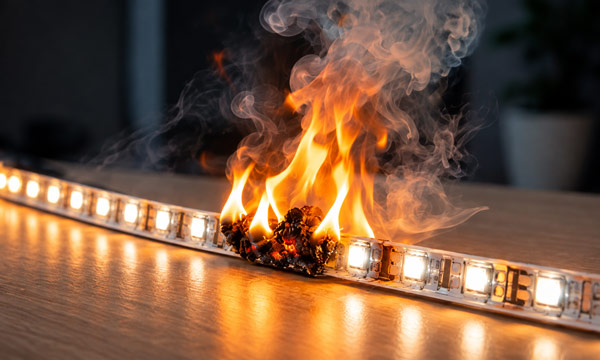
Yes. LED strips can become a fire hazard if the strip, supply wiring, connectors, or power equipment overheat or develop an electrical fault.
Their flexible design makes installation convenient, but it also makes it easy to overlook mounting and loading requirements.
For a safer installation:
- Unroll the strip before powering it. Operating a tightly wound strip can concentrate heat.
- Respect the maximum run length. Extending a strip can exceed the capacity of its conductors, connectors, or supply arrangement.
- Cut only at designated points. Use the specified connectors and resealing method where cutting is permitted.
- Follow the mounting instructions. Use an appropriate channel or heat-dissipating surface when required.
- Keep strips clear of bedding, rugs, and loose fabric. These materials can obstruct cooling and place combustible material close to electrical components.
- Protect the adapter and connections. Their installation conditions matter as much as those of the visible strip.
Some strips operate at mains voltage, while others use low-voltage supplies. Always identify the product type before choosing an installation method.
An adhesive backing provides a mounting method. It does not confirm that every surface or enclosed space is suitable.
Is It Safe to Leave LED Lights On All Night?

Many LED fixtures are designed for extended operation and can provide overnight lighting when installed and used within their specifications.
There is no universal number of hours after which every LED becomes unsafe. The relevant factors include the product’s intended duty, ambient temperature, heat dissipation, electrical loading, and condition.
Before leaving lights operating overnight, check that:
- The manufacturer permits the intended operating period.
- The fixture and power supply have the required ventilation or mounting clearance.
- Cables and connectors show no visible damage.
- The installation has no burning smell, scorching, or other signs of a fault.
A long advertised lifespan does not guarantee that every component will remain safe throughout that period. Likewise, allowing a faulty light to cool between uses does not repair the underlying problem.
Turn decorative lighting off when it is unnecessary, and follow any specific unattended-use restrictions supplied with the product.
Warning Signs You Should Not Ignore
A light can continue working while an electrical problem develops. Pay attention to changes in its appearance, sound, smell, and behavior.
| Warning sign | Recommended response |
|---|---|
| Burning smell, melted plastic, or scorch marks | Stop using the equipment and arrange inspection. |
| Smoke, flames, or active sparking | Leave the area and contact emergency services. |
| Repeated circuit breaker trips | Leave the affected circuit off and have the cause investigated. |
| Persistent flickering or unusual buzzing | Arrange assessment, especially if accompanied by odor, discoloration, or overheating. |
| Discolored switches or unusually warm outlets | Stop using the affected connection and contact an electrician. |
These symptoms can indicate serious wiring or equipment problems.
Persistent flickering LED lights deserve attention, although flickering alone does not identify the fault or prove that a fire is imminent.
If you can safely reach an undamaged switch or electrical panel, disconnect the affected supply. Avoid touching wet, scorched, or smoking electrical parts, and do not repeatedly reset a tripping breaker.
FAQs
1. Can LED Lights Catch Fire When Turned Off?
A light that appears off may still have an energized power supply. A remote control or smart control can stop light output while leaving electronic components connected to electricity.
For plug-in lighting, unplugging an undamaged unit disconnects its mains supply. A remote “off” command should never be treated as electrical isolation before maintenance.
2. Can Solar LED Garden Lights Catch Fire?
Yes. Solar lighting can develop a fire hazard in its battery or charging components, even when the LED itself is functioning normally. Solar LED products have been recalled because their lithium-ion batteries could overheat.
Battery chemistry and charging requirements vary between products. Use only the specified replacement battery, and stop using a light with a swollen battery, damaged battery compartment, or signs of overheating.
3. Can an Incompatible Dimmer Make LED Lights Unsafe?
An incompatible dimmer can cause unstable operation, flickering, buzzing, or component stress. These symptoms require investigation, although they do not automatically mean a fire is developing.
Use LEDs explicitly designed for dimming and a control approved for their driver type and electrical load. A dimmer switch causing LED lights to flicker may need compatibility checks, adjustment, or replacement by a qualified electrician.
4. Can LED Recessed Lights Touch Ceiling Insulation?
Only when the exact fitting is approved for contact with the insulation being used. IC-rated recessed lighting is designed for specified insulation-contact conditions. Other fittings require clearance according to their installation instructions.
Installing an LED bulb does not change the rating of an existing housing. Check any separate driver’s placement requirements as well, since its permitted installation conditions may differ from those of the light.
5. Will a Surge Protector Prevent LED Lights From Catching Fire?
A suitable surge protective device can help protect lighting electronics against transient overvoltage. It provides protection against a particular electrical event rather than every possible lighting fault.
It cannot correct loose terminals, unsuitable wiring, trapped heat, or an incompatible power supply. Surge protection should form part of an appropriately designed installation, with the light and all supporting components used within their ratings.
