

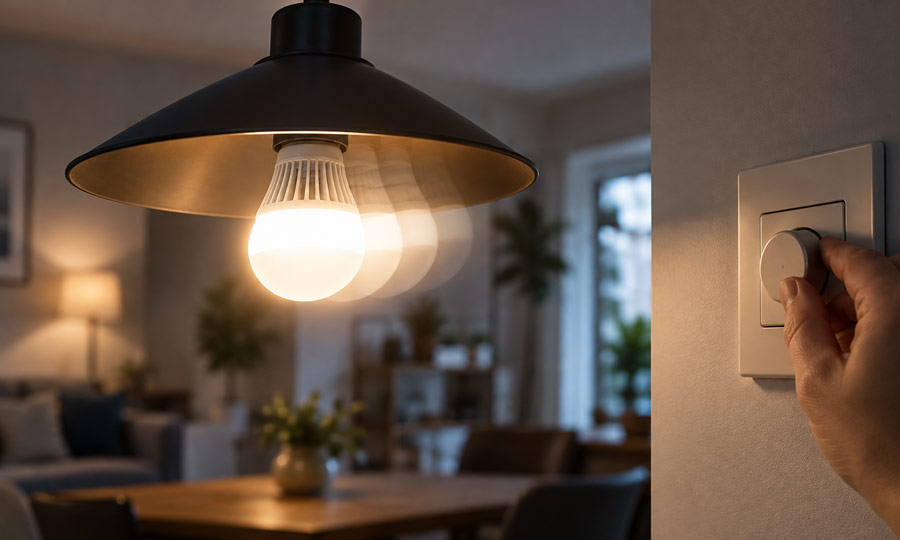
When Should You Worry About Flickering LED Lights?
What Causes LED Lights to Flicker?
Can Flickering LED Lights Affect Your Health?
Are Flickering Outdoor LED Lights Dangerous?
How to Check Flickering LED Lights Safely
How to Reduce Future Flickering
FAQs
Flickering LED lights can be dangerous, depending on the cause. A dimmer compatibility problem may cause flickering without an immediate electrical hazard. However, loose connections, damaged wiring, or overheating components require prompt attention. Flickering accompanied by a burning smell, sparks, discoloration, or repeated circuit breaker trips should be treated as a serious warning.
The useful questions are where the flickering happens, when it starts, and whether other symptoms appear. These clues help distinguish a bulb or control problem from an electrical fault that needs professional inspection.
When Should You Worry About Flickering LED Lights?

Start with the warning signs before attempting any troubleshooting.
Stop using the affected lighting if you notice burning odors, smoke, sparks, melted plastic, scorch marks, crackling, or signs of unusual overheating. Repeated breaker trips and even a mild electrical shock also warrant professional attention.
Reference: Electrical Safety Foundation International. (n.d.). Home wiring safety tips.
If it is safe to reach an undamaged electrical panel, switch off the affected circuit. Do not touch damaged fittings, open electrical enclosures, or repeatedly reset a tripping breaker. If there is smoke or an active fire, leave the area and contact emergency services.
The flickering pattern can help you decide what to investigate next:
| What you notice | What it may indicate | Appropriate next step |
|---|---|---|
| Flickering only near the lowest dimmer setting | A compatibility problem or an unsuitable minimum dimming level | Check the bulb and dimmer specifications |
| One replaceable bulb flickers | A bulb, socket, or local connection problem | With power disconnected, check the bulb or try a compatible replacement |
| Several lights flicker together | A shared control, circuit, or supply problem | Arrange an electrical inspection if it persists |
| Flickering starts when a large appliance runs | A voltage change associated with the load | Have frequent or pronounced changes investigated |
| Flickering appears with burning, sparking, or overheating | A potentially dangerous electrical fault | Stop using the circuit and obtain urgent assistance |
These are troubleshooting clues, not a safety diagnosis. One flickering bulb can still have a damaged socket, and several flickering bulbs may share the same incompatible dimmer. The surrounding symptoms matter.
What Causes LED Lights to Flicker?
LEDs respond quickly to changes in the current supplied to them. Their drivers and controls therefore play an important role in keeping light output steady. Visible flickering is not an unavoidable feature of LED lighting: suitable driver design can greatly reduce it.
Incompatible Dimmers
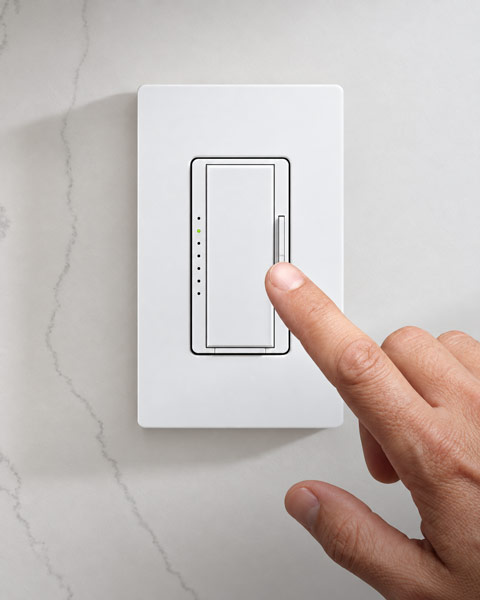
An incompatible dimmer switch is a common explanation for flickering that appears during dimming.
A bulb labeled “dimmable” still needs a compatible control. Different LED drivers respond differently to dimming methods, and a dimmer designed for another load type may produce unstable results.
If flickering occurs only at very low brightness, the dimmer may be trying to operate the LED below its stable range. Some controls provide a minimum brightness adjustment, often called low-end trim. Follow the instructions for the exact model, and have any switch replacement handled by a qualified electrician.
Bulb or Driver Problems
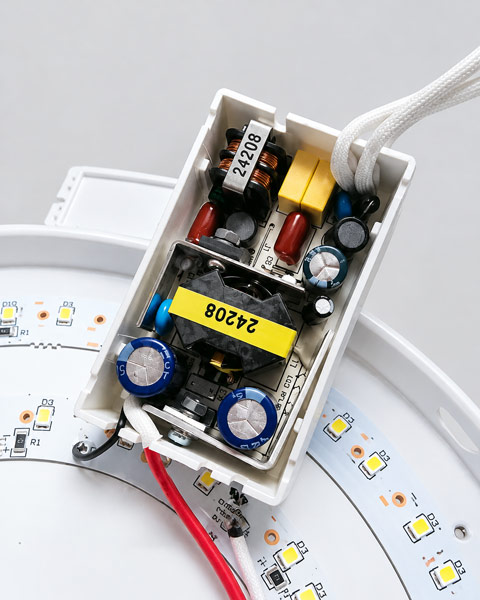
A deteriorating LED driver may struggle to maintain consistent output. A defective bulb can also flicker even when the surrounding electrical system is functioning normally.
Heat is another consideration. When using LED bulbs in existing fixtures, check the voltage, base type, physical fit, and suitability for enclosed fittings. An LED bulb that works in an open table lamp may not be suitable for a sealed outdoor lantern.
Flickering that begins after the light has been operating for a while deserves attention, particularly if it occurs alongside discoloration or other signs of heat damage. A replacement should match the fixture’s requirements, rather than simply fit the socket.
Loose or Damaged Connections
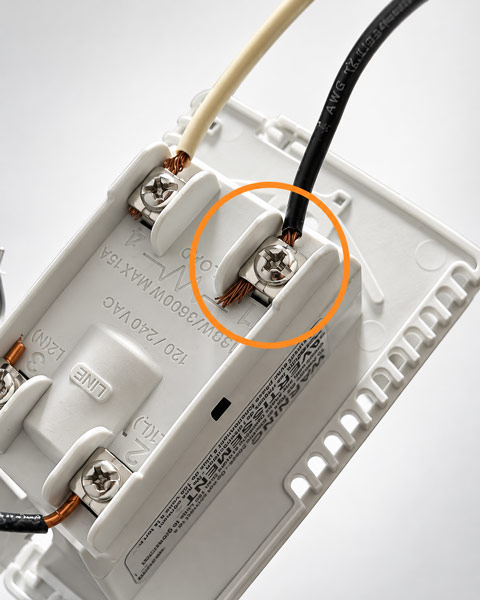
An unstable connection can interrupt the electrical supply and cause irregular flickering. The problem may be at a socket, switch, connector, or another point in the circuit.
Poor connections can also generate heat or produce electrical arcing. This is why replacing the bulb does not resolve every flickering problem, and why persistent flickering should not be dismissed just because the light still works.
Leave internal wiring, damaged sockets, and electrical terminals to a qualified electrician.
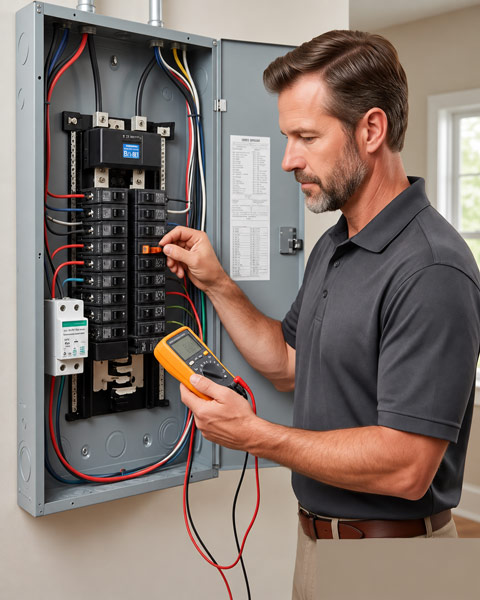
Voltage Changes and Supply Problems
Lighting can react to voltage changes when electrical loads switch on or off. Problems may originate within the property or on the electricity supply network.
An occasional brief change does not identify the cause by itself. Frequent flickering, unusually bright or dim lights, or changes affecting multiple parts of the property require investigation. An electrician can assess the installation, while the electricity provider can investigate supply-side voltage concerns.
Can Flickering LED Lights Affect Your Health?
Electrical safety and visual comfort are separate concerns. A light can be electrically sound while producing flicker that some people find uncomfortable.
Temporal light modulation means that a light’s output changes over time. Its effects depend on the frequency, the amount of brightness variation, viewing conditions, and individual sensitivity. Some effects become noticeable when the eyes or illuminated objects move, even if the light appears steady when viewed directly.
Sensitive individuals may experience headaches, visual discomfort, dizziness, or nausea. Flashing light can also trigger seizures in people with photosensitive epilepsy, although this does not mean that everyone with epilepsy reacts to flickering light.
Reference: Epilepsy Foundation. (n.d.). Photosensitivity and seizures.
Flicker can additionally change how moving objects appear. In a workshop, for example, the stroboscopic effect can make motion harder to judge. Lighting used around moving equipment needs particular care.
If a light consistently causes discomfort, stop using it and choose a more suitable lighting setup. Seek medical advice for persistent or concerning symptoms.
Are Flickering Outdoor LED Lights Dangerous?
Outdoor lighting introduces additional possible causes, including moisture, corrosion, damaged cables, and unsuitable power supplies.
When troubleshooting flickering garden lights, note whether the problem affects one fixture or several lights together. Also record whether it begins after rain, irrigation, or garden maintenance. These observations can help narrow the investigation.
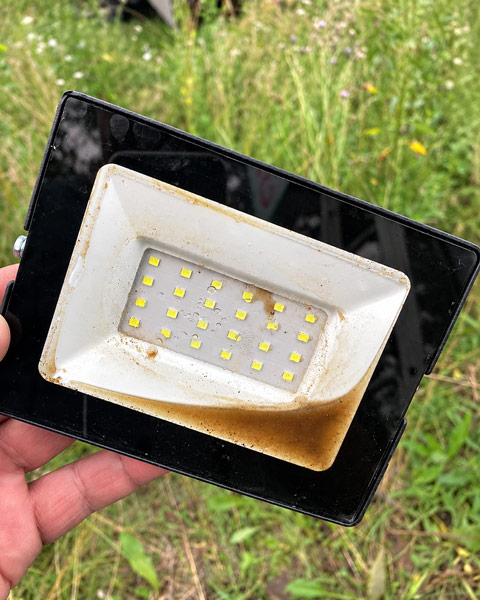
A cracked housing, failed seal, or damaged cable entry can allow moisture to reach components. Choosing an appropriate outdoor ingress protection rating helps address exposure, but the rating does not compensate for damaged seals or incorrect installation. IP65 protection, for example, does not mean a fixture is suitable for submersion.
Low-voltage systems also need compatible lamps, transformers, connectors, and controls. Lower operating voltage does not eliminate the possibility of overheating, and the transformer’s mains connection still requires appropriate protection.
Keep a water-damaged or repeatedly tripping system switched off until the fault has been assessed. Simply allowing a fitting to dry does not establish that it is safe to use again.
How to Check Flickering LED Lights Safely
If there are no urgent warning signs, a few limited checks can help identify whether the problem follows the bulb, the control, or the installation.
1. Record the Pattern
Note which lights flicker and when it happens. Useful observations include whether the problem appears immediately, after warming up, during dimming, after rain, or when an appliance starts.
Avoid repeatedly switching equipment on and off to provoke a suspected electrical fault.
2. Disconnect Power Before Handling a Bulb
Unplug a portable lamp. For a fixed fitting, isolate its circuit before handling a replaceable bulb and allow the bulb to cool.
Check that the bulb is seated correctly without forcing it. Do not bend socket contacts, touch internal terminals, or attempt to repair a damaged holder.
3. Try a Suitable Replacement
If the fitting is designed for user-replaceable bulbs and shows no damage, try a known working bulb with the correct specifications.
If the replacement also flickers, the socket, control, or supply needs further investigation. A successful replacement is useful evidence, but it does not override signs of damage elsewhere.
4. Check Compatibility Information
Review the bulb and dimmer instructions, including supported load types and any minimum brightness settings.
For integrated LED fixtures, check the fixture documentation. Do not open a sealed fitting or substitute a driver based only on a matching wattage.
5. Arrange Professional Inspection When Needed
Persistent flickering, repeated bulb failures, or problems involving several fixtures deserve professional diagnosis. Give the electrician your observations about timing, affected lights, and recent changes to the installation.
How to Reduce Future Flickering
Reliable lighting depends on compatible components and installation conditions.
Choose bulbs and fixtures with clear operating specifications. Match dimmable LEDs to supported controls, use enclosed-fixture-rated bulbs where required, and follow the stated environmental ratings.
For outdoor installations, keep housings, seals, and visible cables in good condition. Review the system’s capacity before adding fixtures.
Where flicker sensitivity matters, look for measured flicker information at the brightness levels you intend to use. Performance at full output may differ from performance when dimmed, so a sample installation can be useful before committing to a larger lighting project.
Reference: U.S. Department of Energy. (n.d.). Flicker research.
FAQs
1. Why Do LED Lights Flash When the Switch Is Turned Off?
Some electronic switches, smart controls, and dimmers allow a small standby current to pass through the lighting circuit even when the light is switched off. Sensitive LED drivers may react by producing a faint glow or occasional flashes.
This is often related to control compatibility. Verify that the bulb and switch are designed to work together, and have ongoing issues inspected by an electrician. Avoid adding unapproved components to the circuit as a workaround.
2. Why Do LED Lights Appear to Flicker in Videos but Look Normal?
Camera sensors can detect rapid variations in light output that are not obvious to human vision. The final appearance depends on the LED driver, modulation pattern, shutter speed, and camera settings.
Visible flicker in a recording does not automatically indicate an electrical fault, and a smooth video does not guarantee completely flicker-free operation. Accurate evaluation requires appropriate testing equipment rather than relying only on a phone camera.
3. Why Does My LED Strip Flicker After Adding More Sections?
Extending an LED strip increases the electrical load and may exceed the capability of the existing power supply, connectors, wiring, or controller.
Check the strip voltage, maximum supported length, total wattage, and power supply specifications before expanding the system. Longer installations may also experience voltage drop, causing flicker or uneven brightness. Follow the manufacturer’s recommended layout for additional sections.
4. Why Does My Dusk-to-Dawn LED Light Keep Turning On and Off?
A common cause is the built-in photocell detecting light from the fixture itself or nearby reflective surfaces. The sensor turns the light off after detecting brightness, then turns it back on when the area becomes dark again.
Review the sensor location, surrounding lighting, and installation conditions. Proper positioning and compatible landscape lighting controls can help prevent repeated cycling. Continued problems may require checking the sensor or wiring.
5. Why Do Solar Garden Lights Start Flashing Later at Night?
A solar light that works normally at first and becomes unstable later may have insufficient stored energy, an aging battery, poor connections, or a controller issue.
Clean the solar panel, check for shade, and confirm that the battery is receiving enough charging time. Reduced operating performance may indicate declining solar garden light battery life. Replace batteries only with the specified type and stop using any unit with signs of swelling, leakage, or overheating.
