

Table of Contents
- Has Your Bedroom Always Been Dim, or Has Something Changed?
- Six Reasons Bedroom Lights Feel Too Dim
- 1. The Bulbs Produce Too Little Light for the Job
- 2. The Fixture Concentrates Light in a Small Area
- 3. The Walls and Ceiling Contribute Very Little Reflected Light
- 4. A Visible Bright Source Creates Discomfort
- 5. The Controls Are Limiting Output
- 6. Dirt, Heat, or Aging Has Reduced the Light
- Try a Simple Lighting Test Before Buying Anything
- Why the Same Lumen Total Can Produce Different Bedrooms
- Give the Bedroom Separate Settings for Everyday Activities
- FAQs
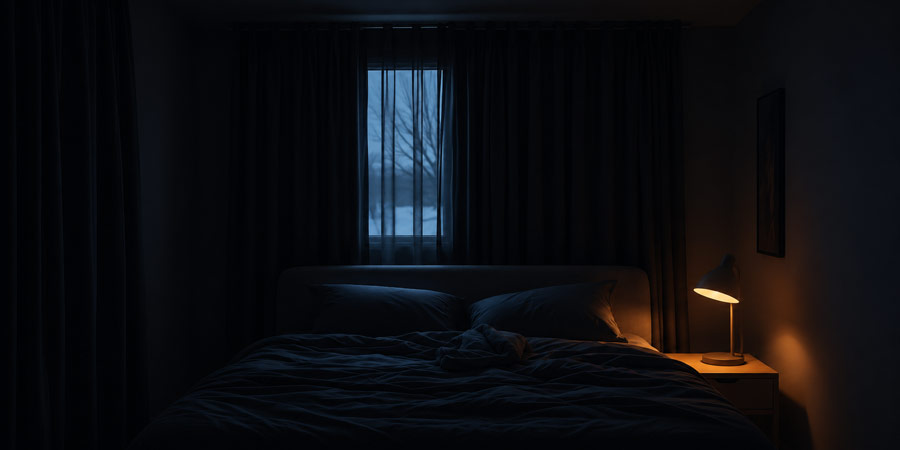
Bedroom lights can feel dim because the bulbs produce too little light, the fixtures send it to the wrong places, or dark surfaces absorb much of it. Low dimmer settings and aging LEDs can also reduce actual output.
Some bedrooms are deliberately lit softly for the evening. The problem appears when that same setting has to serve reading, dressing, cleaning, and everything else.
A comfortable bedroom needs enough light where you use it, with controls that let you lower it when you want to relax. Understanding where the light goes is often more useful than immediately buying a brighter bulb.
Has Your Bedroom Always Been Dim, or Has Something Changed?
Start with the history of the problem.
If the bedroom has always felt dark, investigate the lighting layout, bulb output, shades, and room finishes. A ceiling fixture that illuminates the middle of the bed while leaving the wardrobe in shadow may be working exactly as designed.
If the room became dim after a bulb replacement, compare the new bulb’s lumen rating and light distribution with the old one. Similar-looking bulbs can produce very different results.
If brightness has declined gradually, dirt and LED light loss become more plausible explanations. A sudden change across several lights deserves a different response: unexplained dimming, particularly with buzzing, hot switches, burning smells, or changes when appliances operate, calls for inspection by a qualified electrician.
That distinction helps you choose between improving the room’s lighting and diagnosing a fault.
Six Reasons Bedroom Lights Feel Too Dim
1. The Bulbs Produce Too Little Light for the Job
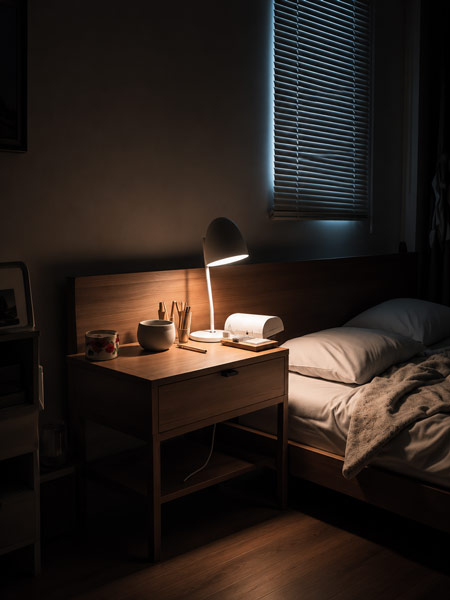
Wattage tells you how much electricity a bulb uses. Lumens describe its light output. Comparing LED bulbs by watts alone can therefore lead to disappointing brightness.
When choosing replacements, check the lumen rating of the light bulb, then consider what that light has to accomplish.
A bedside lamp may illuminate only the area around the bed, while a decorative ceiling fixture may provide too little light for a large bedroom. Before increasing output, check whether you need broader illumination to find items across the room, focused light for reading, or better light placement around the mirror.
2. The Fixture Concentrates Light in a Small Area
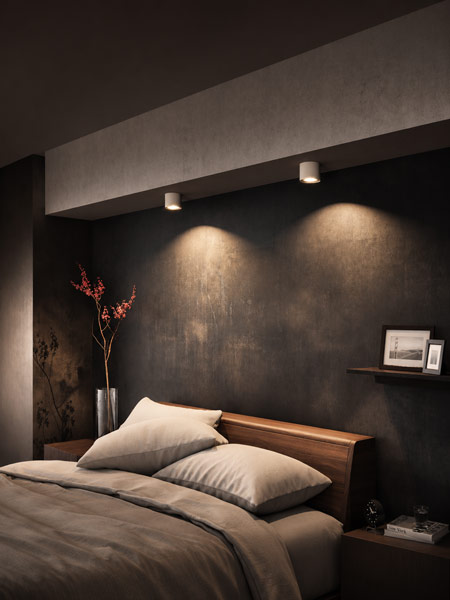
Directional bulbs and deep shades can concentrate light below the fixture, leaving upper walls and room edges dark. The beam angle of a spotlight affects coverage, with narrow beams concentrating light and wider beams spreading it over a larger area.
If the bedspread is bright but the wardrobe remains dark, a brighter bulb in the same fixture may mainly intensify the existing bright patch. A broader light distribution or an additional light in the poorly lit area may be more effective.
3. The Walls and Ceiling Contribute Very Little Reflected Light
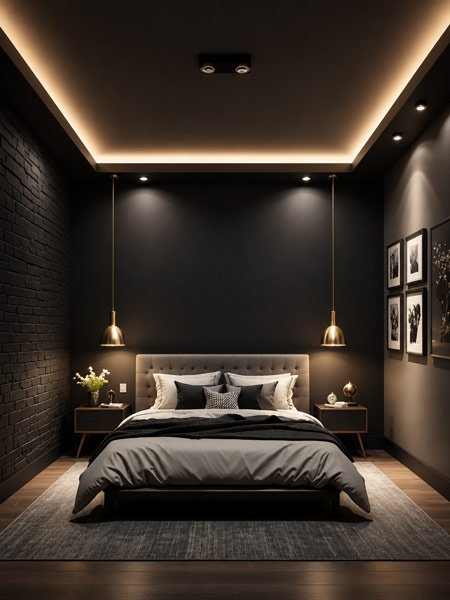
Dark finishes absorb more light, while lighter surfaces generally reflect more of it back into the room. Because walls, curtains, and furniture occupy much of your view, a bedroom can feel gloomy even when the floor beneath the ceiling light is well lit.
With dark walls, try directing light toward a lighter ceiling or adding soft illumination to a suitable wall surface, then check the result from the doorway and bed.
4. A Visible Bright Source Creates Discomfort
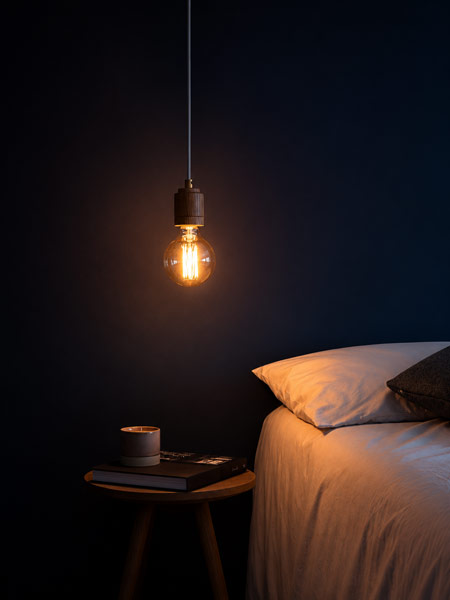
An exposed bulb or visible LED point can cause glare even when the bedroom remains poorly lit. The effect depends on the source’s brightness, size, position, and surrounding brightness.
Check the lighting while standing near the entrance, sitting up in bed, and lying back on the pillow. If a source causes glare, adjust its position, shielding, or output, and use another light to illuminate any remaining dark areas.
5. The Controls Are Limiting Output
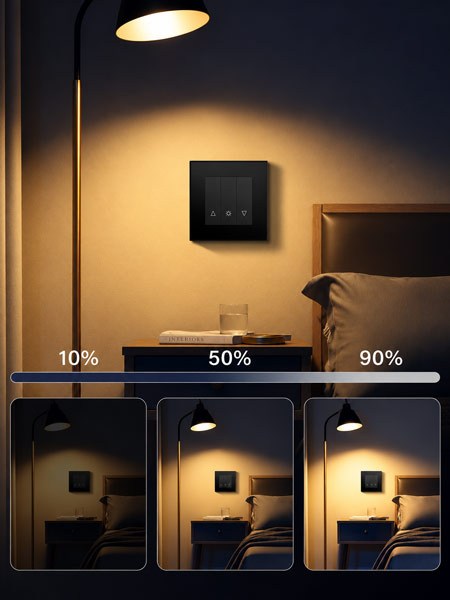
Saved evening scenes, scheduled routines, or brightness limits can restrict output. For connected lighting, check both the wall control and the bulb’s software settings.
A “dimmable” label does not guarantee compatibility with every dimmer. Check the manufacturer’s compatibility information for the exact bulb-and-control combination, especially if low output comes with dimmer-related flickering.
Note whether the problem occurs at all settings, only near minimum brightness, or immediately after replacing a bulb.
6. Dirt, Heat, or Aging Has Reduced the Light
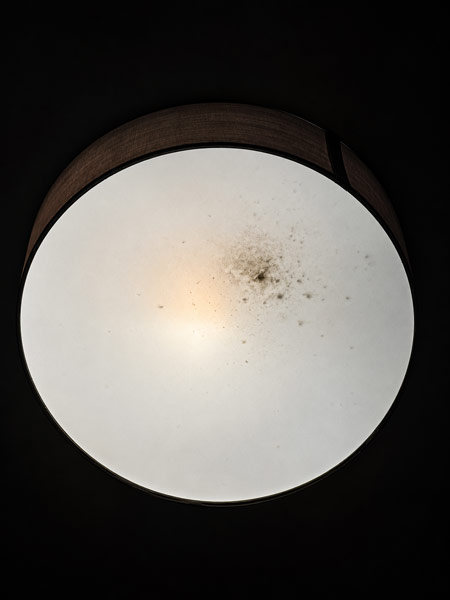
Dust on diffusers and shades can reduce the light reaching the room. Switch the fixture off, let it cool, and clean accessible parts according to its instructions.
LEDs can gradually lose brightness, and high operating temperatures can accelerate that decline. For a replaceable bulb, compare its brightness with a new, compatible bulb of the same lumen rating.
Enclosed fixtures trap heat, so check that any replacement LED bulb is approved for enclosed use.
Try a Simple Lighting Test Before Buying Anything
Use a portable lamp you already own to investigate the room after dark. Keep curtains, other lights, and your viewing position consistent.
Test the Darkest Useful Surface
Place the lamp where it can illuminate the area that bothers you most: a wardrobe front, a dressing area, or a dark wall.
If that small change makes the bedroom easier to use, you have identified a location that needs attention.
This is more informative than adding another bulb near the room’s existing brightest point.
Test the Reading Position
Move an adjustable lamp so it lights the page without putting the source directly in your eyes. Check for shadows from your head, hands, and the book itself.
If reading becomes comfortable while the rest of the bedroom stays unchanged, the main improvement belongs at the bedside.
When measuring lighting, take the reading at the task surface. Lux describes light arriving on a surface, so a measurement in the middle of the room cannot tell you exactly how well your book is illuminated.
Test the View From the Bed
Sit or recline where you normally relax. Compare the original lighting with the portable lamp illuminating a suitable wall or ceiling.
Ask two separate questions:
- Can I see what I need to see?
- Is any light source uncomfortable to look toward?
Keeping those questions separate prevents a common mistake: accepting glare as evidence that the room has enough useful light.
These tests are practical comparisons rather than a formal lighting survey, but they can make your next purchase much more targeted.
Why the Same Lumen Total Can Produce Different Bedrooms
Consider two hypothetical bedrooms, each using two 800-lumen bulbs.
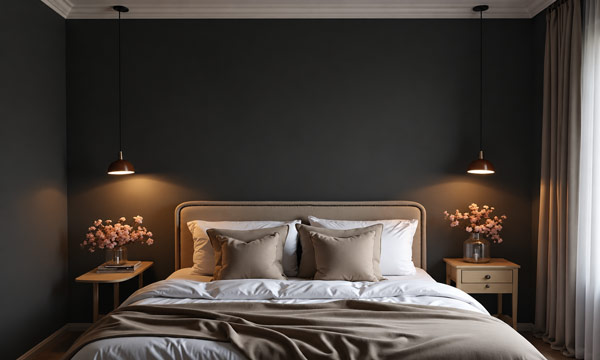
Deep downward-facing bedroom lights concentrate illumination on the bed, leaving the surrounding walls and corners relatively dark.
In the first, both bulbs sit inside deep downward-facing shades over the bed. Most of the visible illumination falls on the bedding.

Wide-distribution bedroom lighting spreads illumination across the bed and surrounding walls, creating a brighter and more balanced room.
In the second, the fixtures distribute light across the room, including some illumination on the surrounding walls.
Both installations begin with a nominal total of 1,600 bulb lumens. Their distribution produces different illuminated surfaces and different viewing conditions.
That is why adding up bulb ratings is only a starting point. A complete assessment also considers the fixture, shade, placement, room finishes, and the activities taking place.
Evaluate the room from the places where you actually spend time. The appearance of the fixture itself tells only part of the story.
Give the Bedroom Separate Settings for Everyday Activities
A bedroom has several lighting jobs. Planning around those jobs makes brightness easier to manage.
| Activity | What the lighting needs to achieve | Useful approach |
|---|---|---|
| Dressing and cleaning | Reveal room edges, belongings, and working areas | Broad general illumination with attention to dark zones |
| Reading in bed | Illuminate the page comfortably | An adjustable bedside light with independent control |
| Relaxing before bed | Maintain comfortable visibility at a lower level | Reduced ambient output and softly illuminated surroundings |
Independent control matters as much as the number of fixtures. A reading light should be available without requiring the whole room to operate at full brightness.
Similarly, the bedroom should have a practical brighter setting for finding a dropped item or sorting clothes. An attractive evening atmosphere does not resolve those needs by itself.
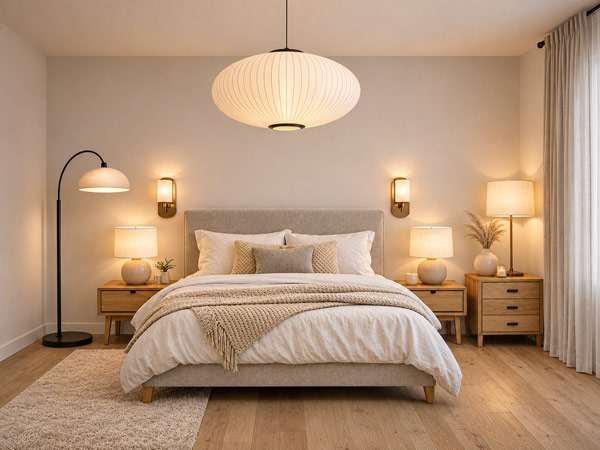
Keep Warm Light if You Prefer It
Warm white light around 2700K–3000K is a common residential choice. Kelvin describes color appearance; it does not specify how many lumens a bulb produces.
A cooler-looking bulb may change your impression of the room, but it does not automatically improve coverage or deliver more light to the page.
If you enjoy warm bedroom lighting, first improve its output, distribution, and control. You can preserve the atmosphere you like while making the room more useful.
FAQs
1. Why Do My Bedroom LED Lights Glow Faintly When Switched Off?
A small leakage current can sometimes keep an LED glowing faintly after the switch is off. This is known as ghosting and can occur with certain illuminated switches or electronic controls.
Check the switch-and-lamp compatibility information. If the behavior is new or the installation is uncertain, have an electrician identify the cause before changing components.
2. Why Are Color-Changing Bedroom Bulbs Dimmer in Red or Blue Mode?
Different settings use different combinations of LED channels. Some bulbs include dedicated white LEDs that produce brighter white illumination than their saturated color settings.
For color-changing light bulbs, the advertised lumen figure may apply to a specified white-light setting rather than every available color. Check the product specifications and use an appropriate white mode when you need practical room lighting.
3. Why Does a Bedroom LED Strip Get Dimmer Toward the Far End?
Voltage drop is a common explanation, particularly with long constant-voltage LED strips. Resistance along the conductors reduces the voltage available farther from the power connection, which can lower light output.
Check the manufacturer’s maximum run length, connection requirements, and approved power-feed arrangement. Use the specified supply voltage; increasing it beyond the strip’s rating is not an appropriate fix.
4. What CRI Should I Choose for Bedroom Lighting?
CRI 80 can serve general illumination, while CRI 90 or above is a useful target where fabric, skin tone, and finish appearance matter. Higher color rendering index values generally indicate better color fidelity against the reference used by the test.
CRI describes color rendering rather than light quantity. Choose it alongside suitable output and placement, especially around wardrobes and dressing areas.
5. Can I Repair a Dim Integrated LED Bedroom Light?
Sometimes. An integrated LED light contains a built-in light source rather than a standard replaceable bulb.
Some models allow an approved LED module or driver to be replaced. Others require replacement of the complete fixture. Check the exact model’s service instructions, warranty, and replacement-part availability, and have electrical repairs performed by a qualified person where required.