

Table of Contents
- Which temperature rating should you check?
- What happens to solar lights below freezing?
- Why lights that worked in summer go dark early in winter
- How much energy does the light need each night?
- What happens in very hot weather?
- Can day-to-night temperature swings make solar lights fail?
- How to tell whether temperature is the reason your light stopped working
- Choosing solar lights for a very cold or hot garden
- FAQs
For outdoor solar lights with rechargeable batteries, 68–77°F (20–25°C) at the battery is a useful benchmark for comparing performance in mild conditions. The actual temperature limits depend on the fixture. Check how cold or hot the complete light can get while operating, then check the separate temperature range in which its battery can recharge. A solar light can turn on during a freezing night using energy stored earlier, even when its charging circuit has paused.
Temperature is only part of what determines how long the light stays on. A cool, sunny day can give the panel plenty of energy, while a mild, overcast day can leave the battery partly charged. The best way to understand a short runtime is to look at what happened during the day and what the light had to deliver after dusk.
Which Temperature Rating Should You Check?
| Specification | What it describes | When it matters |
|---|---|---|
| Ambient operating temperature | The surrounding air temperature within which the complete fixture is rated to operate | Deciding whether the light can run at your installation site during a freeze or heat wave |
| Battery charging temperature | The temperature range in which the battery or charging system can accept a charge | Determining whether a sunny morning or hot afternoon can actually replenish the battery |
| Battery discharging temperature | The temperature range in which the battery is rated to deliver power | Estimating whether the LED can start and stay lit on a cold or hot night |
| Storage temperature | The conditions specified for the fixture or battery while it is out of service | Putting the light away between seasons or keeping a spare battery |
One outdoor solar fixture, for example, lists an operating range of −4 to 122°F (−20 to 50°C) and suspends charging below 32°F (0°C). At 23°F (−5°C), that fixture can still illuminate using energy already in the battery. If the temperature stays below its charging threshold through several days of sunlight, the stored energy can run out. That is why a wide operating range alone tells you little about how the light will perform through a week of freezing weather.
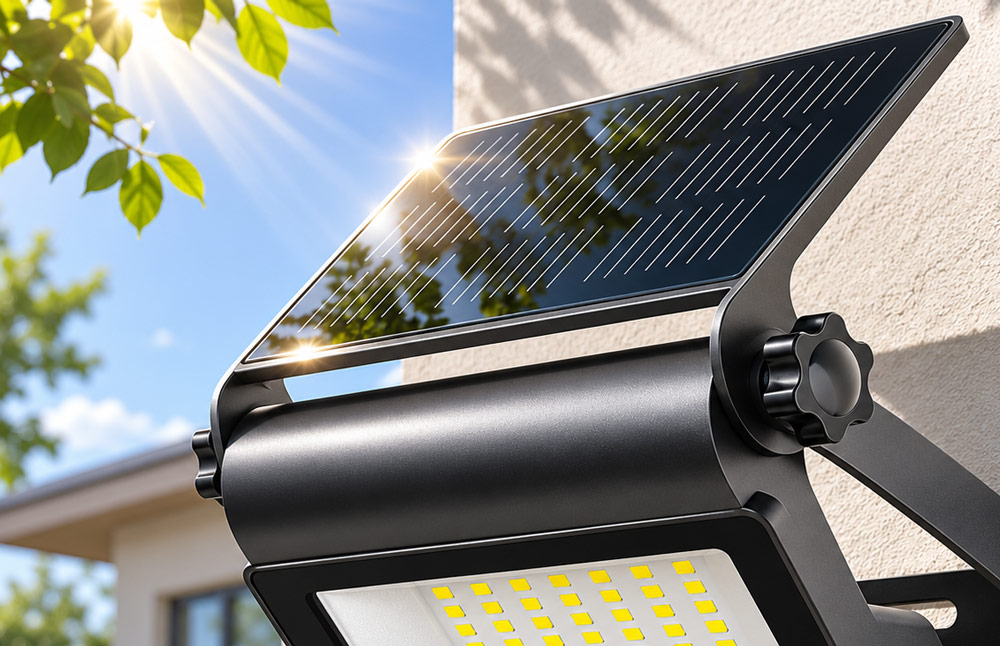
You may also see 77°F (25°C) on a solar panel specification. That figure refers to the photovoltaic cell temperature under standard test conditions, alongside a specified light intensity. In the garden, sunlight, wind, mounting and panel construction all affect cell temperature. The panel surface, battery and surrounding air can be at different temperatures at the same time.
Federal Energy Management Program. (2026, May 11). Optimizing solar photovoltaic performance for longevity. U.S. Department of Energy.
What Happens to Solar Lights Below Freezing?
Cold affects what the battery can deliver at night. At lower temperatures, internal resistance can rise and the battery voltage can drop more under load. A light may turn on at its usual brightness, then dim or reach its low-voltage cutoff earlier in the evening. If usable runtime returns in milder weather after adequate charging, cold-weather performance is a plausible explanation.
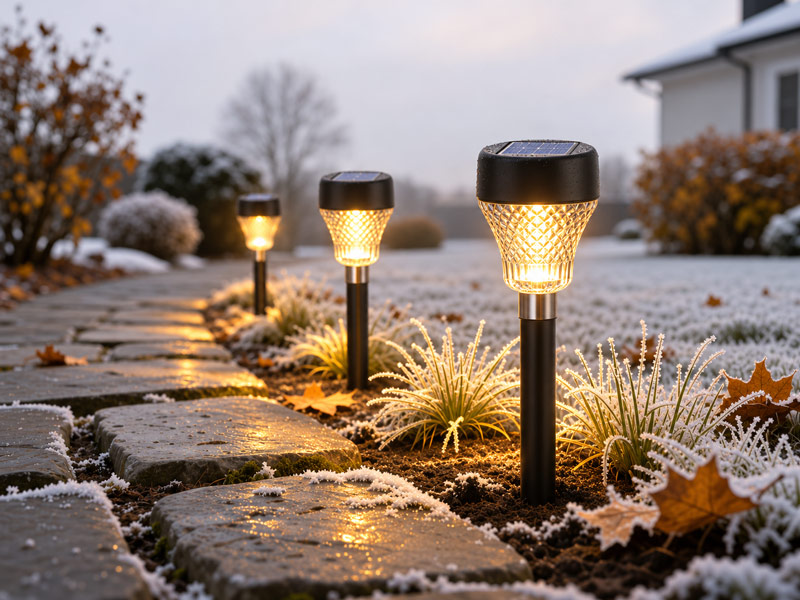
Charging is a separate issue. Charging a conventional lithium-ion battery below freezing can cause lithium plating, a buildup of metallic lithium inside the cell that can permanently damage it. A fixture with low-temperature protection can pause charging and resume when conditions return to its approved range. If you regularly get freezing mornings, check the expected temperature during the hours when the panel actually receives sunlight. A frosty sunrise can still be followed by a usable afternoon charging window.
The battery label helps you interpret the specifications. Lithium iron phosphate (LiFePO₄ or LFP) is a type of lithium-ion battery, so check the model’s low-temperature charging instructions even if it is advertised for cold-weather operation. Small garden lights may use nickel-metal hydride (NiMH) cells. Those cells have their own charging limits, and their voltage and available output can also fall in cold conditions. The battery chemistry is a starting point. The cell and controller specifications tell you what the fixture can do.
Why Lights That Worked in Summer Go Dark Early in Winter
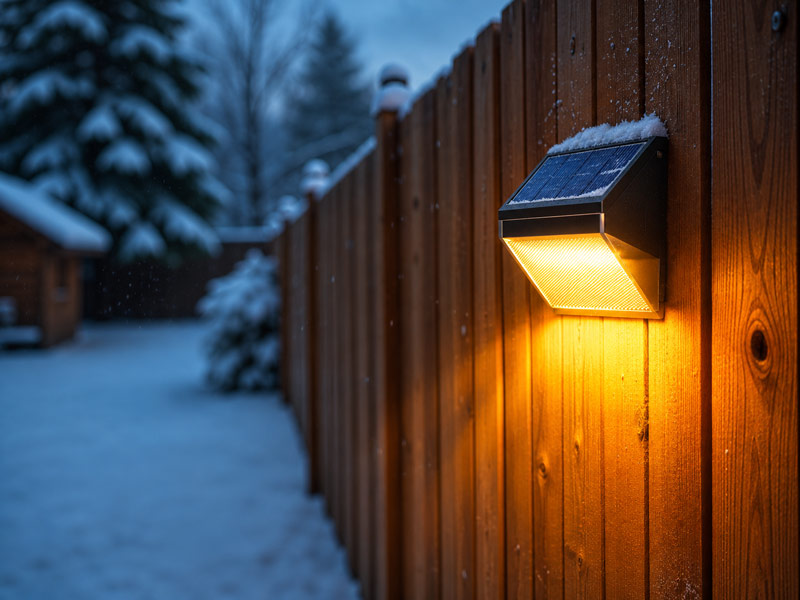
Shorter days, longer nights and lower sun angles all affect how solar-powered lights work in winter. A fence or shed that casts little shade on the panel in summer may shade it for much of a winter afternoon. Snow over the panel reduces the light reaching the cells, and several overcast days in a row can leave the battery with less energy each evening.
One homeowner reported that a solar lamppost had performed well in spring and summer but was down to about four hours of light during gloomy winter weather. The useful first check in that situation is whether runtime recovers after a clear day within the fixture’s charging temperature range. If it does, limited daily charging is a better lead than an immediate battery replacement.
Another gardener installed solar lights in a south-facing yard and found that the shed shaded the fixtures when the sun was strongest. The relevant exposure was at the panels themselves. Walk the site during the hours you expect the lights to charge, and look at the face of each panel from its actual mounting position. A panel a few feet away can have a different charging window.
How much energy does the light need each night?
Suppose a light draws 0.5 W from its battery in the mode you use. Eight hours of operation requires about 4 Wh of usable energy. If a winter day adds only 2 Wh of usable charge, that day’s input covers about four hours at the same setting. A battery that starts with a reserve can make up the difference for a time, but the reserve shrinks whenever the light uses more energy than the panel replaces.
That calculation explains why a larger battery can carry a light through a brief stretch of poor weather, while a better-exposed panel can improve runtime day after day. If you need illumination only during the first few hours after dusk, a timer or lower brightness setting can bring nightly consumption closer to what the panel collects. With motion lighting, account for how often the fixture switches to full brightness. A busy walkway uses more energy than a quiet garden corner.
What Happens in Very Hot Weather?
At the same light intensity, a hotter photovoltaic cell generally produces less power because its voltage drops. A hot, clear day can still yield more energy than a cool, cloudy one. At the fixture itself, prolonged heat can accelerate lithium-ion battery aging, and some controllers temporarily suspend charging when temperatures rise beyond their limits. For lithium-ion batteries, U.S. fire-safety guidance advises against charging above 40°C (about 104°F). Follow the fixture’s charging instructions, including any tighter limit it specifies.
Solar Energy Technologies Office. (2026, May 5). Solar photovoltaic performance and efficiency basics. U.S. Department of Energy.
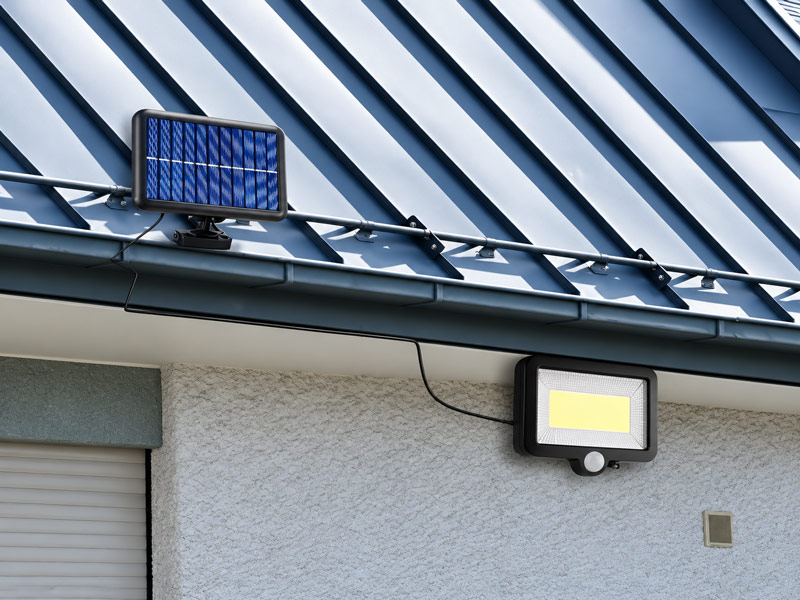
Look at where the heat builds up. A compact fixture against a sun-heated wall can experience different conditions from the same fixture on an open post. If the model has a separate panel, you may be able to give the panel direct sunlight while placing the fixture and battery in a cooler, ventilated location. Check where the battery is housed first. On some designs it sits with the panel, so shading the lamp head leaves the battery exposed to the same heat.
A light that repeatedly reports a temperature warning during the afternoon and recovers after cooling warrants a check of its mounting location and thermal limits. A light that has gradually lost runtime and still fades early after a proper charge in mild weather may have lost battery capacity. Compare it in the same lighting mode so a change in brightness or motion activity does not skew the result.
Can Day-to-Night Temperature Swings Make Solar Lights Fail?
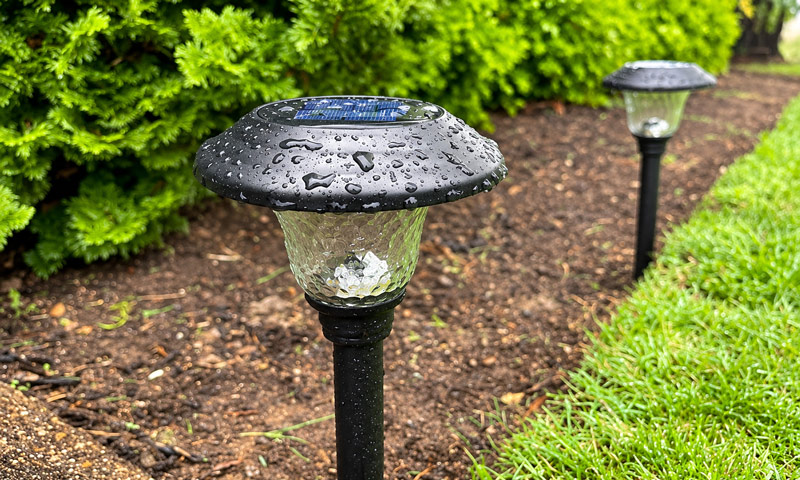
A cold night after a warm, humid day can bring the lens below the dew point. A light film of condensation inside a solar light that clears as the fixture warms is consistent with temporary fogging. Persistent droplets, pooled water or corrosion point to a moisture problem worth inspecting, especially around the lens seal and battery cover. If water reaches the battery compartment, stop using the fixture and follow the manufacturer’s service instructions before attempting to charge it again.
How to Tell Whether Temperature Is the Reason Your Light Stopped Working
- Record when the problem starts. A light that turns on at dusk and fades early is delivering some stored energy. A light that never turns on may be affected by its dusk sensor, switch position or charge level. Check whether a porch light or streetlight shines onto the sensor after dark.
- Check the panel during charging hours. Look for moving shadows, leaves and snow at the panel. Then compare the daytime conditions with the charging specification. A clear panel in direct sun can still have a short charging window if the battery is outside its approved range for much of the day.
- Run a comparison in mild conditions. Give the fixture the charging period recommended in its manual, with unobstructed sunlight and temperatures within its charging range. Observe it after dusk at the same brightness setting. If you have two identical lights, compare a poorly performing one with a working one in the same location and mode. A problem that follows one fixture points toward that unit’s battery, connections or electronics.
- Investigate persistent charging problems. If your solar light still won’t charge under those conditions, check any user-accessible panel connector and follow the manual’s battery or service procedure. If the fixture repeatedly stops only at a certain temperature, check its status indicator and published thermal limits before replacing parts.
Choosing Solar Lights for a Very Cold or Hot Garden
For a cold site, look for a documented minimum charging temperature, a minimum operating temperature and details about low-temperature charge protection. Check the temperatures during your brightest winter hours as well as the overnight lows. A fixture that can operate through a cold night still needs enough daylight at suitable charging temperatures to replenish its battery.
For a hot, exposed site, check the maximum ambient operating temperature and maximum charging temperature. Look for mounting instructions that address airflow and direct exposure. If your best solar exposure is on a hot wall but the light itself can sit in a cooler location, a model with a separate panel gives you more control over where each part goes.
Finally, compare the advertised runtime with the hours and brightness you need. A garden border can still look good if its lights fade late in the evening. For steps, a primary entrance or a walkway you use before dawn, compare solar and wired low-voltage lighting against the conditions at that specific site. If the route needs consistent illumination through several days of poor charging, use a power source or backup that can meet that requirement.
FAQs
1. Can solar lights charge through a window in winter?
Yes, if enough sunlight reaches the panel through the glass and the battery is within its charging range. The amount of charge depends on window orientation, tint or coatings, screens and how long direct sunlight reaches the panel. A sunny windowsill can be useful for a portable light. Check the resulting nighttime runtime before relying on it as your regular charging spot.
2. Do solar lights charge when switched off?
It depends on what the switch controls. On some models, OFF disables the LED while the panel continues charging. Other models require ON or AUTO to enable the charging circuit. Check the manual’s first-charge instructions, which usually specify the correct switch position.
3. Can I use regular AA batteries in solar garden lights?
Use the rechargeable battery type, voltage and size specified by the fixture manufacturer. A disposable alkaline AA can fit the same compartment as a rechargeable NiMH AA, but the solar circuit may attempt to recharge it. Charging disposable batteries can cause leakage or rupture. Check the battery label and the manual before buying a replacement.
4. How should I store solar lights over winter?
Clean and dry the fixture, then follow its instructions for switch position, battery removal and storage charge. Keep it in a dry location within the published storage range. An unheated garage is suitable only if its temperature stays within that range. For a sealed fixture, store the unit intact. For a model with a removable battery, follow the instructions for that battery type.
5. Does an IP65 or IP67 rating mean a solar light is frostproof?
An IP65 enclosure rating covers dust and water jets under specified test conditions. IP67 covers dust and the effects of temporary immersion under its test conditions. To assess freeze tolerance, use the fixture’s ambient operating range and the battery’s charging range. If the light will be exposed to ice buildup or repeated freeze-thaw cycles, check the manufacturer’s installation guidance for those conditions as well.
