
Table of Contents
- What Does “Dark Sky Compliant” Actually Mean?
- Five Features to Look for in Dark Sky Outdoor Lighting
- The Overlooked Issue: How Much Light the Whole Property Produces
- Design the Dark Areas Before Placing the Lights
- Check Reflected Light as Carefully as Direct Light
- A Practical Example: Lighting an Entrance, Path, and Patio
- How to Check the Installation After Dark
- FAQs
Dark sky compliant outdoor lighting is lighting designed to provide useful illumination while limiting glare, light spilling onto neighboring properties, and artificial brightness in the night sky. It typically combines shielded fixtures, downward aiming, warm light, appropriate brightness, and controls that reduce unnecessary operating hours.
For a garden, this means making paths, entrances, and outdoor living areas comfortable to use while preserving darkness around them.
The important detail is that performance depends on the entire installation. A suitable fixture still needs the right position, output setting, and operating schedule.
What Does “Dark Sky Compliant” Actually Mean?
Before choosing a light, establish what the compliance claim refers to. Three descriptions commonly appear in outdoor lighting specifications:
| Description | What it tells you | What still needs checking |
|---|---|---|
| Dark sky friendly | The design aims to reduce unnecessary light pollution. | The specifications and evidence behind the claim. |
| Independently certified | A particular product configuration has been assessed against a defined approval scheme. | Whether the exact model, output, optics, and color temperature are covered. |
| Compliant with local requirements | An installation satisfies the applicable lighting rules. | Site requirements, mounting, light spill, operating hours, and any required documentation. |
Product approval programs have different categories and technical limits. A general marketing description should therefore lead to a more specific question: Which requirements does this exact configuration meet?
Local requirements also need separate attention. A fixture’s approval does not establish that every possible installation of it will meet the rules for a particular property.
Five Features to Look for in Dark Sky Outdoor Lighting
1. A Clear Purpose for Each Light
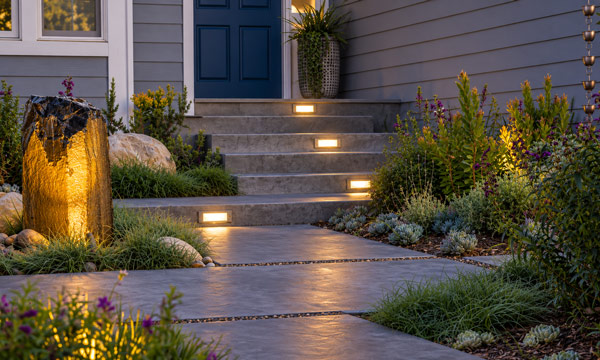
Outdoor pathway, step, and entrance lighting provide targeted illumination for different areas around the home.
Begin with the activity that needs illumination.
An entrance light helps someone find a lock. A step light reveals a change in level. A pathway light helps people follow a route.
Give each proposed fixture a similarly specific job. This makes it easier to choose its location and decide when it should operate. It also helps prevent the gradual addition of lights simply because another section of the garden appears darker.
Purpose should determine the lighting plan before fixture quantity does.
2. Shielding That Controls the Actual Light Source
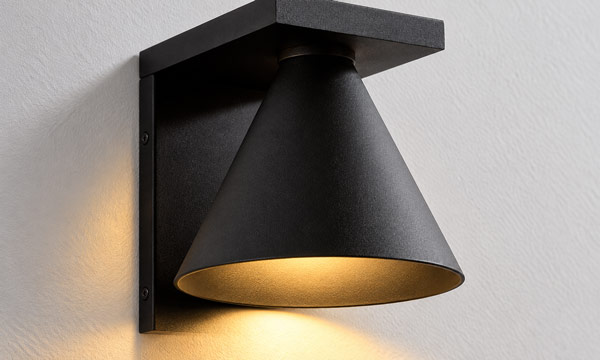
A shielded outdoor wall light directs illumination downward to help reduce glare and unwanted light pollution.
A fully shielded fixture prevents light from being emitted at or above the horizontal plane when installed in its intended position. Recessed light sources and suitable shielding also help reduce direct glare.
An opaque top alone does not establish good light control. A lantern with a solid roof and clear sides can still expose a bright bulb to people across the garden.
Carefully shielded downlighting provides a practical starting point for illuminating entrances, paths, and seating areas.
Check the fixture from the positions where people will actually see it. A light that appears comfortable while you stand beneath it may expose its LED when viewed from a lower terrace or a seated position.
Also distinguish a fully shielded design from a general certification claim. Approval schemes can apply different uplight tolerances to different product categories, so the applicable photometric criteria matter.
3. Enough Light for the Task
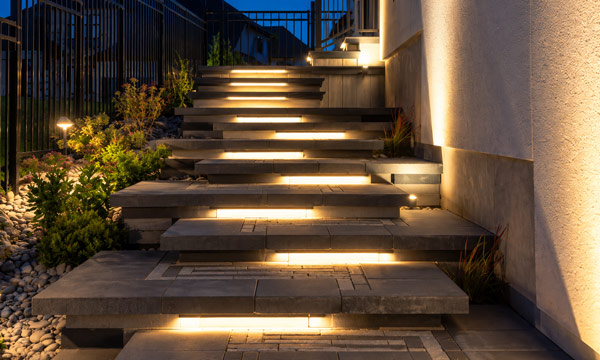
Low-level LED step lights illuminate each stair tread, improving visibility and helping people navigate outdoor steps safely.
Compare lumens when assessing light output. Watts describe electrical power consumption, so they cannot reliably tell you how much light an LED fixture produces.
Even lumens do not explain the complete result. Beam distribution, mounting height, spacing, and shielding determine where that output goes.
For example, a modest-output fixture positioned close to a step can make the edge easy to identify. A brighter fixture farther away may illuminate a much larger area while leaving the step poorly defined.
Choose output by checking whether people can comfortably perform the intended task. Dimming is useful because it allows the installed system to be adjusted after dark.
Avoid choosing every fixture at maximum output “just in case.” That decision can create unnecessary brightness throughout the property.
4. Warm Light with a Verified Color Temperature
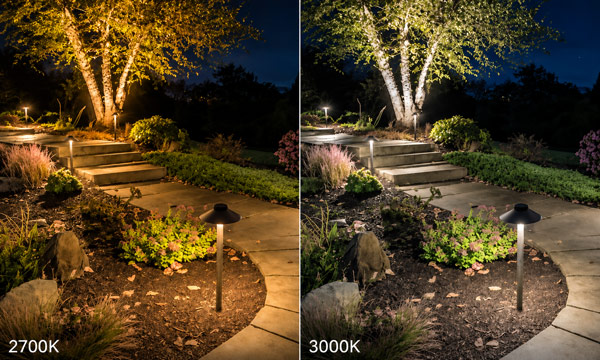
Warm landscape lighting creates a comfortable nighttime atmosphere while highlighting garden paths, plants, and outdoor living spaces.
A nominal color temperature of 3000K or below is a common ceiling in current product approval criteria. For residential lighting, 2700K or lower is often recommended as a more night-friendly starting point.
When comparing 2700K and 3000K landscape lighting, consider the surrounding darkness and the actual lighting task. The warmer option is often well suited to patios, garden paths, and residential entrances.
More sensitive locations may benefit from lower color temperatures or carefully specified amber sources.
Check the numerical specification rather than relying on descriptions such as “soft” or “warm.”
Color temperature is only one part of the decision. A warm, exposed lamp can still cause glare and light trespass.
5. Controls That Match How the Space Is Used
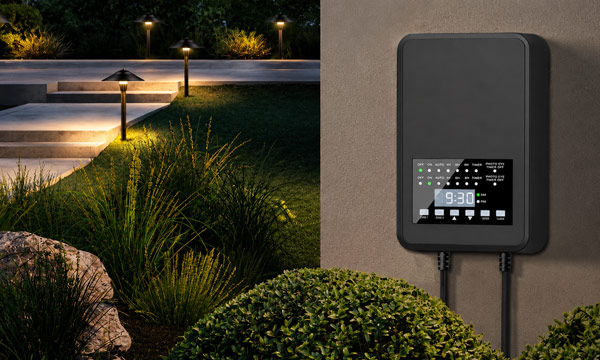
An outdoor landscape lighting transformer with a timer and photocell sensor helps automate lighting schedules and reduce unnecessary nighttime operation.
Outdoor lighting needs usually change during the evening.
A patio may need illumination during dinner. An entrance may need occasional light later. A decorative feature may have no useful reason to remain illuminated overnight.
A landscape lighting timer can establish a shutoff schedule, while motion detection can provide light for intermittent use.
A photocell by itself usually responds to ambient daylight. It can prevent daytime operation, but it does not necessarily shorten nighttime operating hours.
For a more considered setup, assign controls by activity:
- Schedule lighting for evening gathering areas.
- Use motion activation where access is occasional.
- Adjust output where dimming is supported.
- Review schedules as household routines and seasonal conditions change.
Keep necessary illumination available whenever people are using the route or activity area.
The Overlooked Issue: How Much Light the Whole Property Produces
Individual fixture specifications can hide the cumulative effect of an installation.
A property with many small lamps may emit more light over a night than one with fewer, more carefully positioned fixtures. Operating hours can make that difference larger.
Consider these two illustrative schedules:
| Lighting arrangement | Combined light output | Operating time | Light output over the schedule |
|---|---|---|---|
| Eight fixtures at 100 lumens each | 800 lumens | 8 hours | 6,400 lumen-hours |
| Four fixtures at 150 lumens each | 600 lumens | 3 hours | 1,800 lumen-hours |
The second arrangement produces approximately 72% fewer lumen-hours.
These figures do not establish equivalent visibility or prove compliance. Lumen-hours are simply a way to compare emitted light over time. They do not account for direction, spectrum, reflection, or ecological sensitivity.
For planning purposes, however, the calculation reveals something useful: fixture count and operating duration deserve as much attention as the brightness of an individual lamp.
Before adding another light, examine whether an existing fixture can cover the task through better positioning, aiming, or scheduling.
Design the Dark Areas Before Placing the Lights
A useful approach to garden lighting is to mark the areas that should remain dark before selecting fixtures.
These might include unused planting borders, the garden boundary, or a quiet section beyond the main circulation route. Sensitive environments may require particularly careful protection of natural darkness.
This approach gives the lighting plan a clear edge. It also helps prevent decorative lighting from gradually spreading across the entire landscape.
For an ordinary residential garden, start with three questions:
- Where will people walk?
- Where will they spend time?
- Where can darkness remain without interfering with those activities?
Then design the light around the answers.
An illuminated entrance, a readable path, and a comfortable seating area can form a coherent nighttime garden. Planting beyond those areas can remain part of the dark background.
That background also has a visual role. It helps individual illuminated features retain definition and gives the garden depth.
Check Reflected Light as Carefully as Direct Light
Shielding controls light leaving the fixture, but the illuminated surface can send some of that light upward again. Surface conditions are therefore part of responsible lighting design.
Pale paving, light-colored walls, and other reflective finishes deserve attention during installation.
Imagine a shielded wall light positioned above a small doorway. If its beam also covers a broad white façade, the installation may create far more visible brightness than the entrance task requires.
A narrower distribution, lower output, or different mounting position may provide a better result.
Evaluate the beam on the actual finished surface. A fixture tested against a temporary board or unfinished ground may look different once paving and wall finishes are complete.
A Practical Example: Lighting an Entrance, Path, and Patio
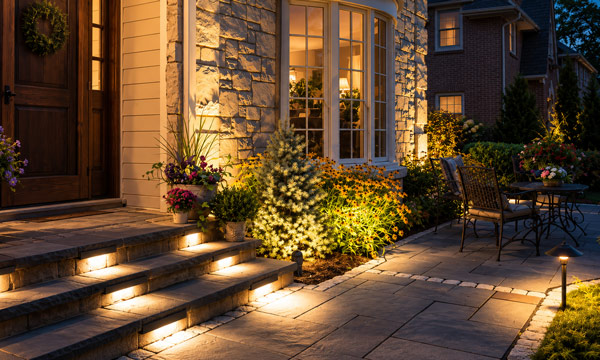
Consider a garden with a front gate, a short path, two steps, and a patio.
A sensible starting layout would treat these as separate tasks:
- At the entrance: place a shielded light where it helps visitors identify the doorway and use the lock.
- Along the path: position fixtures to reveal the route and changes in direction, then check that the walking surface remains readable.
- At the steps: place controlled light where it defines the tread edges.
- At the patio: provide comfortable illumination for the activities taking place there, with output and operating hours that can be adjusted.
Keep the surrounding planting outside these beams where practical.
This is a starting method rather than a fixed fixture schedule. Path width, elevation, surface reflectance, and the users’ visibility needs will determine the final arrangement.
If one area remains difficult to use, investigate the distribution of light there before increasing output across the entire garden.
How to Check the Installation After Dark
A useful final review follows the same journey a visitor would take through the property.
Walk the intended route. Check that entrances, obstacles, and changes in level are easy to identify.
Look toward the fixtures. Notice exposed bulbs, bright LED points, and light spilling beyond the intended area. Effective shielding should also be assessed from the property edge.
Sit where people will spend time. A fixture that feels comfortable from a standing position may be distracting from a low chair.
Inspect the boundary. Check whether light reaches neighboring windows, adjacent land, or areas deliberately left dark.
Test the controls. Confirm that schedules, dimming settings, and motion activation behave as intended.
Use this walk-through to refine the installation. Where formal compliance requires calculations or measurements, the visual review complements that evidence.
FAQs
1. Can Solar-Powered Outdoor Lights Be Dark Sky Compliant?
Yes. Solar power describes the energy source. Dark sky performance depends on the fixture’s shielding, light distribution, color temperature, output, and controls.
A solar light with an exposed glowing diffuser can still spill light upward and sideways. Choose solar fixtures using the same lighting criteria you would apply to wired products, and check their available nighttime operating modes.
2. Can Existing Outdoor Fixtures Be Improved Without Replacing Them?
Often, yes. Suitable fixtures may accept a lower-output warm lamp, compatible controls, or a purpose-designed shield. Adjustable fittings may also allow better downward aiming. Existing fixtures can sometimes be modified to meet local requirements.
Check compatibility with the manufacturer’s instructions. A replacement bulb that projects below the shield can undermine the improvement. A retrofit also does not automatically give an altered fixture independent product certification.
3. Can Dark Sky Lighting Work with Outdoor Security Cameras?
Yes, provided the camera and lighting are planned together.
Color recording requires suitable visible illumination. Cameras equipped for infrared night operation can use infrared illumination to produce monochrome images, reducing the need for additional visible light.
Check the camera’s operating requirements and test recorded footage with moving subjects. Keep bright sources out of the lens’s direct view, and adjust coverage and exposure before assuming the whole area needs more light.
4. Does an IP65 Rating Mean a Light Is Dark Sky Compliant?
No. An IP65 rating concerns protection against dust and water ingress. It does not establish the fixture’s uplight, glare, color temperature, or operating schedule.
Ingress protection and dark sky performance address separate characteristics. An outdoor fixture needs an environmental protection rating appropriate to its location, alongside suitable optical performance.
5. Is Dark Sky Compliant Lighting Automatically Turtle-Friendly?
No. Sea turtle protection can require more restrictive spectral and installation criteria than general dark sky lighting.
Relevant wildlife criteria may require long-wavelength sources above 560 nanometers with no emissions below that threshold, low mounting, minimal necessary output, and shielding that conceals the lamp or glowing lens. A warm-white appearance alone does not demonstrate suitability. Check the specific requirements for the coastal location.
