
What Does Outdoor Bulb Color Mean?
Is 2700K or 3000K Better for Outdoor Lighting?
Choose the Bulb Color for Each Outdoor Area
Are Yellow or Amber Bulbs Better for Keeping Bugs Away?
Does a Higher Kelvin Number Mean a Brighter Bulb?
Should You Use Colored Bulbs Outdoors?
How to Choose Your Outdoor Bulb
FAQs
Warm white bulbs between 2700K and 3000K are a good starting point for most residential outdoor lights. Choose 2700K for a softer, more golden appearance or 3000K for a slightly cleaner white. Yellow or amber bulbs are worth considering where reducing insect attraction is a priority.
The best choice also depends on where the light goes. A front porch, garden path, and outdoor workbench have different needs. Bulb color sets the appearance, while light output, placement, and shielding determine how effectively the area is illuminated.
What Does Outdoor Bulb Color Mean?
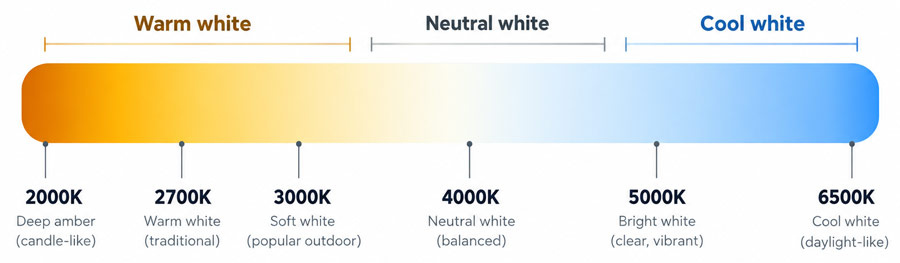
When choosing an outdoor bulb, “color” can describe either the shade of white light or a distinct color such as yellow, red, or blue.
White light is commonly described by its correlated color temperature, measured in kelvin, or K. Lower numbers look warmer and more yellow; higher numbers look cooler and more blue-white. This rating describes appearance, not how hot the bulb becomes.
| Bulb color | Typical color temperature | Appearance | Suggested residential use |
|---|---|---|---|
| Very warm white | 1800K–2200K | Golden, candlelike | Decorative lighting and quiet seating areas |
| Warm white | 2700K | Soft white with a warm tint | Porches, patios, and traditional exteriors |
| Warm white | 3000K | Less yellow than 2700K | Entrances, paths, and contemporary exteriors |
| Neutral to cool white | 3500K–4000K | Crisp white | Localized outdoor tasks where this appearance is preferred |
| Daylight | 5000K–6500K | Cool, sometimes noticeably blue-white | Specific applications requiring this appearance; usually unnecessary for residential ambiance |
These are starting points, not mandatory specifications. Labels such as “soft white” and “bright white” vary, so compare the actual Kelvin numbers on the packaging.
Saturated yellow, red, green, and blue bulbs are a separate category. Their color cannot always be meaningfully described by a white-light Kelvin rating.
Is 2700K or 3000K Better for Outdoor Lighting?
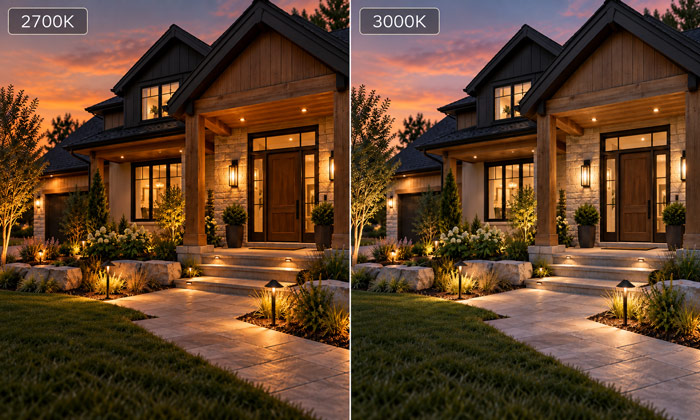
Both are practical choices for a home exterior. The difference is mainly how warm you want the space to look.
Choose 2700K when comfort and a golden appearance matter most. It often suits timber decks, brick walls, traditional lanterns, and outdoor seating.
Choose 3000K when you prefer warm light with less yellow. It is a useful option for entrances, pale stone, and contemporary architecture.
When comparing 2700K vs. 3000K landscape lighting, test the bulbs against the actual surfaces they will illuminate. Wall paint, paving, glass shades, and nearby lighting all affect the result.
Keep adjacent fixtures consistent when they illuminate the same wall or path. Different temperatures can work in separate areas, but a matched pair of porch lights usually looks more intentional.
Choose the Bulb Color for Each Outdoor Area
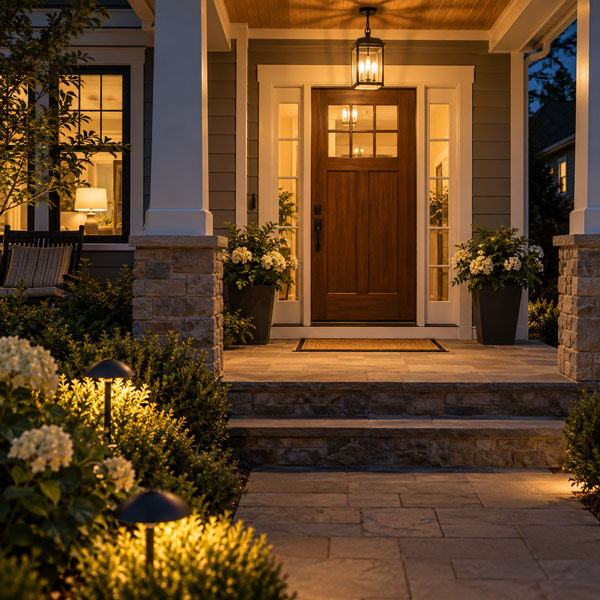
Front Porch and Entryway
Start with 2700K or 3000K.
A porch should feel welcoming while providing enough light to find keys, read the house number, and see the threshold. Choose the color you prefer, then adjust the light output and fixture position to make those tasks comfortable.
If the bulb is directly visible through clear glass, check it from the approach to the door. Even a warm bulb can feel glaring when its bright surface is exposed.
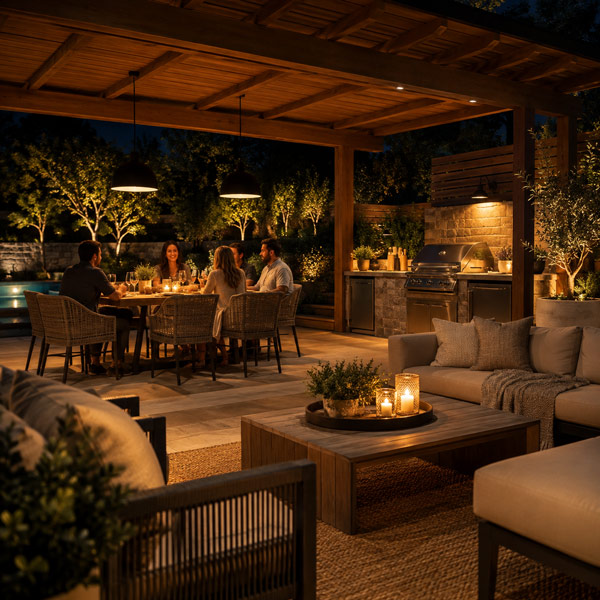
Patios, Decks, and Pergolas
For an outdoor living area, 2700K is a practical starting point. Very warm light around 2200K can create a more golden, decorative effect.
Think about where people sit. A bulb that looks pleasant from across the garden may be uncomfortable directly above a dining chair. Position lighting so that it illuminates the table or surrounding surfaces without shining into faces.
Keep food preparation areas separately illuminated if the general lighting is too subdued for the task.
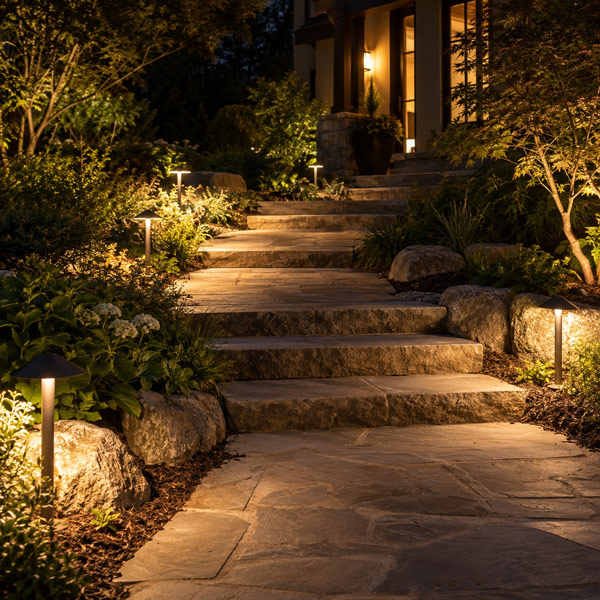
Garden Paths and Steps
Warm white light around 2700K–3000K can work well along residential paths.
Here, the priority is seeing the walking surface and changes in level. A cooler bulb does not automatically make steps easier to navigate. Placement, shadows, and the distribution of light deserve just as much attention.
Check the route after dark from both directions. If a step remains difficult to see, adjust the fixture or coverage before changing the color temperature.
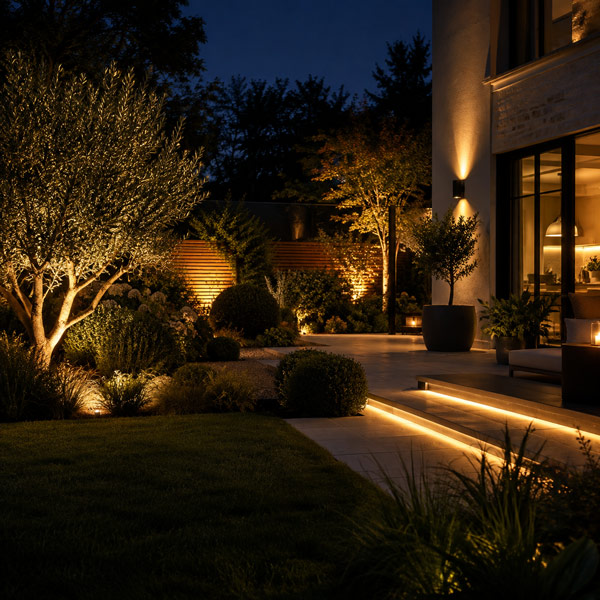
Gardens and Architectural Features
Try 2700K for a warm evening appearance or 3000K for a less golden finish.
Use a small test area before choosing bulbs for the entire garden. A light that flatters a timber fence may look different on a white wall or silver foliage.
Avoid illuminating every feature equally. A few carefully chosen focal points can make the garden easier to read while leaving surrounding areas darker.
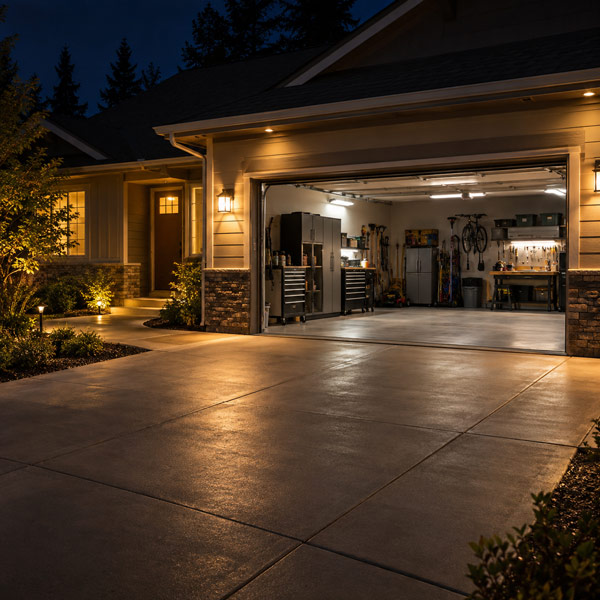
Garages, Driveways, and Outdoor Work Areas
For everyday arrival and access, begin with a warm white option and assess whether the coverage is adequate.
A neutral white bulb around 3500K–4000K may suit a localized work area if you prefer that appearance. However, switching to 5000K is not a substitute for placing the light where it is needed.
For security lighting, prioritize controlled illumination: direct light toward the relevant area, limit spill beyond it, and use it when needed. Warm color, appropriate output, shielding, and controls work together.
Are Yellow or Amber Bulbs Better for Keeping Bugs Away?
Yellow “bug” bulbs can attract fewer insects than some other outdoor lights. They are worth considering near frequently used doors and seating areas.
However, less attractive does not mean insect-proof. A yellow bulb does not create a protective barrier, and different insects respond differently to light.
When choosing lighting that attracts fewer bugs, look at the bulb’s intended use and light output as well as its color. A deeply tinted bulb also changes how nearby objects appear, which may be less desirable at a dining table or entrance.
Use only as much light as the area needs, and switch unnecessary lights off when the space is empty.
Does a Higher Kelvin Number Mean a Brighter Bulb?
No. Kelvin describes light color; lumens describe light output. Watts describe the electrical power the bulb uses.
For example, a 2700K bulb and a 5000K bulb can both be rated at 800 lumens. Their color looks different, but the higher Kelvin number does not establish that one produces more light.
Understanding what lumens mean in light bulbs helps you solve the right problem:
- If the area looks too yellow, consider a slightly higher color temperature.
- If the walking surface is too dark, check light output and coverage.
- If the light feels uncomfortable, check exposed bulbs, aiming, and reflections.
- If one corner remains dark, reconsider fixture placement.
There is no single lumen figure that suits every porch or garden. Mounting height, beam spread, fixture shades, and surrounding surfaces change how much light reaches the area.
Should You Use Colored Bulbs Outdoors?
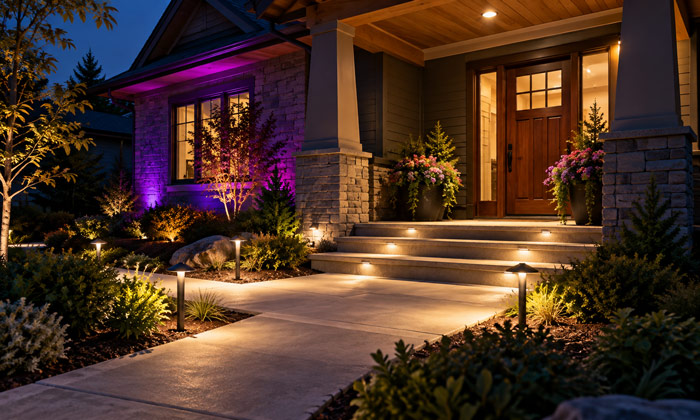
Colored bulbs can work for seasonal displays, parties, and decorative accents. For everyday entrances and walking routes, white light is generally the more practical starting point because it preserves familiar color cues.
Keep decorative color separate from essential lighting. A colored accent on a wall can create atmosphere while a nearby white light illuminates the steps.
If you want one fixture to serve both purposes, check that the bulb offers a suitable white-light mode as well as decorative colors.
How to Choose Your Outdoor Bulb
Use this sequence before buying several matching bulbs:
- Define the job. Decide whether the light is mainly for arrival, walking, relaxing, or a specific task.
- Choose a starting color. Try 2700K for a warmer appearance or 3000K for less yellow.
- Compare light output. Check lumens separately from the Kelvin rating.
- Check compatibility. Confirm the base, voltage, dimensions, and suitability for the fixture and outdoor conditions.
- Test after dark. View the bulb from the street, doorway, and seating area before repeating it across the property.
For a typical home, a consistent warm white scheme is an effective place to begin. Make adjustments where the actual use of the space calls for them, and judge the result by what you can comfortably see.
FAQs
1. Does Dimming an Outdoor LED Bulb Make Its Color Warmer?
Not necessarily. Many dimmable LED bulbs reduce their output while keeping approximately the same color temperature. Bulbs specifically described as “dim-to-warm” become warmer as they dim. Check both the dimming behavior and compatibility with your dimmer before purchasing.
2. Why Do Two Outdoor Bulbs With the Same Kelvin Rating Look Different?
Kelvin is a simplified description of white-light appearance. Two bulbs with the same rating can have different spectra and slightly different tints. Fixture glass and surrounding surfaces can also change the appearance. For closely spaced fittings, matching the bulb model helps reduce visible differences.
3. Do Color-Changing Bulbs Produce Good White Light?
It depends on their design. Some mix red, green, and blue light to create an approximation of white; others include dedicated white LEDs.
When comparing color-changing light bulbs, check the available white temperatures, white-mode lumen output, and color-rendering specifications rather than judging them only by the number of colors offered.
4. What Is the Difference Between Color Temperature and CRI?
Color temperature describes whether the light itself looks warm or cool. CRI, the color rendering index, describes how faithfully a source renders object colors relative to a reference light. A higher Kelvin number does not mean a higher CRI.
When flower colors, finishes, or food presentation matter, evaluate CCT and CRI separately.
5. Do Warm White Outdoor Bulbs Use More Electricity Than Cool White Bulbs?
Color alone does not determine electricity use. Compare the rated watts and expected operating hours. Two bulbs drawing the same wattage for the same amount of time use the same electrical energy, even if their colors differ.
For efficiency, compare how many lumens each bulb produces per watt.
