

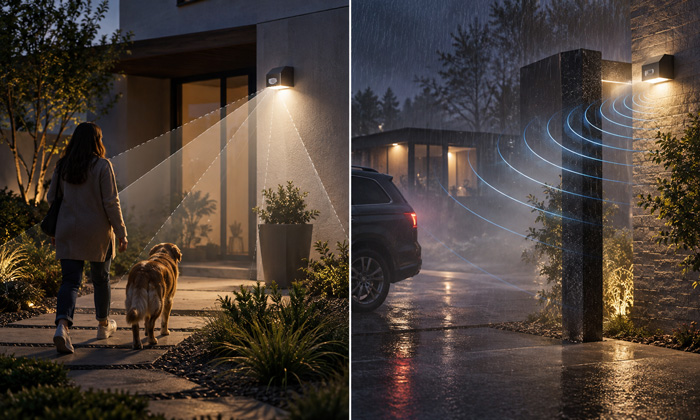
How Motion Sensors Work in Outdoor Lighting
How Radar Sensors Work in Outdoor Lighting
Detection Range and Sensitivity Comparison
Performance in Different Weather Conditions
Energy Efficiency and Power Consumption
Installation Considerations
Reliability and Maintenance Requirements
Which Sensor Technology Is More Suitable?
FAQs
Smart lighting technology has changed the way outdoor spaces are illuminated, especially in areas where energy efficiency, automation, and user convenience are required. Among the most common sensing technologies used in modern garden lights, motion sensors and radar sensors are two popular solutions. Although both technologies can automatically activate lighting when movement is detected, they operate through different principles and provide different performance characteristics.
Choosing between a motion sensor and a radar sensor depends on factors such as detection range, environmental conditions, installation location, response accuracy, and the expected lighting experience. A clear comparison of these two technologies helps create more suitable outdoor lighting solutions for gardens, pathways, driveways, and residential areas.
How Motion Sensors Work in Outdoor Lighting
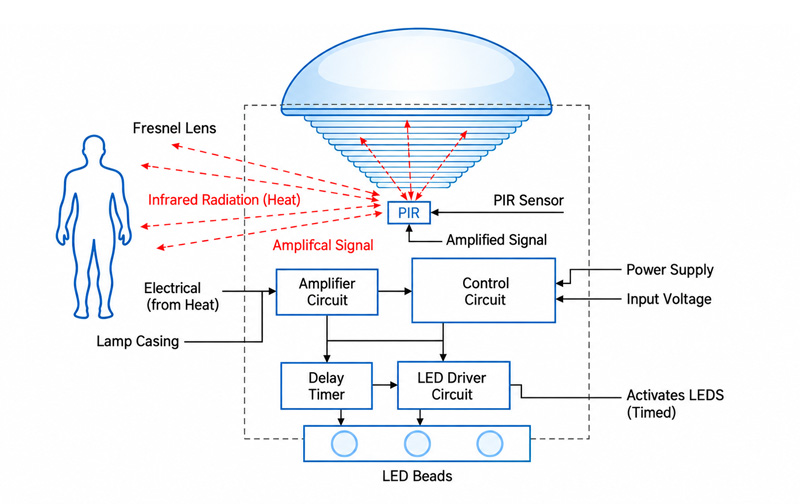
Motion sensors, commonly known as PIR (Passive Infrared) sensors, detect changes in infrared radiation released by objects with heat, such as humans and animals. When a person enters the detection area, the sensor identifies the temperature difference caused by movement and sends a signal to activate the light.
PIR motion sensors are widely used in garden lights because they consume very little power and provide reliable performance in many residential applications. Their simple structure also makes them a cost-effective choice for solar-powered outdoor lighting systems.
Many garden lights combine sensing technology with other components such as solar panels, batteries, LED modules, and control systems. The complete structure of these products involves multiple parts working together, including the elements described in the main parts of a garden light, where each component contributes to overall lighting performance and durability.
How Radar Sensors Work in Outdoor Lighting
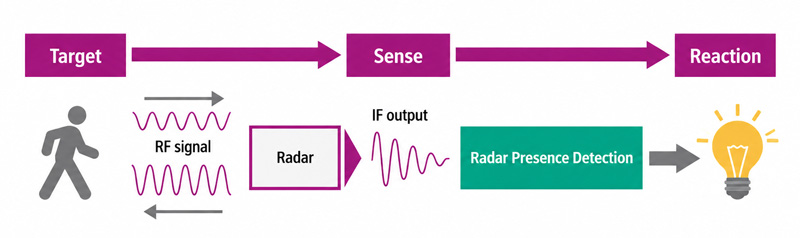
Radar sensors use electromagnetic waves to detect movement. Instead of measuring heat changes, they transmit microwave signals and analyze the reflected waves from objects within the detection area. Changes in the reflected signal allow the sensor to identify movement and activate the light.
Because radar technology does not rely on temperature differences, it can detect movement through certain materials and perform more consistently in changing weather conditions. Rain, cold temperatures, or low heat contrast between objects and the surrounding environment have less influence on radar detection compared with traditional infrared sensing.
Radar sensors are becoming increasingly common in advanced outdoor lighting products because they offer flexible detection capabilities and a wider sensing range. They are often selected for locations that require more sensitive detection and continuous performance under different environmental conditions.
Detection Range and Sensitivity Comparison
One of the main differences between motion sensors and radar sensors is their detection capability.
PIR motion sensors usually detect movement within a defined area where the sensor has a direct view of the target. Their performance is highly dependent on the movement direction, distance, and temperature difference between the moving object and the surrounding environment.
Radar sensors generally provide a broader detection range and can identify smaller movements. Their ability to sense through some non-metallic materials gives designers more flexibility when installing lighting fixtures. This makes radar sensors suitable for areas where hidden installation or wider coverage is preferred.
However, higher sensitivity also requires careful adjustment. A radar sensor with excessive detection capability may respond to unwanted movement, such as passing vehicles or nearby activity, depending on the installation environment.
Performance in Different Weather Conditions
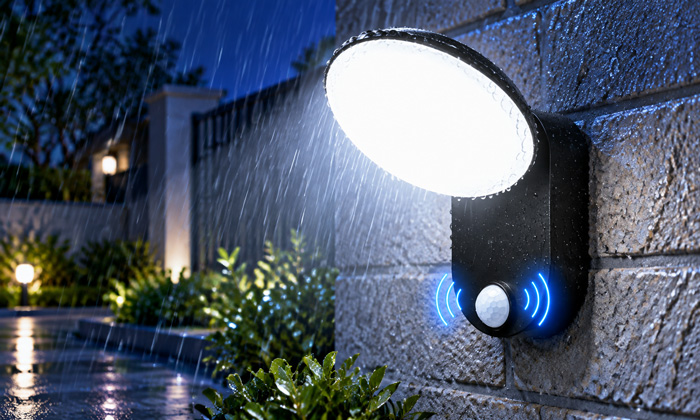
Outdoor lighting systems operate in environments where temperature, humidity, and weather changes can influence sensor performance.
PIR sensors may experience reduced sensitivity during extremely hot conditions because the temperature difference between the human body and the surrounding environment becomes smaller. Direct sunlight and strong heat sources can also affect detection accuracy.
Radar sensors maintain stable detection performance across a wider range of temperatures because their operation is based on electromagnetic wave reflection rather than infrared heat changes. This characteristic makes radar technology suitable for outdoor applications exposed to seasonal weather variations.
The protection level of the lighting fixture also affects long-term sensor performance. Outdoor lights are commonly designed with waterproof protection ratings, and the meaning of standards such as IP65 waterproof rating for garden lights is closely related to how well lighting products resist dust and water exposure during outdoor use.
Energy Efficiency and Power Consumption
Both motion sensors and radar sensors help reduce unnecessary energy consumption by allowing lights to operate only when activity is detected.
PIR sensors are known for their low standby power consumption, making them especially suitable for solar garden lights where battery capacity is limited. The combination of efficient LEDs, solar charging systems, and intelligent sensing allows outdoor lighting to operate for extended periods without frequent maintenance.
Radar sensors may require slightly more electronic processing compared with basic PIR systems, but their improved detection ability can create a more responsive lighting experience. In applications where frequent activation and wider detection coverage are needed, radar technology can provide practical advantages.
Power supply design also affects sensor selection. Outdoor lighting powered by electricity and solar energy may have different installation requirements and operating characteristics. The choice of power system, along with other design factors, is commonly considered when evaluating different types of garden lighting solutions.
Installation Considerations
Installation location plays a major role in sensor performance.
PIR sensor lights are commonly installed in open areas such as entrances, pathways, and garden spaces where direct detection is possible. Proper positioning helps prevent blind spots and improves activation accuracy.
Radar sensor lights provide more installation flexibility because they are less affected by physical barriers and temperature changes. They are often used in modern lighting designs where a clean appearance and hidden sensor placement are preferred.
Regardless of the sensor type, correct installation height, detection angle, and surrounding environment should be considered during setup. Poor positioning can reduce the effectiveness of even advanced sensing technology.
Reliability and Maintenance Requirements
Both sensor types can provide long service life when integrated into well-designed outdoor lighting products.
PIR sensors have a long history of use and remain popular due to their simple structure and dependable operation. Their maintenance requirements are generally low, especially when installed inside weather-resistant lighting housings.
Radar sensors offer advanced detection performance with fewer limitations caused by environmental temperature changes. They are often chosen for premium lighting systems where stable sensing performance and improved user experience are priorities.
Regular maintenance of the complete lighting system, including cleaning the solar panel, checking battery performance, and ensuring the housing remains intact, helps maintain consistent operation over time.
Which Sensor Technology Is More Suitable?
Motion sensors and radar sensors each provide unique advantages. PIR motion sensors are a practical choice for standard outdoor lighting applications that require energy savings, simple operation, and reliable movement detection. Radar sensors are better suited for projects requiring wider detection coverage, higher sensitivity, and stronger adaptability to environmental changes.
The choice between these two technologies should be based on the specific lighting environment rather than the sensor type alone. Garden pathways, residential entrances, security areas, and landscape lighting projects may have different requirements for detection distance, response speed, and installation flexibility.
As outdoor lighting continues to develop toward smarter and more efficient solutions, both motion sensor and radar sensor technologies will remain valuable options. Understanding their operating principles and performance differences allows designers and users to select lighting systems that deliver better efficiency, convenience, and long-term reliability.
FAQs
Can motion sensors and radar sensors be combined in one outdoor lighting system?
Yes, some advanced outdoor lighting systems combine multiple sensing technologies to improve detection accuracy and reduce unnecessary activation.
A hybrid approach can balance the low power consumption of traditional motion detection with the wider sensing capability of radar technology, making it suitable for more complex lighting environments.
How does sensor sensitivity adjustment affect outdoor light performance?
Sensor sensitivity settings determine how easily a lighting system responds to movement.
Higher sensitivity can improve detection of small movements, but excessive sensitivity may cause unwanted activation. Proper adjustment helps maintain a balance between user convenience, energy efficiency, and reliable operation.
Do radar sensors affect the design flexibility of outdoor light fixtures?
Radar sensors can provide greater design flexibility because they can often be integrated behind certain non-metallic covers, allowing manufacturers to create cleaner fixture appearances.
This makes them suitable for modern outdoor lights where both aesthetics and sensing performance are considered.
How long do motion sensors and radar sensors typically last in outdoor lighting applications?
The service life of both sensor types depends on the quality of electronic components, protection of the fixture housing, operating environment, and overall product design.
A well-sealed outdoor light with proper thermal management can maintain stable sensor performance for many years.
What factors should be considered when choosing a sensor for commercial outdoor lighting projects?
Commercial projects usually require evaluation of detection coverage, traffic patterns, operating schedules, maintenance plans, and lighting control requirements.
The ideal sensor solution should match the specific application area, whether it is a pathway, parking area, public space, or large outdoor facility.
