
Typical Lifespan of Commercial Electric Landscape Lighting
How Long Do Commercial LED Landscape Lights Last?
What Determines the Actual Lifespan?
Which Components Usually Fail First?
Can Maintenance Extend the Lifespan?
When Should Commercial Landscape Lighting Be Replaced?
FAQs
Commercial electric landscape lighting typically lasts 10 to 20 years as a complete system, while individual components may have very different service lives. High-quality LED fixtures can operate for 30,000 to 100,000 hours, but drivers, transformers, wiring, connectors, and outdoor environmental conditions often determine how long the entire lighting installation remains reliable.
For commercial properties, understanding these differences is important when planning maintenance, replacement schedules, and long-term lighting costs.
Typical Lifespan of Commercial Electric Landscape Lighting
| Component | Typical Lifespan | Main Factors Affecting Lifespan |
|---|---|---|
| LED light source | 30,000–100,000 hours | Heat, LED quality, operating hours |
| Commercial LED fixture | 10–20+ years | Housing material, sealing, installation |
| LED driver | 5–10 years | Heat, voltage fluctuations, moisture |
| Transformer | 10–20 years | Load, electrical quality, weather protection |
| Underground wiring | 20+ years | Cable quality, soil conditions, installation |
| Connectors | 5–15 years | Moisture, corrosion, connection quality |
| Photocells and timers | 5–10 years | Switching frequency, weather exposure |
These numbers are general estimates. A professionally installed system using commercial-grade components may exceed them, while inexpensive equipment exposed to harsh conditions can fail considerably earlier.
How Long Do Commercial LED Landscape Lights Last?
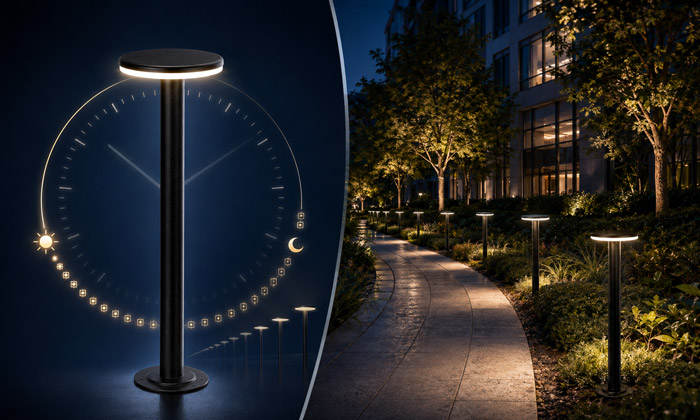
LED technology has significantly increased the lifespan of commercial landscape lighting.
A commercial LED rated for 50,000 hours does not normally stop working immediately after reaching that number. Instead, its light output gradually decreases. LED lifespan ratings are commonly based on the point at which the fixture produces a specified percentage of its original light output.
For example, a 50,000-hour fixture operating approximately 12 hours every night theoretically reaches that operating time after about:
50,000 ÷ 12 ÷ 365 = 11.4 years
A 100,000-hour commercial LED under the same operating schedule could potentially operate for more than 22 years.
However, the LED itself is only one part of the fixture. In real commercial installations, the driver, seals, wiring connections, or fixture housing may require attention before the LED reaches its rated operating life.
What Determines the Actual Lifespan?
Fixture Quality
Commercial-grade landscape fixtures generally use stronger housings, better seals, higher-quality LEDs, and more reliable electronic components than low-cost residential products.
Materials such as brass, copper, stainless steel, and properly coated aluminum can provide strong resistance to outdoor deterioration. The quality of gaskets and seals is equally important because water entering a fixture can quickly damage its electrical components.
Heat Management
Heat is one of the most important factors affecting LED lifespan.
Although LEDs produce less heat than many traditional lamps, their electronic components still generate heat. A well-designed commercial fixture transfers this heat away from the LED and driver.
Poor thermal management can accelerate lumen depreciation and shorten the life of electronic components.
Moisture and Water Protection
Commercial landscape lights constantly face rain, irrigation systems, humidity, condensation, and sometimes temporary flooding.
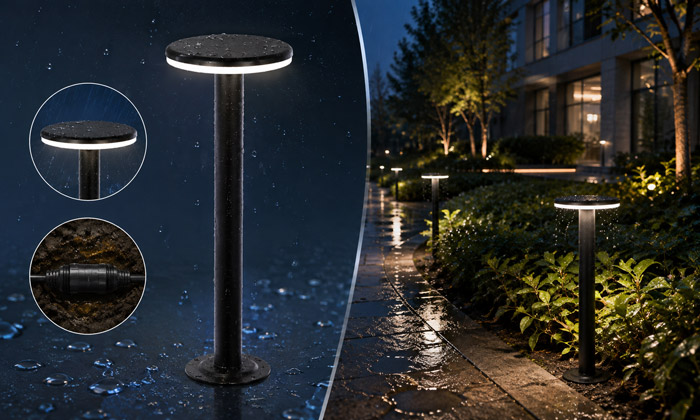
Fixtures with appropriate ingress protection are better suited to these conditions. Underground connections also need effective waterproofing because even a durable fixture can experience electrical problems if moisture reaches its cable connections.
Operating Hours
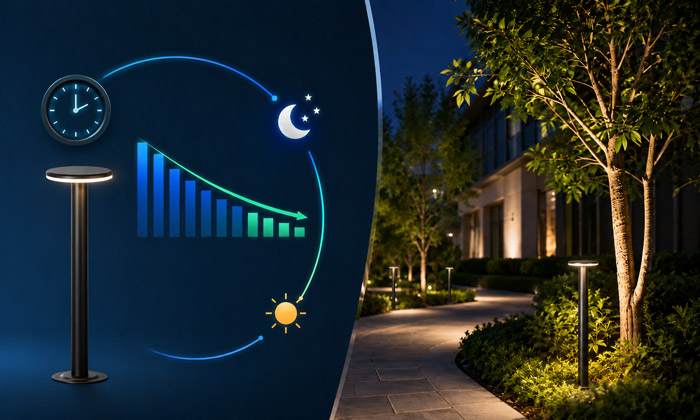
The number of hours the system operates each day directly affects its service life.
A landscape lighting system operating from sunset until sunrise accumulates substantially more operating hours than a system programmed to switch off after a property closes.
Using timers, photocells, or intelligent lighting controls can therefore reduce unnecessary operating hours.
Electrical Conditions
Voltage fluctuations, overloaded transformers, poor-quality power supplies, and incorrect cable sizing can shorten component life.
A properly designed commercial system should provide suitable voltage to every fixture and keep transformers within their recommended operating range.
Installation Quality
Installation has a major influence on long-term reliability.
Common installation problems include poorly sealed connections, incorrect wire sizing, overloaded circuits, inadequate drainage, and fixtures installed where standing water regularly collects.
Even premium commercial lighting equipment can have a short service life if installation conditions are poor.
Which Components Usually Fail First?
The LED light source is not necessarily the first component that needs replacement.
In many commercial electric landscape lighting systems, LED drivers, connectors, photocells, timers, and other electronic controls may wear out earlier than the LED modules themselves.
Outdoor connectors are particularly vulnerable when moisture protection is inadequate. Corrosion increases electrical resistance and can eventually create intermittent operation or complete fixture failure.
For this reason, evaluating system lifespan should involve the entire electrical system rather than the LED rating alone.
Can Maintenance Extend the Lifespan?
Yes. Regular maintenance can substantially improve the reliability of commercial landscape lighting.
Fixtures should periodically be inspected for dirt, vegetation, physical damage, corrosion, water intrusion, and loose electrical connections. Lenses should also be cleaned because accumulated dirt can reduce usable light output.
Landscape changes matter as well. Growing plants may cover fixtures or trap moisture around them, while soil movement can expose or damage underground cables.
Preventive inspections make it possible to correct these problems before they cause permanent equipment failure.
See also: How to Clean Garden Lights?
When Should Commercial Landscape Lighting Be Replaced?
Replacement does not always need to wait until fixtures completely fail.
A commercial lighting system may be worth upgrading when:
- Light output has noticeably declined.
- Multiple fixtures or drivers require frequent repairs.
- Corrosion or water intrusion has become widespread.
- Older fixtures consume significantly more electricity than modern LEDs.
- Replacement parts are difficult to obtain.
- The existing system no longer provides consistent illumination.
- Electrical components have reached the end of their practical service life.
For older systems, replacing several failing components individually may eventually cost more than installing a modern commercial LED system.
FAQs
How much does commercial landscape lighting cost to install?
Commercial landscape lighting installation commonly varies based on property size, fixture quantity, electrical infrastructure, trenching requirements, control systems, and fixture grade.
Large properties may require multiple lighting zones and transformers, increasing overall project costs.
Is low-voltage or line-voltage landscape lighting better for commercial properties?
Low-voltage systems are widely used for pathways, gardens, signage, and architectural accents because they offer flexible installation and efficient LED operation.
Line-voltage lighting is often preferred where higher output, longer cable runs, or powerful security illumination is required.
See also: Low Voltage Pathway Lights vs. High Voltage Lighting: Which Is Better for Outdoor Use?
How many lumens are recommended for commercial landscape lighting?
Required brightness depends on the application. Pathway lights may use roughly 100–300 lumens, architectural accent fixtures often range from 300–1,000 lumens, while parking areas, building façades, and security zones may require substantially higher output.
What color temperature is best for commercial outdoor lighting?
Warm white lighting around 2700K–3000K is commonly used for hospitality, landscaping, and architectural areas.
Lighting between 3500K–4000K can provide a cleaner appearance for commercial entrances, walkways, and security-focused applications.
Does commercial landscape lighting need to meet lighting codes?
Commercial outdoor lighting may need to comply with local electrical codes, energy requirements, zoning regulations, light-trespass limits, and dark-sky ordinances.
Requirements vary by location and project type, so system design should account for applicable local standards.
