

What Does a Ballast Do?
Why Do LED Lights Use Drivers?
Which LED Tubes Need a Ballast?
Do You Need to Remove the Ballast for LED Lights?
Is It Better to Keep the Ballast or Bypass It?
What About Regular Screw-In LED Bulbs?
What Should You Check Before Buying an LED Replacement?
Do Outdoor LED Lights Need a Ballast?
FAQs
Most LED lights do not need a ballast. They use an LED driver or other suitable power-control circuitry. The main exception is a ballast-compatible LED tube, commonly called a Type A LED tube, which requires a compatible, working fluorescent ballast.
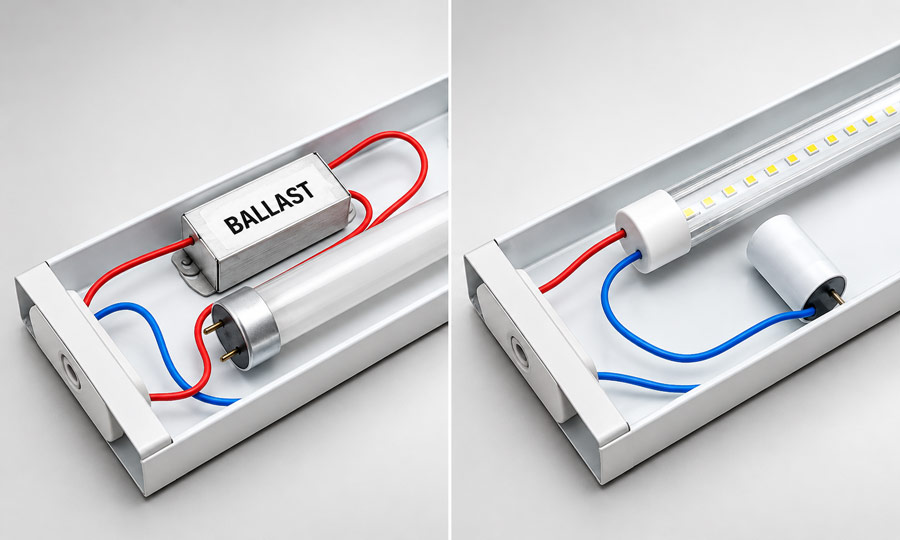
For anyone replacing fluorescent light bulbs with LEDs, the important question is which electrical arrangement the replacement lamp requires. Some LED tubes keep the existing ballast, while others require it to be disconnected.
Choosing the correct type determines whether installation is a straightforward lamp replacement or a fixture conversion.
What Does a Ballast Do?
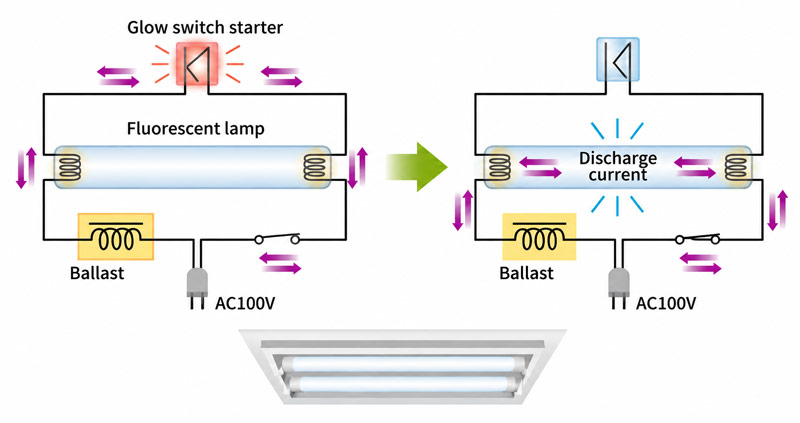
The ballast limits current during operation and releases stored magnetic energy at startup, creating the high voltage needed to ignite the fluorescent tube and maintain stable discharge current.
A ballast controls the electrical current supplied to a fluorescent or high-intensity discharge lamp. It also provides the electrical conditions needed to start the lamp.
Once a fluorescent lamp starts, it cannot safely limit its own current. The ballast keeps that current within the intended operating range.
Older fixtures may contain magnetic ballasts, while many newer fluorescent fixtures use electronic ballasts. Neither type should be assumed compatible with an LED replacement simply because the lamp fits the socket.
LEDs produce light through semiconductor components, so their electrical requirements differ from those of fluorescent lamps.
Why Do LED Lights Use Drivers?
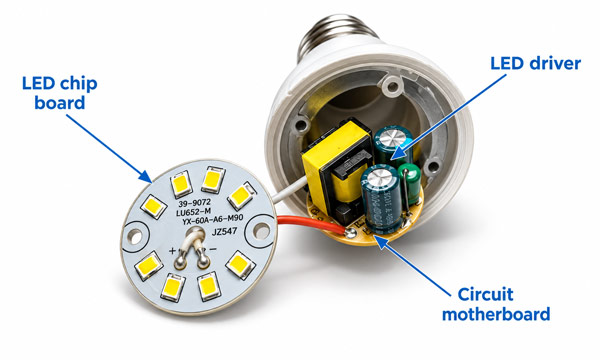
LEDs also need controlled electrical power. In most mains-powered LED products, a driver converts the incoming supply into power suitable for the LED components and regulates their operation.
The driver may be built into the lamp or supplied separately. A standard household LED bulb usually contains its own driver, so you do not need to purchase another power-control device when replacing an ordinary incandescent bulb.
In an integrated LED fixture, the LED light source forms part of the fixture itself. Its driver may sit inside the housing or in a separate enclosure. A separate electrical box therefore does not automatically mean the light has a ballast.
Which LED Tubes Need a Ballast?
The following classifications describe common LED tube replacement systems.
| LED tube type | Does it need a fluorescent ballast? | How it operates |
|---|---|---|
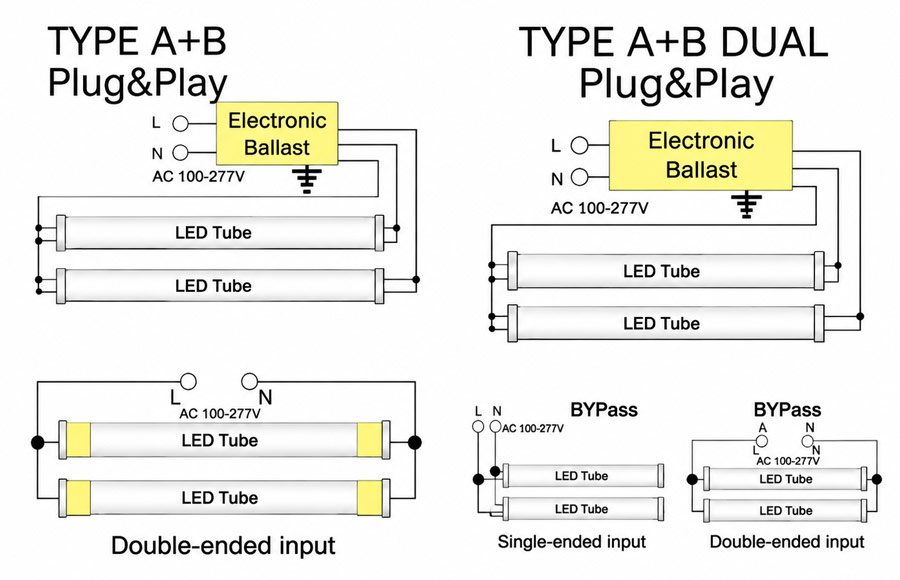
| Type A: ballast-compatible | Yes | Runs through an existing ballast approved for that specific LED tube. |
| Type B: ballast-bypass | No | Uses an internal driver and receives line voltage through correctly rewired lamp holders. |
| Type A/B: hybrid | Depends on installation | Supports either compatible-ballast operation or an approved direct-wire installation. |
| Type C: external-driver | No | Uses a matched external LED driver in place of the fluorescent ballast. |
These categories describe electrical compatibility. They do not mean that lamps with matching dimensions are interchangeable.
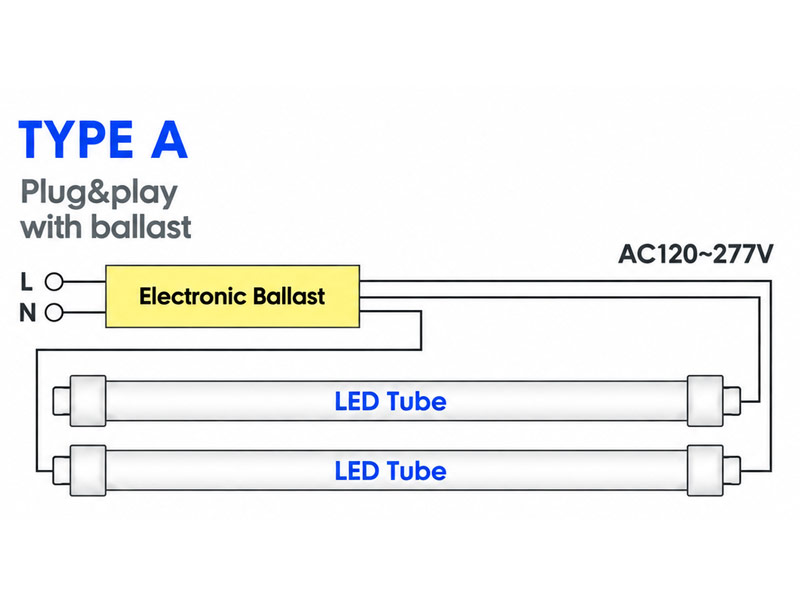
Type A Requires a Compatible, Functioning Ballast
“Plug-and-play” does not mean compatible with every fluorescent fixture. Check the LED tube manufacturer’s compatibility list against the exact ballast model.
A Type A tube still depends on that ballast. If the ballast fails, installing another Type A tube will not solve the underlying problem.
Type A/B Still Requires the Correct Installation
A hybrid tube offers two installation options, but it does not automatically bypass a failed ballast. Switching from ballast operation to direct-wire operation requires the fixture to be converted according to the lamp’s instructions.
The replacement tube must be approved for the wiring arrangement actually used in the fixture.
Do You Need to Remove the Ballast for LED Lights?
You need to disconnect the fluorescent ballast when installing a Type B LED tube. A Type C conversion replaces the ballast’s function with a matched external driver. A Type A installation retains the compatible ballast.
For ballast-bypass installations, distinguish between removing the ballast from the electrical circuit and physically removing it from the fixture. Follow the retrofit instructions for both. An unused ballast should not remain unintentionally energized.
Ballast bypass also involves more than changing the tube. The installer needs to verify the lamp holders and wiring arrangement.
Type B lamps may use single-ended or double-ended power connections. Single-ended designs generally require non-shunted lamp holders at the powered end. Some double-ended products support either shunted or non-shunted holders, but the individual product instructions determine what is acceptable.
Because this work changes connections carrying mains voltage, a qualified electrician should perform the conversion. Power must be isolated and verified off before work begins, and the fixture must receive the conversion labels supplied or required by the retrofit instructions.
A Type C tube must receive power from its specified external driver. It must not be treated as a Type B tube and connected directly to mains power.
Is It Better to Keep the Ballast or Bypass It?
The appropriate choice depends on the condition of the fixture, installation costs, and future maintenance.
Keeping a compatible ballast can make sense when it is in good condition and a quick lamp replacement is the priority. Type A tubes can reduce installation work because the fixture wiring remains as designed.
Bypassing the ballast can make sense when the existing ballast is failing or continued ballast maintenance is undesirable. Type B lamps eliminate that particular component, although their internal drivers can still fail.
An external-driver system can suit projects where access to a separately replaceable driver is useful. This requires a compatible lamp-and-driver combination and the appropriate conversion work.
Compare the complete installed system rather than the tube price alone. Relevant costs include:
- Lamps, drivers, and any replacement lamp holders.
- Electrical installation labor.
- Electricity consumption at the required light output.
- Future maintenance access and replacement parts.
Removing a ballast eliminates its losses, but it does not guarantee a fixed percentage of energy savings. Compare total fixture input power for systems delivering suitable illumination.
For a practical calculation:
Annual electricity use in kWh = total fixture watts ÷ 1,000 × annual operating hours
If the fixture has damaged insulation, deteriorated sockets, or extensive corrosion, replacing the complete fixture may be more appropriate than retaining it for a tube conversion.
What About Regular Screw-In LED Bulbs?
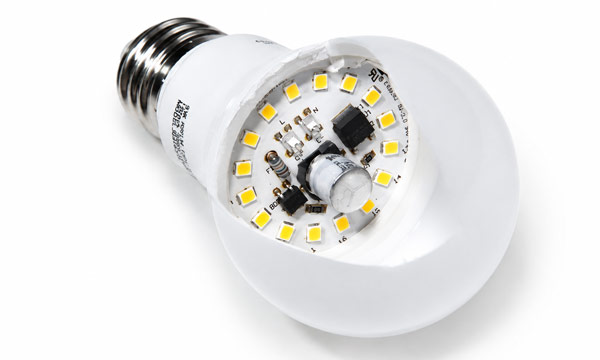
Ordinary screw-in LED replacement bulbs for household lamps generally do not require a separate ballast. Their power-control electronics are built into the bulb.
When using LED bulbs in regular fixtures, check the base, supply voltage, physical fit, actual wattage, and suitability for enclosed or outdoor use.
This differs from a fluorescent tube fixture, where the existing ballast forms part of the power circuit. The shape of the socket alone does not establish electrical compatibility.
What Should You Check Before Buying an LED Replacement?
Before ordering lamps for an existing fixture, confirm these details:
- The replacement lamp’s operating type. Look for ballast-compatible, ballast-bypass, hybrid, or external-driver instructions.
- The existing power arrangement. A fixture may already have been converted, even if its housing originally held fluorescent lamps.
- The electrical ratings. Confirm the supply voltage and, where applicable, the approved ballast or driver model.
- The physical fit. Match the required length, base, and lamp-holder arrangement.
- The intended lighting result. Check lumen output, light distribution, color temperature, and environmental ratings.
For a larger installation, evaluate a representative fixture before purchasing replacements for the entire building. Fixtures that look identical can contain different ballast models, so inspect enough units to identify those differences.
Do Outdoor LED Lights Need a Ballast?
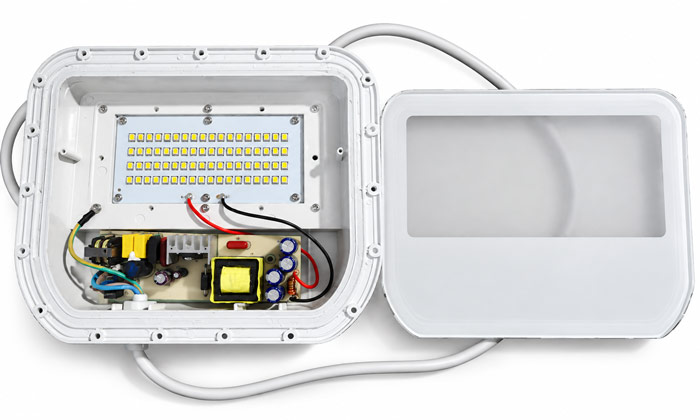
Purpose-built LED garden, pathway, and wall lights generally do not use fluorescent ballasts. They may use an internal driver, a separate driver, or a low-voltage supply matched to the fixture.
A low-voltage landscape lighting transformer is a different component from a fluorescent ballast. It reduces the supply voltage for compatible landscape lighting.
The fixture’s input specification still matters. A light marked for 12V AC should not automatically be treated as interchangeable with one requiring 12V DC. Some products accept both, but this must be stated in their specifications.
Also check the supply’s capacity, any minimum-load requirement, and suitability for outdoor installation. A light that does not need a ballast may still require a specific transformer or driver.
FAQs
1. Can a T8 LED Tube Replace a T12 Fluorescent Tube?
Some T8 LED tubes are designed as replacements for T12 fluorescent lamps, but physical size and socket type are only the first checks to make.
Confirm that the LED tube is approved for the existing fixture configuration and follow the manufacturer’s instructions for ballast compatibility, ballast removal, or rewiring. A tube that fits a T12 fixture is not automatically electrically compatible.
2. Can LED Tubes Be Dimmed After Removing the Ballast?
Only when the LED tube and control system are designed to support dimming. Removing a ballast does not automatically make a light fixture dimmable.
Some direct-wire LED tubes are fixed-output products, while others support specific dimming methods such as phase-cut or 0–10V control. Check the exact tube model and compatible controls before installation.
3. Why Do LED Tubes Flicker Even After the Ballast Is Removed?
Removing the ballast eliminates one possible source of problems, but LED flicker can still result from other causes such as incompatible controls, unstable power, loose connections, overheating, or a failing LED driver.
The pattern of the problem can help identify the cause. A single flickering tube may indicate a local issue, while multiple affected fixtures may point to shared wiring or supply problems. Persistent flickering should be checked, especially if there are signs of heat damage or unusual noise.
4. Can Fluorescent Tubes and LED Tubes Be Mixed in the Same Fixture?
Generally, do not mix them unless the lamp and fixture documentation specifically allows that combination.
After a fixture has been converted for direct-wire LED tubes, fluorescent lamps should not be installed because the electrical configuration may have changed. Follow the conversion label and use only the approved replacement type.
5. Can LED Tubes Work With an Existing Emergency Ballast?
Some LED tubes are designed to operate with specific emergency ballasts, but compatibility must be confirmed for the exact lamp, ballast, and fixture combination.
Direct-wire systems and external-driver systems may require different emergency components. A lamp that works during normal operation does not automatically guarantee correct emergency performance. The completed installation should be tested in backup mode to confirm required illumination and runtime.
