Table of Contents
- What Does UL Listing Evaluate?
- UL Listed vs. UL Recognized vs. UL Certified
- Which UL Standards Apply to Lighting?
- Does UL Listed Mean a Light Is Suitable for Outdoor Use?
- How to Verify UL Listed Lighting Before Buying
- What Should You Check for Low-Voltage Landscape Lighting?
- Is UL Listing Required for Lighting?
- FAQs
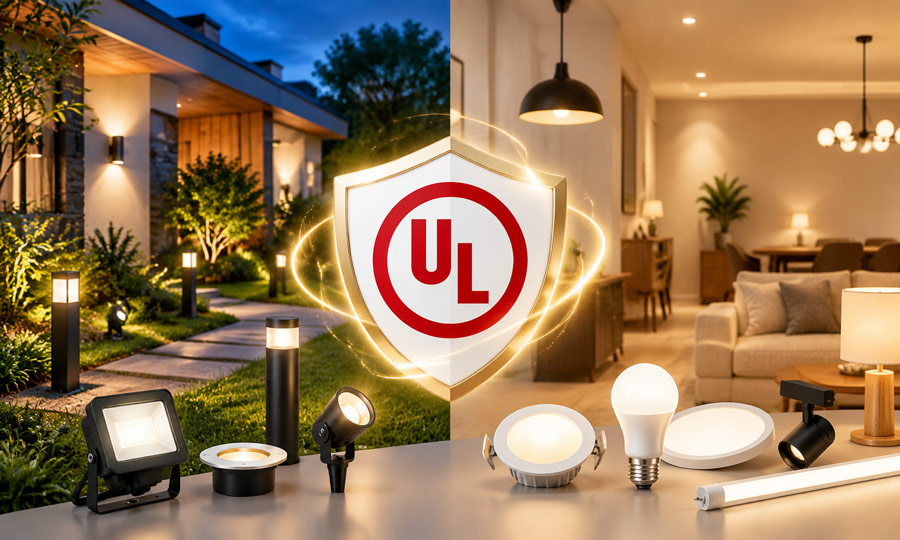
UL Listed means a lighting product has been evaluated and certified by UL to meet applicable safety standards for its intended use. For a listed light fixture, the certification covers the fixture identified in the listing. A certified component inside a light does not automatically establish certification of the complete fixture.
When choosing lighting, this distinction matters. You need to know what product has been certified, which installation conditions the certification covers, and whether those conditions match your project.
For garden and outdoor lighting, the location rating deserves particular attention. UL Listed lighting can be intended for dry, damp, or wet locations, so the certification mark and the environmental markings should be checked together.
What Does UL Listing Evaluate?
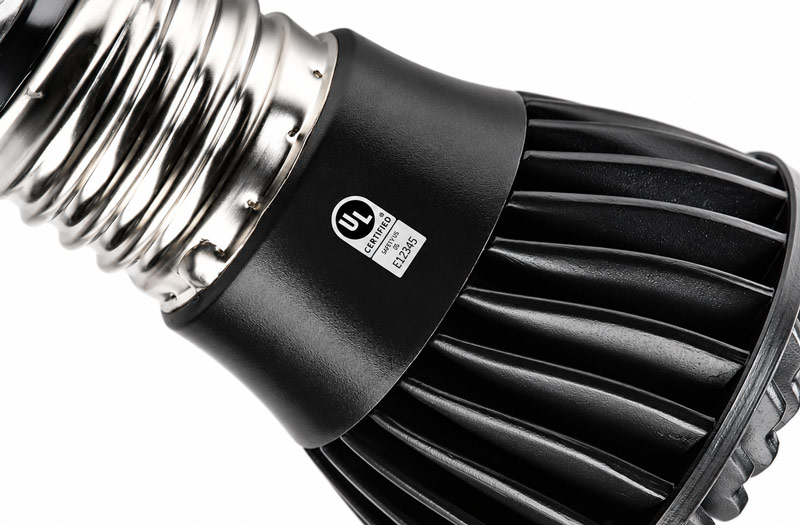
The initials UL come from Underwriters Laboratories. In lighting, UL listing provides independent evidence that representative samples of a product meet the applicable safety requirements. Evaluation addresses relevant hazards, including fire and electrical shock, according to the product’s construction and intended use.
Certification also involves follow-up checks of manufacturing to help verify continued compliance after the original evaluation.
For buyers, the practical value is a documented safety assessment tied to an identifiable product. That assessment should be considered alongside the installation instructions and electrical ratings.
Lighting performance requires separate consideration. Compare lumen output, color temperature, color rendering, and energy efficiency in the specification sheet. Safety certification and lighting-performance testing answer different questions about a product.
UL Listed vs. UL Recognized vs. UL Certified
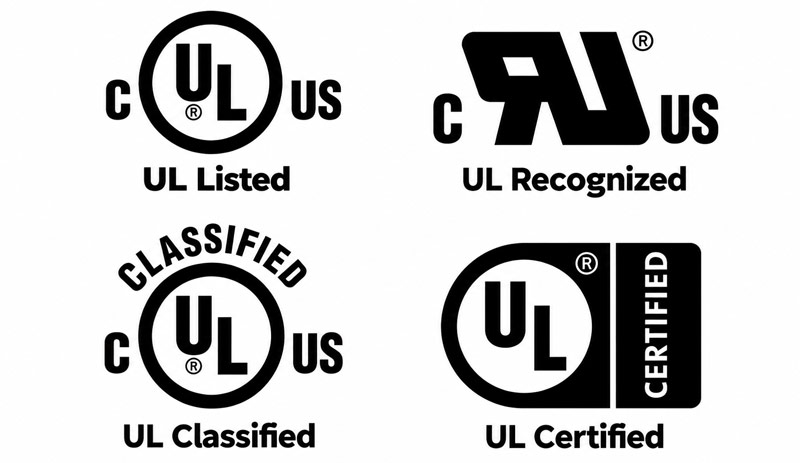
These terms describe different certification scopes. Understanding them helps prevent a component certificate from being mistaken for evidence covering an entire light fixture.
| Term | What it means | What lighting buyers should check |
|---|---|---|
| UL Listed | The identified product meets applicable safety requirements for its intended use. | Confirm that the listing covers the fixture being purchased. |
| UL Recognized Component | A component or subassembly has been evaluated for incorporation into another product under specified conditions. | A recognized driver, circuit board, or wiring component does not establish certification of the complete light. |
| UL Classified | Evaluation covers specified properties, hazards, or conditions. | Read the stated scope of the classification. |
| UL Certified | A broader term used on enhanced certification marks, encompassing Listed and Classified products. | Check the certification record to understand the scope. |
UL’s guidance distinguishes component recognition from end-product certification and confirms that enhanced marks using “Certified” can represent its Listing or Classification services.
When a product description says “uses UL components” or “meets UL standards,” request evidence of the actual certification. The useful evidence is a matching product mark and certification record identifying what was evaluated.
Which UL Standards Apply to Lighting?
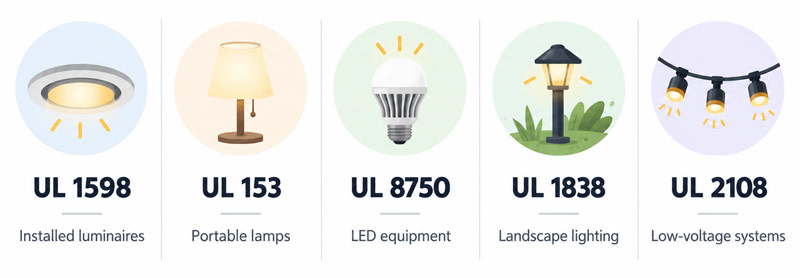
Different lighting products fall under different standards. There is no single UL standard covering every fixture, power supply, and lighting system.
| Standard | Typical scope |
|---|---|
| UL 1598 | Luminaires, including many permanently installed light fixtures |
| UL 153 | Portable electric luminaires, such as table and floor lamps |
| UL 8750 | LED equipment used in lighting products |
| UL 1838 | Low-voltage landscape lighting systems |
| UL 2108 | Low-voltage lighting systems |
The applicable requirements depend on the product’s design, electrical supply, and intended application. A standard number in a specification sheet should be checked against the product’s actual certification record.
Does UL Listed Mean a Light Is Suitable for Outdoor Use?
Outdoor suitability depends on the fixture’s environmental markings and installation instructions. Check whether the product is intended for dry, damp, or wet locations.
| Location rating | Exposure covered | Typical setting |
|---|---|---|
| Dry | Locations normally free from dampness | Indoor living spaces |
| Damp | Humidity or condensation in partially protected locations | Sheltered porches protected from direct water |
| Wet | Water dripping, splashing, or flowing against equipment | Exposed exterior lighting |
Fixtures installed in wet locations need wet-location suitability. A roof does not necessarily prevent wind-driven rain from reaching a fixture, so assess the actual exposure at the mounting position.
Wet-location suitability also does not automatically establish suitability for underwater installation. Submersible lighting requires identification for that application.
How UL Listing Relates to IP Ratings
An IP rating describes enclosure protection against the entry of solids and water under defined test conditions. UL listing addresses the applicable product-safety requirements.
When comparing IP44 vs. IP65, use the IP rating to assess ingress protection, then separately verify the product’s safety certification and permitted installation environment. An IP rating alone does not establish UL listing.
How to Verify UL Listed Lighting Before Buying
A reliable check connects the actual product to a certification record with a matching scope.
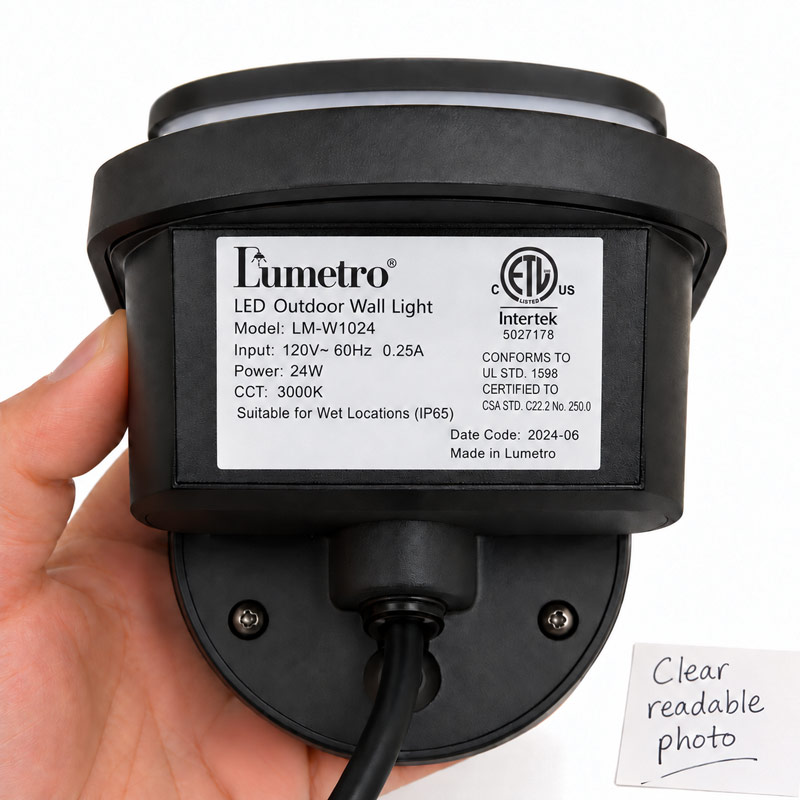
1. Request a Clear Product-Label Photo
Ask for a readable photo showing the certification mark, model identification, and relevant ratings. Traditional Listing marks and enhanced Certified marks can both indicate legitimate certification.
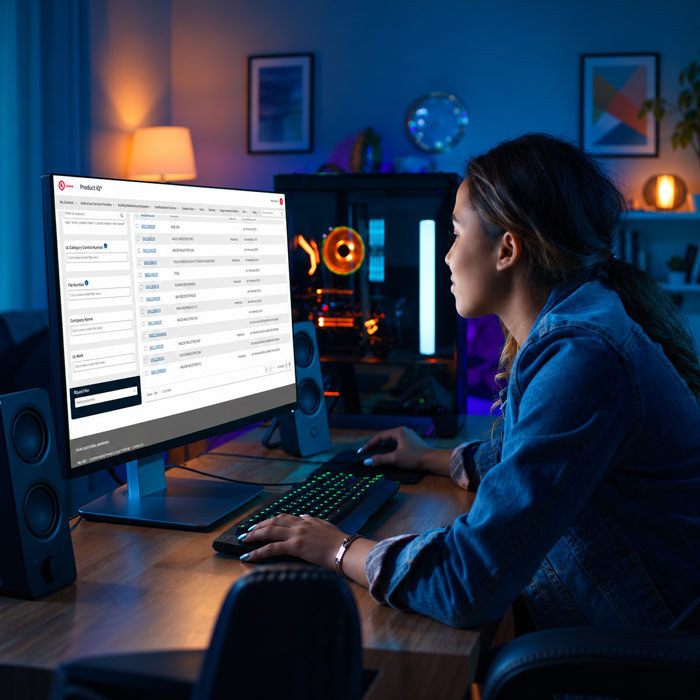
2. Search the Certification Database
Use UL Product iQ to find certification information. Search using the manufacturer’s name, model designation, or the identifier supplied with the certification.
UL Solutions. (n.d.). Product iQ. Retrieved October 19, 2026, from UL Product iQ.
Compare the result with the product being offered. Check the product category and certification details, rather than relying on a similar product name. UL provides Product iQ specifically to verify certifications and access associated guide information.
3. Confirm What the Certification Covers
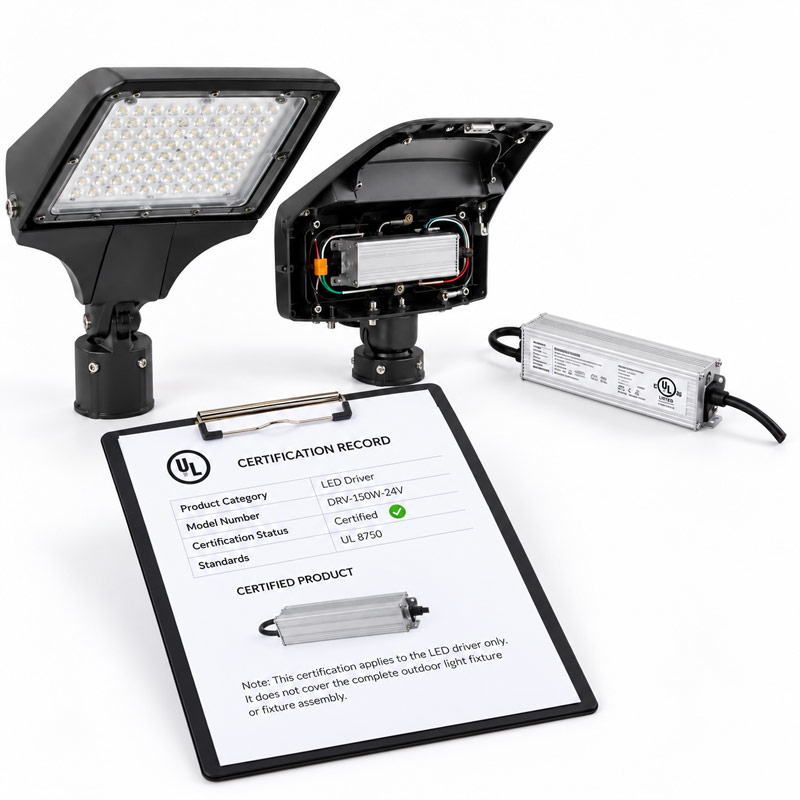
Determine whether the record covers the complete fixture, a lighting system, a power unit, or a component.
For example, evidence covering an LED driver does not establish that the assembled outdoor fixture has been certified. Request documentation covering the product you intend to install.
4. Match the Ratings to Your Installation
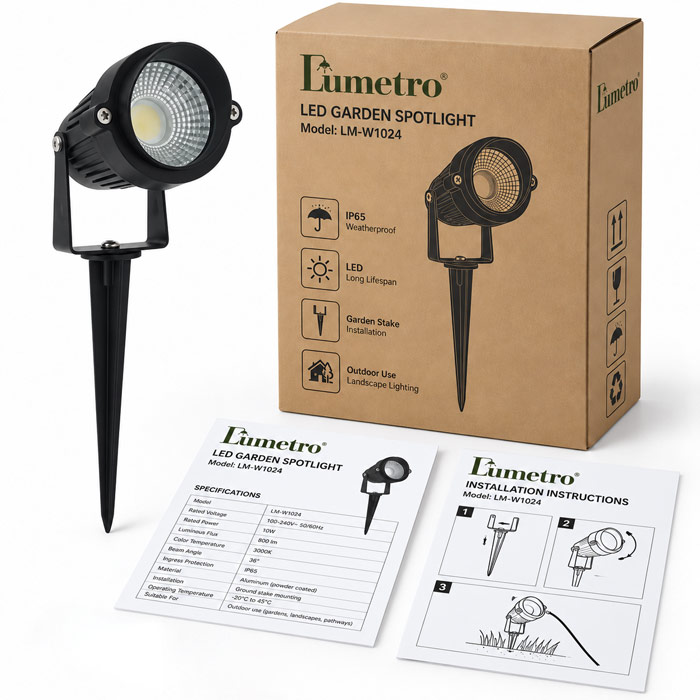
Read the product documentation for supply voltage, environmental suitability, mounting restrictions, and installation conditions.
Keep the label, specification sheet, and installation instructions together when comparing products. If the documentation conflicts or the model cannot be matched, ask the supplier to resolve the discrepancy before ordering.
What Should You Check for Low-Voltage Landscape Lighting?
Low-voltage landscape lighting can be evaluated as a complete system or as separate luminaires and power units. Compatibility therefore depends on the marked ratings and installation instructions for the components being combined.
When selecting a 12V landscape lighting transformer, check its output type, rated capacity, installation location, and compatibility with the connected fixtures.
A matching voltage number is only part of the selection. Confirm whether the fixtures require AC or DC power and whether the proposed connected load stays within the power unit’s permitted ratings. These checks help ensure the selected equipment works together as intended.
Is UL Listing Required for Lighting?
The applicable requirements depend on the installation, product category, and locally adopted electrical rules.
For U.S. workplaces, many types of electrical equipment require approval through a Nationally Recognized Testing Laboratory. UL is one recognized certification route; other accepted laboratories can also certify products within their recognized scopes. OSHA’s program does not require every qualifying product to carry one particular laboratory’s mark.
For a specific lighting project, confirm the accepted certification with the electrical contractor or local inspection authority. Project specifications may also set certification requirements that should be resolved before purchasing.
A useful buying decision brings three things together: a verifiable certification for the exact product, ratings suited to the installation, and instructions that support the proposed use.
FAQs
1. Can I Use LED Bulbs in a UL Listed Light Fixture?
Often, yes, provided the fixture permits that lamp type. When using LED bulbs in regular fixtures, match the base, voltage, physical dimensions, and permitted wattage. For enclosed fixtures, check the LED bulb’s enclosed-fixture suitability and follow any restrictions on its labeling.
2. Are All UL Listed Lights Dimmable?
No. Check for an explicit dimming specification and a compatible control. The fixture or driver and the dimmer must support the intended load and control method. UL provides certification services for different dimmer types and lighting loads, so a general safety mark should not be treated as evidence of universal dimmer compatibility.
3. Does UL Listing Still Cover a Fixture After It Is Modified?
The original certification does not automatically establish compliance of an altered fixture. Changes to wiring, drivers, or other construction can require further assessment. For LED conversions, a certified retrofit kit installed according to its instructions provides a defined route; other modifications may require a field evaluation.
4. Can a U.S. UL Listed Light Be Installed in Canada?
Check whether the certification also covers Canadian requirements. U.S. certification alone does not establish Canadian coverage. Look for the appropriate Canadian indication on the mark and confirm it in the certification record. Enhanced UL marks can use the country code “CA” to identify certification to Canadian requirements.
5. Is UL Listed the Same as IC Rated for Recessed Lighting?
No. Insulation-contact suitability requires the appropriate identification and installation instructions. IC-rated recessed lighting permits specified contact with insulation, while non-IC fixtures require clearance. Check the exact fixture’s markings before placing insulation against or over it.
