

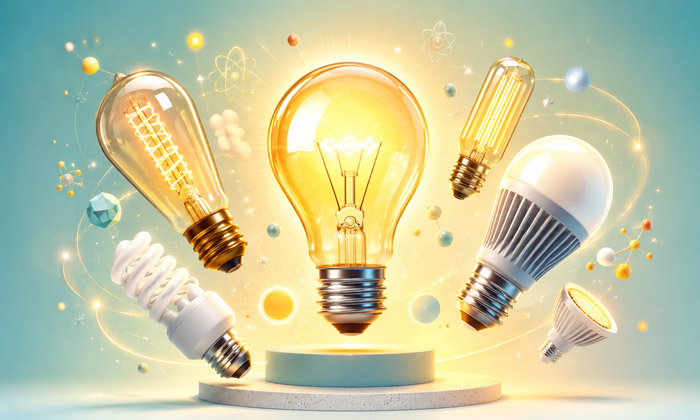
1. The Light Bulb Was Not Invented by Just One Person
2. Early Incandescent Bulbs Wasted Most of Their Energy as Heat
3. Brightness Is Measured in Lumens, Not Watts
4. Light Bulbs Come in Many Different Shapes
5. The Letter and Number Codes on Bulbs Actually Mean Something
6. The Base of the Bulb Is Just as Important as the Bulb Shape
7. Candelabra Bulbs Are Named for Their Candle-Like Appearance
8. E12 and E26 Bulbs Can Look Similar but Are Not Interchangeable
9. E26 and E27 Are Extremely Similar—but That Does Not Make Every Bulb Universal
10. LED Bulbs Can Last for Tens of Thousands of Hours
11. LEDs Do Not Usually “Burn Out” the Same Way Incandescent Bulbs Do
12. Heat Still Matters Even for Efficient LED Bulbs
13. “Warm” and “Cool” Light Refer to Color, Not Physical Temperature
14. Modern Bulbs Can Produce Millions of Colors
15. Dimming an LED Is More Complicated Than Dimming an Incandescent Bulb
16. A Clear Bulb and a Frosted Bulb Can Produce Different Visual Effects
17. Bulb Orientation Can Affect Light Distribution
18. The Glass Bulb Is Not Always Necessary for Producing Light
19. Bulb Efficiency Is Often Expressed in Lumens per Watt
FAQs
Light bulbs are such a familiar part of everyday life that most people rarely stop to think about how interesting they actually are. They illuminate homes, offices, streets, stores, restaurants, and nearly every indoor environment, yet behind a simple bulb is a long history of engineering, material science, electrical design, and continuous innovation.
From early incandescent lamps to modern LEDs and smart color-changing bulbs, lighting technology has changed dramatically. Bulbs have become brighter, more efficient, longer-lasting, and more adaptable while consuming far less electricity than many older designs. Even familiar terms such as A19, E12, E26, E27, candelabra, and Type B reveal how much variety exists within what seems like a very simple product.
Here are some of the most useful and surprising fun facts about light bulbs.
1. The Light Bulb Was Not Invented by Just One Person
Thomas Edison is commonly associated with the invention of the electric light bulb, but the history is more complicated.
Many inventors experimented with electric lighting before Edison developed his commercially practical incandescent lamp. Early researchers demonstrated that electricity could produce light by heating materials or creating an electrical arc. The challenge was not simply producing light—it was creating a lamp that could operate reliably, last for a reasonable amount of time, and be manufactured economically.
Edison's major contribution was developing a practical lighting system that combined an effective incandescent lamp with electrical distribution infrastructure.
This distinction is important because the modern light bulb represents decades of cumulative technological progress rather than one isolated invention.
2. Early Incandescent Bulbs Wasted Most of Their Energy as Heat
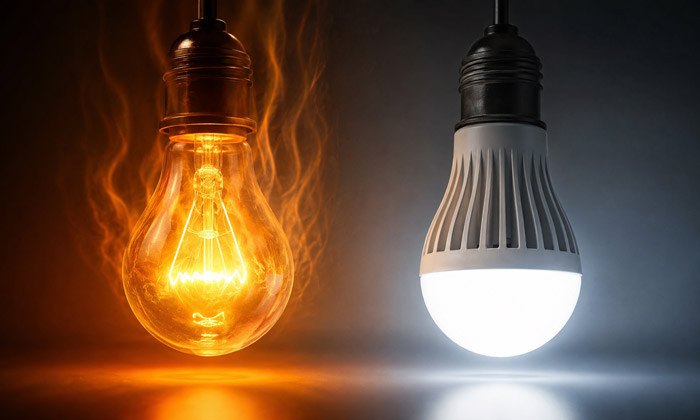
Traditional incandescent bulbs produce light by passing electricity through a thin filament. The electrical resistance heats the filament until it becomes hot enough to glow.
The process works, but it is not particularly efficient.
A substantial portion of the electricity consumed by an incandescent bulb becomes heat rather than visible light. This is why incandescent bulbs become extremely hot during operation.
LED technology works very differently. Instead of heating a filament until it glows, LEDs produce light through electroluminescence inside semiconductor materials. Because less energy must be converted into heat, LEDs can produce similar illumination while consuming significantly less electricity.
This difference is one of the main reasons LEDs have replaced traditional incandescent bulbs in many applications.
3. Brightness Is Measured in Lumens, Not Watts
For many years, people commonly used wattage to judge how bright a light bulb would be. However, watts actually measure the amount of electrical power a bulb consumes, while lumens measure the amount of visible light it produces. This distinction has become especially important with LED lighting because LEDs can produce the same brightness as traditional incandescent bulbs while using significantly less electricity.
The chart below compares the approximate power consumption of incandescent and LED bulbs at several common brightness levels. It clearly shows how LED bulbs require far fewer watts to deliver a similar lumen output.
At approximately 800 lumens, for example, a traditional incandescent bulb typically uses about 60 watts, while an LED bulb can provide comparable brightness using roughly 8 to 9 watts. At around 1,600 lumens, the difference becomes even more noticeable, with an incandescent bulb using about 100 watts compared with roughly 15 watts for an LED.
This is why wattage alone is no longer a reliable way to compare bulb brightness. When choosing a modern light bulb, check the lumen rating first to determine how much light it produces, then look at the wattage to see how much electricity it consumes. A bulb that delivers more lumens with fewer watts generally provides greater energy efficiency.
Physical size does not necessarily determine brightness either. Small decorative bulbs may have very different lumen outputs depending on their design and technology. If a compact bulb seems too dim for its intended use, factors such as lumen output, voltage, fixture conditions, and bulb type should all be considered. For more details, see why mini light bulbs are not bright enough and how to choose the right ones .
4. Light Bulbs Come in Many Different Shapes
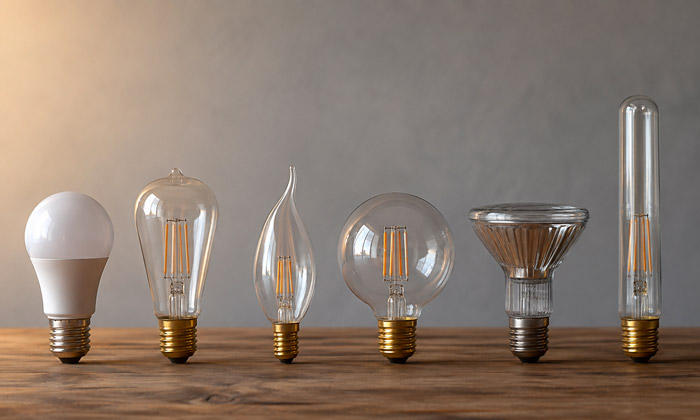
A bulb's shape is more than a decorative choice. Different shapes distribute light differently and are designed for different fixtures.
Some common bulb shapes include:
- A-shaped bulbs: the classic household light bulb shape.
- B-shaped bulbs: narrow decorative bulbs often used in chandeliers.
- Candle-shaped bulbs: designed to imitate the appearance of candle flames.
- Globe bulbs: round bulbs frequently used around mirrors and decorative fixtures.
- Reflector bulbs: designed to direct light in a specific direction.
- Tubular bulbs: elongated bulbs used in certain appliances and decorative fixtures.
The familiar household bulb is usually part of the Type A family. Readers who want to understand the terminology in more detail can explore what a Type A bulb is, including its typical shape and applications.
Decorative fixtures often use another recognizable category. A Type B bulb generally has a slimmer profile that works particularly well in chandeliers, sconces, and other fixtures where the bulb remains visible.
5. The Letter and Number Codes on Bulbs Actually Mean Something
Bulb names such as A19 or B11 can look like random product codes, but they usually contain useful information.
The letter generally identifies the bulb's shape, while the number traditionally indicates its approximate diameter.
In the North American bulb-numbering system, the number commonly represents the diameter in eighths of an inch.
For example:
- An A19 bulb has a diameter of approximately 19/8 inch, or 2.375 inches.
- A B11 bulb has a diameter of approximately 11/8 inch, or 1.375 inches.
These codes help consumers and manufacturers distinguish between bulbs that may use similar electrical connections but have very different physical dimensions.
6. The Base of the Bulb Is Just as Important as the Bulb Shape
Choosing the right bulb requires more than matching its appearance.
The base must fit the socket.
One of the most common bulb bases is the Edison screw base. The letter E refers to Edison, while the number indicates the approximate diameter of the screw base in millimeters.
Common examples include:
| Base Type | Approximate Diameter | Common Application |
|---|---|---|
| E12 | 12 mm | Chandeliers, decorative lamps, night lights |
| E14 | 14 mm | Decorative fixtures, common in some international markets |
| E17 | 17 mm | Intermediate-size fixtures and appliances |
| E26 | 26 mm | Standard household bulbs in North America |
| E27 | 27 mm | Common household lighting in many international markets |
This naming system makes bulb specifications much easier to understand once you know what the numbers mean.
7. Candelabra Bulbs Are Named for Their Candle-Like Appearance
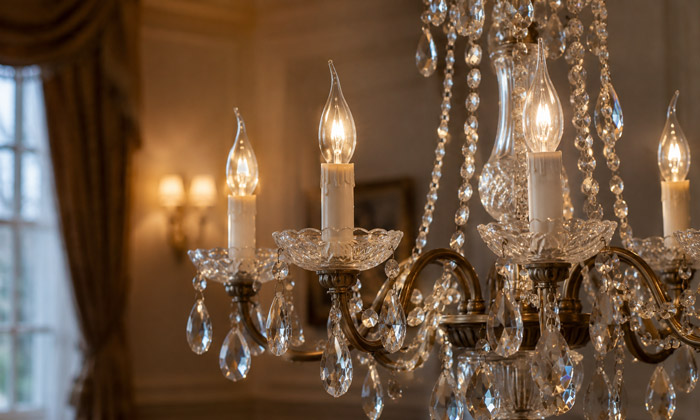
Before electric lighting, chandeliers frequently held real candles. Modern decorative lighting often preserves this traditional appearance.
That is where candelabra-style bulbs come in.
Many have narrow glass bodies, flame-shaped tips, or bent-tip designs intended to resemble candle flames. They are popular in chandeliers, wall sconces, pendant lights, and decorative table lamps.
The term can refer to the visual style of the bulb, but it is also closely associated with the small E12 candelabra base used in North America.
If you are choosing bulbs for decorative fixtures, understanding what candelabra bulbs are can help distinguish their shape, base, and common applications from standard household bulbs.
8. E12 and E26 Bulbs Can Look Similar but Are Not Interchangeable
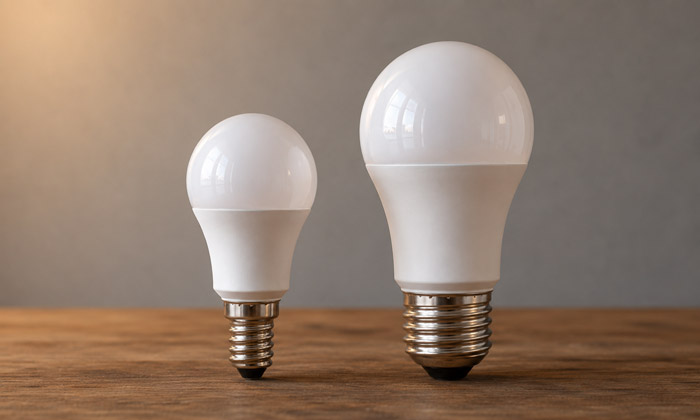
Two bulbs may produce similar light while using completely different sockets.
E12 and E26 are a good example.
An E12 base measures approximately 12 mm across, while an E26 base measures about 26 mm. That difference is substantial enough that the bulbs cannot normally be used in the same socket without a suitable adapter.
The two sizes also tend to appear in different fixture categories. E12 bulbs are common in chandeliers and decorative fixtures, while E26 bulbs are widely used in standard household lamps and ceiling fixtures.
A detailed E12 candelabra bulb vs. E26 bulb comparison helps explain why matching the socket is just as important as matching brightness, color temperature, or bulb shape.
9. E26 and E27 Are Extremely Similar—but That Does Not Make Every Bulb Universal
E26 and E27 bases differ nominally by only about one millimeter in diameter.
Because their physical dimensions are so similar, consumers sometimes assume that every E26 and E27 bulb can be freely exchanged.
The actual situation requires more attention.
Mechanical fit is only one consideration. Voltage requirements, certification standards, electrical specifications, fixture design, and local regulations can also determine whether a bulb is appropriate.
For this reason, it is better to check specifications rather than assume universal compatibility. The question whether E27 socket light bulbs are universal involves more than simply comparing the physical diameter of the screw base.
10. LED Bulbs Can Last for Tens of Thousands of Hours
One of the most remarkable improvements in lighting technology is operating life.
Traditional incandescent bulbs often had relatively short service lives because their filaments gradually deteriorated. LEDs do not rely on the same fragile glowing filament, allowing well-designed LED products to operate for much longer periods.
Many LED bulbs are rated for tens of thousands of operating hours.
Consider a hypothetical bulb rated for 25,000 hours.
If it operates for three hours per day:
25,000 ÷ 3 ≈ 8,333 days
That equals roughly 22 years of theoretical usage.
Real-world lifespan can vary considerably depending on heat, electrical conditions, switching frequency, fixture design, driver quality, and environmental factors, but the improvement over traditional lighting can still be substantial.
11. LEDs Do Not Usually “Burn Out” the Same Way Incandescent Bulbs Do
An incandescent filament may suddenly break, causing the bulb to stop producing light immediately.
LEDs often age differently.
Instead of suddenly failing, an LED light source may gradually lose brightness over time. Manufacturers therefore commonly describe LED lifetime according to lumen maintenance.
For example, L70 generally refers to the point at which an LED is expected to produce approximately 70% of its initial light output.
This means that the concept of bulb lifespan has changed. For modern LEDs, useful life can be related not only to whether the bulb still turns on, but also to how much light it continues to produce.
12. Heat Still Matters Even for Efficient LED Bulbs
LEDs are much more energy-efficient than incandescent lamps, but that does not mean they produce no heat.
LED components and electronic drivers still generate heat during operation.
Managing this heat is extremely important because excessive temperature can reduce performance and shorten the life of electronic components.
That is why many LED bulbs contain heat-dissipation structures hidden beneath the outer housing.
Poor ventilation can also be a problem. Some LEDs are specifically rated for enclosed fixtures, while others are not. Installing a bulb in an environment where heat cannot escape may affect its expected lifespan.
So while LEDs feel cooler than traditional incandescent bulbs in many situations, thermal management remains an important part of LED engineering.
13. “Warm” and “Cool” Light Refer to Color, Not Physical Temperature
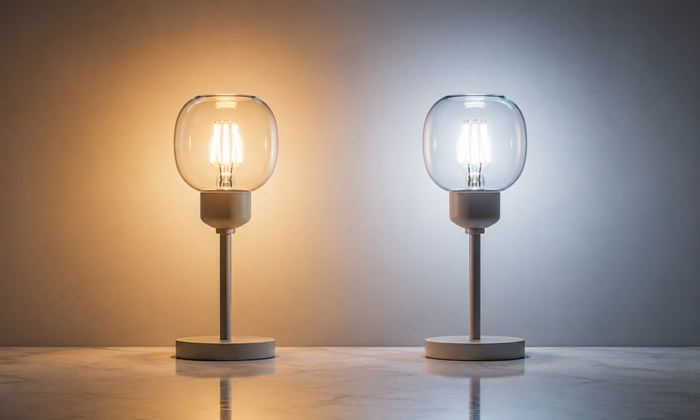
The terminology used for light color can seem backward at first.
A warm-white bulb usually has a lower correlated color temperature, often around 2700K to 3000K.
A cooler-looking bulb may be rated around 4000K, 5000K, or higher.
Typical ranges include:
| Color Temperature | General Appearance | Common Uses |
|---|---|---|
| 2200K–2700K | Very warm, amber | Decorative lighting, relaxing environments |
| 2700K–3000K | Warm white | Bedrooms, living rooms, restaurants |
| 3500K–4000K | Neutral white | Kitchens, offices, work areas |
| 5000K–6500K | Cool/daylight appearance | Workshops, task lighting, utility areas |
The Kelvin value describes the appearance of the light rather than how hot the bulb physically becomes.
14. Modern Bulbs Can Produce Millions of Colors
Some of today's bulbs can do far more than simply switch on and off.
Color-changing LED bulbs combine multiple LED channels, often involving red, green, and blue light sources. By adjusting the intensity of these channels, the bulb can create a broad range of perceived colors.
Many smart bulbs add white LEDs as well, improving white-light performance and allowing adjustment between warmer and cooler white tones.
The underlying principle becomes easier to understand by looking at how color-changing light bulbs work, particularly how LEDs and electronic controls combine different wavelengths to create different colors.
This capability has transformed light bulbs from simple illumination devices into flexible tools for decoration, mood lighting, entertainment, and interior design.
15. Dimming an LED Is More Complicated Than Dimming an Incandescent Bulb
Traditional incandescent bulbs are relatively straightforward to dim because reducing the electrical power supplied to the filament reduces its temperature and brightness.
LED bulbs contain electronic drivers, making dimming more technically complex.
Not every LED is dimmable, and not every dimmable LED works perfectly with every dimmer.
An incompatible combination may produce problems such as:
- flickering,
- buzzing,
- limited dimming range,
- delayed startup,
- unstable brightness,
- or failure to dim properly.
For reliable performance, the bulb, driver, and dimmer need to work together correctly.
16. A Clear Bulb and a Frosted Bulb Can Produce Different Visual Effects
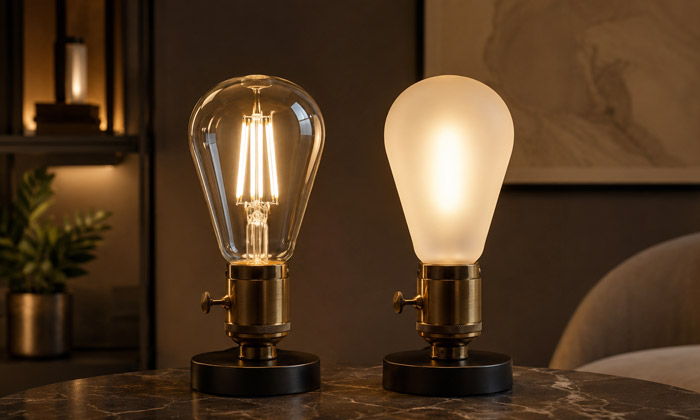
Two bulbs with similar lumen ratings can still look noticeably different.
A clear bulb allows the internal filament or LED structure to remain visible. It can create sharper highlights and is often chosen for decorative fixtures.
A frosted bulb diffuses the light through a translucent outer surface, producing a softer and more even appearance.
Neither design is inherently better. The appropriate choice depends on the fixture and the desired lighting effect.
Clear bulbs can be particularly attractive in decorative chandeliers or exposed fixtures, while frosted bulbs are useful where glare reduction and smooth light distribution are more important.
17. Bulb Orientation Can Affect Light Distribution
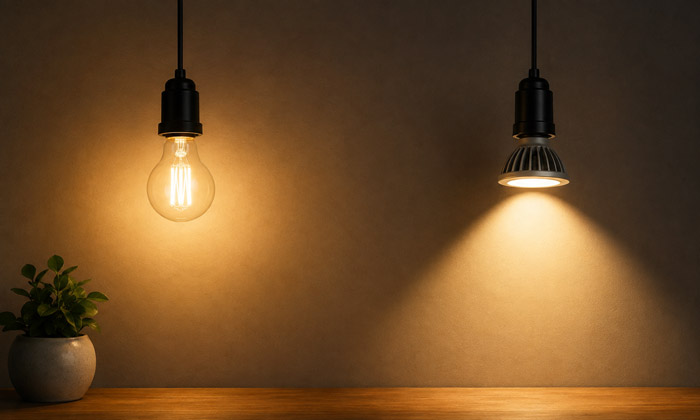
Not all bulbs send equal amounts of light in every direction.
Traditional incandescent bulbs naturally produce broad omnidirectional illumination because the glowing filament radiates light around itself.
LEDs are inherently directional components. Bulb manufacturers therefore use optical designs, diffusers, multiple LED arrangements, and reflective components to control where the light goes.
This is why two LED bulbs with identical lumen ratings may illuminate a room differently.
One may distribute light broadly around the fixture, while another sends more light upward or downward.
Lumens tell you how much light a bulb produces overall, but beam angle and distribution help determine where that light actually goes.
18. The Glass Bulb Is Not Always Necessary for Producing Light
In a traditional incandescent lamp, the glass envelope protects the hot filament and maintains the controlled environment necessary for operation.
LED technology does not require a glowing tungsten filament.
As a result, the familiar bulb-shaped outer shell of many LED lamps exists partly because consumers and existing fixtures are designed around the traditional bulb form.
Inside, the construction is completely different.
A typical LED bulb may contain:
- LED chips,
- a circuit board,
- an electronic driver,
- heat-management components,
- optical diffusers,
- and a standardized base.
The classic light bulb shape has therefore survived even though the technology inside it has changed dramatically.
19. Bulb Efficiency Is Often Expressed in Lumens per Watt
An easy way to compare the efficiency of light sources is luminous efficacy, commonly expressed as lumens per watt (lm/W).
The calculation is simple:
Lumens ÷ Watts = Lumens per Watt
For example, if a 9-watt LED produces 800 lumens:
800 ÷ 9 ≈ 89 lm/W
If an older 60-watt incandescent bulb produces approximately the same 800 lumens:
800 ÷ 60 ≈ 13 lm/W
The LED therefore produces substantially more visible light for each watt of electricity consumed.
This is one of the clearest numerical demonstrations of how lighting efficiency has improved.
FAQs
What Does CRI Mean on a Light Bulb?
CRI, or Color Rendering Index, measures how accurately a light source reveals colors compared with natural light. It is rated on a scale up to 100.
For most homes, a CRI of 80 or higher is acceptable, while CRI 90+ bulbs are often preferred for kitchens, bathrooms, artwork, retail displays, and other spaces where accurate color appearance matters.
Why Do LED Light Bulbs Flicker?
LED bulbs may flicker because of unstable voltage, incompatible switches, low-quality LED drivers, loose electrical connections, or problems within the fixture.
Some flickering is barely noticeable, while more severe flicker can be distracting. Using properly rated bulbs and compatible electrical components can help reduce the problem.
Can LED Bulbs Be Used in Enclosed Fixtures?
Only LED bulbs specifically rated for enclosed fixtures should be used in fully enclosed housings.
Enclosed fixtures trap heat around the bulb and its electronic driver, which may reduce performance or shorten service life. Always check the bulb packaging or manufacturer specifications for an enclosed-fixture rating before installation.
Are LED Light Bulbs Better Than CFL Bulbs?
LED bulbs generally offer faster startup, better energy efficiency, longer service life, and greater design flexibility than CFL bulbs.
CFLs also contain a small amount of mercury and require more careful disposal. For most modern household lighting applications, LEDs have become the more common choice.
Can Light Bulbs Be Recycled?
Some light bulbs can be recycled, but disposal requirements depend on the bulb type.
CFL and fluorescent lamps require special handling because they contain mercury, while LEDs contain electronic components and may be accepted by electronics or lighting recycling programs. Incandescent and halogen bulbs are handled differently in many locations, so local recycling rules should be checked before disposal.
