

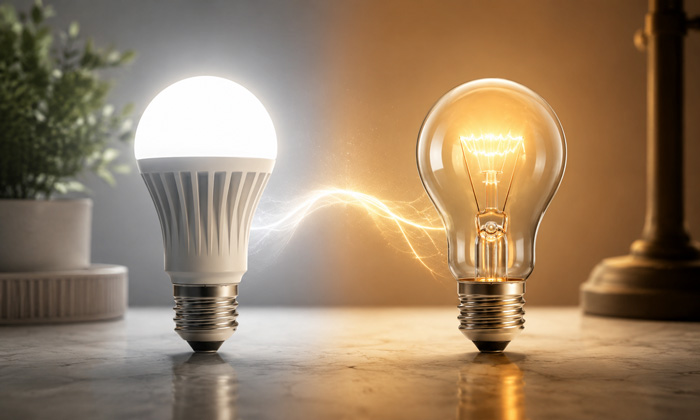
LED Watts vs. Incandescent Watts
LED to Incandescent Watt Conversion Table
A Simple LED-to-Incandescent Conversion Formula
Why There Is No Exact Watt-to-Watt Conversion
The Best Conversion Method: Compare Lumens
Example: What Is a 5-Watt LED Equivalent To?
Example: What Is an 8-Watt LED Equivalent To?
Example: What Is a 10-Watt LED Equivalent To?
Example: What Is a 12-Watt LED Equivalent To?
Example: What Is a 15-Watt LED Equivalent To?
Example: What Is a 20-Watt LED Equivalent To?
Can You Simply Multiply LED Watts by 10?
Why a 60-Watt LED Is Not the Same as a 60-Watt Incandescent
Lumens Are More Important Than Watts
Understanding Lumens per Watt
Does Color Temperature Affect the Conversion?
Does LED Bulb Shape Affect Watt Equivalence?
How to Replace an Incandescent Bulb With an LED
How to Convert When Only LED Watts Are Available
Why LED Equivalency Labels Sometimes Differ
LED Wattage Does Not Determine Fixture Compatibility by Incandescent Equivalent
LED Watts and Energy Savings
Incandescent to LED Conversion Works in Reverse
Common LED and Incandescent Equivalents
What If an LED Produces More Lumens Than the Incandescent Bulb?
What If You Want an LED That Looks Like an Incandescent Bulb?
Should You Compare Watts, Lumens, or Both?
The Most Accurate Way to Convert LED Watts to Incandescent Watts
FAQs
Converting LED watts to incandescent watts is not a matter of multiplying by one fixed number. LED bulbs use electricity much more efficiently than traditional incandescent bulbs, so the correct comparison is based primarily on light output, measured in lumens, rather than wattage alone.
As a practical rule, an LED bulb typically uses about 75% to 85% less electricity than an incandescent bulb that produces a similar amount of light. For example, an LED bulb using around 8 to 10 watts can often replace a traditional 60-watt incandescent bulb.
However, LED efficiency varies by bulb design, color temperature, quality, and manufacturer. That means wattage conversion should be treated as an estimate, while lumen output provides the most reliable way to find an equivalent bulb.
LED Watts vs. Incandescent Watts
Watts measure electrical power consumption, not brightness.
An old 60-watt incandescent bulb is called a “60-watt bulb” because it consumes approximately 60 watts of electricity. An LED that produces roughly the same brightness may consume only 8 or 9 watts.
Therefore:
LED watts tell you how much electricity the LED uses.
Incandescent equivalent watts tell you approximately how much power an incandescent bulb would need to produce similar brightness.
This distinction is important because two LED bulbs with exactly the same wattage can have different lumen outputs.
For instance:
- One 9-watt LED may produce 750 lumens.
- Another 9-watt LED may produce 850 lumens.
- A highly efficient 9-watt LED may produce more than 900 lumens.
They consume the same amount of electricity but do not necessarily provide exactly the same amount of light.
LED to Incandescent Watt Conversion Table
The following table provides common approximate equivalents for household lighting.
| LED Wattage | Approximate Incandescent Equivalent | Typical Light Output |
|---|---|---|
| 2–3 W | 20–25 W | 200–300 lumens |
| 4–5 W | 30–40 W | 350–500 lumens |
| 5–7 W | 40 W | 450–550 lumens |
| 7–9 W | 60 W | 700–850 lumens |
| 9–12 W | 75 W | 900–1,100 lumens |
| 12–15 W | 100 W | 1,500–1,700 lumens |
| 16–20 W | 125 W | 1,900–2,200 lumens |
| 20–25 W | 150 W | 2,500–2,800 lumens |
| 30–40 W | 200–250 W | 3,500–4,500 lumens |
These values are approximate. When choosing a replacement bulb, compare the lumen rating printed on the packaging whenever possible.
A Simple LED-to-Incandescent Conversion Formula
If you only know the LED wattage and need a quick estimate, one common rule is:
Incandescent equivalent watts ≈ LED watts × 6 to 8
For example, suppose you have a 10-watt LED bulb.
Using a factor of 6:
10 W × 6 = 60 W
Using a factor of 8:
10 W × 8 = 80 W
A 10-watt LED therefore typically falls somewhere around the brightness range traditionally associated with a 60- to 75-watt incandescent bulb.
For a 15-watt LED:
15 W × 6 = 90 W
15 W × 8 = 120 W
That LED may therefore provide approximately the brightness associated with a 100-watt incandescent bulb.
The formula is useful for quick estimates, but it should not replace lumen comparisons.
Why There Is No Exact Watt-to-Watt Conversion
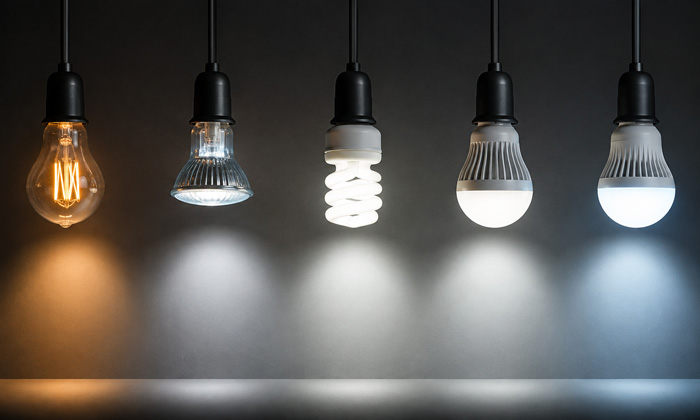
There is no universal conversion formula because different lighting technologies convert electricity into visible light with different levels of efficiency.
A large portion of the electricity used by an incandescent bulb becomes heat rather than visible light. LEDs are much more efficient because a greater percentage of their electrical energy is converted into useful illumination.
Even among LEDs, efficiency varies considerably.
The relevant measurement is luminous efficacy, expressed in lumens per watt:
Luminous efficacy = Lumens ÷ Watts
Suppose an LED bulb produces 800 lumens while consuming 8 watts:
800 ÷ 8 = 100 lumens per watt
Now consider another LED that also produces 800 lumens but consumes 10 watts:
800 ÷ 10 = 80 lumens per watt
Both bulbs can replace approximately the same incandescent bulb because their brightness is similar, but their LED wattages are different.
This is why converting LED watts directly into incandescent watts can never be perfectly precise.
The Best Conversion Method: Compare Lumens
The most accurate method is to ignore wattage initially and compare lumen output.
Traditional household incandescent bulbs generally produced approximately the following brightness levels:
- 40-watt incandescent: about 450 lumens
- 60-watt incandescent: about 800 lumens
- 75-watt incandescent: about 1,100 lumens
- 100-watt incandescent: about 1,600 lumens
- 150-watt incandescent: about 2,600 lumens
If an LED produces approximately 800 lumens, it is generally considered a replacement for a 60-watt incandescent bulb regardless of whether the LED consumes 7 watts, 8 watts, 9 watts, or 10 watts.
If an LED produces approximately 1,600 lumens, it is roughly equivalent to a traditional 100-watt incandescent bulb.
The conversion process can therefore be written as:
LED wattage → Find LED lumens → Match lumens to traditional incandescent output
This method produces a much more useful result than relying on wattage alone.
Example: What Is a 5-Watt LED Equivalent To?
A typical 5-watt LED may produce approximately 400 to 500 lumens.
An incandescent bulb producing similar brightness would usually consume around 40 watts.
Therefore:
5-watt LED ≈ 40-watt incandescent
The exact equivalent depends on the LED's lumen rating. A particularly efficient 5-watt LED could produce more light and therefore approach the output of a higher-wattage incandescent bulb.
Example: What Is an 8-Watt LED Equivalent To?
Many 8-watt LED bulbs produce approximately 700 to 800 lumens.
That level of brightness is close to a traditional 60-watt incandescent bulb.
Therefore:
8-watt LED ≈ 60-watt incandescent
Again, check lumens. An 8-watt LED producing only 650 lumens will appear dimmer than one producing 800 lumens.
Example: What Is a 10-Watt LED Equivalent To?
A 10-watt LED commonly produces approximately 800 to 1,000 lumens.
That places it between traditional 60-watt and 75-watt incandescent bulbs.
A practical estimate is:
10-watt LED ≈ 60- to 75-watt incandescent
If the LED produces around 800 lumens, think of it as a 60-watt incandescent replacement. If it produces closer to 1,100 lumens, it approaches a traditional 75-watt replacement.
Example: What Is a 12-Watt LED Equivalent To?
A good-quality 12-watt LED may produce roughly 1,100 to 1,500 lumens.
Depending on its efficiency, it could replace an incandescent bulb in approximately the 75- to 100-watt range.
Therefore:
12-watt LED ≈ 75- to 100-watt incandescent
The wide range demonstrates why wattage alone is insufficient for exact comparisons.
Example: What Is a 15-Watt LED Equivalent To?
Many 15-watt LEDs produce approximately 1,500 to 1,700 lumens.
A traditional 100-watt incandescent bulb typically produced around 1,600 lumens.
Therefore:
15-watt LED ≈ 100-watt incandescent
Some modern LEDs achieve the same brightness using only 12 or 13 watts, while less efficient products may require closer to 16 or 17 watts.
Example: What Is a 20-Watt LED Equivalent To?
A 20-watt LED may produce around 2,000 to 2,500 lumens, although output varies significantly among products.
That brightness can correspond approximately to an incandescent bulb using 125 to 150 watts.
A reasonable estimate is:
20-watt LED ≈ 125- to 150-watt incandescent
For high-output lighting, lumen comparison becomes even more important because efficiency differences between LED products can become substantial.
Can You Simply Multiply LED Watts by 10?
You may sometimes see the rule:
LED watts × 10 = incandescent watts
This rule is easy to remember, but it is often inaccurate for modern LEDs.
For example, multiplying a 9-watt LED by 10 would suggest:
9 W × 10 = 90 W incandescent
Yet many 9-watt LED bulbs produce around 800 lumens, making them closer to a traditional 60-watt incandescent bulb.
The “multiply by 10” rule originated partly from rough comparisons with earlier generations of energy-efficient lighting. Modern LED technology has a wide range of efficiencies, so there is no reason to expect a constant 10:1 relationship.
A multiplier of approximately 6 to 8 is often more realistic for general household LEDs, but lumens remain the better standard.
Why a 60-Watt LED Is Not the Same as a 60-Watt Incandescent
This is an important point when reading lighting specifications.
A true 60-watt LED bulb actually consuming 60 watts would be extremely bright compared with a traditional 60-watt incandescent bulb.
Depending on its efficiency, a 60-watt LED could potentially produce several thousand lumens.
By contrast, a package labeled:
“60W Replacement”
usually does not mean the LED consumes 60 watts.
It means the bulb produces approximately the amount of light associated with a traditional 60-watt incandescent bulb.
The actual power consumption might be only 8 or 9 watts.
Always distinguish between:
Actual wattage: electricity consumed by the LED.
and
Wattage equivalent: approximate incandescent bulb brightness being replaced.
Lumens Are More Important Than Watts
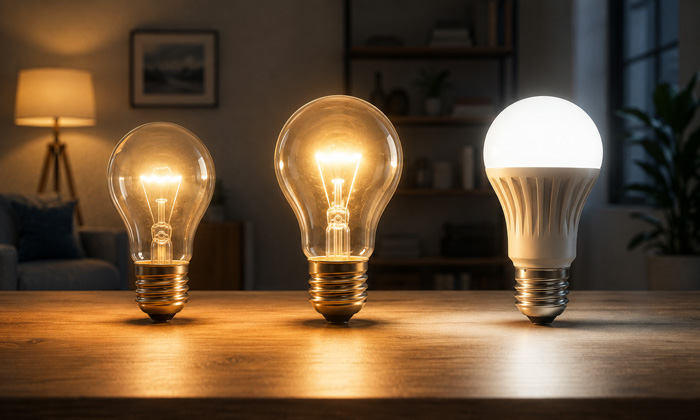
Before LED lighting became common, people became accustomed to using watts as a shortcut for brightness.
For incandescent technology, that approach worked reasonably well because most incandescent bulbs had similar efficiency. A 100-watt bulb was generally brighter than a 60-watt bulb, and consumers could predict brightness simply by looking at power consumption.
LED technology changed that relationship.
With LEDs:
Watts = energy consumption
Lumens = light output
When brightness is the goal, lumens should therefore be your primary measurement.
If you are replacing an incandescent bulb, identify its expected lumen output and choose an LED producing roughly the same number of lumens.
Understanding Lumens per Watt
Lumens per watt can help explain why some LEDs use fewer watts than others while providing similar brightness.
Suppose three LED bulbs each produce 800 lumens.
LED A
Power consumption: 10 watts
800 ÷ 10 = 80 lm/W
LED B
Power consumption: 8 watts
800 ÷ 8 = 100 lm/W
LED C
Power consumption: 6.5 watts
800 ÷ 6.5 ≈ 123 lm/W
All three could serve as replacements for approximately the same 60-watt incandescent bulb because all three produce 800 lumens.
LED C, however, uses the least electricity because it has the highest luminous efficacy.
This illustrates why future LED products may require even fewer watts to replace the same incandescent bulbs.
Does Color Temperature Affect the Conversion?
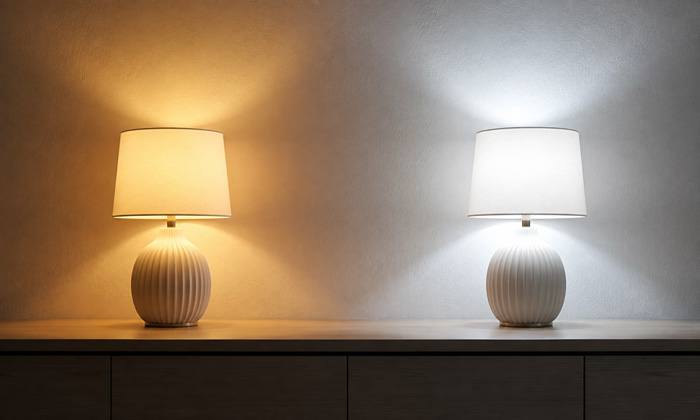
Color temperature does not directly determine incandescent watt equivalence, but it can affect how bright a light appears to the human eye.
Common LED color temperatures include:
2700K: warm white, similar to a traditional incandescent bulb.
3000K: warm to soft white.
4000K: neutral or cool white.
5000K–6500K: daylight or cool daylight appearance.
A 2700K LED and a 5000K LED may both produce 800 lumens, meaning their measurable light output is similar. However, the cooler 5000K bulb may appear brighter or sharper in some environments.
If your goal is to reproduce the appearance of traditional incandescent lighting, LEDs around 2700K are usually the closest match.
The watt conversion itself should still be based primarily on lumens.
Does LED Bulb Shape Affect Watt Equivalence?
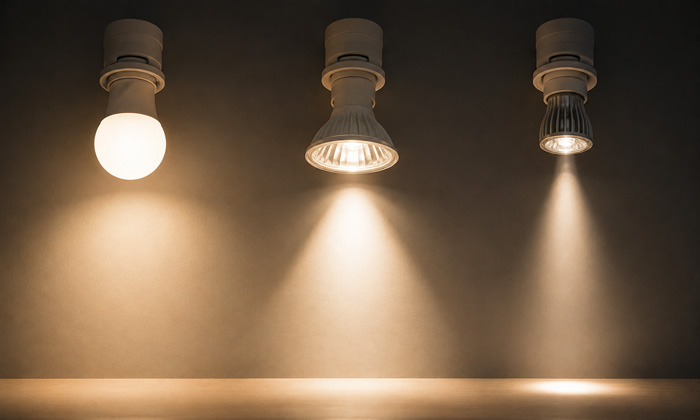
Bulb shape can affect how light is distributed even when total lumen output is similar.
An omnidirectional LED may distribute light in many directions, while a reflector or spotlight LED concentrates its output into a narrower beam.
For example, two LEDs may each produce 800 lumens:
- A standard A19 bulb spreads those lumens around a room.
- A spotlight concentrates them into a smaller area.
The spotlight may appear much brighter on the surface it illuminates even though its total lumen output is the same.
For standard household bulb replacement, comparing lumens is generally sufficient. For directional lighting, beam angle and candela may also influence perceived brightness.
How to Replace an Incandescent Bulb With an LED
If you are replacing an existing incandescent bulb, start with the incandescent wattage and convert it into approximate lumens.
For example, suppose you want to replace a 60-watt incandescent bulb.
A typical 60-watt incandescent produces approximately:
800 lumens
Instead of searching only for an “8-watt LED” or “9-watt LED,” search for an LED producing approximately 800 lumens.
You may find several options:
- 7-watt LED producing 800 lumens
- 8-watt LED producing 800 lumens
- 9-watt LED producing 800 lumens
- 10-watt LED producing 800 lumens
All can potentially serve as 60-watt incandescent replacements.
The lower-wattage model simply converts electricity into light more efficiently.
How to Convert When Only LED Watts Are Available
Sometimes an LED product provides wattage but you do not immediately know its lumen output.
In that situation, you can estimate brightness using expected LED efficiency.
A common modern LED may produce approximately:
80 to 120 lumens per watt
If you have a 10-watt LED, estimated light output could therefore be:
10 W × 80 lm/W = 800 lumens
to
10 W × 120 lm/W = 1,200 lumens
That could place the bulb approximately between a traditional 60-watt and 75-watt incandescent bulb.
However, the range is relatively wide. This calculation should therefore be considered an estimate rather than a precise conversion.
Why LED Equivalency Labels Sometimes Differ
You may see two LED bulbs with the same wattage carrying different incandescent-equivalent ratings.
For example:
LED Bulb A: 9 watts, 800 lumens, 60W equivalent
LED Bulb B: 9 watts, 900 lumens, possibly marketed as a brighter 60W replacement
The difference occurs because watt-equivalent labels represent approximate brightness categories rather than exact physical conversions.
Manufacturers may also design LEDs differently in terms of:
- driver efficiency,
- LED chip efficiency,
- optical losses,
- thermal management,
- diffuser design,
- beam distribution.
As a result, actual lumen output should always take priority over the equivalent-watt label.
LED Wattage Does Not Determine Fixture Compatibility by Incandescent Equivalent
When replacing an incandescent bulb, do not confuse equivalent wattage with actual electrical wattage.
Suppose a lamp fixture states:
Maximum 60 watts
A 9-watt LED marketed as a “60W equivalent” is electrically consuming only about 9 watts.
Its 60W equivalent description refers to light output, not electrical consumption.
Similarly, an LED marked “100W equivalent” may actually consume only 12 to 15 watts.
For electrical load calculations, always use the LED's actual wattage, not its incandescent-equivalent rating.
Fixture compatibility can also depend on other factors such as enclosed-fixture ratings, heat management, dimmer compatibility, voltage, and bulb dimensions.
LED Watts and Energy Savings
The wattage difference between LED and incandescent lighting directly affects electricity consumption.
Consider a 60-watt incandescent bulb replaced by a 9-watt LED.
The reduction in power consumption is:
60 W − 9 W = 51 W
The percentage reduction is:
51 ÷ 60 × 100 = 85%
The LED uses approximately 85% less electricity while producing roughly similar light output.
Now consider replacing a 100-watt incandescent with a 15-watt LED:
100 W − 15 W = 85 W
Again:
85 ÷ 100 × 100 = 85%
This is why LEDs can produce substantial energy savings while maintaining similar brightness.
Incandescent to LED Conversion Works in Reverse
The same principle can be used when converting from incandescent watts to LED watts.
If you know the incandescent wattage, first estimate the required lumens.
For example:
60W incandescent → approximately 800 lumens
Then find an LED with approximately 800 lumens.
That LED will commonly consume somewhere around 7 to 10 watts.
Similarly:
100W incandescent → approximately 1,600 lumens
An LED producing that amount of light may consume approximately 12 to 17 watts.
Instead of using:
Incandescent watts ÷ fixed number = LED watts
the better method is:
Incandescent watts → approximate lumens → LED with matching lumens
Common LED and Incandescent Equivalents
For quick reference, the most commonly used household replacements can be summarized as:
40W incandescent → approximately 5–7W LED
60W incandescent → approximately 7–9W LED
75W incandescent → approximately 9–12W LED
100W incandescent → approximately 12–15W LED
150W incandescent → approximately 20–25W LED
These figures work well as general purchasing guidelines, but they should not override the lumen rating printed on a specific bulb.
What If an LED Produces More Lumens Than the Incandescent Bulb?
If the LED produces more lumens, it will generally provide more light than the incandescent bulb being replaced.
For example, suppose your old incandescent bulb produces approximately 800 lumens.
If you replace it with:
- 800-lumen LED: approximately equal brightness
- 1,100-lumen LED: noticeably brighter
- 1,600-lumen LED: substantially brighter
The actual LED wattage does not change this comparison.
An efficient 10-watt LED producing 1,100 lumens may be brighter than a less efficient 11-watt LED producing only 900 lumens.
Always compare lumen output when brightness matters.
What If You Want an LED That Looks Like an Incandescent Bulb?
If the goal is not only equivalent brightness but also a similar visual appearance, look at both lumens and color temperature.
For a traditional 60-watt incandescent replacement, a suitable specification might be:
Brightness: approximately 800 lumens
LED power: approximately 7–10 watts
Color temperature: approximately 2700K
A 2700K LED generally produces the warm, slightly yellow-white appearance commonly associated with traditional incandescent lighting.
A 5000K LED could have the same 800-lumen output but appear much cooler and more daylight-like.
Should You Compare Watts, Lumens, or Both?
Use both measurements, but for different purposes.
Use lumens to determine how bright the bulb will be.
Use watts to determine how much electricity the bulb consumes.
If the goal is to determine incandescent equivalence, start with lumens.
For example:
An LED consumes 9 watts and produces 800 lumens.
Its energy consumption is 9 watts.
Its incandescent equivalent is approximately 60 watts because a traditional 60-watt incandescent bulb produces roughly the same amount of light.
Therefore the correct description is:
9W LED, approximately 60W incandescent equivalent, approximately 800 lumens.
The Most Accurate Way to Convert LED Watts to Incandescent Watts
For a reliable conversion, use the following process:
Step 1: Find the LED's lumen output.
Look for the lumen rating on the bulb, package, specification sheet, or product listing.
Step 2: Match those lumens to a traditional incandescent brightness level.
Use common reference points:
450 lumens ≈ 40W incandescent
800 lumens ≈ 60W incandescent
1,100 lumens ≈ 75W incandescent
1,600 lumens ≈ 100W incandescent
2,600 lumens ≈ 150W incandescent
Step 3: Treat the result as brightness equivalence, not electrical equivalence.
An LED described as “100W equivalent” does not consume 100 watts. It may consume only about 12 to 15 watts.
FAQs
Can LED bulbs be used with old incandescent dimmer switches?
Not always. Many traditional dimmers were designed for the higher electrical load of incandescent bulbs.
For stable dimming without flickering, buzzing, or limited range, use dimmable LEDs with an LED-compatible dimmer.
Do LED bulbs lose brightness as they age?
Yes. LEDs typically become gradually dimmer over time rather than suddenly burning out.
Their rated lifespan is often based on the point at which light output falls to a specified percentage of the original level.
Why does an LED bulb flicker even when its wattage is correct?
Flickering can result from incompatible dimmers, unstable voltage, poor-quality drivers, loose electrical connections, or switches with small standby currents.
Correct wattage alone does not guarantee stable operation.
Can a higher-lumen LED damage a lamp fixture?
Higher lumen output itself does not damage a fixture.
The important factors are the LED’s actual wattage, operating temperature, voltage, physical size, and whether the bulb is approved for enclosed fixtures when applicable.
Are LED replacement bulbs suitable for enclosed light fixtures?
Only if the bulb is rated for enclosed fixtures.
Heat can build up inside enclosed housings and shorten the life of LEDs that are not designed for those conditions, even when their electrical wattage is relatively low.
