

What Are Nautical Garden Lights?
The Historical Inspiration Behind Nautical Lighting
Types of Nautical Garden Lights
Why Are Nautical Garden Lights So Popular?
How to Incorporate Nautical Garden Lights Into Your Landscape
Maintenance Considerations
Conclusion
FAQs
Outdoor lighting has evolved far beyond simple floodlights and pathway lamps. Today, homeowners are looking for fixtures that not only illuminate their gardens but also express a unique style and atmosphere. Among the many trends in outdoor décor, nautical garden lights have become increasingly popular. Inspired by maritime history and coastal living, these lights blend durability, functionality, and timeless charm.
But what exactly are nautical garden lights, and why have they captured the attention of homeowners, designers, and landscapers worldwide? This article explores their origins, defining features, practical benefits, and the reasons behind their growing popularity.
What Are Nautical Garden Lights?
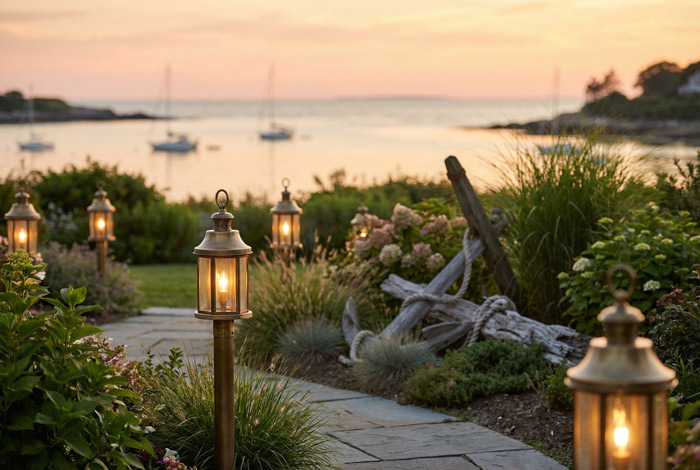
Nautical garden lights are specialized outdoor lighting fixtures inspired by traditional maritime illumination systems and coastal architectural elements. Their design origins can be traced back to ship lanterns, harbor lighting, marine bulkhead fixtures, and lighthouse structures, where lighting equipment needed to maintain reliable performance in demanding environments. Today, modern nautical garden lights combine these historic design elements with advanced manufacturing techniques, making them suitable for premium outdoor landscapes, coastal properties, hospitality spaces, and architectural lighting projects. The use of coastal-inspired forms and warm, atmospheric illumination also connects with broader outdoor design approaches, where elements such as natural textures, relaxed layouts, and elegant garden lighting styles create a distinctive visual character through Mediterranean-inspired outdoor lighting concepts.
Characterized by their distinctive maritime design language, nautical garden lights integrate classic aesthetics with practical engineering. Their forms often draw inspiration from vintage navigation lamps, ship deck fixtures, dockside lighting, and lighthouse silhouettes, creating a timeless coastal atmosphere while enhancing the visual appeal of outdoor spaces. To achieve long-lasting durability, these fixtures are commonly produced using materials such as solid brass, marine-grade copper, stainless steel, and corrosion-resistant aluminum with protective finishes. The choice of material plays an important role in determining a fixture’s durability, appearance, and maintenance requirements. For outdoor lighting projects, understanding the differences between materials such as copper and stainless steel can help designers select the most suitable option for different environments.
Designed for demanding outdoor conditions, professional nautical garden lights typically feature weather-resistant construction, sealed components, and high IP protection ratings to ensure dependable operation against rain, humidity, wind, and coastal exposure. Their warm white illumination recreates the soft glow of traditional maritime lanterns, adding depth to landscapes while highlighting architectural details and outdoor features. By combining marine-inspired aesthetics, durable materials, and modern lighting technology, nautical garden lights deliver a refined balance between classic coastal character and contemporary outdoor lighting performance.
The Historical Inspiration Behind Nautical Lighting
To fully understand the appeal of nautical garden lights, it helps to consider their historical roots.
For centuries, ships relied on sturdy lanterns to navigate dark waters safely. These lanterns had protective metal cages and thick glass to prevent damage from waves, wind, and impact. Similarly, harbor docks and lighthouses used rugged lighting to guide sailors home.
Over time, these practical designs became symbolic of adventure, exploration, and seaside living. The aesthetic moved from purely functional maritime equipment to decorative elements in coastal homes and eventually into garden landscapes worldwide.
Types of Nautical Garden Lights
Nautical garden lighting comes in various forms, each serving different functional and decorative purposes.
1. Bulkhead Lights
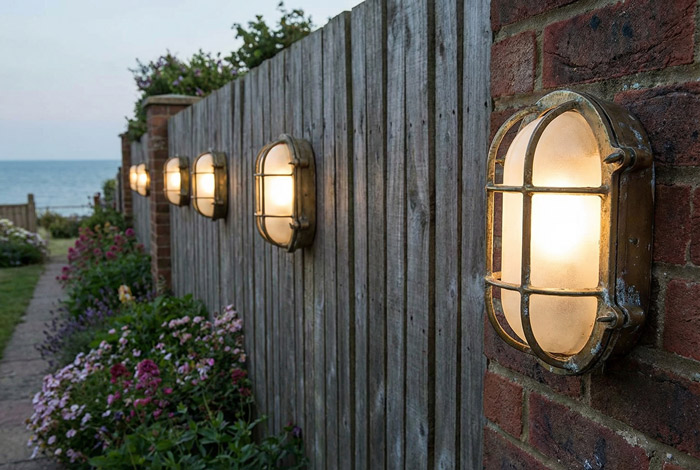
Bulkhead lights are one of the most recognizable nautical fixtures. Originally mounted on ship walls (bulkheads), these oval or round lights often feature a metal cage over frosted glass. In gardens, they are commonly installed on exterior walls, fences, or garage facades.
Why they’re popular:
- Extremely durable
- Compact and versatile
- Perfect for coastal and industrial-style homes
2. Lantern-Style Path Lights
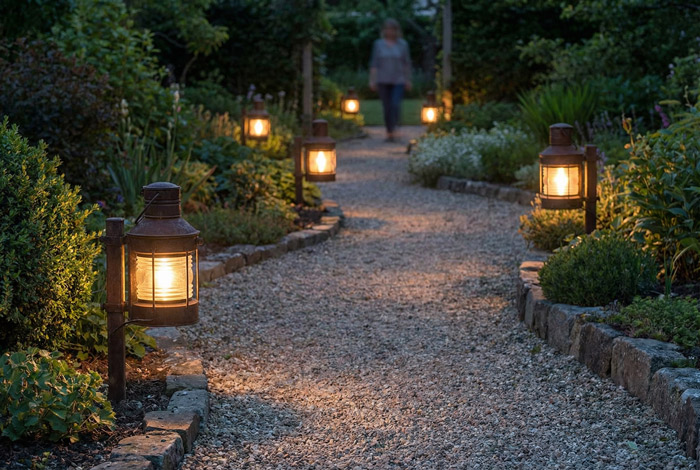
These lights mimic traditional ship lanterns and are often mounted along pathways, driveways, or garden borders. They add charm while guiding visitors safely through outdoor spaces.
Why they’re popular:
- Create a romantic, coastal atmosphere
- Provide practical pathway illumination
- Blend well with natural landscaping
3. Post and Pier Lights
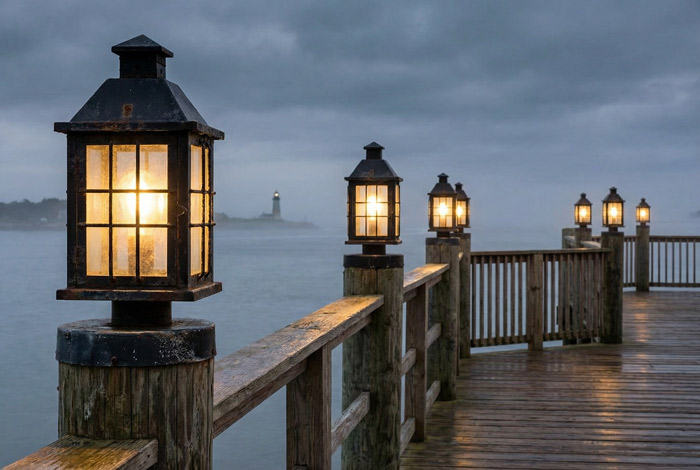
Inspired by dock and pier lighting, these fixtures are mounted on gate posts, pillars, or deck railings. They often have a classic lantern shape with sturdy metal framing.
Why they’re popular:
- Enhance entryways
- Add architectural character
- Provide elevated, widespread illumination
4. Wall-Mounted Ship Lights
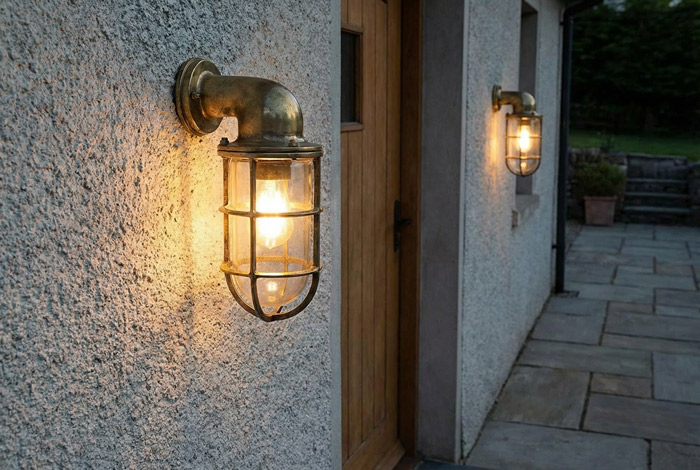
These fixtures resemble traditional maritime wall lamps and are frequently used beside doors, patios, and balconies.
Why they’re popular:
- Make entrances feel warm and inviting
- Pair well with coastal, farmhouse, and industrial designs
- Offer focused, stylish lighting
Why Are Nautical Garden Lights So Popular?
Several factors contribute to the widespread appeal of nautical garden lighting.
1. Timeless Aesthetic Appeal
Nautical design never goes out of style. It combines simplicity, practicality, and elegance. Whether installed in a seaside cottage or a suburban backyard, these lights bring a sense of calm and sophistication.
Unlike trendy fixtures that may look dated within a few years, nautical lights have a classic appearance rooted in history.
2. Exceptional Durability
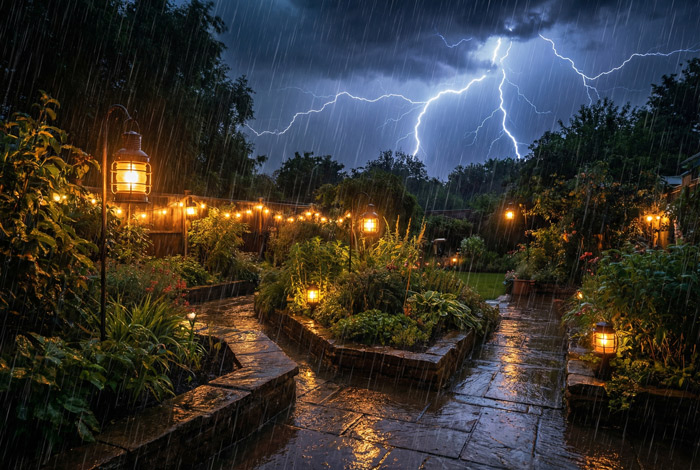
Because they are modeled after marine equipment, nautical garden lights are built to last. High-quality brass and copper fixtures can withstand decades of exposure while developing a beautiful natural patina over time.
This durability makes them a smart long-term investment, especially in regions with harsh weather conditions.
3. Versatility Across Design Styles
Although nautical lighting is closely associated with coastal homes, it complements many architectural styles, including:
- Coastal and beach houses
- Modern minimalist homes
- Industrial loft-style exteriors
- Rustic farmhouse designs
- Mediterranean villas
Their neutral metals and simple forms allow them to integrate seamlessly into diverse settings.
4. Warm and Inviting Atmosphere
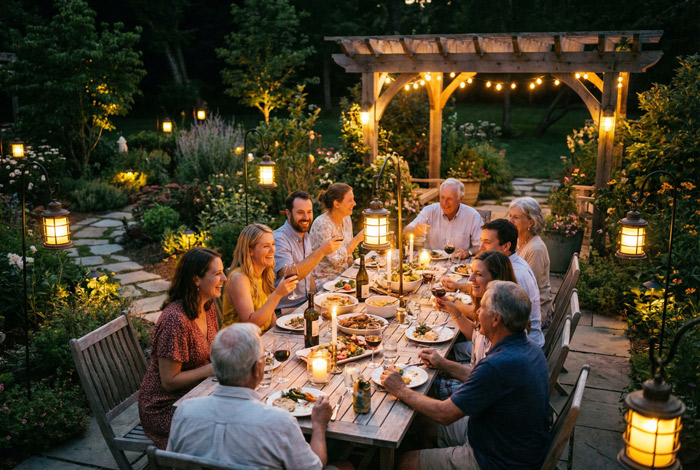
Lighting plays a crucial role in shaping mood. Nautical garden lights typically emit a warm glow that makes outdoor spaces feel comfortable and welcoming.
This is particularly appealing for homeowners who enjoy:
- Outdoor dining
- Evening garden parties
- Relaxing on patios or decks
The soft illumination enhances ambiance without overwhelming the space.
5. Symbolism and Emotional Appeal
Nautical design evokes powerful imagery:
- Adventure and exploration
- Calm ocean breezes
- Peaceful coastal evenings
- Maritime heritage
Even for people who do not live near the ocean, nautical garden lights can create a seaside escape within their own backyard.
6. Sustainability and Modern Technology
Today’s nautical garden lights often incorporate modern innovations such as:
- LED bulbs for energy efficiency
- Solar-powered options
- Smart lighting controls
- Motion sensors
This combination of classic design and modern efficiency makes them appealing to environmentally conscious homeowners.
How to Incorporate Nautical Garden Lights Into Your Landscape
If you’re considering adding nautical lighting to your garden, here are some practical tips:
1. Highlight Pathways
Install lantern-style path lights along walkways to improve safety and create visual rhythm.
2. Frame Entry Points
Use pier lights or wall-mounted fixtures to accent gates, doors, and garden entrances.
3. Layer Your Lighting
Combine different types of nautical fixtures—bulkhead lights for walls, post lights for vertical accents, and lanterns for pathways—to create depth and dimension.
4. Choose the Right Finish
- Brass: Warm and traditional
- Copper: Develops a beautiful green patina over time
- Matte black: Modern and versatile
- Polished stainless steel: Clean and contemporary

Although nautical garden lights are durable, regular maintenance ensures longevity:
- Clean glass panels periodically
- Check seals and gaskets for water resistance
- Replace bulbs with appropriate wattage
- Apply protective coatings if needed
In coastal environments, occasional rinsing helps remove salt buildup.
Nautical garden lights are more than just outdoor fixtures—they are a fusion of history, craftsmanship, and timeless design. Inspired by maritime heritage, they bring durability, elegance, and warmth to outdoor spaces.
Their popularity continues to grow because they offer the perfect balance between functionality and aesthetic appeal. Whether illuminating a garden path, framing a front door, or accenting a patio, nautical garden lights transform ordinary landscapes into inviting, character-filled retreats.
In a world where trends come and go, nautical lighting stands out as a classic choice—anchored in tradition, built to endure, and designed to inspire.
FAQs
What color temperature is best for nautical garden lighting?
A warm white range between 2700K and 3000K is generally recommended.
This color temperature enhances a traditional maritime aesthetic and creates a soft, inviting outdoor atmosphere without appearing harsh or overly bright.
How far apart should nautical pathway lights be installed?
For balanced illumination, pathway lights are typically spaced 6–8 feet (1.8–2.4 meters) apart.
Actual spacing depends on lumen output, pathway width, mounting height, and the desired brightness level.
Are nautical garden lights compatible with low-voltage landscape systems?
Yes. Many nautical-style fixtures are available in 12V low-voltage configurations.
These models work with standard landscape lighting transformers and offer improved safety and energy efficiency for residential installations.
How do you prevent glare from nautical outdoor fixtures?
Select fixtures with frosted or seeded glass, downward-facing designs, or integrated glare shields.
Proper placement is equally important—avoid mounting lights at direct eye level and aim beams toward surfaces rather than into open sightlines.
What certifications should quality nautical garden lights have?
Look for recognized safety and compliance certifications such as CE, UL, ETL, or RoHS, depending on your region.
These certifications indicate conformity with electrical safety and environmental standards.
