
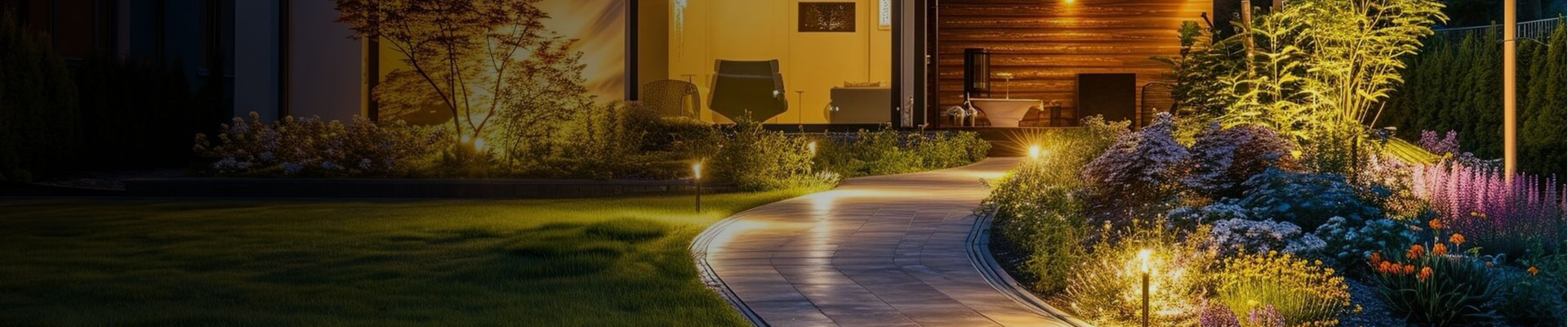
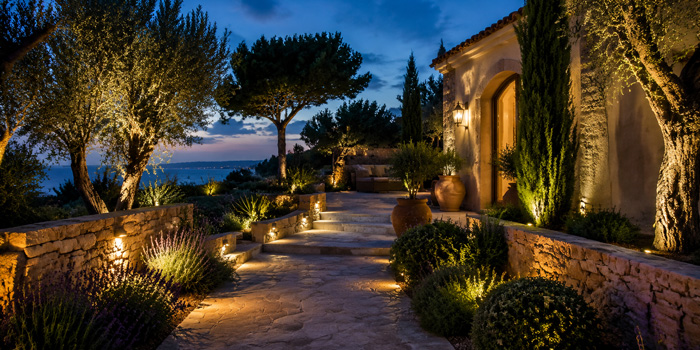
The Core Idea of Mediterranean Garden Lighting
Key Features of Mediterranean Garden Lighting
Common Types of Mediterranean Garden Lights
Materials and Finishes
Where Mediterranean Garden Lighting Works Best
How to Create a Mediterranean Lighting Effect
FAQs
Mediterranean garden lighting is an outdoor lighting style inspired by the landscapes, architecture, and relaxed evening atmosphere of countries around the Mediterranean Sea, such as Italy, Greece, Spain, Morocco, and southern France. It is designed to make a garden feel warm, welcoming, natural, and timeless, especially after sunset.
Unlike bright, modern outdoor lighting that focuses only on visibility, Mediterranean garden lighting focuses on mood, texture, and atmosphere. It highlights stone walls, terracotta pots, olive trees, climbing vines, water features, pathways, and outdoor dining areas with soft, warm light.
The Core Idea of Mediterranean Garden Lighting
The main purpose of Mediterranean garden lighting is to create a comfortable outdoor space that feels beautiful and usable in the evening. Mediterranean gardens are often designed for outdoor living, including dining, relaxing, entertaining, and walking through planted areas. Lighting supports this lifestyle by making the garden feel intimate rather than overly illuminated.
A Mediterranean lighting design usually avoids harsh white light. Instead, it uses warm tones that resemble candlelight, lanterns, or the golden glow of sunset. This helps create a calm and romantic atmosphere.
Key Features of Mediterranean Garden Lighting
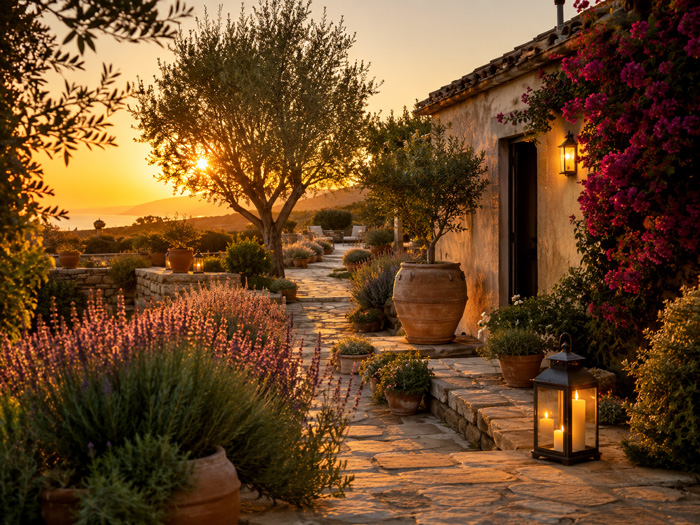
1. Warm Light Color
Warm light is one of the most important features of Mediterranean garden lighting. Bulbs are usually in the range of 2200K to 3000K, which gives off a golden or amber tone. This color temperature works well with natural materials such as stone, clay, wood, and aged metal. Cool white lighting can make a Mediterranean garden feel too modern or cold. Warm lighting brings out the richness of terracotta, limestone, stucco walls, and rustic tiles.
2. Lantern-Style Fixtures
Lanterns are strongly associated with Mediterranean outdoor spaces. They may be mounted on walls, placed on tables, hung from pergolas, or positioned along pathways. Common materials include wrought iron, bronze, copper, brass, and weathered metal. Moroccan-style lanterns with patterned cutouts are also popular. They cast decorative shadows on walls and paving, adding depth and character to the garden.
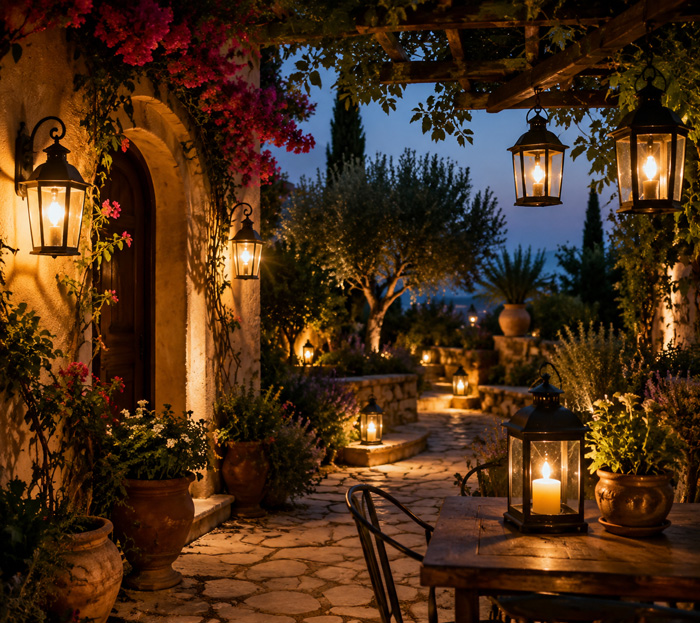
3. Subtle Pathway Lighting
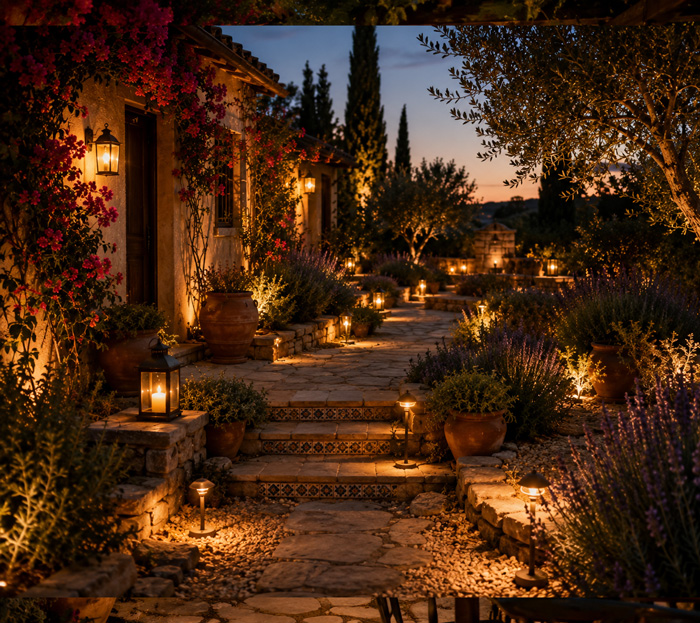
Mediterranean gardens often include stone paths, gravel walkways, or tiled steps. Pathway lighting helps guide movement through the garden without overpowering the landscape. Low-level lights are usually preferred. They should softly illuminate the ground and edges of the path, not shine directly into people’s eyes. The goal is safety combined with atmosphere.
4. Accent Lighting for Plants and Architecture
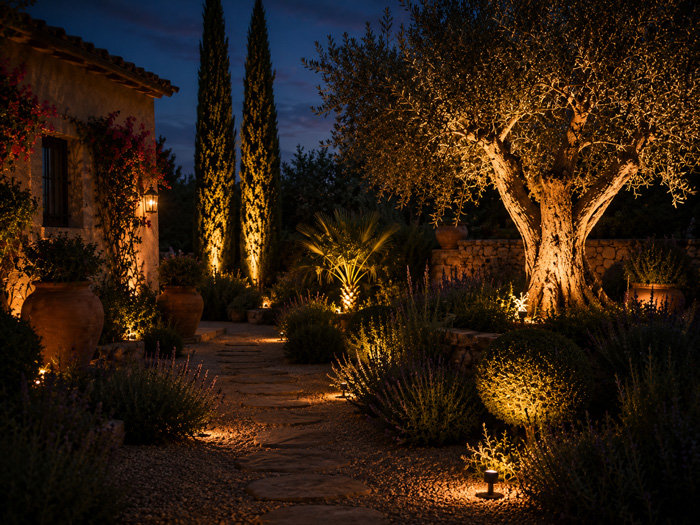
Mediterranean garden lighting often highlights key features rather than lighting everything equally. For example, uplights may be used to show the shape of an olive tree, palm tree, cypress, or sculptural shrub. Wall lights may emphasize textured stucco, stonework, arches, or columns. This type of lighting adds visual interest and makes the garden feel layered at night.
5. Candlelight and Fire Elements
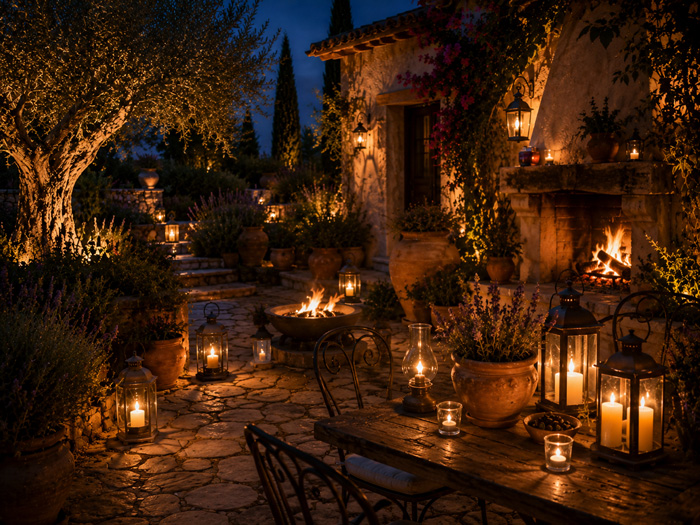
Candles, oil lamps, fire bowls, and outdoor fireplaces are common in Mediterranean-style outdoor spaces. They add movement, warmth, and a traditional feeling that electric lights alone cannot fully create. Even when real flames are not practical, lighting can imitate the soft flicker of candlelight through warm bulbs, lanterns, or dimmable fixtures.
Common Types of Mediterranean Garden Lights
Mediterranean garden lighting can include several types of fixtures, each with a clear purpose.
Wall lights are used on exterior walls, garden boundaries, entrances, and patios. They often have rustic metal finishes and warm glass shades.
Pendant lights work well under pergolas, covered terraces, or outdoor dining areas. They help define a seating or eating space.
String lights are popular for creating a casual Mediterranean evening atmosphere. They can be hung across patios, between trees, or along pergolas.
Path lights guide people safely through the garden while adding a soft glow to walkways.
Uplights are placed near trees, statues, walls, or large pots to create dramatic shadows and highlight shapes.
Step lights are useful for stairs, raised terraces, and garden levels. They improve safety while keeping the design subtle.
The materials used in Mediterranean garden lighting should look natural, aged, or handcrafted. Shiny chrome or very sleek finishes usually feel out of place. Better choices include:
- Wrought iron
- Aged bronze
- Antique brass
- Copper
- Weathered steel
- Frosted or amber glass
- Ceramic or terracotta details
These materials match the rustic elegance of Mediterranean gardens and age well outdoors.
Where Mediterranean Garden Lighting Works Best
This lighting style works especially well in gardens with natural textures and warm architectural details. It is ideal for spaces with stone paving, gravel paths, white or cream walls, terracotta planters, wooden pergolas, climbing plants, fountains, and outdoor dining areas.
It can also be used in modern gardens that want a warmer, more relaxed atmosphere. The key is to keep the lighting soft, warm, and balanced.
How to Create a Mediterranean Lighting Effect
To create Mediterranean garden lighting, start by identifying the most important areas of the garden. These may include the entrance, path, seating area, dining space, trees, water feature, or architectural wall.
Use different layers of light instead of relying on one bright source. Combine wall lights, lanterns, path lights, and accent lights. Keep the brightness low to medium, and choose warm bulbs. Dimmers are helpful because they allow the mood to change depending on the occasion.
Avoid over-lighting the space. A Mediterranean garden should still have shadows. The contrast between soft light and darkness is what makes the garden feel peaceful and atmospheric.
How much does Mediterranean garden lighting usually cost?
The cost depends on garden size, fixture quality, wiring needs, and installation complexity.
A small garden may only need a few decorative fixtures, while a large landscape with multiple lighting zones usually requires a higher budget.
Is solar lighting suitable for a Mediterranean-style garden?
Solar lighting can work for decorative accents, but it may not provide consistent brightness in shaded areas.
For reliable performance, low-voltage wired lighting is usually better for main paths, patios, and feature areas.
What IP rating is best for Mediterranean outdoor lights?
For exposed garden areas, lights should usually have at least an IP65 rating.
Fixtures placed under covered patios or pergolas may use lower ratings, but higher protection is better for rain, dust, and long-term outdoor use.
See also: What Is IP65? The Waterproof Rating of Garden Lights
How far apart should garden lights be placed?
Spacing depends on the fixture type and brightness.
Path lights are commonly placed several feet apart to avoid a runway effect, while accent lights should be positioned based on the object’s size, shape, and viewing angle.
Can Mediterranean garden lighting be controlled with smart systems?
Yes. Smart timers, dimmers, motion sensors, and app-controlled lighting systems can be used without affecting the Mediterranean look, as long as the fixtures and light color remain warm, subtle, and visually consistent.
