
Choosing the right brightness for pathway lights can affect both the appearance and safety of an outdoor space. Many low-voltage and solar pathway lights use lumen ratings to describe their brightness, but a common question is whether 10 lumens is bright enough for pathway lighting.
The short answer is that 10 lumens is generally considered a soft, decorative level of brightness rather than a practical illumination level for walkways. It can create a subtle glow, highlight garden features, or add ambiance, but it usually does not provide enough light for clear visibility on a path.
What Does 10 Lumens Look Like on a Pathway?
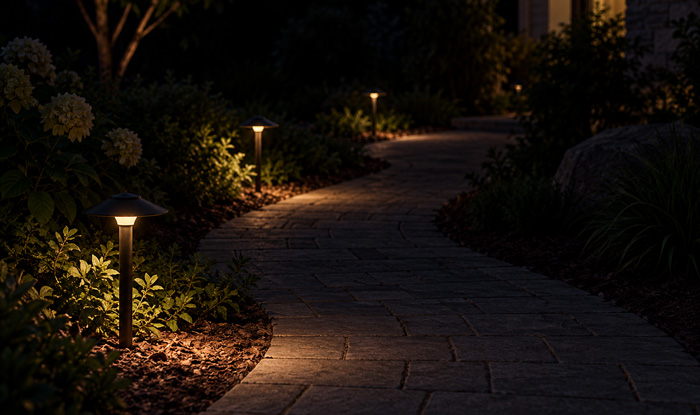
Image shown for reference only. The actual lighting effect of a 10-lumen pathway light may vary depending on fixture design, installation conditions, and surrounding environment. Actual performance may differ.
Lumens indicate the amount of visible light produced by a fixture, but the brightness people experience outdoors depends on how the light is distributed throughout the space. A 10-lumen pathway light usually provides a soft glow rather than strong illumination, making it suitable for decorative landscaping, highlighting garden features, and adding a subtle visual guide along walkways.
The way a low-lumen fixture looks can change depending on installation conditions, including mounting height, lens design, spacing, beam direction, and surrounding light sources. A light placed in a darker garden area may create a more noticeable effect, while the same fixture near other outdoor lighting may appear less prominent. Since lumen output does not fully describe how light performs after installation, factors such as brightness distribution and intensity measurement also influence the overall result. These factors are closely related to the way lighting performance is evaluated in outdoor applications, including the methods used for measuring light intensity accurately.
For pathway lighting, a 10-lumen fixture is generally best used for creating atmosphere and adding landscape detail rather than delivering strong illumination for frequent nighttime walking.
Is 10 Lumens Enough for Pathway Safety?
For pathways where people need to see steps, changes in elevation, or obstacles, 10 lumens is usually too low. Most functional pathway lighting requires a higher lumen output to create consistent illumination across walking areas. Many outdoor lighting recommendations place pathway fixtures in a much higher range, often around 100–200 lumens depending on the design and purpose.
A 10-lumen light works better for:
- Decorative garden borders
- Subtle landscape accents
- Low-glow solar lights
- Creating a cozy outdoor atmosphere
A brighter pathway light is more suitable for:
- Driveways
- Frequently used walkways
- Steps and entrances
- Areas requiring improved visibility
10 Lumens Compared With Common Pathway Light Levels
| Light Output | Brightness Level | Best Use |
|---|---|---|
| 5–10 lumens | Very soft glow | Decorative garden lighting, accent areas |
| 10–50 lumens | Low brightness | Small pathways, landscape enhancement |
| 50–100 lumens | Moderate brightness | Residential walkways and garden paths |
| 100–200 lumens | Functional pathway lighting | Main walkways and entrances |
| 200+ lumens | High brightness | Large outdoor areas and security-focused lighting |
Factors That Affect How Bright 10 Lumens Feels
The lumen number alone does not determine the final appearance of pathway lighting. Several design elements influence perceived brightness.
Fixture spacing:
A series of 10-lumen lights placed close together can create a stronger overall effect than a few widely spaced fixtures.
Light direction:
A downward-facing fixture reduces glare and distributes light more effectively across the ground.
Surrounding conditions:
A dark backyard makes low-lumen lights appear brighter, while areas with existing lighting reduce their visual impact.
Color temperature:
Warm white lighting often creates a softer and more comfortable outdoor atmosphere, while cooler tones may appear sharper.
Lumens vs. Watts in Pathway Lighting
Wattage and brightness are not the same measurement in outdoor lighting. Watts describe the energy a fixture uses, while lumens represent the amount of visible light it produces. This difference is especially noticeable with LED fixtures, which can deliver higher light output without requiring significantly more power.
The actual lighting result depends on the fixture design, LED efficiency, lumen output, and the size of the area being illuminated. A fixture with lower wattage may still provide effective brightness when designed efficiently, while larger landscape areas may require different power levels to achieve balanced illumination. Factors such as fixture selection and power requirements are commonly considered when planning landscape lighting wattage.
How to Choose the Right Lumen Level for Pathway Lights
The right lumen output depends on the purpose and location of the pathway lighting. Lower outputs around 10 lumens are suitable for decorative accents and creating a soft outdoor glow. For residential walkways that require more visible illumination, fixtures in the range of 50–100 lumens are often a better choice. Paths that need clearer visibility, such as entrances or frequently used walkways, may require 100–200 lumens or more.
When selecting pathway lights, lumen output provides a more accurate way to compare brightness than wattage alone. It indicates how much visible light a fixture produces, helping match the lighting level with the intended use, from subtle landscape decoration to practical outdoor illumination.
FAQs
See also: How Far Apart Should Pathway Lights Be?
