
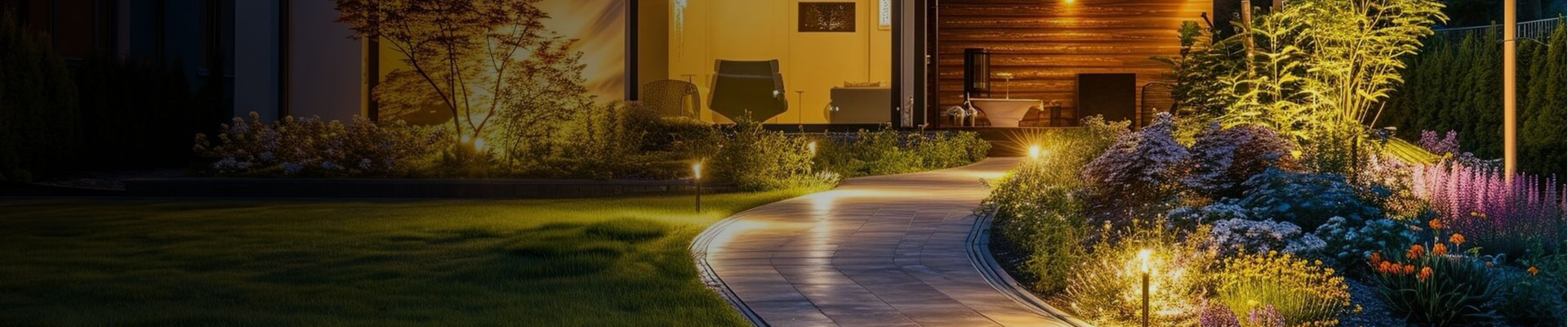
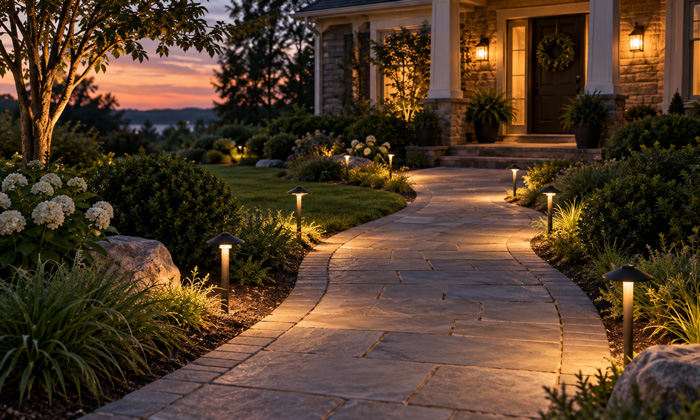
Pathway lights create a safe and inviting outdoor environment by guiding people along walkways, garden paths, and driveways after sunset. The spacing between each light directly affects brightness, visibility, and the overall appearance of the landscape. Lights placed too close together can make the area feel overly bright, while lights positioned too far apart may leave uncomfortable dark gaps.
For most residential pathways, pathway lights are typically spaced 6 to 8 feet apart. This distance allows the light from each fixture to blend naturally, creating balanced illumination without making the walkway look crowded.
Standard Spacing for Different Pathway Types
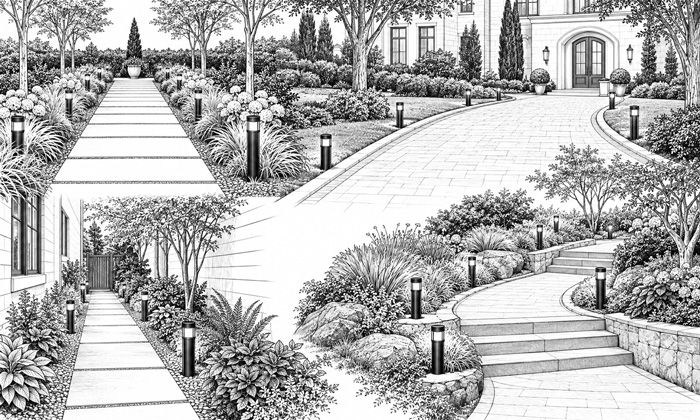
The ideal distance between pathway lights depends on the shape, size, and purpose of the walkway.
- Straight garden paths: A spacing of 6 to 8 feet usually provides consistent coverage while maintaining a natural look.
- Narrow walkways: Smaller gaps of around 4 to 6 feet can help prevent shadows and improve visibility.
- Wide entrances or driveways: Brighter fixtures may allow spacing of 8 to 10 feet or more.
- Curved paths and steps: Lights should be placed closer together near bends, elevation changes, and areas where people need extra guidance.
A well-planned layout should focus on creating a smooth flow of light rather than simply adding more fixtures. The goal is to make the path easy to follow while keeping the lighting comfortable.
Factors That Affect Pathway Light Spacing
Light Brightness and Beam Coverage
Not all pathway lights produce the same amount of illumination. A low-lumen decorative light creates a smaller light pool and usually requires closer placement. Higher-output LED pathway lights can cover a larger area and may be installed farther apart.
The beam angle also influences spacing. Wide beams spread light across more of the walkway, while narrow beams need shorter distances between fixtures to avoid dark areas.
Path Width
The width of the pathway plays an important role in determining fixture placement. A narrow walkway may only need lights along one side, while a wider walkway often benefits from staggered placement on both sides.
For paths wider than a typical garden walkway, alternating lights from side to side can create more even illumination and a more natural appearance.
Path Shape and Landscape Design
Straight rows of lights placed at identical intervals can sometimes create a rigid “runway” effect. A staggered arrangement often looks more organic, especially in gardens with curves, plants, or decorative features.
The spacing of pathway lights varies depending on the fixture type, brightness, and the area being illuminated. Solar lights used along gardens, walkways, and driveways may require different placement distances to achieve even coverage. Many outdoor lighting designs follow similar spacing principles, such as adjusting the distance between fixtures according to light output and installation conditions, which are also considered when planning solar light placement.
How to Avoid Common Pathway Lighting Mistakes
One common mistake is installing too many lights close together. Although this may seem like it improves visibility, excessive brightness can create glare and reduce the comfortable atmosphere of the outdoor space.
Another issue is leaving large gaps between fixtures. Dark sections between lights can make the pathway harder to navigate, especially around uneven surfaces, stairs, or garden edges.
Before permanently installing pathway lights, placing fixtures temporarily and viewing the walkway at night can help identify areas that need adjustment.
Creating the Right Lighting Balance
The best pathway lighting design combines safety, appearance, and efficiency. A spacing range of 6 to 8 feet works well as a starting point for many homes, but the final arrangement should match the light output, pathway structure, and surrounding environment.
Proper spacing allows pathway lights to provide gentle guidance without overpowering the landscape. With the right placement, outdoor walkways become safer, more attractive, and better integrated with the overall garden design.
FAQs
