
Choose a Warm White Color Temperature
Match the Light Type to the Garden Area
Balance Decorative Sparkle With Useful Light
Choose a Power Source That Fits Your Plans
Check the Entire Set for Outdoor Use
Measure Before Choosing the Number of Lights
Use Timers to Keep the Display Consistent
Try a Simple Holiday Garden Arrangement
FAQs
A welcoming holiday garden begins with light that makes people want to stay. A softly illuminated entrance, a glowing tree, and gentle lighting around a seating area can create a festive setting without filling every corner with decorations.
When choosing lights used to create a warm holiday atmosphere, start with warm white LEDs, match each light style to its location, and keep brightness comfortable. Then check the power supply, outdoor suitability, and controls before buying.
The aim is to make your garden feel inviting while keeping paths, steps, and gathering areas easy to use.
Choose a Warm White Color Temperature
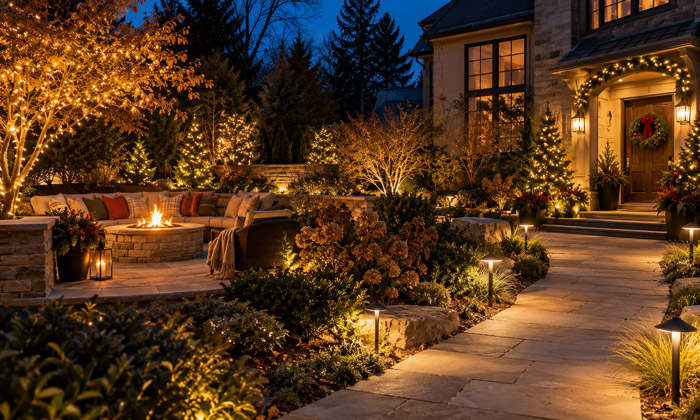
Color temperature describes how yellow or blue white light appears. It is measured in kelvins, or K; lower values look warmer, while higher values look cooler. Brightness is a separate characteristic, so a warm white bulb can still be uncomfortably bright.
For a cozy holiday garden, around 2700K is a useful starting point. It gives seating areas and decorations a soft appearance. A 3000K light remains warm but looks slightly crisper, which may suit entrances and garden features. The difference between 2700K and 3000K landscape lighting becomes particularly relevant when seasonal decorations sit beside existing fixtures.
Check a sample before buying several sets. Products labeled “warm white” can look noticeably different, especially when purchased from different ranges. Test new lights beside your porch and pathway lights after dark, rather than judging them only from product photographs.
Match the Light Type to the Garden Area
Different lights create different effects. Small points of light suit foliage, while larger bulbs can give an open seating area a stronger visual frame.
| Light type | Suitable location | Effect |
|---|---|---|
| Mini LED string lights | Small trees, railings, and garlands | Delicate sparkle |
| Globe or festoon lights | Patios and pergolas | An inviting overhead glow |
| Net lights | Broad shrubs and hedges | Even decorative coverage |
| Outdoor LED lanterns | Tables and sheltered seating areas | Gentle pools of light |
| Shielded pathway lights | Walkways and changes in direction | Light directed toward the walking surface |
| Curtain or icicle lights | A suitable pergola edge or covered backdrop | A more prominent seasonal feature |
Mini lights work particularly well in wreaths and garlands, while net lights simplify decorating broad shrubs. Larger bulbs produce a more visible outline and are better reserved for areas where that stronger effect is useful.
For a small garden, start with two or three light types. For example, combine mini lights on one tree, lanterns around a table, and functional lighting along the route between them. Add another decorative layer only if the space still feels unfinished.
Balance Decorative Sparkle With Useful Light
A garden can look bright in photographs while leaving its steps difficult to see. Decorative lights and practical lighting need separate consideration.
Use small decorative lights to bring attention to foliage or ornaments. Provide directed light where guests walk, turn, or step down. Around seating, check whether people can comfortably see one another without staring into exposed bulbs.
When comparing functional fixtures, look at lumens rather than watts. Lumens describe light output; watts describe power consumption. There is no single lumen figure that suits every garden because fixture placement, beam direction, and the size of the illuminated area all matter.
Before fixing everything permanently, view the arrangement from three places:
- The entrance, where guests first see the display.
- A seated position, where glare may become noticeable.
- The main path, where dark gaps can hide changes in level.
If one source dominates the view, reposition it or reduce its output using compatible controls. Adding more lights elsewhere is not always the best solution.
Choose a Power Source That Fits Your Plans
The right power source depends on where the lights will go and how reliably you need them to operate.
Plug-In Lights for Scheduled Gatherings
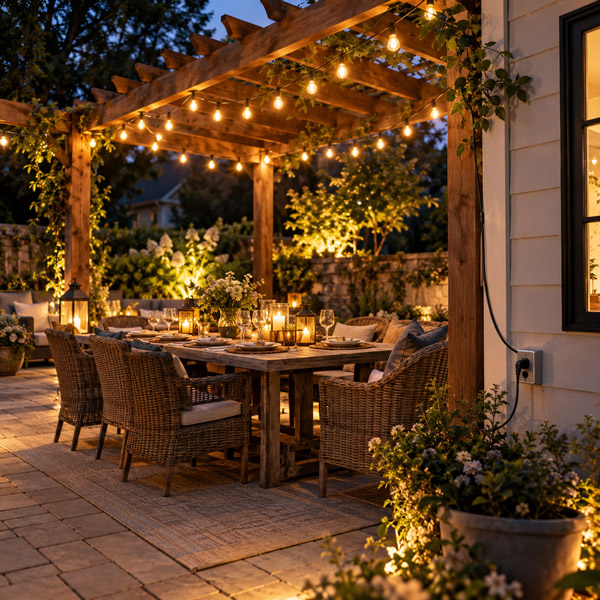
Plug-in lights are practical when a suitable outdoor power supply is nearby. They suit displays that need to operate throughout a planned evening without depending on that day’s sunlight.
Measure the route to the outlet before purchasing. A string’s overall cable length may include an unlit lead, so check its illuminated length separately.
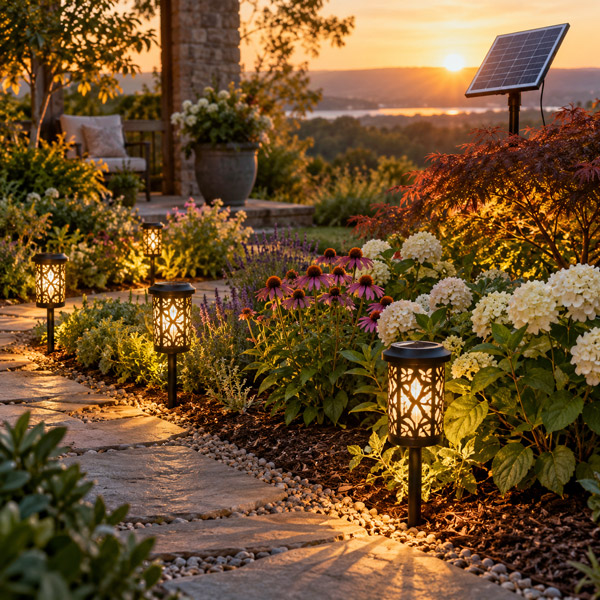
Solar Lights for Flexible Decorative Accents
Solar lights can work well in garden areas where running cable is inconvenient. Their usefulness depends on the panel receiving sufficient daylight, and runtime can vary with weather and season.
Position the panel for charging rather than hiding it behind the decoration. For an important holiday gathering, test the lights under the conditions you expect instead of relying solely on an advertised maximum runtime.
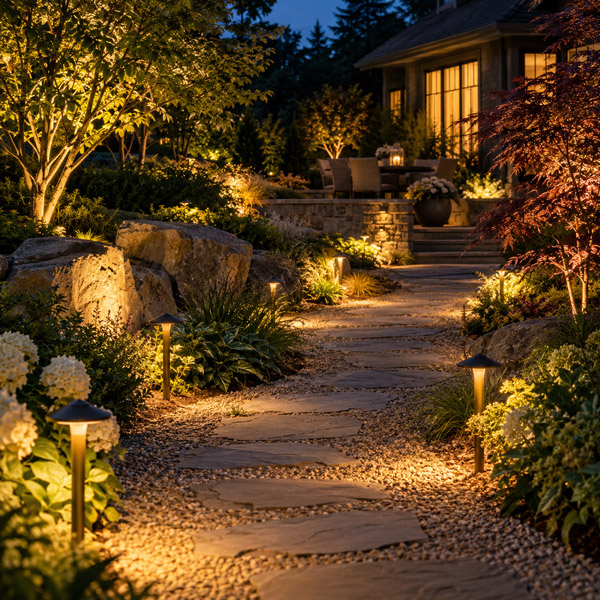
Low-Voltage Lighting for a Lasting Garden Layout
Low-voltage lighting is worth considering when paths and garden features need illumination beyond the holiday season. Comparing solar and low-voltage outdoor lighting helps clarify the trade-off between flexible placement and a wired installation with a suitable transformer.
Battery-powered lanterns can complement any of these arrangements, especially on tables. Check their outdoor suitability and expected runtime before making them part of your evening setup.
Check the Entire Set for Outdoor Use
An outdoor display includes more than the visible bulbs. Cables, connections, controllers, and power supplies must also be suitable for their installed locations.
Before buying, check:
- Whether the product is explicitly intended for outdoor use.
- Whether its installation instructions permit the exposure you expect.
- Where the controller and power supply must be placed.
- How many compatible strings may be connected together.
- Whether replacement bulbs or other serviceable parts are available.
Do not assume that an LED string is suitable for rain simply because its bulbs appear sealed. Follow the product’s instructions for protecting connections and positioning accessories.
For seasonal installations, also consider how easily the set can be removed and stored. A manageable arrangement is more likely to be reused than one that requires untangling a complicated web of cables every year.
Measure Before Choosing the Number of Lights
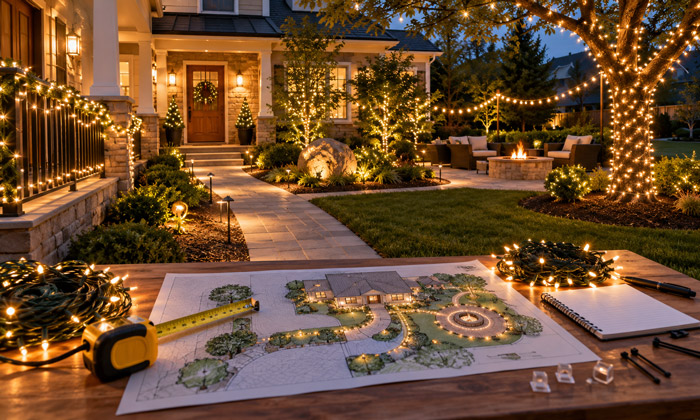
Start with a simple sketch showing the entrance, paths, seating area, main decorative feature, and available power supply.
Measure the actual route each light string will follow. A straight railing needs a different length from a tree trunk wrapped repeatedly with lights. Draped strings also need more cable than the direct distance between their supports. Measuring first makes it easier to choose appropriate strand lengths and avoid unfinished sections.
For trees, test a short section at your preferred spacing before estimating the full length. Tighter spacing creates a denser effect and uses more cable. Leave attachments appropriately loose and follow the manufacturer’s mounting guidance.
Keep cable routes away from walking areas, and plan the connection points before installation.
Use Timers to Keep the Display Consistent
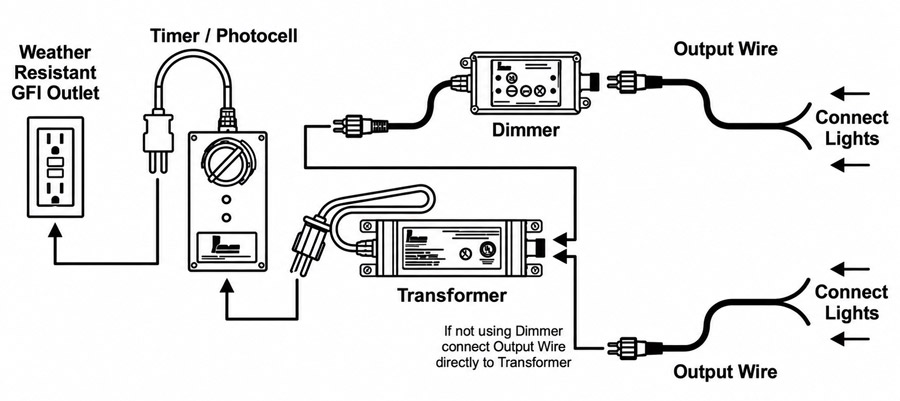
Schematic of a typical landscape lighting control system, showing a GFCI outlet, timer/photocell, dimmer, transformer, and connections to the lights.
Automatic controls make holiday lighting easier to manage, particularly when several parts of the garden are illuminated.
A compatible landscape lighting timer can provide a regular operating schedule. Depending on the system, a photocell may respond to changing daylight, while a timer determines when the lights switch off.
Choose controls that suit the lighting system and its electrical load. If you want dimming, confirm that the lights and controller support it.
For a relaxed setting, try steady illumination as the main mode. A small twinkling feature can add movement without making the entire garden feel busy.
Try a Simple Holiday Garden Arrangement
For a compact garden with a patio and one small tree, use the tree as the main decorative feature.
Wrap it with warm white mini lights, then place outdoor lanterns near the seating area. Keep the route from the house clearly illuminated with existing or suitably positioned path lights. If the patio still needs definition, add a modest overhead string rather than decorating every fence panel.
View the result from indoors as well as outside. Move any bright bulbs that sit directly in the main sightline, and leave some planting unlit so the focal feature remains distinct.
For a larger garden, repeat one element—such as the same lantern style or matching light strings—across a few selected areas. Repetition can connect the display without requiring identical decorations everywhere.
FAQs
Are Clear or Frosted Bulbs Better for a Cozy Holiday Garden?
Frosted bulbs diffuse light and soften the appearance of individual light sources, making them a good choice near seating and dining areas.
Clear bulbs create more visible sparkle and work well for decorative displays viewed from a distance. Both can create a warm atmosphere when color temperature and brightness are carefully matched.
Can RGB String Lights Produce a Natural Warm White Glow?
Basic RGB lights create white by mixing red, green, and blue, which can sometimes produce a noticeable color tint.
For a more natural warm white appearance, choose products with a dedicated warm white LED channel and check the specifications rather than relying only on labels such as “multicolor.”
Why Do Some LED Holiday Lights Flicker in Photos or Videos?
Some LED lights rapidly vary their output in a way that cameras can detect even when the light appears steady to the human eye.
This can create visible flicker or dark bands in recordings. If photography or video is important, test the lights with your phone before installation and at the brightness level you plan to use.
What Cable Color Looks Best for Garden Holiday Lights?
Choose a cable color that blends with the background. Dark green works well among evergreen foliage, black suits darker structures, and white often blends better with pale walls or painted pergolas.
A less noticeable cable keeps attention on the illuminated bulbs and makes the installation look cleaner during daylight.
How Do Snow and Reflective Surfaces Affect Holiday Garden Lighting?
Snow, pale paving, glass, and water can reflect decorative lighting and make the overall display appear brighter or more visually prominent.
Start with moderate brightness near reflective surfaces and evaluate the result after dark. Reposition or dim lights that create distracting reflections near seating areas or windows.
